

P2149 on 2009-2013 Chevrolet Malibu: Fuel Injector Group B Circuit Causes and Fixes
On a 2009-2013 Malibu, code P2149 is most often caused by a chafed fuel injector wiring harness, a known issue outlined in GM Technical Service Bulletin #PIP4924C. Inspect the harness for damage, particularly where it may rub against the intake plenum, valve cover bolts, or fuel lines, before replacing any parts.
- For a 2009-2013 Malibu, P2149 almost always points to a problem with the fuel injector wiring harness.
- Before buying any parts, carefully inspect the harness for damage at the contact points mentioned in TSB PIP4924C.
- This code will cause serious drivability problems like stalling and rough running, so it should be addressed promptly.
- The code will likely be paired with another code (like P0203) that identifies the specific cylinder where the fault originated.
What's Unique About the 2009-2013 Chevrolet MALIBU
The 2009-2013 Chevrolet Malibu, along with many other GM vehicles from this era, is specifically known for a wiring harness issue that triggers this code. General Motors issued Technical Service Bulletin #PIP4924C, which points directly to the fuel injector wiring harness rubbing through its insulation against engine components. Specific chafe points mentioned in the TSB are against the intake plenum, valve cover bolts, the fuel line, and the side of the cylinder head under the plenum. This makes a wiring inspection the absolute first step in diagnosis, as it's a more probable cause than a failed injector or computer on this particular vehicle.
Diagnostic Flowchart
Tap your situation to follow the diagnostic path that matches what you're seeing on this vehicle.
Generation note: This year range covers the end of the seventh generation (2009-2012) and the beginning of the eighth generation (2013) of the Chevrolet Malibu. The primary cause, a chafed wiring harness, is a known issue on both generations as noted in GM's service bulletin PIP4924C, which covers models up to 2013.
Symptoms You May Notice
- Engine runs rough or vibrates excessively
- Stalling, especially when coming to a stop
- Noticeable loss of engine power and hesitation during acceleration
- Engine may crank but fail to start
- Check Engine Light is on, possibly flashing
- Reduced fuel efficiency
- Replacing one or more fuel injectors without first thoroughly inspecting the wiring harness. The harness is the most likely culprit on this vehicle, and skipping this step can lead to unnecessary expense and a recurring problem.
Most Likely Causes
- Chafed or Damaged Fuel Injector Wiring Harness 🔴 High Probability As documented in TSB #PIP4924C, the harness routing can cause it to rub against various engine parts, leading to an open or shorted wire. Common chafe points are against the intake plenum, valve cover bolts, fuel lines, and the side of the cylinder head. Engine vibration over time wears through the wire's insulation.
How to confirm: Visually inspect the entire fuel injector harness, paying close attention to points of contact with the intake plenum, valve cover bolts, fuel lines, and the side of the cylinder head. It may be necessary to remove the plastic engine cover and reposition the harness to see the damaged areas. A multimeter can be used to check for continuity from the ECM connector to the injector connector; resistance greater than 0.2 Ω suggests a problem.
Typical fix: Repair the damaged section of wire using solder and heat-shrink tubing. Protect the harness with new convoluted tubing or high-quality electrical tape (such as Tesa tape). Reroute the harness slightly if possible to prevent future contact. In severe cases, the entire harness may need replacement.
Est. part cost: $5-$25 for repair materials, $150-$300 for a new harness - Failed Fuel Injector 🟡 Medium Probability
How to confirm: After confirming the wiring is intact, test the resistance of the fuel injectors in Group B using a multimeter. Compare the readings to the manufacturer's specification (typically 10-15 Ohms for these engines) or to the injectors in the other group. An injector with a reading that is significantly different (e.g., open circuit/infinite resistance or zero resistance) is faulty.
Typical fix: Replace the failed fuel injector. It is often recommended to replace all injectors in the affected bank or all injectors at once if they are high mileage.
Est. part cost: $50-$120 per injector - Loose or Corroded Electrical Connector ⚪ Low Probability Vibrations can loosen the injector connectors over time. On some GM engines, the female pins within the connector can become loose, a problem that can sometimes be fixed with the 'ice pick trick' to carefully tighten the pin's grip.
How to confirm: Inspect the connectors at the fuel injectors and at the PCM. Look for any signs of corrosion, moisture, or backed-out pins. Wiggle the connector while the engine is running (if possible) to see if it affects the idle.
Typical fix: Clean the connector terminals with an electrical contact cleaner and ensure a secure connection. Apply dielectric grease to prevent future corrosion. If pins are loose, they may need to be carefully re-tensioned or the connector pigtail replaced.
Est. part cost: $5-$20 for cleaner and grease
Rare But Worth Checking
- Faulty Powertrain Control Module (PCM): This is the least likely cause. The PCM's internal injector driver circuit can fail, but this should only be considered after all wiring and fuel injectors have been tested and proven to be good.
Diagnosis Steps
- Read all stored fault codes with an OBD-II scanner. Note any specific injector codes (P0201-P0206) as they will point you toward the affected cylinders in Group B (typically cylinders 2 and 4 on a 4-cyl).
- Perform a thorough visual inspection of the fuel injector wiring harness. Per TSB PIP4924C, check for chafing against the intake plenum, valve cover bolts, fuel lines, and the side of the cylinder head. Manipulate the harness by hand to expose any hidden breaks or worn spots.
- If damage is found, repair the wire(s) using solder and heat shrink, protect the area with loom or tape, clear the codes, and test drive the vehicle.
- If no visible damage is found, disconnect the harness from the injectors in Group B and from the PCM. Use a multimeter set to Ohms to test for continuity on each wire. Check for any shorts to ground or to other wires in the harness.
- If wiring tests good, measure the resistance (ohms) of each injector in Group B. Compare the readings to each other and to the manufacturer's specification (typically 10-15 Ohms). Replace any injector that is out of spec.
- As a final check, use a 'noid light' to confirm if the PCM is sending a pulse signal to the injectors. If there is no pulse on the Group B injectors but the wiring and injectors are good, a faulty PCM is likely.
- If the PCM is suspected, it is best to have a professional confirm the diagnosis before replacement, as it requires programming to the vehicle's VIN.
Parts You'll Likely Need
- Fuel Injector Wiring Harness Repair Supplies — Due to the high probability of a chafed harness per TSB PIP4924C, you will likely need wire, solder, heat shrink, and/or anti-abrasion tape to perform a repair.
Trusted brands: Tesa (for tape), 3M
Aftermarket price range: $10-$25 - Fuel Injector
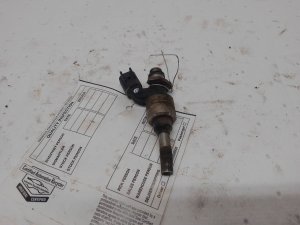
(OEM #12638530)— If the wiring harness is intact, the next most likely cause is a failed fuel injector within Group B. This part number is common for the 3.6L V6 engine found in some Malibus and platform mates.
Trusted brands: ACDelco (OEM), Bosch, Standard Motor Products
OEM price range: $90-$150
Aftermarket price range: $50-$120 - Fuel Injector Wiring Harness
(OEM #12689346)— In cases of severe, widespread damage, the entire injector harness may need to be replaced. This is a GM Genuine Part number.
Trusted brands: ACDelco (GM Genuine)
OEM price range: $100-$175
Related Codes That Often Appear With This One
- P0201, P0202, P0203, P0204, P0205, or P0206 — These codes specify a circuit malfunction for an individual cylinder's injector. P2149 is a group fault, so it will almost always be accompanied by a specific cylinder's injector code (e.g., P0202 or P0204), which helps pinpoint the location of the wiring issue.
- P0300 — This code indicates a random or multiple cylinder misfire. Since P2149 disables an entire bank of injectors, multiple cylinders will misfire, triggering this code.
- P2146 — This is the equivalent code for Fuel Injector Group 'A'. It's possible, though less common, to see both if there is widespread harness damage or a major PCM fault.
Technical Service Bulletins (TSBs) & Recalls
- PIP4924C: Instructs technicians to inspect the fuel injector wiring harness for rubbing through or internal wire opens when encountering P2149 and other related injector codes. It lists specific chafe points to check.
- 21-NA-149: While not specific to P2149, this related TSB details common engine wiring harness chafing locations on various GM vehicles and provides detailed repair procedures, including using harness sleeves and anti-abrasion tape, which are relevant to fixing the P2149 cause.
Platform-Specific Known Issues
- A GM Technical Service Bulletin (PIP4924C) exists for this code on this vehicle, specifically calling out the fuel injector wiring harness for potential rub-through or internal wire opens. Common chafe points are against the intake plenum, valve cover bolts, and fuel lines.
- A user on CarParts.com with a Chevy truck noted a similar P2149 code that appeared primarily when the engine was cold, suggesting the temperature change can affect a marginal wire or connection.
Mechanic-Grade Diagnostic Values
- Fuel Injector Coil Resistance — expected: 10 to 15 Ohms when cold for high-impedance injectors, with all injectors measuring within 0.5 Ohms of each other.. Failure: A reading of infinite resistance (OL) indicates an open coil, while a reading near zero or significantly lower than others indicates a shorted injector. A reading more than 20% different from the others suggests a failing injector.
- Injector Wiring Harness Continuity — expected: Less than 0.2 Ω. Failure: Resistance greater than 0.2 Ω indicates excessive resistance or a partial break in the wire between the PCM connector and the fuel injector connector.
- Injector Connector Voltage (Engine Running) — expected: 11.5 - 12.5 Volts (or system/alternator voltage) on the power supply wire.. Failure: Voltage below 9V on the supply wire indicates a significant voltage drop in the circuit. A scope will show the PCM pulling this voltage to ground to fire the injector; the absence of this pattern indicates a control circuit problem.
Scan Tool Commands That Help
- GM GDS2 / Tech2Win: Fuel Injector Balance Test — This bidirectional test is used after confirming the wiring and ignition systems are good. The tool commands each injector to fire individually and measures the corresponding drop in fuel rail pressure. An injector that causes a significantly different pressure drop than the others is likely clogged or mechanically faulty.
Wiring & Ground Locations
- ECM (Engine Control Module) — On 7th generation models (2009-2012), it is typically located in the engine compartment near the battery on the left (driver's) side. Some sources may refer to this as the right side from a forward-facing perspective.. This is the source of the injector control signals. All wiring tests will eventually lead back to the ECM's connectors, so knowing its location is critical for checking continuity and pinouts.
- G109 / G110 — G109 is on the left rear of the engine compartment; G110 is on the left front of the engine compartment (on 2014+ models, likely similar to 2013). For 2008 models, G110 is located near the CMP exhaust sensor.. These are primary engine and component ground points. A loose or corroded ground at these locations can cause widespread electrical issues, including erratic sensor readings and problems in the fuel injector circuits.
- G103 — Typically located on the cowl, above the brake booster in the engine compartment on many GM vehicles.. This ground point serves the Body Control Module (BCM) and other interior modules. While not directly tied to the injector circuit, a fault here can cause bizarre electrical behavior and communication issues between modules that could complicate diagnosis.
Real Owner Repair Stories
- YouTube user Sam Bennett (Dodge Ram with Cummins engine (different vehicle, but identical P2149 diagnostic principle)) — Truck running very poorly, bad idle, no power, check engine light with code P2149.
❌ Tried (didn't work) Checked for fuel in oil (none found).
✅ What actually fixed it The owner tested the resistance of all injectors in the affected bank (rear three). Five injectors read around 0.7-0.8 Ohms, but one injector read 17.9 Ohms. This high resistance indicated a bad injector solenoid. Replacing that single injector resolved the code and all symptoms.
"I Checked Everything" — The Actual Cause
- In the context of this electrical code, the equivalent scenario is when wiring and components test good with a multimeter but the fault persists. A failing GM fuel injector can sometimes test within the correct resistance range when cold, but then fail (go open or partially short) once it reaches operating temperature. If the P2149 code only appears after the engine has warmed up, an injector that is failing due to heat soak should be suspected, even if it passes a cold resistance test.
When the Usual Fixes Don't Work
- While the authoritative TSB (#PIP4924C) for the Malibu heavily points towards a chafed wiring harness as the primary cause for P2149, it is critical not to overlook the injectors themselves. Multiple documented cases on vehicles with similar GM engine architecture show that a single, electrically-failed fuel injector (e.g., with high internal resistance) can be the true root cause. A thorough diagnosis should always include testing the resistance of the injectors in the affected bank, as replacing a single faulty injector is often simpler and less expensive than repairing or replacing a harness.
OEM Part Supersession History
12638530→12669384— Standard part lifecycle update by the manufacturer (GM).
Heads up: While physically compatible, it's recommended to replace injectors as a full set to ensure matched flow rates and performance characteristics. Mixing old and new part numbers is not advised.
Model Year Variations Within This Range
- 2009-2012 vs 2013: The 2013 model year marked the shift from the 7th to the 8th generation Malibu. While the TSB for harness chafing covers both, the introduction of new engines like the 2.5L I4 means that component locations, ground points (e.g., G102, G109), and specific wiring harness routing may differ from the earlier 2.4L and 3.6L engines. Diagnostic procedures remain the same, but wiring diagrams specific to the engine are crucial.
Used OEM Parts in Stock




New Aftermarket Parts Available



The information in this article is provided for general reference and educational purposes only. Vehicle specifications, procedures, and part compatibility can vary by production date, trim level, and region. Always consult your vehicle's factory service manual and verify part numbers before purchasing or performing repairs. Safety-critical components such as airbags, seat belts, and braking systems should be installed by a qualified professional.
- Chevrolet MALIBU:
- 🛍️ Shop This Part
- What's Unique About the 2009-2013 Chevrolet MALIBU
- Diagnostic Flowchart
- Symptoms You May Notice
- Most Likely Causes
- Rare But Worth Checking
- Diagnosis Steps
- Parts You'll Likely Need
- Related Codes That Often Appear With This One
- Technical Service Bulletins (TSBs) & Recalls
- Platform-Specific Known Issues
- Mechanic-Grade Diagnostic Values
- Scan Tool Commands That Help
- Wiring & Ground Locations
- Real Owner Repair Stories
- "I Checked Everything" — The Actual Cause
- When the Usual Fixes Don't Work
- OEM Part Supersession History
- Model Year Variations Within This Range
- 🎟️ Get 5% Off