

P2149 on 2010-2014 Cadillac SRX: Fuel Injector Group 'B' Circuit Fixes
This code almost always points to a chafed or broken fuel injector wiring harness. A GM Technical Service Bulletin (PIP4924D) specifically calls out this issue. The fix is to locate and repair the damaged wires, which is often a low-cost but labor-intensive job. The 'B' group of injectors typically corresponds to cylinders 2, 4, and 6.
- P2149 on a 2010-2014 SRX is a very specific and well-documented problem.
- Before buying any parts, thoroughly inspect the fuel injector wiring harness for damage, as this is the most likely cause per GM's own service bulletin.
- The fix is often a simple wire repair, not an expensive component replacement.
- Protecting the repaired harness with loom or re-routing it is critical to prevent the problem from happening again.
- This issue is shared across many GM models that use the 3.0L and 3.6L V6 engines from the same era.
What's Unique About the 2010-2014 Cadillac SRX
The 2010-2014 Cadillac SRX, along with many other GM vehicles from this era using the 3.0L (LF1, LFW) and 3.6L (LLT, LFX) V6 engines, is known for this specific problem. The primary cause is not usually the injectors themselves, but the engine's wiring harness. Due to engine movement and vibration, the harness is prone to rubbing against engine components like the intake plenum, valve cover bolts, or fuel lines, eventually wearing through the insulation and causing a short or open circuit. This is so common that GM issued a specific Technical Service Bulletin (TSB PIP4924D) to guide technicians directly to this problem.
Diagnostic Flowchart
Tap your situation to follow the diagnostic path that matches what you're seeing on this vehicle.
Symptoms You May Notice
- Check Engine Light is on
- Engine running rough or vibrating heavily
- Noticeable loss of engine power
- Engine misfiring, often felt as a shake during acceleration
- Poor fuel economy
- Hesitation or stumbling during acceleration
- Engine may stall
- Replacing all fuel injectors on Bank B without first thoroughly inspecting the wiring harness. Many owners and even shops may replace injectors only to find the problem persists because the root cause was the harness, leading to wasted time and money.
Most Likely Causes
- Chafed/Damaged Fuel Injector Wiring Harness 🔴 High Probability As documented in GM TSB PIP4924D, the harness routing allows it to rub against sharp edges on the engine. Specific chafe points mentioned are against the intake plenum, at valve cover bolts, against a fuel line, and on the side of the cylinder head under the plenum.
How to confirm: A thorough visual inspection of the fuel injector wiring harness is required. This often necessitates removing the plastic engine cover and possibly the upper intake manifold for full access. Un-tape and inspect the loom in the common chafe areas identified in the TSB. Use a multimeter to check for continuity on the power feed wire and for shorts to ground on the affected injector circuits. A continuity test that shows resistance greater than 0.2 Ohms suggests a high-resistance path from a damaged wire.
Typical fix: Repair the broken or shorted wire(s). This involves cutting out the damaged section, splicing in a new piece of wire (preferably of the same gauge), and protecting the repair with solder and heat shrink tubing. 🎬 Watch: How to repair open circuits in injector wiring The harness should then be re-routed or wrapped in protective conduit to prevent future rubbing. Some owners use zip ties to secure the harness away from sharp edges.
Est. part cost: $5-$25 for wiring repair supplies.
Rare But Worth Checking
- Failed Fuel Injector: While less common than the wiring issue, an injector can fail internally, creating an open or shorted circuit. If a thorough wiring harness inspection reveals no damage, this is the next logical component to test. A user on a forum with a similar engine experienced this, where swapping injectors moved the misfire code, confirming a bad injector. A resistance test can confirm this; 🎬 Watch: How to diagnose and test fuel injector circuits a reading of 0 ohms indicates a shorted injector, while a very high or 'OL' reading indicates an open one.
- Failed Powertrain Control Module (PCM): This is the least likely cause. The PCM contains driver circuits that control the injectors. A failed driver transistor inside the PCM can mimic a wiring problem. This should only be considered after the wiring and injectors have been definitively ruled out.
Diagnosis Steps
- Read the trouble codes with an OBD-II scanner. Note P2149 and any other accompanying codes like P020x or P030x.
- Consult TSB PIP4924D. This bulletin is the roadmap for this repair and lists the most common failure points.
- Disconnect the battery. Remove the plastic engine cover to gain access to the top of the engine.
- Perform a thorough visual inspection of the fuel injector wiring harness. Pay close attention to areas where it contacts the intake plenum, valve cover bolts, fuel lines, and the side of the cylinder head. You may need to remove the upper intake manifold to get a clear view of the entire harness run.
- If a chafed spot is found, carefully cut open the harness loom and inspect the individual wires for breaks, corrosion, or exposed copper.
- If no visual damage is apparent, use a multimeter to test the supply voltage circuit for Group B injectors (Cylinders 2, 4, 6). Check for battery voltage at the power feed wire for each injector in the group.
- If voltage is missing, perform a continuity test on the power feed wire from the fuse box to the injectors to pinpoint the open circuit.
- If the wiring is confirmed to be good, test the resistance of the fuel injectors in Group B. Compare the readings to the manufacturer's specifications to identify a failed injector. For the 3.0L engine, expect ~12 Ohms; for the 3.6L LFX, expect 1.2-1.8 Ohms.
- Only after confirming the harness and injectors are good should you consider a faulty PCM as the cause.
Parts You'll Likely Need
- Wiring Repair Supplies — The most common fix is repairing the existing harness, 🎬 See a mechanic find and fix a P2149 wiring fault which requires wire, butt connectors, solder, and heat shrink tubing.
OEM price range: $N/A
Aftermarket price range: $10-$25 - Fuel Injector (3.6L LFX, 2012-2014)
(OEM #12634126)— If the wiring is intact, one of the injectors in Group B may have failed. This part number is for the 3.6L LFX engine commonly found in these model years.
Trusted brands: ACDelco, Bosch, Standard Motor Products
OEM price range: $90-$120
Aftermarket price range: $50-$100 - Fuel Injector (3.0L LF1/LFW & 3.6L LLT, 2010-2011)
(OEM #12609418)— If the wiring is intact on an earlier model with the 3.0L or 3.6L LLT engine, one of the injectors in Group B may have failed.
Trusted brands: ACDelco, Bosch
OEM price range: $90-$150
Aftermarket price range: $50-$100
Related Codes That Often Appear With This One
- P0201-P0206 — These are specific injector circuit codes (e.g., P0202, P0204, P0206 for Bank B). You may see one of these alongside P2149, indicating the initial fault that led to the PCM identifying a group-wide problem.
- P2146 — This is the equivalent code for Fuel Injector Group 'A'. It is possible, though less common, to have wiring issues affecting both banks.
- P0300, P0302, P0304, P0306 — These are misfire codes. P0300 is a random/multiple cylinder misfire, while P0302, P0304, and P0306 are specific to the cylinders in Group B that have been shut down.
Technical Service Bulletins (TSBs) & Recalls
- PIP4924D: SES light and misfire with injector related codes (including P2149). Recommends inspecting the fuel injector wiring harness for rub-through or open wires. This TSB applies to a wide range of GM vehicles with the 3.0L and 3.6L V6 engines.
Platform-Specific Known Issues
- GM Technical Service Bulletin PIP4924D directly addresses code P2149 on the 2010-2014 SRX. It instructs technicians to inspect the fuel injector wiring harness for rubbing through or internal wire opens, specifically noting common chafe points against the intake plenum, valve cover bolts, and fuel lines.
- Owner experiences on forums confirm the TSB's accuracy. The repair almost always involves finding a single broken wire within the harness loom, often near the back of the engine bay where access is tight.
Mechanic-Grade Diagnostic Values
- Fuel Injector Resistance (2012-2014 3.6L LFX V6) — expected: 1.2 - 1.8 Ohms. Failure: A reading outside this range, near 0 Ohms (short), or OL/infinite (open) indicates a failed injector.
- Fuel Injector Resistance (2010-2011 3.0L LF1 V6) — expected: ~11 - 14 Ohms. Failure: A significant deviation from this range indicates a fault in the high-impedance injector's coil.
- Injector Pulse Width (at idle) — expected: 2 - 4 milliseconds (ms). Failure: A value of 0 ms on the affected bank's injectors while others are pulsing indicates the ECM has shut down the circuit.
- Wiring Harness Continuity — expected: < 0.2 Ohms. Failure: Resistance greater than 0.2 Ohms suggests a high-resistance path due to corrosion or a partially broken wire.
- Injector Connector Voltage (Key On, Engine Off) — expected: ~12 Volts (Battery Voltage). Failure: Voltage below 10V points to an upstream problem in the wiring or a fault in the supply circuit.
Scan Tool Commands That Help
- GDS2 (GM Dealer Tool): Injector Balance Test — This bidirectional test can confirm if the ECM is capable of commanding the injectors. The tool commands each injector to fire and measures the corresponding drop in fuel rail pressure. While mainly for flow issues, it helps verify the ECM driver circuit is functional after wiring and resistance tests pass.
- GDS2 (GM Dealer Tool): Injector Control Circuit Test Status (Live Data) — This live data parameter can be monitored while performing a 'wiggle test' on the wiring harness. A change in status from 'OK' to 'Fault' when the harness is moved can help pinpoint the exact location of an intermittent open or short circuit.
Wiring & Ground Locations
- G101 / G106 — G101 is on the lower front of the engine block, often jumpered to G106 on the frame cross rail under the crank pulley.. These are primary grounds for the Engine Control Module (ECM). A loose or corroded connection here can cause a wide range of erratic electrical issues and voltage-related codes like P2149.
- ECM Connectors (X1, X2, X3) — The ECM is located in the left (driver's side) front of the engine compartment. The control wires for the fuel injectors run from these connectors into the engine harness.. These connectors are the starting point for performing continuity tests on the injector circuits. A technician would test for an open wire between a pin on one of these connectors and the corresponding pin at the fuel injector connector.
- G103 — Located at the left rear of the engine compartment on the cowl, above the brake booster.. This is another critical ground point for various modules. While not a direct engine ground, a fault here can contribute to widespread electrical issues that could potentially manifest as a P2149 code.
Real Owner Repair Stories
- Turbo Diesel Register Forum (2004.5 Dodge Ram (different vehicle, but same P2149 code and diagnostic principle)) — Truck lost all power and was running on only 3 cylinders.
❌ Tried (didn't work) Visual inspection of the wiring harness revealed no damage.
✅ What actually fixed it An ohm test of each injector revealed five injectors at 0.3 ohms and one injector (#4) at 0 ohms (a dead short). Replacing the single shorted injector resolved the P2149 code and restored normal operation. This highlights that a shorted injector, not just an open circuit, can trigger the group shutdown. - DuramaxDiesels.com Forum (GM Duramax Truck (different vehicle, same P2149 code)) — Engine would idle fine but go into 'tractor mode' (limp mode on half the cylinders) under throttle.
❌ Tried (didn't work) Wiggling and shaking harnesses would sometimes temporarily fix the issue, making it hard to trace.
✅ What actually fixed it The final fix was finding a wire in the main harness that was intermittently shorting out on the engine block. A proper repair of that single wire permanently solved the problem.
OEM Part Supersession History
12602411→12609418— Standard part revision and update by the manufacturer.
Heads up: Applies to 2010-2011 models with 3.0L/3.6L LLT engines.12642128→12634126— Standard part revision and update by the manufacturer.
Heads up: Applies to 2012-2014 models with the 3.6L LFX engine.
Model Year Variations Within This Range
- 2010-2011: These models primarily use the 3.0L LF1 or 3.6L LLT V6 engines. They use high-impedance fuel injectors (PN 12609418) with a resistance of approximately 11-14 Ohms.
- 2012-2014: These models use the updated 3.6L LFX V6 engine. They use low-impedance fuel injectors (PN 12634126) with a resistance of approximately 1.2-1.8 Ohms. Using the wrong resistance specification for the year will lead to a misdiagnosis.
Helpful Videos


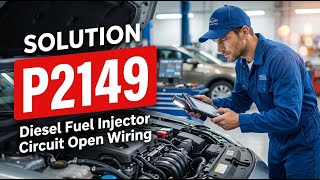
Used OEM Parts in Stock
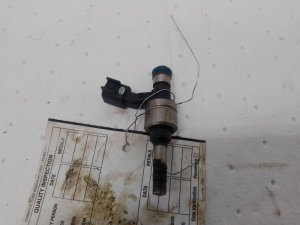
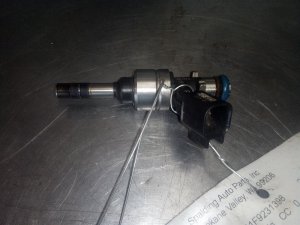
New Aftermarket Parts Available

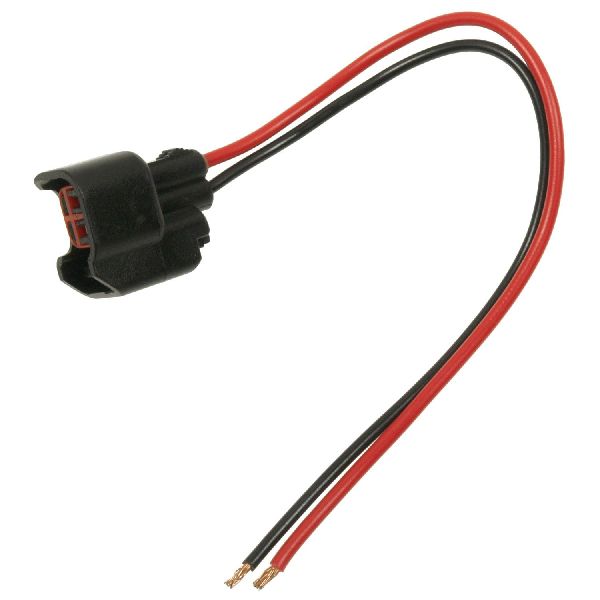

The information in this article is provided for general reference and educational purposes only. Vehicle specifications, procedures, and part compatibility can vary by production date, trim level, and region. Always consult your vehicle's factory service manual and verify part numbers before purchasing or performing repairs. Safety-critical components such as airbags, seat belts, and braking systems should be installed by a qualified professional.
- Cadillac SRX:
- 🎬 Helpful Videos
- 🛍️ Shop This Part
- What's Unique About the 2010-2014 Cadillac SRX
- Diagnostic Flowchart
- Symptoms You May Notice
- Most Likely Causes
- Rare But Worth Checking
- Diagnosis Steps
- Parts You'll Likely Need
- Related Codes That Often Appear With This One
- Technical Service Bulletins (TSBs) & Recalls
- Platform-Specific Known Issues
- Mechanic-Grade Diagnostic Values
- Scan Tool Commands That Help
- Wiring & Ground Locations
- Real Owner Repair Stories
- OEM Part Supersession History
- Model Year Variations Within This Range
- 🎟️ Get 5% Off