

P2138 on 2013-2018 GMC Yukon XL: Reduced Power Causes and Fixes
On a 2013-2018 GMC Yukon XL, code P2138 almost always points to a problem with the accelerator pedal assembly or its wiring. The most common fix is replacing the accelerator pedal assembly. However, GM has issued service bulletins noting that water intrusion into a body harness connector can also cause this code, so inspecting wiring is critical before replacing parts.
- P2138 on your Yukon XL means the accelerator pedal sensors are sending conflicting signals, causing a dangerous 'Reduced Engine Power' mode.
- Before buying any parts, thoroughly inspect the wiring. Check the connector at the pedal itself and, more importantly, the large IP-to-body harness connector in the driver's kick panel for moisture or corrosion, as this is a known GM issue.
- If wiring is confirmed to be good, the most likely fix is to replace the entire accelerator pedal assembly.
- Do not immediately assume the throttle body is the problem; it is a less frequent cause than the pedal or wiring for this specific code.
What's Unique About the 2013-2018 Gmc YUKON XL
The 2013-2018 Yukon XL spans two generations (GMT900 and K2XX), but this issue is common across both. GM has a known history with this code across many truck and SUV models, as documented in multiple Technical Service Bulletins. The primary culprits are not just failing pedal sensors, but also specific electrical connectors that are prone to poor terminal tension or water intrusion, which can mimic a sensor failure. This makes checking the wiring harness, especially the instrument panel-to-body connector (often called the X305 connector) near the driver's kick panel, a critical diagnostic step unique to these platforms. Water leaks from clogged sunroof drains, A-pillar seals, or windshield cowl sealing are common sources of this water intrusion.
Diagnostic Flowchart
Tap your situation to follow the diagnostic path that matches what you're seeing on this vehicle.
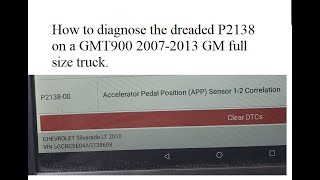
Generation note: This year range covers the end of the GMT900 platform (2013-2014) and the beginning of the K2XX platform (2015-2018). The P2138 code and its common causes, particularly wiring and connector issues as noted in TSBs, are relevant to both generations. For the GMT900 models, accelerator pedal assembly part number 25832864 is a common replacement. 🎬 Watch: Diagnostic steps and wiring diagrams for GMT900 models. For the K2XX models, it's important to check if you have standard or power-adjustable pedals (RPO code JF4) before ordering a replacement.
🎬 See how to diagnose P2138 on the K2XX platform.Symptoms You May Notice
- "Reduced Engine Power" message displayed on the dashboard.
- Check Engine Light (Malfunction Indicator Lamp) is on.
- Severely limited acceleration or poor throttle response.
- Vehicle may stall when coming to a stop.
- Unresponsive accelerator pedal.
- Harsh or erratic transmission shifting.
- Traction control light may illuminate simultaneously.
- Replacing the throttle body when the issue is the accelerator pedal or its wiring.
- Replacing the accelerator pedal when the root cause is a corroded or loose connector in the body harness.
- Immediately replacing the pedal without first applying dielectric grease to the connector terminals, which can sometimes resolve the issue on its own.
Most Likely Causes
- Faulty Accelerator Pedal Position (APP) Sensor Assembly 🔴 High Probability The APP sensor is a high-use electronic component that can wear out over time, causing its two internal sensors to send conflicting signals. It is the most frequently replaced part for this code.
How to confirm: Use a scan tool to monitor live data for APP Sensor 1 and APP Sensor 2. The voltage readings should be smooth and correlate as the pedal is pressed (e.g., one sensor may read double the voltage of the other at idle, and half the voltage at wide-open throttle). Any jumps, drops, or non-linear readings indicate a faulty sensor. A voltage divergence greater than 0.5V can trigger the fault.
Typical fix: Replace the entire accelerator pedal assembly, as the sensor is integrated into it. A relearn procedure is recommended after installation but often does not require special tools.
Est. part cost: $70-$150 - Wiring or Connector Issues (Poor Terminal Tension / Water Intrusion) 🔴 High Probability GM has issued multiple TSBs (e.g., 07-06-04-019F) for this exact issue. The instrument panel-to-body harness connector, often near the driver's kick panel, is susceptible to water intrusion from clogged sunroof drains, A-pillar seals, or windshield leaks, causing corrosion and voltage discrepancies. Poor terminal tension at the APP sensor connector is also a known cause.
How to confirm: Visually inspect the APP sensor connector for loose pins or corrosion. Locate and disconnect the IP-to-body harness connector and check for any signs of moisture, green/white corrosion, or backed-out terminals. Wiggle the harness while monitoring live data to see if the signal drops out. Some owners find previously repaired or spliced wires near the connectors that have failed.
Typical fix: Clean and dry the connector, apply dielectric grease, and ensure a secure connection. If terminals are corroded or damaged, the connector pigtail may need to be replaced. In severe cases, some technicians recommend running new wires directly from the pedal to the ECM to bypass the problematic body connector entirely.
Est. part cost: $20-$50 for a pigtail connector - Dirty or Faulty Throttle Body ⚪ Low Probability While less common than the pedal or its wiring, a throttle body with significant carbon buildup can cause the throttle plate to stick, creating a mismatch between what the pedal is requesting and what the throttle position sensors (TPS) are reporting. This is more likely to set a TPS-specific code but can contribute to a P2138.
How to confirm: Remove the intake tube and visually inspect the throttle body and plate for heavy carbon deposits. A sticky or slow-moving plate when actuated by hand (with the engine off) is a clear sign.
Typical fix: Clean the throttle body thoroughly with a dedicated throttle body cleaner and a soft brush. After cleaning, a throttle body relearn procedure may be necessary. If the internal electronics have failed, the entire throttle body assembly will need replacement.
Est. part cost: $150-$300
Rare But Worth Checking
- Faulty Engine Control Module (ECM): This is very rare. The ECM should only be considered after all other possibilities, including all wiring and sensors, have been exhaustively tested and ruled out. One owner on a forum traced the issue to high resistance within the ECM's low-reference circuits after confirming all external wiring was good.
Diagnosis Steps
- Read the trouble codes with an OBD-II scanner and note any other codes present. Clear the codes and see if P2138 returns immediately or after a short drive.
- Using the scanner's live data function, monitor the voltage of APP Sensor 1 and APP Sensor 2 while slowly pressing and releasing the accelerator pedal. The values should change smoothly and in correlation with each other. Watch for any spikes, drops, or flat spots in the voltage readings.
- Visually inspect the accelerator pedal sensor's electrical connector. Unplug it and check for loose pins, damage, or corrosion. Apply dielectric grease to the terminals and ensure it is seated securely.
- Locate the Instrument Panel (IP) to body harness connector, typically in the driver's side kick panel area. Disconnect it and inspect thoroughly for signs of water intrusion (discoloration, moisture) or corrosion (green or white powder).
- If water intrusion is suspected, use a water hose to test for leaks around the A-pillar, sunroof drains, and windshield cowl area to find the source.
- Inspect the wiring harness leading from the pedal to the ECM for any visible damage, chafing, or poor connections, especially where it passes through the firewall or near previous repairs.
- If wiring and connectors are confirmed to be good and the live data shows erratic sensor readings, replace the accelerator pedal assembly.
- If the pedal assembly is replaced and the problem persists, inspect the throttle body for cleanliness and proper operation.
- As a final step, if all other components and wiring are verified to be good, the ECM may need to be tested by a professional.
Parts You'll Likely Need
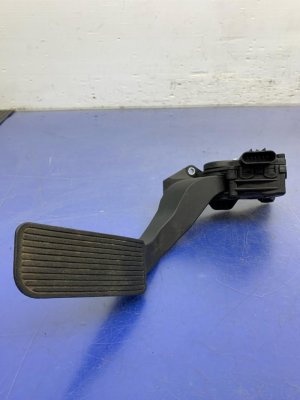
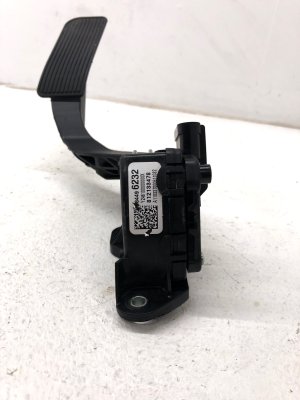
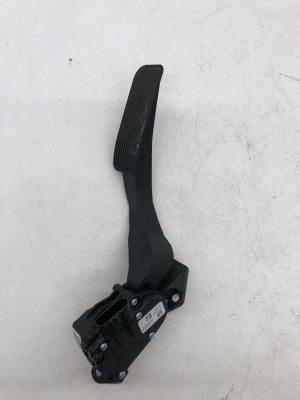
- Accelerator Pedal Assembly
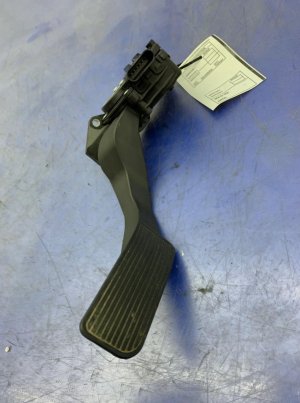
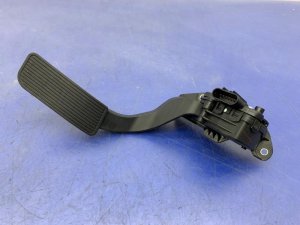
(OEM #25832864 (For GMT900 models, 2013-2014); 20972082 / 23362231 (For K2XX models 2015+ w/ standard pedals))— This is the most common component to fail, causing the sensor correlation error. The sensors are integrated into the pedal assembly and are not sold separately.
Trusted brands: ACDelco, GM Genuine, Dorman, NTK
OEM price range: $100-$180
Aftermarket price range: $70-$120 - IP to Body Harness Connector Pigtail — If water intrusion has caused corrosion, simply cleaning the connector may not be enough. Replacing the connector pigtail ensures a solid connection. Some owners bypass this connector entirely for a more robust fix.
Trusted brands: ACDelco
OEM price range: $30-$60
Aftermarket price range: $20-$40 - Dielectric Grease — Applying this grease to the APP sensor connector and the body harness connector is a crucial preventative step to protect against moisture and ensure good contact. It can sometimes fix the issue without replacing parts.
Related Codes That Often Appear With This One
- P2122 — This code indicates a low voltage input for APP Sensor 1, which is part of the same assembly and circuit.
- P2123 — This code indicates a high voltage input for APP Sensor 1, pointing to a fault in the same component.
- P2127 — This code indicates a low voltage input for APP Sensor 2, the other sensor in the pedal assembly.
- P2128 — This code indicates a high voltage input for APP Sensor 2, further isolating the problem to the pedal assembly or its circuits.
Technical Service Bulletins (TSBs) & Recalls
- PIP5344: Mentions P2138 in a list of codes that can cause a reduced power message.
- 070604019F: Cites an intermittent MIL and Reduced Engine Power with DTC P2138, pointing to a water intrusion issue in the IP-to-body harness connector.
- PIP3783D: Points to poor terminal tension in the Accelerator Pedal Position circuits as a cause for P2138 and related codes.
- 07-06-04-019E: A revision of a previous TSB, also linking P2138 and Reduced Engine Power to a harness connector problem.
Platform-Specific Known Issues
- Water Intrusion at IP-to-Body Connector: A known issue documented in TSB #070604019F involves water leaking from areas like the A-pillar or sunroof drains into the instrument panel-to-body harness connector, causing corrosion and triggering code P2138.
- Poor Terminal Tension: TSB #PIP3783D specifically calls out inspecting the accelerator pedal position circuits for poor terminal tension as a cause for P2138 and related codes. This can happen at the pedal connector or the body harness connector.
- Pedal Type Verification (2015+): For 2015 and newer K2XX models, it is critical to verify if the vehicle has standard pedals or power-adjustable pedals (RPO code JF4 on the glovebox sticker) before ordering a replacement part, as they are different.
Mechanic-Grade Diagnostic Values
- APP Sensor 1 Voltage — expected: 0.32V - 4.75V, sweeping smoothly from pedal released to pedal fully pressed.. Failure: Voltage outside this range, or any jumps, drops, or flat spots during pedal movement.
- APP Sensor 2 Voltage — expected: Approximately half of the APP Sensor 1 voltage at all times. Should sweep smoothly.. Failure: The voltage does not track APP Sensor 1 proportionally, or the divergence between the two sensors is greater than 0.5V.
- APP Sensor Circuit Resistance to ECM — expected: Less than 5.0 ohms on signal and reference wires.. Failure: Resistance greater than 5.0 ohms indicates high resistance in the circuit, which could be a corroded wire or poor connection.
- 5-Volt Reference at APP Connector — expected: Approximately 5.0V with Key On, Engine Off.. Failure: Significantly lower voltage (e.g., 1-2V) suggests a short on the 5V reference circuit, potentially caused by another sensor on the same circuit.
Scan Tool Commands That Help
- GDS2 / Tech2 / Professional Scan Tool: Idle Relearn Procedure / Throttle Relearn — After replacing the accelerator pedal assembly or cleaning/replacing the throttle body, a relearn procedure may be required to reset learned values. While not always mandatory as the system can self-learn, performing it can resolve issues faster.
Wiring & Ground Locations
- APP Sensor Connector (6-pin) — At the top of the accelerator pedal assembly.. This is the primary connection point for the two pedal sensors. Poor terminal tension, backed-out pins, or corrosion here is a direct cause of P2138. A wiggle test on this connector while watching live data is a key diagnostic step.
- APP Sensor Connector Pinout — On the harness connector for the accelerator pedal.. Knowing the pinout allows for direct testing of each circuit. For a typical GM 6-pin connector: Pin A (PU) is Low Reference, Pin B (L-BU) is APP Sensor 2 Signal, Pin C (TN) is 5-Volt Reference, Pin D (BN) is Low Reference, Pin E (D-BU) is APP Sensor 1 Signal, Pin F (WH/BK) is 5-Volt Reference.
- IP-to-Body Harness Connector — Located in or around the driver's side kick panel area.. As per GM TSB #07-06-04-019F, this connector is a known weak point for water intrusion from windshield leaks, A-pillar seals, or clogged sunroof drains, causing corrosion on the APP sensor circuits that pass through it.
- G103 / G104 — Typically located on the rear of the engine block (left and right sides).. These are primary engine grounds. While not directly for the APP sensor (which is grounded through the ECM), a poor engine or ECM ground can introduce electrical noise and voltage offsets that can affect sensor readings and trigger correlation codes.
Real Owner Repair Stories
- Tahoe Yukon Forum user (2011 Yukon XL 2500 with 6.0L engine, ~200,000 miles) — P2138 code with reduced engine power.
❌ Tried (didn't work) Initially found frayed wires to the pedal and high resistance on low-reference circuits., Replaced all six wires to the pedal with a new pigtail connector., Replaced the accelerator pedal assembly., Replaced the throttle body assembly (which included a new TPS)., Cleaned sunroof drains.
✅ What actually fixed it The user was still diagnosing but had narrowed it down to the known water intrusion issue affecting the IP-to-body harness connector or a potential short in the PCM caused by the water leak, as all components and direct wiring had been replaced. The detailed diagnostic process highlights the importance of checking the harness connector beyond just the pedal and throttle body. - YouTube video from user AnthonyJ350 (K2XX Platform GM Truck (Silverado/Sierra/Yukon)) — Intermittent P2138 code, reduced engine power message.
❌ Tried (didn't work) Dealer replaced the accelerator pedal assembly, but the problem returned.
✅ What actually fixed it The root cause was identified as water intrusion from a poorly sealed 'shark fin' roof antenna. The water would run down the A-pillar and collect in the driver's side footwell/kick panel area, causing corrosion and intermittent issues with the electronics and connectors in that area, triggering the P2138 code. The fix is to remove and properly reseal the antenna base and then repair any corroded wiring or connectors.
OEM Part Supersession History
15847349, 15101848→25832864— Standard part revision and consolidation.
Heads up: Part 25832864 is specified for GMT900 models (through 2014) and is often described as having a 'tin connector'.20972082→23362231— Standard part revision for the newer platform.
Heads up: Part 23362231 is specified for K2XX models (2015+) without power adjustable pedals. Using the wrong generation of pedal will not work.
Model Year Variations Within This Range
- 2015-2018 (K2XX Platform): These models are particularly susceptible to water leaks from the 'shark fin' roof antenna, which was not present on the earlier GMT900 platform. This leak path is a specific cause of P2138 on these later models by introducing moisture into the driver's side kick panel connectors.
Helpful Videos
We Have This Part in Stock


The information in this article is provided for general reference and educational purposes only. Vehicle specifications, procedures, and part compatibility can vary by production date, trim level, and region. Always consult your vehicle's factory service manual and verify part numbers before purchasing or performing repairs. Safety-critical components such as airbags, seat belts, and braking systems should be installed by a qualified professional.
- Gmc YUKON XL:
- 🎬 Helpful Videos
- 🛍️ Shop This Part
- What's Unique About the 2013-2018 Gmc YUKON XL
- Diagnostic Flowchart
- Symptoms You May Notice
- Most Likely Causes
- Rare But Worth Checking
- Diagnosis Steps
- Parts You'll Likely Need
- Related Codes That Often Appear With This One
- Technical Service Bulletins (TSBs) & Recalls
- Platform-Specific Known Issues
- Mechanic-Grade Diagnostic Values
- Scan Tool Commands That Help
- Wiring & Ground Locations
- Real Owner Repair Stories
- OEM Part Supersession History
- Model Year Variations Within This Range
- 🎟️ Get 5% Off