

P2138 on 2015-2017 GMC Sierra: Causes, Fixes for Reduced Engine Power
For a 2015-2017 GMC Sierra, code P2138 almost always means a problem with the accelerator pedal assembly or its wiring. The truck will enter 'Reduced Engine Power' mode. Before replacing the pedal assembly (approx. $60-$180), inspect the wiring and connectors for damage or corrosion, as this is a very common failure point noted in GM service bulletins. Specifically, check the IP-to-body harness connector in the driver's kick panel for water intrusion, a notorious issue on this platform.
- P2138 on your Sierra will cause 'Reduced Engine Power' mode for safety.
- DO NOT immediately replace the accelerator pedal. The problem is very often a bad electrical connection.
- The most important first step is to inspect the large IP-to-body harness connector in the driver's kick panel for corrosion or moisture, as per GM TSBs.
- If connectors and wiring are clean and secure, the next most likely cause is a failed accelerator pedal assembly, which is a straightforward DIY replacement.
- Always use dielectric grease on re-seated electrical connectors to prevent future issues.
What's Unique About the 2015-2017 Gmc SIERRA
On this generation of GM trucks (K2XX platform), P2138 is notoriously linked to wiring and connector issues, not just a failed pedal sensor. General Motors has issued multiple Technical Service Bulletins (TSBs) acknowledging that intermittent power loss with this code is often caused by a poor connection or water intrusion into a specific instrument panel-to-body harness connector (often called the X225 connector) located in the driver's side kick panel area. Water can leak from A-pillar seals, windshield seals, or clogged sunroof drains, dripping directly onto this connector and causing corrosion. This makes inspecting the wiring a critical first step before replacing any parts.
Diagnostic Flowchart
Tap your situation to follow the diagnostic path that matches what you're seeing on this vehicle.
Symptoms You May Notice
- "Reduced Engine Power" message on the instrument cluster.
- Check Engine Light (Malfunction Indicator Lamp) is on.
- Severely limited acceleration or poor throttle response.
- Vehicle may not accelerate at all or may stall.
- Sudden loss of power while driving.
- Unresponsive engine when pressing the gas pedal.
- Replacing the Throttle Body. P2138 specifically relates to a signal correlation problem at the accelerator pedal, not the throttle body. A faulty throttle body typically sets different codes, such as P2135. Owners have reported replacing the throttle body without fixing the P2138 code.
Most Likely Causes
- Poor connection or corrosion at the IP-to-Body harness connector 🔴 High Probability GM Technical Service Bulletins #070604019F and #07-06-04-019E directly cite this as a common cause due to potential water intrusion into the driver's side kick panel area. Leaks from the A-pillar, windshield, or sunroof drains are known to drip onto this connector, causing corrosion on the APP sensor circuit pins.
How to confirm: Locate the large electrical connector (often called X225) in the driver's side kick panel. Disconnect the battery, then disconnect the connector and inspect both halves for any signs of green or white corrosion, moisture, rust, or backed-out pins.
Typical fix: Clean the connector terminals carefully with an electrical contact cleaner. Apply dielectric grease to the connector before reassembly to prevent future moisture intrusion. In severe cases, the connector and affected pins may need to be replaced with a new pigtail. The source of the water leak must also be found and repaired.
Est. part cost: $5-$25 - Defective Accelerator Pedal Position (APP) Sensor Assembly 🔴 High Probability The sensor is a high-use electronic component that can wear out over time, causing its internal signals to drift or fail. It is the most common part to fail after wiring issues are ruled out.
How to confirm: Use a scan tool to monitor the live data for APP Sensor 1 and APP Sensor 2. While slowly pressing and releasing the pedal, watch for smooth, corresponding changes in voltage. One sensor's voltage should be roughly double the other. For example, at idle, Sensor 1 might read ~0.9V and Sensor 2 ~0.45V. Any jumps, dropouts, or flat-lining indicates a bad sensor.
Typical fix: Replace the entire accelerator pedal assembly. 🎬 See this step-by-step guide to replacing the pedal assembly. It is a single unit that includes the pedal and the integrated sensors. Ensure you buy the correct part for vehicles with or without power-adjustable pedals (RPO code JF4).
Est. part cost: $60-$180 - Damaged wiring or poor connection at the APP sensor 🟡 Medium Probability The wiring harness to the pedal can be stressed, damaged, or have poor pin tension at the connector over time. TSB #PIP3783D specifically mentions checking for poor terminal tension. In some cases, wires can fray or break internally while the insulation appears intact.
How to confirm: Visually inspect the wiring going to the accelerator pedal. With the engine running and scan tool connected, perform a 'wiggle test' by gently moving the connector and harness to see if the sensor voltage readings fluctuate or drop out.
Typical fix: Repair the damaged wiring. Clean the connector and apply dielectric grease. If the connector itself is damaged, it may need to be replaced with a pigtail.
Est. part cost: $15-$40
Rare But Worth Checking
- Faulty Engine Control Module (ECM): This is very rare. The ECM should only be considered after all other possibilities, including all wiring, connectors, and sensors, have been thoroughly tested and ruled out. An ECM failure can sometimes be diagnosed by checking for high resistance internally on the low reference circuits.
Diagnosis Steps
- Read the trouble codes with an OBD-II scanner and confirm that P2138 is present.
- Check for any other related APP sensor codes (P2122, P2123, P2127, P2128) or 5V reference codes.
- CRITICAL FIRST STEP: Following GM TSB #070604019F, locate and inspect the IP-to-body harness connector (X225) in the driver's side kick panel. Disconnect it and check for any signs of water intrusion, rust, or green/white corrosion. Clean and apply dielectric grease as needed. If corrosion is found, identify and repair the source of the water leak (A-pillar, sunroof drain, windshield seal).
- Inspect the electrical connector directly at the accelerator pedal assembly. Ensure it is fully seated and check for any damaged pins or wires. Perform a 'wiggle test' on the harness while monitoring live data.
- Use a scan tool with live data capability. Monitor the voltage readings for 'APP Sensor 1' and 'APP Sensor 2'.
- Slowly press the accelerator pedal to the floor and release it. The voltage readings should change smoothly without any dropouts or spikes. Typically, one sensor's voltage is about half of the other's (e.g., Sensor 1 sweeps from ~0.9V to ~4.5V, while Sensor 2 sweeps from ~0.45V to ~2.3V).
- If the readings are erratic or do not change, and the wiring/connectors are confirmed to be good, the accelerator pedal assembly is likely faulty.
- Before replacing the pedal, verify if your truck has standard or power-adjustable pedals (RPO code JF4 in the glove box) to ensure you purchase the correct part.
- If a new pedal assembly does not fix the issue, perform a detailed circuit test (checking for 5V reference, ground, and signal continuity) between the pedal connector and the ECM. 🎬 Watch: Why a new pedal might not fix your P2138.
Parts You'll Likely Need
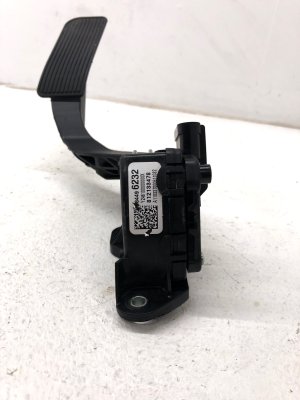
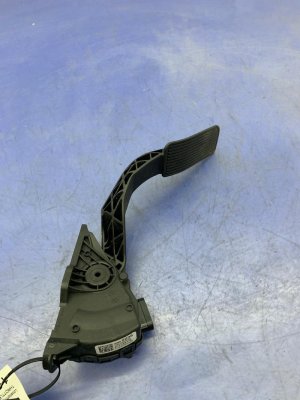
- Accelerator Pedal Position (APP) Sensor Assembly
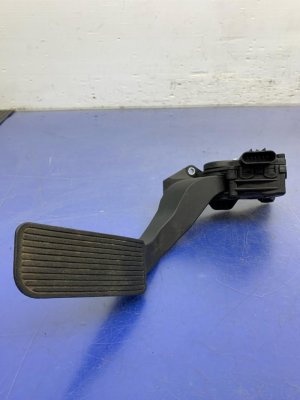
(OEM #23434928 (Supersedes 20972082, for non-adjustable pedals, check RPO code JF4))— This is the most common part to fail after wiring issues have been ruled out. The assembly contains the two sensors that trigger the P2138 code when their signals do not correlate. It is critical to verify if you have standard or power-adjustable pedals (RPO code JF4) before ordering.
Trusted brands: ACDelco, GM Genuine Parts, Dorman, NTK
OEM price range: $120-$180
Aftermarket price range: $60-$100 - Dielectric Grease / Electrical Contact Cleaner — Essential for cleaning and protecting the IP-to-body harness connector and the pedal connector, which are known failure points due to corrosion and moisture.
Trusted brands: Permatex, CRC
OEM price range: $10-$20
Aftermarket price range: $5-$15
Related Codes That Often Appear With This One
- P2122 — Relates to APP Sensor 1 Circuit Low Voltage, indicating a problem in the same system.
- P2123 — Relates to APP Sensor 1 Circuit High Voltage, indicating a problem in the same system.
- P2127 — Relates to APP Sensor 2 Circuit Low Voltage, indicating a problem in the same system.
- P2128 — Relates to APP Sensor 2 Circuit High Voltage, indicating a problem in the same system.
Technical Service Bulletins (TSBs) & Recalls
- 070604019F: Intermittent Malfunction Indicator Lamp (MIL) Illuminated, DTC P2138 with Reduced Engine Power (Repair Instrument Panel (IP) to Body Harness Connector).
- 07-06-04-019E: An earlier version of the above TSB, also pointing to the harness connector as the cause for P2138.
- PIP3783D: Recommends inspecting Accelerator Pedal Position circuits for poor terminal tension when P2138 and related codes are present.
Platform-Specific Known Issues
- TSB #070604019F: This bulletin from GM directly addresses P2138 with 'Reduced Engine Power'. It points to the IP-to-body harness connector as the likely cause and advises inspecting it for water intrusion before replacing parts.
- TSB #PIP3783D: This bulletin advises technicians to inspect the APP sensor circuits for poor terminal tension when P2138 is found.
- Water Intrusion Path: A known issue on this platform involves water leaking from A-pillar seals, poorly sealed windshields, or clogged sunroof drains. This water can travel down the pillar and drip directly onto the IP-to-body harness connector in the driver's kick panel, causing corrosion and triggering this code.
- Incorrect Replacement Pedal: For 2015-2016 models, there was a mid-year change in the pedal sensor wi
Mechanic-Grade Diagnostic Values
- APP Sensor 1 Voltage (2015 and older models) — expected: Approx. 0.47V at idle, sweeping up towards 2.0V at full pedal press.. Failure: Voltage is erratic, does not sweep smoothly, or is swapped with Sensor 2 readings (e.g., starts at ~0.9V).
- APP Sensor 2 Voltage (2015 and older models) — expected: Approx. 0.94V at idle, sweeping up towards 4.0V at full pedal press.. Failure: Voltage is erratic, does not sweep smoothly, or is swapped with Sensor 1 readings (e.g., starts at ~0.47V).
- APP Sensor 1 Voltage (2016 and newer models) — expected: Approx. 0.94V at idle, sweeping up towards 4.0V at full pedal press.. Failure: Voltage is erratic, does not sweep smoothly, or matches the older model's specification.
- APP Sensor 2 Voltage (2016 and newer models) — expected: Approx. 0.47V at idle, sweeping up towards 2.0V at full pedal press.. Failure: Voltage is erratic, does not sweep smoothly, or matches the older model's specification.
- 5-Volt Reference at APP Connector — expected: Approx. 5.0V with Key On, Engine Off.. Failure: Voltage is significantly lower than 5.0V, indicating a short or an issue on the 5V reference circuit.
- APP Sensor Circuit Resistance — expected: Less than 5.0 ohms on signal and low reference wires between the APP connector and the ECM.. Failure: Resistance is greater than 5.0 ohms, indicating high resistance from corrosion or a damaged wire.
- Accelerator Pedal Mounting Bolt Torque — expected: 80 inch-pounds. Failure: N/A
Scan Tool Commands That Help
- GDS2/Tech2: Live Data - Accelerator Pedal Position Sensor 1 & 2 Voltage/Percentage — This is the primary function used to diagnose P2138. It allows the technician to view the voltage signals from both sensors in real-time while operating the pedal to check for smooth, correlated movement and identify any glitches or dropouts.
- GDS2/Tech2: Diagnostic Repair Verification — After a repair (such as cleaning a connector or replacing the pedal), this function should be performed to verify the system is operating correctly and to clear the code from history, as mentioned in GM service bulletins.
Wiring & Ground Locations
- X225 — In the driver's side kick panel area, connecting the instrument panel (IP) harness to the main body harness.. This is the specific connector identified in GM TSB #07-06-04-019F as being highly susceptible to water intrusion from A-pillar or sunroof drain leaks, causing corrosion on the APP sensor circuit pins that pass through it.
- G218 — Under the driver's side dash, near the A-pillar, behind the dash insulator mat.. This is a major body ground for the BCM and other dash components. GM bulletin PIT5405C identifies a poor connection at G218 (due to a loose nut or trapped insulation mat) as a cause for numerous electrical issues, including stalls and various communication DTCs. A faulty ground here can introduce electrical noise or voltage offsets that could potentially affect the sensitive APP sensor readings.
- APP Connector (X304) — The 6-pin connector that plugs directly into the accelerator pedal assembly.. This is the primary connection point for the sensor. The six pins are for APP Sensor 1 (5V Reference, Low Reference, Signal) and APP Sensor 2 (5V Reference, Low Reference, Signal). Wiggle tests and pin tension checks should be performed here.
Real Owner Repair Stories
- YouTube channel '2015-2020 Chevy GMC 1500 Sierra Silverado P2138' (2015 Chevrolet Silverado 2500) — P2138 code, implausible signal between APP sensor 1 and 2.
❌ Tried (didn't work) A new accelerator pedal assembly was installed based on a parts store lookup, but the code persisted.
✅ What actually fixed it The technician discovered the replacement pedal was for a 2016+ model, which has the APP sensor 1 and 2 signal wires internally reversed compared to the 2015 model. The scan tool showed the idle voltages were swapped (0.94V on sensor 1 and 0.47V on sensor 2, instead of the other way around). The fix was to de-pin the 6-pin pedal connector and swap the two signal wires to match the new pedal's configuration. The correct fix would be to install the correct model year pedal. - ScannerDanner Forum user (2015 GMC Canyon 3.6L with 60k miles) — Intermittent P2138 code and limp mode.
❌ Tried (didn't work) Replacing the accelerator pedal assembly (worked for 4 months, then the code returned)., A previous repair attempt by a dealer included replacing the APP sensor connector and running a bypass wire for the sensor 1 signal.
✅ What actually fixed it The user noted that freeze frame data showed APP Sensor 2 (Pos E) glitched to a value below its normal resting voltage. Although the user was unable to replicate the fault during testing, the evidence pointed to an intermittent wiring or connection issue affecting the APP Sensor 2 circuit, as the pedal and part of the Sensor 1 wiring had already been addressed. The final resolution was not posted, but the diagnosis isolated the likely fault to the Sensor 2 circuit wiring.
OEM Part Supersession History
20972082 (Example for non-adjustable pedals)→23434928— Part revision or manufacturer change.
Heads up: A significant change occurred around the 2016 model year where the internal wiring for APP Sensor 1 and APP Sensor 2 signals was reversed. Installing a 2016+ pedal (like 23434928) on a 2015 vehicle will cause an immediate P2138 code because the ECM expects the opposite voltage correlation. The pedals are physically identical.
Model Year Variations Within This Range
- 2015 vs. 2016-2017: The internal wiring of the Accelerator Pedal Position (APP) sensor assembly was reversed. On 2015 models, APP Sensor 1 has a lower voltage at idle (~0.47V) and APP Sensor 2 is higher (~0.94V). For 2016 and newer models, this is flipped: APP Sensor 1 is higher (~0.94V) and APP Sensor 2 is lower (~0.47V). Using the wrong year pedal will cause a P2138 code.
Helpful Videos

We Have This Part in Stock



The information in this article is provided for general reference and educational purposes only. Vehicle specifications, procedures, and part compatibility can vary by production date, trim level, and region. Always consult your vehicle's factory service manual and verify part numbers before purchasing or performing repairs. Safety-critical components such as airbags, seat belts, and braking systems should be installed by a qualified professional.
- Gmc SIERRA:
- 🎬 Helpful Videos
- 🛍️ Shop This Part
- What's Unique About the 2015-2017 Gmc SIERRA
- Diagnostic Flowchart
- Symptoms You May Notice
- Most Likely Causes
- Rare But Worth Checking
- Diagnosis Steps
- Parts You'll Likely Need
- Related Codes That Often Appear With This One
- Technical Service Bulletins (TSBs) & Recalls
- Platform-Specific Known Issues
- Mechanic-Grade Diagnostic Values
- Scan Tool Commands That Help
- Wiring & Ground Locations
- Real Owner Repair Stories
- OEM Part Supersession History
- Model Year Variations Within This Range
- 🎟️ Get 5% Off