

P2138 on 2010-2014 GMC Sierra: 'Reduced Engine Power' Causes and Fixes
On a 2010-2014 Sierra, code P2138 almost always points to a failing accelerator pedal position (APP) sensor or a problem with its wiring. This will cause the truck to enter 'Reduced Engine Power' mode. Replacing the pedal assembly is the most common fix, but inspecting the IP-to-body harness connector in the driver's kick panel for water damage is a critical first step as per GM TSBs.
- P2138 on your Sierra will trigger the 'Reduced Engine Power' mode, making the truck unsafe for normal driving.
- The most likely cause is either a faulty accelerator pedal assembly or corrosion in the IP-to-body wiring connector in the driver's kick panel.
- Before buying any parts, ALWAYS inspect the kick panel connector for signs of water damage (green/white crust), as this is a very common problem outlined in GM service bulletins.
- If wiring is clean and dry, replacing the accelerator pedal assembly is a straightforward DIY fix that usually resolves the code.
What's Unique About the 2010-2014 Gmc SIERRA
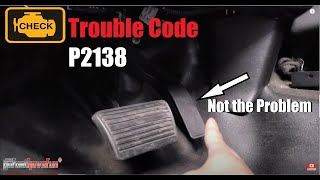
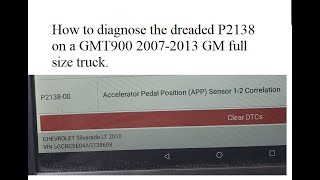
This generation of GMC Sierra and its platform mates are notorious for this issue, as documented in multiple Technical Service Bulletins (TSBs). The problem isn't always the pedal sensor itself. GM has specifically pointed out that poor terminal tension and, most critically, water intrusion into the instrument panel-to-body harness connector can cause this code. This connector, often labeled X205, is located in the driver's side kick panel and is vulnerable to leaks from the A-pillar, windshield, or sunroof drains, leading to corrosion. This makes checking the wiring and connectors 🎬 See a professional diagnostic walkthrough for the GMT900 platform just as, if not more, important than inspecting the pedal assembly.
Diagnostic Flowchart
Tap your situation to follow the diagnostic path that matches what you're seeing on this vehicle.
Generation note: The 2010-2014 year range covers the end of the 3rd generation Sierra (GMT900, 2007-2013) and the first year of the 4th generation (K2XX, 2014-2018). The P2138 code and its common causes (pedal sensor, wiring issues) are relevant to both generations. The provided TSBs from NHTSA apply through the 2014 model year and beyond, covering this transition and confirming the issue persists across platforms.
Symptoms You May Notice
- "Reduced Engine Power" message displayed on the instrument cluster.
- Check Engine Light (Malfunction Indicator Lamp) is on.
- Poor, delayed, or no throttle response.
- Vehicle will not accelerate properly and may be stuck at a very low speed.
- Sudden loss of power while driving.
- Traction control or StabiliTrak light may also illuminate.
- Replacing the throttle body. The P2138 code on this truck specifically relates to a disagreement between the two sensors in the *pedal assembly*, not the throttle body. While throttle body issues can cause other drivability problems (often code P2135), they are not the primary root cause of a P2138 correlation fault.
- Replacing the APP sensor without checking wiring. Many owners replace the pedal assembly only to have the code return because the actual fault was corrosion in the IP-to-body harness connector, as detailed in the GM TSBs.
Most Likely Causes
- Faulty Accelerator Pedal Position (APP) Sensor Assembly 🔴 High Probability The internal components of the sensor can wear out over time, leading to erratic voltage signals. It is the most frequently replaced part for this code, often after the wiring has been ruled out.
How to confirm: Use a scan tool to monitor live data for APP Sensor 1 and APP Sensor 2. Press the pedal slowly and watch for smooth, corresponding changes. If one signal drops out, spikes, or is erratic, the sensor is likely bad. A scan tool with a graphing function is ideal for spotting intermittent glitches.
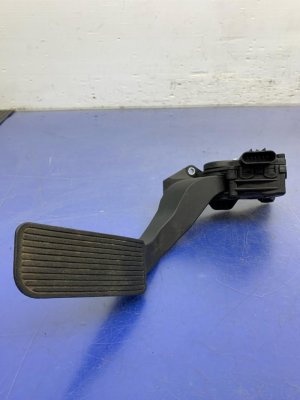
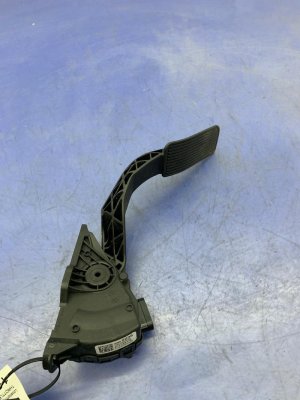
Typical fix: Replace the entire accelerator pedal assembly. It is a single unit that includes the pedal and the integrated sensors, typically held on by two 10mm bolts.
Est. part cost: $50-$150 - Wiring or Connector Issues (Water Intrusion/Corrosion) 🔴 High Probability GM has issued TSBs (#07-06-04-019E, #PIP3783D) specifically citing issues with water intrusion into the instrument panel-to-body harness connector (X205). This large connector, located in the driver's kick panel, is susceptible to water from leaky A-pillars, windshield seals, or sunroof drains. The resulting corrosion on the pins carrying the APP sensor signals is a primary cause of P2138.
How to confirm: Visually inspect the harness connector at the pedal and the larger IP-to-body harness connector (X205, in the driver's kick panel) for green or white corrosion, moisture, or backed-out pins. Perform a 'wiggle test' on the harness while monitoring live data to see if the signal cuts out.
Typical fix: Disconnect the battery, then disconnect the affected connector. Clean corroded terminals meticulously with a contact cleaner and a small brush. Apply dielectric grease to the terminals before reconnecting to prevent future moisture damage. In severe cases, the connector pigtail or a section of wiring may need to be replaced.
Est. part cost: $5-$50
Rare But Worth Checking
- Faulty Engine Control Module (ECM): This is very rare. The ECM should only be considered after all other possibilities, including wiring and the sensor itself, have been exhaustively ruled out. One owner on a Tahoe Yukon Forum reported a faulty ECM was the ultimate culprit after replacing the pedal, throttle body, and repairing wiring.
- Aftermarket Accessories: Improperly installed aftermarket electronics (like remote starters or alarms) tapped into the wrong circuits can interfere with the 5-volt reference signal used by the APP sensor, causing this code. TSB #07-06-04-019E specifically calls this out as a preliminary check.
- Low System Voltage: A failing battery or alternator can cause system voltage to drop. If voltage drops below a certain threshold (e.g., 10 volts), the ECM can lose its throttle body calibration, potentially triggering various throttle-related codes, including P2138.
Diagnosis Steps
- Read the trouble codes with an OBD-II scanner. Confirm P2138 is present and note any other codes.
- Access the live data stream on the scanner. Monitor the voltage readings for 'APP Sensor 1' and 'APP Sensor 2'. A graphing function is highly recommended.
- With the engine off but ignition on, slowly press and release the accelerator pedal. Watch the two sensor readings. They should change smoothly and in correlation with each other (one may rise while the other falls, but they should be consistent). Any glitches, dropouts, or erratic readings point towards a problem.
- Perform a 'wiggle test': While watching the live data, gently wiggle the wiring harness at the pedal connector. If the signal drops out, you have a wiring issue at the pigtail.
- Crucial Step: Locate the IP-to-body harness connector (X205) in the driver's side kick panel area. Disconnect the battery, then unplug this connector. Meticulously inspect both sides for green or white corrosion, which indicates water intrusion.
- If corrosion is found, clean the terminals thoroughly with electrical contact cleaner and a small brush. Apply dielectric grease to the connector pins before reassembly to seal out moisture.
- Investigate the source of the water leak. Common culprits are clogged sunroof drains, a poorly sealed windshield, or bad A-pillar seals. This step is essential to prevent the problem from recurring.
- If wiring and connectors are confirmed good and the sensor data is still faulty, replace the accelerator pedal assembly. It is typically held in with two 10mm bolts.
- After repair, clear the codes and perform a test drive to ensure the 'Reduced Engine Power' message does not return.
Parts You'll Likely Need
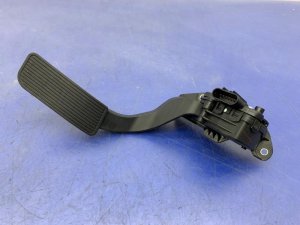
- Accelerator Pedal Position Sensor Assembly
(OEM #25832864)— This is the most common failure point for code P2138 when wiring is not the issue. The assembly contains the integrated sensors that wear out and cause the voltage correlation error.
Trusted brands: ACDelco (GM Genuine), Standard Motor Products, Dorman (699-105)
OEM price range: $80-$150
Aftermarket price range: $50-$100 - Dielectric Grease — Essential for preventing moisture and corrosion in the pedal connector and the IP-to-body harness connector after cleaning or inspection. Applying it can sometimes be the entire fix.
Trusted brands: Permatex, ACDelco
OEM price range: $5-$15
Aftermarket price range: $5-$10
Related Codes That Often Appear With This One
- P2122 — Relates to APP Sensor 1 Circuit Low Voltage.
- P2123 — Relates to APP Sensor 1 Circuit High Voltage.
- P2127 — Relates to APP Sensor 2 Circuit Low Voltage.
- P2128 — Relates to APP Sensor 2 Circuit High Voltage.
- P2135 — Relates to Throttle Position Sensor (TPS) correlation. While P2138 is pedal-focused, a severe electrical issue could potentially trigger codes for both the pedal and throttle body.
Technical Service Bulletins (TSBs) & Recalls
- 07-06-04-019E: Intermittent Malfunction Indicator Lamp (MIL) Illuminated, DTC P2138 with Reduced Engine Power (Repair Instrument Panel (IP) to Body Harness Connector)
- PIP3783D: SES Light And/Or Reduced Engine Power With APP DTCs
Platform-Specific Known Issues
- Bulletin #07-06-04-019E: A known issue where water intrusion into the instrument panel-to-body harness connector (in the driver's kick panel) can cause intermittent MIL illumination, Reduced Engine Power, and set DTC P2138. The TSB explicitly warns *not* to replace the pedal assembly without first inspecting this connector and checking for water leaks.
- Bulletin #PIP3783D: This bulletin advises technicians to inspect the Accelerator Pedal Position circuits for poor terminal tension when codes like P2138 are present, indicating a known problem with the electrical connections themselves, often caused by corrosion or physical damage.
Mechanic-Grade Diagnostic Values
- APP Sensor 1 and 2 Live Data Voltage (Scan Tool) — expected: One sensor's voltage is typically about half of the other's. For example, APP1 might read ~0.8V and APP2 ~0.4V at idle, sweeping up to ~4.5V and ~2.3V respectively at full pedal depression. The key is a smooth, proportional change without glitches.. Failure: A voltage difference greater than a predetermined value (e.g., 0.5V) for more than 2 seconds will trigger the code. On a scan tool, a reading that is stuck, erratic, or drops to 0V during a pedal sweep indicates a fault.
- 5-Volt Reference at APP Sensor Connector — expected: Approximately 5 volts DC with the key on, engine off.. Failure: Significantly lower or no voltage indicates a wiring issue or a problem with the ECM's 5V reference circuit.
- Continuity/Resistance of APP Sensor Wires — expected: Less than 5-10 ohms of resistance from the sensor connector to the ECM connector.. Failure: High resistance (>10-20 ohms) or an open circuit (OL) indicates a broken wire or corroded connection that needs repair.
Scan Tool Commands That Help
- GDS2/Tech2 (or equivalent professional scanner): Idle Learn / Throttle Relearn — After replacing the accelerator pedal, throttle body, or disconnecting the battery, the ECM may need to relearn the idle and throttle position values. While GM trucks often have a manual relearn procedure, using a scan tool to initiate the function is the most reliable method to ensure the values are learned correctly and prevent idle or performance issues.
- Scan Tool with Live Data Graphing: Graphing APP Sensor 1 vs. APP Sensor 2 — This is the primary diagnostic function for P2138. Graphing the two sensor inputs simultaneously while operating the pedal makes it easy to spot intermittent dropouts, glitches, or non-correlation that would be difficult to see with just numerical data.
Wiring & Ground Locations
- X205 — In the driver's side kick panel area, near the floor. It is the large Instrument Panel (IP) to body harness connector.. This is the specific connector identified in GM TSB #07-06-04-019E as the most common cause of P2138 due to water intrusion and corrosion. The APP sensor signal, 5V reference, and ground circuits all pass through this connector, making it a critical point of failure.
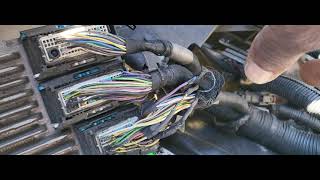
- ECM Connector J1 (E38 ECM) — The E38 ECM is located in the engine bay. J1 is the top connector on the module.. The APP sensor circuits terminate here. Specifically, on some GMT900 models, APP Sensor 2 signal is at pin 32 and APP Sensor 1 signal is at pin 29. A 'wiggle test' at this connector can help identify a poor pin connection at the ECM.
- APP Sensor Connector (at pedal) — Directly plugs into the top of the accelerator pedal assembly.. This is the origin of the signals. Poor terminal tension, fretting corrosion, or damage to the pigtail wiring can cause the fault. A wiggle test here is a primary diagnostic step.
Real Owner Repair Stories
- YouTube user Dale Chalkey (2014 Chevy Silverado) — Truck running poorly, limp mode, error codes for accelerator pedal and throttle body.
❌ Tried (didn't work) Replacing the accelerator pedal with a new aftermarket part. The new part was faulty out of the box and showed mismatched sensor readings on the scan tool (Sensor 2 at 31% and Sensor 1 at 0% at idle).
✅ What actually fixed it The original problem was likely the throttle body, which had been replaced. The diagnostic confusion came from the new aftermarket pedal being defective. Reinstalling the original (old) pedal assembly resolved the P2138 correlation code, and the truck ran perfectly, indicating the original pedal was not the issue. - YouTube user 'p2138 reduced power... FIXED!' (GM vehicle (Chevy/Cadillac)) — Intermittent Reduced Power / Limp Mode, code P2138. Would happen when hitting a bump.
❌ Tried (didn't work) Initial scan tool live data looked normal when the vehicle was stationary.
✅ What actually fixed it A wiggle test on the harness revealed an internal break in a wire leading to the ECM connector (X1). Even though the insulation was intact, the copper strands inside were broken. The fix was to solder the broken wire near the ECM pin, which resolved the intermittent short.
When the Usual Fixes Don't Work
- In one documented case on a 2014 Silverado, the owner replaced the accelerator pedal with a new aftermarket unit, but the problem persisted with mismatched sensor readings on a scan tool. Re-installing the original pedal and focusing on the actual culprit (which had been a faulty throttle body) resolved the issue. This highlights that a brand-new part can be defective and that verifying its operation with live data is crucial before assuming the original diagnosis was wrong.
Model Year Variations Within This Range
- 2010-2013 (GMT900 Platform): These models are the primary focus of TSB #07-06-04-019E regarding water leaks into the X205 connector in the kick panel. The wiring diagrams and connector locations are well-documented for this generation.
- 2014 (K2XX Platform): The 2014 model year marked the switch to the new K2XX platform. While it can still suffer from P2138, some wiring, module locations, and part numbers may differ from the previous GMT900 generation. The issue of water intrusion causing this code is also known to persist on these newer trucks.
Helpful Videos

We Have This Part in Stock



The information in this article is provided for general reference and educational purposes only. Vehicle specifications, procedures, and part compatibility can vary by production date, trim level, and region. Always consult your vehicle's factory service manual and verify part numbers before purchasing or performing repairs. Safety-critical components such as airbags, seat belts, and braking systems should be installed by a qualified professional.
- Gmc SIERRA:
- 🎬 Helpful Videos
- 🛍️ Shop This Part
- What's Unique About the 2010-2014 Gmc SIERRA
- Diagnostic Flowchart
- Symptoms You May Notice
- Most Likely Causes
- Rare But Worth Checking
- Diagnosis Steps
- Parts You'll Likely Need
- Related Codes That Often Appear With This One
- Technical Service Bulletins (TSBs) & Recalls
- Platform-Specific Known Issues
- Mechanic-Grade Diagnostic Values
- Scan Tool Commands That Help
- Wiring & Ground Locations
- Real Owner Repair Stories
- When the Usual Fixes Don't Work
- Model Year Variations Within This Range
- 🎟️ Get 5% Off