

P2138 on 2007-2014 GMC Acadia: Reduced Power Causes and Fixes
On a 2007-2014 GMC Acadia, code P2138 is most often caused by a faulty accelerator pedal position (APP) sensor or a wiring issue, specifically water intrusion or corrosion at the IP-to-body harness connector in the driver's kick panel, as detailed in GM TSB #07-06-04-019F. This triggers 'Reduced Engine Power' mode. Replacing the pedal assembly is a common DIY fix, but inspecting the specified connectors for water damage first is critical to avoid misdiagnosis.
- P2138 on a GMC Acadia will immediately put the vehicle into 'Reduced Engine Power' mode, making it a serious issue that requires prompt attention.
- The most likely cause is a faulty Accelerator Pedal Position (APP) sensor, which is a straightforward DIY replacement.
- Before replacing any parts, always inspect the electrical connector at the throttle body for corrosion, as this is a well-documented problem identified in GM service bulletins.
- A scan tool capable of reading live data is the most effective tool for diagnosing whether the APP sensor is truly at fault.
- Applying dielectric grease to cleaned electrical connectors (at the throttle body and APP sensor) is a good preventative measure.
What's Unique About the 2007-2014 Gmc ACADIA

The first-generation GMC Acadia and its GM Lambda platform siblings (Buick Enclave, Saturn Outlook, Chevrolet Traverse) are particularly known for this issue. GM issued multiple Technical Service Bulletins (TSBs), most notably #07-06-04-019F, which supersedes previous versions. This TSB highlights that the problem is frequently not the sensor itself, but water intrusion causing corrosion on the electrical terminals inside the Instrument Panel (IP) to body harness connector, often found in the driver's side kick panel. This specific wiring issue can mimic a failed pedal or throttle body, making proper diagnosis crucial to avoid replacing unnecessary parts. The TSB explicitly states, "Do Not replace the accelerator pedal assembly" without first checking for this water leak issue.
Diagnostic Flowchart

Tap your situation to follow the diagnostic path that matches what you're seeing on this vehicle.
Generation note: The 2007-2014 year range covers the first generation of the GMC Acadia, which received a significant facelift for the 2013 model year. While the underlying powertrain and electrical systems are very similar, there may be minor differences in connector locations or part numbers between the pre-facelift (2007-2012) and post-facelift (2013-2014) models. The causes of P2138, especially the water intrusion noted in TSBs, are common to both.
Symptoms You May Notice
- "Reduced Engine Power" message displayed on the dashboard.
- "Service Stabilitrak" and "Traction Control Off" messages appearing.
- Check Engine Light (Malfunction Indicator Lamp) is on.
- Vehicle enters "limp mode" with very poor or no acceleration.
- Engine may stall or have a strange, unresponsive pedal feel.
- Engine may rev on its own with no throttle input.
- Replacing the throttle body when the actual problem is the accelerator pedal sensor.
- Replacing the accelerator pedal sensor when the problem is a corroded IP-to-body harness connector in the driver's kick panel, as warned against in TSB #07-06-04-019F.
- Replacing either sensor without first inspecting all related wiring harnesses and connectors for damage or corrosion, which is a well-documented issue on this platform.
Most Likely Causes

- Water Intrusion into IP-to-Body Harness Connector 🔴 High Probability GM TSB #07-06-04-019F specifically identifies water intrusion into the IP-to-body harness connector (located in the driver's kick panel) as a primary cause. Leaks from A-pillar seals, clogged sunroof drains, or windshield seals allow water to drip onto this connector, causing corrosion and voltage discrepancies on the APP sensor circuits that pass through it.
How to confirm: Following the TSB, inspect the connectors in the driver's side footwell and kick panel area for any signs of moisture, rust, or green/white corrosion. A Reddit user confirmed this fixed their issue after finding moisture in a connector in the driver's side tire well area, drying it, and packing it with dielectric grease.
Typical fix: Dry out the connector, clean the terminals meticulously, and apply dielectric grease to prevent future moisture intrusion. The source of the water leak must also be found 🎬 See the real fix for water-damaged harness connectors. and repaired to prevent recurrence.
Est. part cost: $5-$20 - Faulty Accelerator Pedal Position (APP) Sensor 🔴 High Probability The internal potentiometers of the sensor wear out over time, causing their voltage signals to become erratic, jumpy, or non-correlating. This is a common failure point after wiring issues are ruled out.
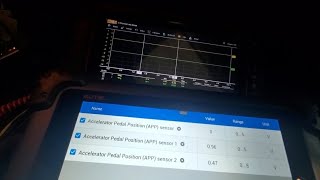
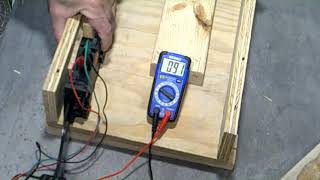
How to confirm: Use a scan tool to monitor live data for APP Sensor 1 and APP Sensor 2. Press the pedal slowly; the voltage readings should be smooth and react instantly. Jumps, dropouts, or a lack of response indicate a bad sensor. One diagnostic video showed how resistance checks on a faulty pedal revealed erratic readings compared to a new one.
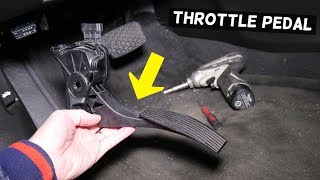
Typical fix: Replace the entire accelerator pedal assembly. It is sold as one unit and is typically held on by three 10mm nuts.
Est. part cost: $50-$150 - Damaged Wiring or Connector at the Throttle Body 🟡 Medium Probability While the kick panel connector is more cited for P2138, the throttle body connector can also suffer from fretting corrosion. This poor connection disrupts signals between the throttle body's internal Throttle Position Sensor (TPS) and the ECM.
How to confirm: Visually inspect the throttle body connector and its wiring harness. Look for loose pins, green or white corrosion, or any signs of damage. Wiggle the connector with the engine running to see if it triggers the fault.
Typical fix: Clean the connector terminals and apply dielectric grease. If corrosion is severe, the connector pigtail and terminals may need to be replaced.
Est. part cost: $20-$50 - Faulty Throttle Body Assembly 🟡 Medium Probability The internal Throttle Position Sensor (TPS) is integrated into the throttle body. Failure of the TPS can cause correlation faults. Additionally, heavy carbon buildup can cause the throttle plate to stick, which may also trigger correlation codes by creating a mismatch between the pedal request and the actual throttle plate angle.
How to confirm: Diagnosis is best after ruling out the APP sensor and all wiring. First, inspect the throttle body bore for excessive carbon buildup. If clean, and wiring/APP sensor are good, the throttle body itself is the likely suspect.
Typical fix: Clean the throttle body bore and plate thoroughly with throttle body cleaner. If the issue persists, replace the entire throttle body assembly. A relearn procedure may be required after replacement.
Est. part cost: $150-$300
Rare But Worth Checking
- Faulty Engine Control Module (ECM): This should only be considered after all other possibilities, including sensors, wiring, and connectors, have been thoroughly tested and ruled out. ECM failure is very rare but is the final step in the diagnostic flowchart if all circuits test normal.
Diagnosis Steps
- Connect an OBD-II scanner and confirm P2138 is the primary code. Note any other codes, such as C0242 for the traction control system. 🎬 Watch this diagnostic breakdown of P2138 and C0242 codes.
- Check TSBs First: Acknowledge GM TSB #07-06-04-019F. The primary diagnostic step should be to inspect the IP-to-body harness connector in the driver's side kick panel for water intrusion and corrosion. Repair any leaks and clean/repair the connector before proceeding.
- Using the scanner's live data function, observe the voltage readings for 'APP Sensor 1' and 'APP Sensor 2'.
- With the key on and engine off, slowly press and release the accelerator pedal. Watch for smooth, consistent changes in voltage. One sensor should sweep from a low to high voltage, while the other does the opposite or sweeps at a different ratio. Any glitches, spikes, or flat spots point to a faulty APP sensor.
- If APP sensor data is perfect, move to the engine bay and inspect the electrical connector at the throttle body. Disconnect it and check for corrosion, bent pins, or loose terminals.
- Inspect the wiring harness leading to both the APP sensor (under the dash) and the throttle body for any visible damage, chafing, or melting.
- If all sensors and wiring appear to be in good condition, the issue may lie with a sticking or faulty throttle body itself or, in very rare cases, the ECM.
Parts You'll Likely Need

- Accelerator Pedal Position (APP) Sensor Assembly
(OEM #ACDelco 25832864 (or superseding part numbers like 84024926))— This is a very common component to fail internally, causing the voltage correlation error. It is replaced as a complete pedal assembly.
Trusted brands: ACDelco, Dorman (699-106), Standard Motor Products
OEM price range: $80-$150
Aftermarket price range: $50-$100 - Throttle Body Assembly
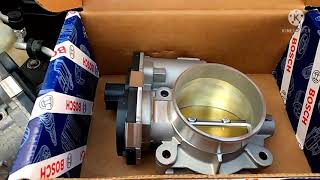
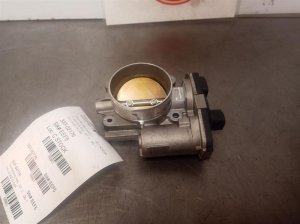
(OEM #ACDelco 217-3104 (for 2007-2011), ACDelco 12670981 (for 2012-2016))— Replaced if the internal Throttle Position Sensor (TPS) has failed or if the throttle plate is sticking due to carbon buildup. It's less common than the APP sensor but is the next likely component.
Trusted brands: ACDelco, Hitachi, Dorman (977-351)
OEM price range: $200-$300
Aftermarket price range: $150-$220 - Accelerator Pedal Position Sensor Connector
(OEM #Dorman 645-595)— Used to repair a damaged or corroded connector pigtail at the accelerator pedal itself.
Trusted brands: ACDelco
Related Codes That Often Appear With This One
- C0242 — This code indicates the Traction Control System has received a fault signal from the ECM. It is set as a direct result of the P2138 code because the stability system cannot trust the engine torque request from the faulty pedal/throttle signals.
Technical Service Bulletins (TSBs) & Recalls
- 07-06-04-019F: The most critical TSB for this issue. It details how water intrusion into the IP-to-body harness connector causes P2138 and instructs technicians to check for water leaks before replacing parts. It supersedes earlier versions.
- PIP3783D: An additional bulletin that advises inspection of the APP sensor circuits for poor terminal tension, which can also cause P2138 and related codes.
Platform-Specific Known Issues
- A known issue documented in GM Technical Service Bulletin #07-06-04-019F involves the electrical connector at the throttle body. It states the concern is an intermittent Malfunction Indicator Lamp (MIL) with Reduced Engine Power displayed and DTC P2138 set due to water intrusion in the IP-to-body harness connector.
- The TSB explicitly warns technicians *not* to replace the accelerator pedal assembly without first inspecting this specific connector in the driver's kick panel for water damage.
- GM also issued Special Coverage Adjustment #N182188250 for other models like the Malibu and Regal, extending the warranty for this exact issue to 10 years/150,000 miles, showing how widespread APP sensor circuit issues are for the manufacturer.
Mechanic-Grade Diagnostic Values
- APP Sensor 1 & 2 Voltage Correlation (Scan Tool) — expected: Both sensors should show smooth, proportional voltage changes as the pedal is pressed, typically sweeping between ~0.5V and ~4.5V. The two signals should not diverge by more than 10% during travel.. Failure: A voltage variance between APP1 and APP2 of more than 10% for over 1 second, or a variance of more than 5% from the learned idle value when the pedal is released. A static divergence greater than 0.5V can also trigger the fault.
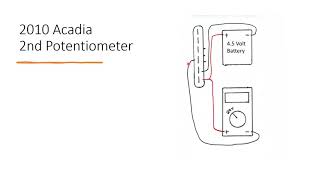
- APP Sensor Bench Test (2007-2008 Metal Pedal) — expected: Sensor 1: ~2.6V at idle, sweeping down to ~1.9V at full press. Sensor 2: ~1.9V at idle, sweeping down to ~0.6V at full press.. Failure: Voltage readings that are erratic, jumpy, or do not follow this sweep pattern indicate a faulty sensor.
- APP Sensor Bench Test (2009+ Plastic Pedal) — expected: Sensor 1: ~2.8V at idle, sweeping down to ~2.3V at full press. Sensor 2: ~2.1V at idle, sweeping down to ~0.6V at full press.. Failure: Any spikes, glitches, or inconsistent readings during the sweep indicate a faulty sensor.
- APP Sensor Circuit Low Reference Resistance — expected: Less than 5.0 Ω.. Failure: Resistance over 5.0 Ω indicates excessive resistance in the ground circuit for the sensor.
- APP Sensor Circuit 5V Reference Voltage — expected: Greater than 4.8V.. Failure: Voltage below 4.8V indicates a problem with the 5V reference circuit from the ECM.
Scan Tool Commands That Help
- Professional Scan Tool (GDS2/Tech2): Idle Learn Reset / Reset Adaptive Values — This function should be used after replacing the throttle body or cleaning it. It erases the old learned throttle angle values stored in the ECM, forcing the system to relearn the new baseline. It is typically found under 'Module Set Up' or 'Special Functions/TAC System'.
- No Tool Required: Idle Relearn Procedure (Manual) — After replacing the throttle body, APP sensor, or disconnecting the battery, this procedure helps the ECM relearn the idle position. A common method is: 1. Start the engine and let it idle in Park for 3 minutes. 2. Turn the engine off and wait 60 seconds. 3. Restart the engine and let it idle in Park for another 3 minutes. The idle should normalize.
- No Tool Required: Drive Cycle Relearn — If the manual idle relearn doesn't resolve a rough idle, a drive cycle may be necessary. This involves driving the vehicle at speeds above 44 MPH with several decelerations and extended idles to help the ECM fully adapt.
Wiring & Ground Locations

- X202 Connector — Behind the driver's side kick panel, where the instrument panel (IP) harness connects to the body harness.. This is the specific connector most frequently cited in TSBs for water intrusion causing P2138. Water from a leaking A-pillar, sunroof drain, or windshield seal drips onto this connector, causing corrosion on the APP sensor signal and reference pins that pass through it.
- G301 — Behind the left (driver's side) kick panel.. This is a major interior ground point for multiple modules and sensors. A poor connection at G301 can cause floating voltages and reference issues for various systems, including the BCM and circuits related to the APP sensor.
- G305 — Near the battery, or under the vehicle to the rear of the left B-pillar at the third body mount on the frame.. As a key body or chassis ground, corrosion or looseness here can cause widespread electrical issues and unstable sensor readings.
- APP Sensor Connector — Directly on the accelerator pedal assembly, under the driver's side dashboard.. This is the primary connection point for the sensor. The six pins include two 5V reference signals, two low reference (ground) signals, and the two APP signal wires returning to the ECM.
Real Owner Repair Stories
- 2CarPros Forum User 'MILLIEROCK2X' (GM Vehicle (model not specified, but issue is identical to Acadia)) — Persistent P2138 code and 'Reduced Power' light for 3 months.
❌ Tried (didn't work) Replaced the throttle body 2 times., Replaced the accelerator pedal 3 times., Took to a shop that 'checked the wiring' and said it was fine., Resetting the ECM would temporarily clear the code, but it returned instantly upon revving the engine.
✅ What actually fixed it The confirmed root cause was water intrusion and corrosion in the harness connectors, specifically connector X202 located behind the driver's side kick panel, as detailed in GM TSBs. The fix required locating the water leak, opening the connector, meticulously cleaning the corroded terminals, and applying dielectric grease before reconnecting. - Car Talk Community User 'vinny.mossman_163369' (2008 Buick Lacrosse (different vehicle, but identical GM electrical issue)) — P2138, reduced engine power, and traction control warnings that only appeared during or after rainfall.
❌ Tried (didn't work) Replacing the throttle body., Replacing the accelerator pedal.
✅ What actually fixed it The problem was confirmed to be water leaking into the passenger compartment and shorting the wiring at a large electrical connector in the left kick panel. The permanent fix required finding and sealing the source of the water leak (e.g., plugged cowl drain or bad windshield seal) and cleaning the affected connector.
"I Checked Everything" — The Actual Cause
- In the context of P2138, the equivalent of a 'smoke test clean' is when standard electrical checks and part swaps fail to resolve the issue. A common scenario is a technician replacing the APP sensor and even the throttle body, only for the code to return immediately or intermittently. A shop may even perform a visual wiring inspection and find no obvious damage. The actual cause, as documented in TSB #07-06-04-019F and confirmed by owner reports, is often hidden corrosion inside the X202 body harness connector in the driver's kick panel. This corrosion is caused by a water leak and can be missed without disassembling the connector for a pin-by-pin inspection.
When the Usual Fixes Don't Work
- Owners and technicians should be aware that replacing the accelerator pedal and throttle body, even multiple times, often does not fix this code. The persistence of P2138 after replacing the most common components is a strong indicator that the root cause is a wiring or connector issue, not a faulty part. The official GM TSB #07-06-04-019F specifically warns against replacing the pedal assembly without first investigating for water intrusion at the IP-to-body harness connector (X202) in the driver's kick panel, as this is the most probable cause on the Acadia platform.
OEM Part Supersession History
25832864→84024926— GM regularly updates service parts to integrate new materials or technologies. This likely represents a revision for improved reliability or a consolidation of part numbers.22802046, 25865203→84024926— Part number consolidation for service inventory.
Model Year Variations Within This Range
- 2007-2008: Early models often used a metal accelerator pedal assembly. Bench test voltages for this pedal are different from the later plastic version. Sensor 1: ~2.6V idle to ~1.9V full press. Sensor 2: ~1.9V idle to ~0.6V full press.
- 2009-2014: Later models use a plastic accelerator pedal assembly (e.g., PN 84024926). Bench test voltages for this pedal are different from the early metal version. Sensor 1: ~2.8V idle to ~2.3V full press. Sensor 2: ~2.1V idle to ~0.6V full press.
Helpful Videos

We Have This Part in Stock


The information in this article is provided for general reference and educational purposes only. Vehicle specifications, procedures, and part compatibility can vary by production date, trim level, and region. Always consult your vehicle's factory service manual and verify part numbers before purchasing or performing repairs. Safety-critical components such as airbags, seat belts, and braking systems should be installed by a qualified professional.
- Gmc ACADIA:
- 🎬 Helpful Videos
- 🛍️ Shop This Part
- What's Unique About the 2007-2014 Gmc ACADIA
- Diagnostic Flowchart
- Symptoms You May Notice
- Most Likely Causes
- Rare But Worth Checking
- Diagnosis Steps
- Parts You'll Likely Need
- Related Codes That Often Appear With This One
- Technical Service Bulletins (TSBs) & Recalls
- Platform-Specific Known Issues
- Mechanic-Grade Diagnostic Values
- Scan Tool Commands That Help
- Wiring & Ground Locations
- Real Owner Repair Stories
- "I Checked Everything" — The Actual Cause
- When the Usual Fixes Don't Work
- OEM Part Supersession History
- Model Year Variations Within This Range
- 🎟️ Get 5% Off