

P2138 on 2013-2018 Chevrolet Suburban: Reduced Power & APP Sensor Fixes
On a 2013-2018 Suburban, code P2138 almost always triggers 'Reduced Engine Power' mode and points to a problem with the accelerator pedal. Before replacing the pedal assembly, inspect the wiring and connector at the pedal, as poor connections are a very common cause documented in GM Technical Service Bulletins (TSBs). Crucially, also inspect the large IP-to-Body harness connector in the driver's side kick panel for corrosion from water leaks, a well-documented root cause. A connector repair is c
- P2138 on a 2013-2018 Suburban means the gas pedal sensors are sending conflicting signals, which will trigger the 'Reduced Engine Power' mode.
- Before you buy any parts, inspect the wiring. The most common cause is a bad connection at the pedal connector or a corroded body harness connector in the driver's kick panel.
- A 'wiggle test' on the pedal connector while watching live scan tool data is a quick way to diagnose a bad connection.
- If wiring and connectors are good, the next step is to replace the entire accelerator pedal assembly.
- Do not mistake this for a throttle body issue; P2138 points specifically to the accelerator pedal circuits.
What's Unique About the 2013-2018 Chevrolet SUBURBAN
On this generation of GM trucks and SUVs, P2138 is frequently caused by electrical connection issues rather than an actual failed pedal sensor. Multiple GM Technical Service Bulletins (TSBs) point to problems like poor terminal tension at the accelerator pedal connector, or water intrusion causing corrosion in a major body harness connector (often labeled X202) in the driver's side footwell. Water can enter from leaking A-pillar seals, sunroof drains, or windshield cowls. Owners often replace the pedal assembly, only to have the problem return because the root cause was in the wiring or a corroded downstream connector.
Diagnostic Flowchart
Tap your situation to follow the diagnostic path that matches what you're seeing on this vehicle.
Generation note: This range covers the end of the 10th generation (2013-2014, GMT900 platform) and the beginning of the 11th generation (2015-2018, K2XX platform). The P2138 code and its common causes, particularly wiring and connector issues, are documented in TSBs that apply to both generations, indicating it's a persistent platform issue.
Symptoms You May Notice
- "Reduced Engine Power" message on the instrument cluster
- Check Engine Light is on
- Very poor or no throttle response
- Vehicle will not accelerate properly
- Unstable engine RPM
- Hesitation or sudden loss of power while driving
- Replacing the Throttle Body. P2138 specifically relates to the accelerator *pedal* sensors. Problems with the throttle body position sensor will set different codes, most commonly P2135.
Most Likely Causes
- Water Intrusion into the IP-to-Body Harness Connector Very High Probability TSB #07-06-04-019F specifically identifies water intrusion into a large harness connector (often the X202 connector) in the driver's side kick panel area as a primary cause for P2138. Leaks from the A-pillar, sunroof drains, or windshield cowl can allow water to drip onto this connector, causing corrosion and voltage discrepancies between the two APP circuits. This is considered the most common 'hidden' cause after the pedal itself.
How to confirm: Inspect the driver's side floor and kick panel for signs of moisture, water stains, or rust on nearby metal brackets. Disconnect the large IP-to-body harness connector (X202) 🎬 Watch: How to find and clean the corroded X202 connector. and check for any green or white corrosion on the pins and terminals. A water hose test on the windshield and A-pillar area may reveal the leak source.
Typical fix: Repair the source of the water leak first. Meticulously clean the corroded connector terminals using a specialized contact cleaner. If corrosion is severe, the affected terminals or the entire connector may need to be replaced. A permanent but advanced fix involves running new wires to bypass the connector entirely.
Est. part cost: $20-$50 for connector cleaning supplies and terminals. - Poor Connection or Fretting at the Accelerator Pedal Sensor Connector 🔴 High Probability GM has issued multiple TSBs (e.g., #PIP3783D) specifically for poor terminal tension in the accelerator pedal position (APP) sensor connector causing this code. The female terminals in the connector can loosen over time, causing intermittent signal loss, especially when the harness is moved.
How to confirm: With the vehicle off, disconnect the connector at the top of the accelerator pedal. Visually inspect for any signs of corrosion or backed-out pins. Perform a 'wiggle test': with the key on and a scan tool monitoring live data, gently wiggle the connector and harness at the pedal. If the APP sensor voltage readings jump, drop to zero, or show a correlation fault, you have found a connection issue.
Typical fix: Clean the terminals and apply a small amount of dielectric grease suitable for low-voltage circuits. If terminal tension is poor, replacing the connector pigtail is the correct repair.
Est. part cost: $15-$45 for a new connector pigtail. - Faulty Accelerator Pedal Position (APP) Sensor Assembly 🟡 Medium Probability While wiring is a more common culprit on this platform, the sensor itself is an electronic component that can fail with age and use. It is often replaced first, but should only be replaced after confirming the wiring and connections are good, as per TSB #07-06-04-019 which explicitly states 'Do Not replace the accelerator pedal assembly' before checking for water intrusion.
How to confirm: If all wiring and connectors (at the pedal and in the kick panel) are confirmed to be good, and a scan tool shows erratic or non-responsive voltage from one or both APP sensors when the pedal is pressed smoothly, the sensor assembly is likely faulty.
Typical fix: Replace the entire accelerator pedal assembly, which includes the integrated sensors.
Est. part cost: $95-$160
Rare But Worth Checking
- Damaged Wiring Harness: Check for any chafing or damage to the wiring harness between the pedal and the ECM, especially if aftermarket accessories have been installed. TSBs warn that aftermarket equipment tapped into 5V reference circuits can cause this code.
- Corroded Ground Straps: On some GM trucks, corroded main body or engine ground straps can cause a host of intermittent electrical issues, including APP sensor codes. Inspect the main ground from the battery to the engine block and frame, and the engine-to-firewall grounds.
- Faulty Engine Control Module (ECM): This is extremely rare. The ECM should only be considered as a cause after all other possibilities (sensor, connectors, wiring) have been exhaustively ruled out by proving the signals are good going into the ECM but the code still sets.
Diagnosis Steps
- Read the trouble codes with an OBD-II scanner. Note P2138 and any other related codes (P2122, P2127, etc.).
- Using a scan tool with live data, monitor the voltage of APP Sensor 1 and APP Sensor 2. Both should read around 0.5V-1.0V at rest and increase smoothly and proportionally to ~4.5V 🎬 See a demonstration of testing pedal sensor voltage correlation. at full pedal. They should not diverge by more than ~0.5V at any point.
- Perform a 'wiggle test': while watching the live data, gently wiggle the connector and wiring harness at the pedal. If the voltage readings jump or drop to zero, you have found a connection issue.
- If the wiggle test passes, inspect for water intrusion. Pull back the carpet and driver's side kick panel trim. Look for signs of moisture, rust on brackets, or water stains.
- Locate and disconnect the large IP-to-Body harness connector (may be labeled X202). Inspect both halves for green or white corrosion on the pins. This is a critical step.
- If no issues are found at the pedal or kick panel connector, inspect the wiring harness for any physical damage or chafing between the pedal and the ECM.
- If all wiring and connectors are confirmed to be good and free of corrosion, the accelerator pedal assembly itself is the most likely culprit.
- After any repair, clear the codes and perform a test drive, including a key cycle, to ensure the problem is resolved.
Parts You'll Likely Need
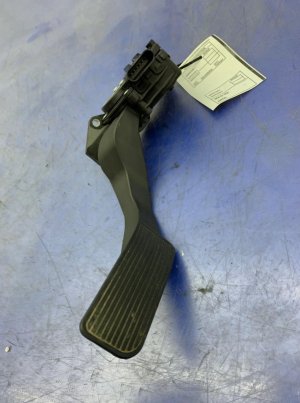
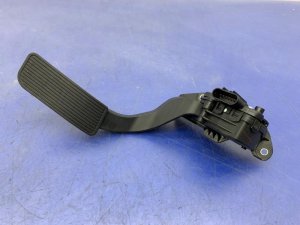
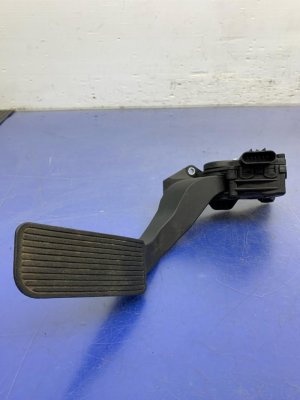
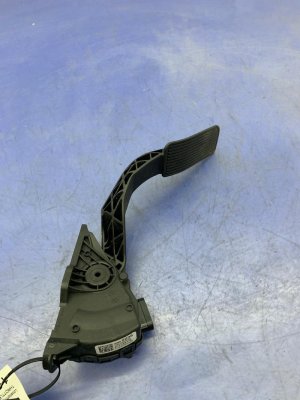
- Accelerator Pedal with Position Sensor
(OEM #2013-2014 (GMT900): 25832864 | 2015-2018 (K2XX): 23362241 or 84374588)— This is the complete assembly that is replaced if the internal sensors have failed. Part numbers vary between generations, so always verify with your VIN. 25832864 is for the 10th gen, while 23362241/84374588 are for the 11th gen.
Trusted brands: ACDelco (OEM), NTK, Dorman, Standard Motor Products (SMP)
OEM price range: $130-$160
Aftermarket price range: $85-$120 - Accelerator Pedal Position Sensor Connector Pigtail
(OEM #ACDelco PT2712)— If the connector at the pedal is damaged or the terminals have lost tension, replacing the pigtail is the proper repair. This is a 6-pin connector.
Trusted brands: ACDelco, Dorman (645-595), Standard Ignition (S1479)
OEM price range: $30-$45
Aftermarket price range: $15-$25
Related Codes That Often Appear With This One
- P2122 — Indicates APP Sensor 1 circuit is low, often set with P2138 due to a shared wiring or connector fault.
- P2123 — Indicates APP Sensor 1 circuit is high, pointing to a wiring issue.
- P2127 — Indicates APP Sensor 2 circuit is low, the companion code to P2122.
- P2128 — Indicates APP Sensor 2 circuit is high, the companion code to P2123.
Technical Service Bulletins (TSBs) & Recalls
- PIP5344: Reduced power message with multiple DTCs including P2138.
- 07-06-04-019F: Intermittent MIL with Reduced Engine Power and DTC P2138 due to water intrusion in a body harness connector.
- PIP3783D: Reduced engine power with P2138 due to poor terminal tension in APP circuits.
Platform-Specific Known Issues
- Bulletin #07-06-04-019F: The most critical TSB for this issue. It explicitly documents P2138 with Reduced Engine Power caused by water intrusion into the instrument panel (IP) to body harness connector, located in the driver's kick panel. It advises repairing the water leak and cleaning/repairing the connector BEFORE replacing any parts.
- Bulletin #PIP3783D: Points to poor terminal tension in the APP sensor circuits as a direct cause for P2138 and related codes. It advises checking the connection at the pedal and ECM.
- Bulletin #PIP5344: A general bulletin that lists P2138 among several other electrical codes that can be set, advising technicians to follow standard diagnostics if the cause is not immediately obvious.
Mechanic-Grade Diagnostic Values
- APP Sensor 1 & 2 Live Data Voltage Correlation — expected: Both sensors should have signals that change proportionally. For example, one sensor might read ~0.5V at idle and ~4.5V at full throttle, while the second sensor reads ~1.0V at idle and ~2.25V at full throttle (inverse correlation). The key is that they move smoothly together.. Failure: A divergence greater than 0.5V between the two sensor signals at any point in the pedal travel will typically trigger the fault. On a scan tool graph, look for one signal to spike, drop out, or become jagged while the other remains smooth.
- APP Sensor 5-Volt Reference — expected: A steady 5.0 volts at the specified reference wire(s) at the pedal connector with the key on, engine off.. Failure: A voltage reading significantly lower than 5.0V (e.g., 1-2V) indicates a short on the 5V reference circuit, which may be shared with other sensors. This requires checking other components on the same circuit.
Scan Tool Commands That Help
- GDS2 / Tech2 (or equivalent professional scanner): Live Data Graphing for APP Sensor 1 and APP Sensor 2 — This is the primary diagnostic method. Graphing both sensor voltages simultaneously while slowly pressing and releasing the accelerator pedal makes it easy to spot any dropouts, spikes, or non-linear behavior in one sensor that would cause the correlation fault.
- GDS2 / Tech2 (or equivalent professional scanner): Clear Codes / Reset ECM — After a repair is completed (e.g., connector cleaned, pedal replaced), the codes must be cleared from the ECM. Unlike some throttle body replacements, no specific 'relearn' or 'calibration' procedure is required for the accelerator pedal on these models; a simple code clear and key cycle is sufficient.
Wiring & Ground Locations
- Accelerator Pedal Connector (6-Pin) — Directly attached to the top of the accelerator pedal assembly under the driver's side dashboard.. This is the primary connection point for the sensor. Poor terminal tension, backed-out pins, or corrosion here directly causes P2138. A 'wiggle test' on this connector is a key diagnostic step. The pinout is typically: Pin A (Low Reference), Pin B (APP Sensor 2 Signal), Pin C (5V Reference), Pin D (Low Reference), Pin E (APP Sensor 1 Signal), Pin F (5V Reference).
- X202 Connector (IP-to-Body Harness) — In the driver's side kick panel area, where the dashboard wiring harness connects to the main body harness.. This connector is a notorious failure point documented in TSB #07-06-04-019F. Water leaking from the A-pillar, cowl, or sunroof drains drips directly onto this connector, corroding the pins for the APP sensor signals that pass through it, causing P2138.
- G103 / G105 (Engine Compartment Grounds) — G103 is often on the cowl above the brake booster. G105 is at the left front of the engine compartment. Another critical ground runs from the negative battery cable to the engine block and frame.. The ECM and its sensors rely on clean ground connections. A corroded or loose engine or body ground can create a floating reference voltage, causing intermittent and difficult-to-diagnose electrical problems, including sensor correlation codes like P2138.
- Frame Grounds (Behind Front Wheels) — On the frame rails directly behind both front wheels.. These grounds are in a terrible location where they are constantly exposed to water, salt, and road debris, making them highly susceptible to corrosion. A bad ground here can affect numerous systems and should be inspected for any electrical fault diagnosis.
Real Owner Repair Stories
- YouTube channel AnthonyJ350 (2015+ K2XX GM Truck (Silverado/Sierra/Tahoe/Suburban)) — Intermittent 'Reduced Engine Power' message and P2138 code. The dealership had been unable to find the cause.
❌ Tried (didn't work) Initial diagnosis by the dealership did not identify the root cause.
✅ What actually fixed it The video identifies evidence of a water leak in the driver's side kick panel, showing rust on metal brackets near the IP-to-Body harness connector. The fix is to find and repair the source of the water leak (often A-pillar, sunroof drain, or windshield cowl) and then clean or repair the corroded connector, as detailed in GM TSB #07-06-04-019F.
OEM Part Supersession History
23163168→23362241— Standard part revision/update by the manufacturer.
Heads up: The part 23362241 is the correct replacement for 23163168. No known incompatibilities.
Model Year Variations Within This Range
- 2013-2014 (GMT900) vs 2015-2018 (K2XX): The accelerator pedal assembly is different between the two generations. The GMT900 platform uses part number 25832864, while the K2XX platform uses 23362241 (or its supersessions). While the part is different, the primary failure modes (water intrusion at the X202 connector, poor connection at the pedal) are common to both platforms as noted in TSBs covering both generations.
- 2015+: Some models within the 2015-2018 range may have power-adjustable pedals (RPO code JF4). It is critical to verify if the vehicle has this option, as the pedal assembly is different from the fixed pedal assembly.
Helpful Videos

We Have This Part in Stock



The information in this article is provided for general reference and educational purposes only. Vehicle specifications, procedures, and part compatibility can vary by production date, trim level, and region. Always consult your vehicle's factory service manual and verify part numbers before purchasing or performing repairs. Safety-critical components such as airbags, seat belts, and braking systems should be installed by a qualified professional.
- Chevrolet SUBURBAN:
- 🎬 Helpful Videos
- 🛍️ Shop This Part
- What's Unique About the 2013-2018 Chevrolet SUBURBAN
- Diagnostic Flowchart
- Symptoms You May Notice
- Most Likely Causes
- Rare But Worth Checking
- Diagnosis Steps
- Parts You'll Likely Need
- Related Codes That Often Appear With This One
- Technical Service Bulletins (TSBs) & Recalls
- Platform-Specific Known Issues
- Mechanic-Grade Diagnostic Values
- Scan Tool Commands That Help
- Wiring & Ground Locations
- Real Owner Repair Stories
- OEM Part Supersession History
- Model Year Variations Within This Range
- 🎟️ Get 5% Off