

P2138 on 2005-2012 Chevrolet Malibu: Reduced Power Causes and Fixes
On a 2005-2012 Chevrolet Malibu, code P2138 is most often caused by a faulty Accelerator Pedal Position (APP) sensor or a wiring issue at the IP-to-body harness connector (X206). Replacing the accelerator pedal assembly is the most common fix, costing around $50-$100 for an aftermarket part. Water intrusion causing corrosion at the X206 connector in the driver's kick panel is an equally common cause, covered by GM TSBs.
- P2138 on a 2005-2012 Malibu is a serious code that will likely put the car in 'Reduced Engine Power' mode.
- The two most likely causes are a bad accelerator pedal assembly or a corroded wiring connector near the driver's kick panel.
- Always inspect the IP-to-body harness connector for corrosion as per GM TSBs before spending money on parts.
- Replacing the accelerator pedal assembly is a straightforward DIY job for many, typically requiring only basic hand tools.
What's Unique About the 2005-2012 Chevrolet MALIBU

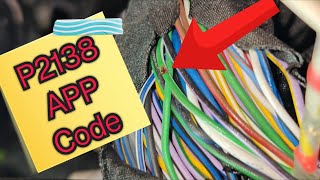
This generation of Chevrolet Malibu, and its GM Epsilon platform-mates like the Pontiac G6 and Saturn Aura, is particularly known for issues related to this code. The problem is so prevalent that GM issued multiple Technical Service Bulletins (TSBs), most notably #07-06-04-019F. These bulletins highlight a known weakness in the instrument panel-to-body harness connector, often designated X206, located in the 🎬 Watch: How to find and fix the X206 connector issue. driver's side kick panel. This connector is susceptible to water intrusion from sources like clogged sunroof drains or poor A-pillar seals, leading to terminal corrosion and the sensor correlation fault. Many owners and technicians report that this wiring issue is just as common, if not more so, than the accelerator pedal sensor failing on its own.
Diagnostic Flowchart

Tap your situation to follow the diagnostic path that matches what you're seeing on this vehicle.
Generation note: The 2005-2012 year range covers the end of the sixth generation (2005-2007) and the full seventh generation (2008-2012) Malibu. The P2138 issue, particularly the X206 wiring connector problem described in TSBs, is common to both generations and other GM vehicles from this era.
Symptoms You May Notice

- Check Engine Light is on
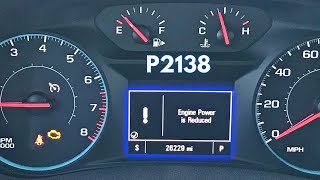
- "Reduced Engine Power" message displayed on the dash
- "Service Stabilitrak" or "Service Traction Control" message may also appear
- Sudden loss of acceleration, vehicle may feel like it's lunging or hesitating.
- Poor or no throttle response
- Vehicle will not accelerate past a low speed (limp mode)
- Cruise control may become inoperative.
- Replacing the throttle body first. On these Malibus, the issue is far more likely to be the accelerator pedal or its wiring. One owner complaint noted that replacing the pedal sensor did not fix the issue, suggesting the deeper wiring problem at the X206 connector was the true cause.
- Replacing the APP sensor without checking the X206 connector. Many owners replace the pedal only to have the code return, especially during or after rain, because the underlying issue is water intrusion at the connector.
Most Likely Causes

- Faulty Accelerator Pedal Position (APP) Sensor 🔴 High Probability The internal potentiometers of the sensor wear out over time, causing the two internal signals to no longer correlate correctly. This is a very common failure part for this code and often the first part replaced.
How to confirm: Use a scan tool with live data to monitor the APP Sensor 1 and APP Sensor 2 voltages while pressing the pedal. The signals should sweep smoothly and mirror each other according to their specified ranges (e.g., one high, one low). Any jumps, dropouts, or non-correlating values indicate a bad sensor. A visual inspection of the connector for bent or corroded pins is also recommended.
Typical fix: Replace the entire accelerator pedal assembly, which contains the integrated sensor. This is typically held on by one to three bolts and is a straightforward DIY job.
Est. part cost: $50-$150 - Water Intrusion/Corrosion at IP-to-Body Harness Connector (X206) 🔴 High Probability GM issued TSB #07-06-04-019F specifically for this issue. Water can leak from clogged sunroof drains, windshield seals, or A-pillar seams and wick into the IP-to-body harness connector (X206) in the driver's kick panel. This causes corrosion on the terminals carrying the APP sensor signals, creating a voltage discrepancy.
How to confirm: Locate the large X206 connector in the driver's side kick panel area. Disconnect it and visually inspect for any signs of moisture, green or white corrosion, or backed-out pins. The presence of wetness in the carpet or headliner on the driver's side is a strong indicator.
Typical fix: If corrosion is minor, clean the terminals with a contact cleaner and apply dielectric grease. If corrosion is severe, the affected terminals or the connector pigtail must be replaced. The source of the water leak must also be found and repaired to prevent recurrence.
Est. part cost: $10-$50 - Damaged Wiring Harness 🟡 Medium Probability Wiring for the APP sensor can chafe or break, particularly near the pedal, at the X206 connector, or where it passes through the firewall. On some GM vehicles with the 3.8L V6, the harness is known to rub against the valve cover, causing shorts. While not a Malibu engine, it highlights a common GM issue.
How to confirm: Visually inspect the wiring harness running from the accelerator pedal to the ECM. Check for any signs of chafing, pinching, or breaks. Perform a continuity test on the APP sensor signal and reference wires from the pedal to the ECM connector.
Typical fix: Repair the damaged section of the wire by soldering and using heat-shrink tubing. Ensure the harness is properly routed and secured to prevent future damage.
Est. part cost: $5-$20
Rare But Worth Checking
- Faulty Throttle Body: While P2138 on a Malibu almost always points to the pedal/wiring, a failing Throttle Position Sensor (TPS) on the throttle body or excessive carbon buildup can sometimes cause similar correlation codes. This should be considered only after the pedal and wiring have been ruled out, as it's a common misdiagnosis.
- Faulty Engine Control Module (ECM): An internal failure of the ECM is very rare but possible. This should be the last resort after all other possibilities, including all wiring, have been exhaustively checked by a professional. As one mechanic noted, 'The first rule of troubleshooting is, it's never the PCM.'
Diagnosis Steps
- Read the fault codes with an OBD-II scanner. Confirm P2138 is present.
- Use the scanner's live data feature to observe the voltages of APP Sensor 1 and APP Sensor 2. Press the pedal slowly from idle to full throttle. Watch for any glitches, jumps, or discrepancies between the two signals. The signals should sweep smoothly but will not be identical.
- If the live data shows a clear sensor fault (e.g., voltage drops to zero or is erratic), the accelerator pedal assembly is likely faulty and should be replaced.
- If the data is inconclusive or the problem is intermittent (especially if it occurs in wet weather), the next step is to inspect the IP-to-body harness connector (X206).
- Disconnect the battery. Locate the connector in the driver's side kick panel area. Disconnect it and inspect thoroughly for any signs of water intrusion, green/white corrosion, or damaged pins, as detailed in GM TSB #07-06-04-019F.
- If corrosion is found, clean the terminals with an electrical contact cleaner and a small brush. Apply dielectric grease to the connector before reassembly to prevent future moisture intrusion. If terminals are severely damaged, replacement pigtails (like ACDelco PT2314) may be needed. Crucially, find and fix the source of the water leak (sunroof drain, etc.).
- If no corrosion is found, perform a 'wiggle test' on the harness at the pedal, at the X206 connector, and near the ECM while monitoring live data to check for intermittent opens or shorts.
- After any repair, clear the codes, reconnect the battery, and perform a test drive to ensure the 'Reduced Engine Power' mode does not return and the code does not reset.
Parts You'll Likely Need
- Accelerator Pedal Assembly
(OEM #25832864 (ACDelco - verify by VIN, common for 2008-2012))— This is the most common failure part that causes the P2138 code. The assembly includes the non-serviceable Accelerator Pedal Position (APP) sensor.
Trusted brands: ACDelco (GM Genuine), Dorman, Standard Motor Products (SMP)
OEM price range: $100-$180
Aftermarket price range: $50-$100 - IP-to-Body Harness Connector Pigtail/Terminals
(OEM #ACDelco PT2314 (Example pigtail, verify specific terminal/connector))— If corrosion is found as described in GM's TSBs, the connector itself or its terminals will need to be replaced to ensure a solid connection.
Trusted brands: ACDelco, Michigan Motorsports
OEM price range: $20-$50
Aftermarket price range: $10-$30
Technical Service Bulletins (TSBs) & Recalls
- 07-06-04-019E: Addresses intermittent MIL, Reduced Engine Power, and DTC P2138 due to a faulty IP-to-body harness connector. Explicitly states 'Do Not replace the accelerator pedal assembly' before checking the connector.
- 070604019F: An updated version of the previous TSB, expanding the model years and providing the same guidance for correcting the harness connector issue due to water intrusion.
- N182201990: A special coverage program for later model Malibus (2016-2018) that extends the warranty for repairs related to P2138, acknowledging the pedal sensor connection issue.
Platform-Specific Known Issues
- A known issue, documented in TSBs #07-06-04-019E and #070604019F, involves water intrusion into the IP-to-body harness connector (X206), causing corrosion and setting DTC P2138.
- Owner complaints frequently mention the vehicle entering 'Reduced Engine Power' mode while driving on the highway, indicating an intermittent failure of the pedal sensor or wiring. [NHTSA ODI #11113693]
- The source of the water leak is often a clogged or disconnected sunroof drain tube that runs down the A-pillar, or a bad seal at the windshield cowl.
- GM has issued special coverage adjustments for some later model years (e.g., 2
Mechanic-Grade Diagnostic Values
- APP Sensor 1 and APP Sensor 2 Live Voltage Sweep — expected: Both sensors should show a smooth, proportional voltage change from approximately 0.5V (pedal released) to 4.5V (full throttle). The two signals are not identical but should mirror each other's movement without glitches or dropouts.. Failure: The ECM will set code P2138 if the voltage divergence between the two APP sensors is greater than 0.5V for more than 2 seconds. Any erratic jumps, flat spots, or non-proportional readings on a scan tool indicate a fault.
Scan Tool Commands That Help
- GDS2 / Tech2 (or high-end aftermarket): Idle Learn Reset / Throttle Relearn — After replacing the accelerator pedal assembly or throttle body, this function resets the learned idle values in the ECM. While not always required for a pedal replacement, it can resolve idle issues or prevent the code from returning if the ECM has stored incorrect correlation values.
- GDS2 / Tech2 (or high-end aftermarket): Throttle Control Test — This is a bidirectional test that allows a technician to command the throttle to specific percentages (e.g., 20%, 50%) and observe the corresponding TPS and APP sensor readings to verify sensor and actuator functionality without physically pressing the pedal.
Wiring & Ground Locations
- X206 — The IP-to-body harness connector is located in the driver's side kick panel area, near the floor.. This connector carries the APP sensor signal and reference voltage wires from the pedal to the ECM. It is the primary location for water intrusion and corrosion that causes P2138, as documented in GM TSB #07-06-04-019F.
- G201 / G202 — Located on the left side of the dash, behind the kick panel.. These are the primary instrument panel ground points for components on the driver's side. A poor ground at these locations can cause a floating reference voltage for the APP sensor, leading to incorrect voltage readings and triggering a correlation fault.
- APP Sensor Connector — Directly attached to the accelerator pedal assembly.. The six pins in this connector are for the two separate sensor circuits (Signal 1, Low Reference 1, 5V Reference 1 and Signal 2, Low Reference 2, 5V Reference 2). A visual inspection for backed-out or corroded pins is a critical first step.
Real Owner Repair Stories
- GM Technical Service Bulletin #07-06-04-019F (2005-2012 Chevrolet Malibu (and other GM models)) — Intermittent Malfunction Indicator Lamp (MIL) illuminated, 'Reduced Engine Power' message displayed, DTC P2138 set in history or current.
❌ Tried (didn't work) Replacing the accelerator pedal assembly without further diagnosis. The TSB explicitly states: 'Important: Do Not replace the accelerator pedal assembly.' before performing the connector check.
✅ What actually fixed it The documented cause was water intrusion into the IP-to-body harness connector (X206) in the driver's kick panel. The fix involves locating and repairing the source of the water leak (e.g., A-pillar seals, sunroof drains), inspecting the X206 connector for corrosion, cleaning or replacing the damaged terminals, and applying dielectric grease before reassembly.
OEM Part Supersession History
15101848, 15847349→25832864— Standard part consolidation and potential design updates by GM.
Heads up: The new part number (25832864) is the correct service replacement for the older numbers and should be a direct fit.
Model Year Variations Within This Range
- 2005-2012: The TSB covering the X206 connector issue was updated from #07-06-04-019E to #07-06-04-019F, expanding the model years and reinforcing the persistence of the issue across the platform's life.
- Unknown specific year change, but observed within the generation.: The physical design of the accelerator pedal assembly changed. Some earlier models had the APP sensor mounted on the side of the pedal assembly, while later replacement parts have the sensor integrated into the top of the assembly. Despite the physical difference, the mounting points and electrical connector remain the same for a direct fit.
Helpful Videos




The information in this article is provided for general reference and educational purposes only. Vehicle specifications, procedures, and part compatibility can vary by production date, trim level, and region. Always consult your vehicle's factory service manual and verify part numbers before purchasing or performing repairs. Safety-critical components such as airbags, seat belts, and braking systems should be installed by a qualified professional.
- Chevrolet MALIBU:
- 🎬 Helpful Videos
- What's Unique About the 2005-2012 Chevrolet MALIBU
- Diagnostic Flowchart
- Symptoms You May Notice
- Most Likely Causes
- Rare But Worth Checking
- Diagnosis Steps
- Parts You'll Likely Need
- Technical Service Bulletins (TSBs) & Recalls
- Platform-Specific Known Issues
- Mechanic-Grade Diagnostic Values
- Scan Tool Commands That Help
- Wiring & Ground Locations
- Real Owner Repair Stories
- OEM Part Supersession History
- Model Year Variations Within This Range
- 🎟️ Get 5% Off