

P2138 on 2005-2011 Cadillac STS: Reduced Engine Power Causes and Fixes
On a 2005-2011 Cadillac STS, code P2138 almost always points to a wiring problem, specifically corrosion in the instrument panel-to-body harness connector located in the driver's side kick panel area. This triggers a 'Reduced Engine Power' warning. Before replacing the ~$100 accelerator pedal, inspect and clean this connector as per GM Technical Service Bulletin #070604019F, which explicitly warns against replacing the pedal assembly without first checking the connector.
- P2138 on a Cadillac STS will immediately put the car in 'Reduced Engine Power' mode.
- The most likely cause is NOT the accelerator pedal itself, but corrosion in a wiring connector located behind the driver's kick panel, as per GM TSB #070604019F.
- ALWAYS inspect and clean the IP-to-body harness connector before spending money on a new accelerator pedal assembly.
- Do not replace the throttle body; this code is specific to the accelerator pedal circuit.
- The repair is DIY-friendly and often only requires cleaning a connector, which can save hundreds of dollars in diagnostic and part replacement costs.
What's Unique About the 2005-2011 Cadillac STS
General Motors has a well-documented history with this code across many vehicles from this era built on the Sigma platform, including the Cadillac STS. The issue is so common that GM issued multiple Technical Service Bulletins (TSBs). These bulletins specifically identify water intrusion into a key wiring harness connector (the IP-to-body connector in the driver's kick panel) as the primary cause, rather than a faulty pedal sensor. This water can leak from A-pillar seals, sunroof drains, or windshield/cowl sealing and drip onto the connector, causing corrosion. This makes inspecting the wiring a mandatory first step on an STS, which can save owners from unnecessarily replacing parts.
Diagnostic Flowchart
Tap your situation to follow the diagnostic path that matches what you're seeing on this vehicle.
Symptoms You May Notice
- "Reduced Engine Power" message displayed on the instrument cluster.
- Check Engine Light (Malfunction Indicator Lamp) is on.
- "Service Traction Control" or other warning lights may appear simultaneously.
- Poor or no response from the accelerator pedal.
- Vehicle has difficulty accelerating or is stuck at a low speed.
- Unstable or sticking throttle.
- Replacing the throttle body. P2138 specifically points to a correlation fault in the accelerator pedal circuits, not the throttle body. Throttle body issues typically set other codes like P2135 or P1516.
- Replacing the accelerator pedal assembly without first inspecting the IP-to-body harness connector. The TSBs make it clear the connector is the most likely culprit, and replacing the pedal will not fix a wiring issue.
Most Likely Causes
- Water Intrusion/Corrosion in IP-to-Body Harness Connector 🔴 High Probability As documented in GM TSBs #070604019F and #07-06-04-019E, the design allows for potential water leaks from the A-pillar, sunroof drains, or cowl area to seep into the Instrument Panel (IP) to body harness connector. This connector carries the APP sensor signals, and when water causes corrosion, it creates a voltage difference between the two sensor signals that triggers P2138. This is a known issue across many GM platforms of the era.
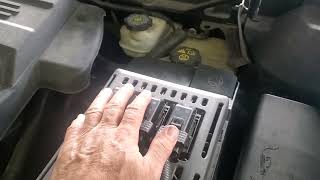
How to confirm: Locate the IP-to-body harness connector, a large connector found behind the driver's side kick panel near the emergency brake. Disconnect it and inspect for any green, blue, or white corrosion, moisture, or pushed-out/damaged pins.
Typical fix: Clean the connector terminals with an electrical contact cleaner and a small brush. If damage is severe, the connector may need to be replaced with a new pigtail. Applying dielectric grease before reassembly is crucial to prevent future moisture intrusion. The source of the water leak must also be identified and repaired.
Est. part cost: $10-$50 - Faulty Accelerator Pedal Position (APP) Sensor Assembly 🟡 Medium Probability While wiring is the most common issue, the internal sensors in the pedal assembly can fail from wear and tear. A user on CadillacForums with a 2006 STS reported that replacing the pedal assembly ultimately fixed their P2138 issue after other attempts failed. However, many owners replace this part unnecessarily when the true fault is the connector.
How to confirm: Using a scan tool that can graph live data, monitor the voltage from APP Sensor 1 and APP Sensor 2 while slowly pressing the pedal. The voltages should rise smoothly and in correlation (one is typically half of the other). Any jumps, dropouts, or flat lines indicate a failed sensor.
Typical fix: Replace the entire accelerator pedal assembly, as the sensors are integrated and not serviced separately. The GM OEM part number for the 2005-2011 STS is 25838049, which supersedes several older part numbers.
Est. part cost: $70-$150 - Damaged Wiring Harness ⚪ Low Probability Wires can become chafed or damaged near the pedal assembly, where the harness passes through the firewall, or near engine components, causing intermittent shorts or opens. A user on Tahoe Yukon Forum with a similar GM vehicle found frayed wires in the harness leading to the pedal.
How to confirm: Visually inspect the wiring harness leading from the APP sensor for any signs of physical damage, chafing, or poor connections. Perform a 'wiggle test' on the harness while monitoring live sensor data on a scan tool to see if the voltage readings fluctuate.
Typical fix: Repair the damaged section of wire using solder and heat shrink tubing. Protect the repaired area from future damage with loom or re-routing.
Est. part cost: $5-$20
Rare But Worth Checking
- Faulty Engine Control Module (ECM): This is very rare and should only be considered after all other possibilities (wiring, connectors, and the APP sensor itself) have been exhaustively ruled out. One owner on a KBB forum with a 2006 STS V6 replaced the pedal, throttle body, and MAF sensor before a dealer suspected the ECM.
Diagnosis Steps
- Connect an OBD-II scanner and confirm that P2138 is the primary code stored. Note if it is current or in history.
- Check for any GM Technical Service Bulletins related to P2138 for your vehicle. TSB #070604019F is highly relevant and applies to a wide range of GM vehicles.
- Following the TSB guidance, remove the driver's side kick panel to access the Instrument Panel (IP) to body harness connector.
- Disconnect the connector and inspect it carefully for any signs of moisture or corrosion (blue, green, or white powder). Also check for backed-out or damaged pins.
- If corrosion is found, clean the terminals with electrical contact cleaner and a small brush. Apply dielectric grease before reconnecting to seal out moisture. If severely damaged, a replacement pigtail may be required.
- If the connector is clean, use a scan tool to monitor live data for APP Sensor 1 and APP Sensor 2. Press the accelerator pedal slowly from 0% to 100% and watch the voltage readings. They should change smoothly and in a predictable, correlated pattern (e.g., Sensor 1 sweeps 1V to 4V, Sensor 2 sweeps 0.5V to 2V).
- If one sensor's reading is erratic, jumps, or drops out, the accelerator pedal assembly is likely faulty.
- If the wiring connector is clean and the pedal sensor tests good, perform a wiggle test on the harness between the pedal and the ECM to check for intermittent connection issues. Watch the live data for any changes.
- If all wiring and the APP sensor are confirmed to be good, the issue may lie with the Engine Control Module (ECM), though this is the least likely cause and requires professional diagnosis.
Parts You'll Likely Need
- Accelerator Pedal Position (APP) Sensor Assembly
(OEM #25838049)— This part is the second most common failure point after wiring issues. The internal sensors can wear out, causing the voltage correlation error. It is replaced as a complete assembly. The OEM part number 25838049 supersedes previous numbers 15263218, 15860872, 21997191, and 25769906.
Trusted brands: ACDelco, Standard Ignition, Bosch
OEM price range: $100-$180
Aftermarket price range: $70-$150 - IP-to-Body Harness Connector Pigtail — If the primary connector in the driver's kick panel is heavily corroded or damaged from water intrusion, it may need to be cut out and replaced with a new pigtail connector to ensure a solid connection for the APP sensor circuits.
Trusted brands: ACDelco, Dorman
OEM price range: $30-$50
Aftermarket price range: $15-$30
Related Codes That Often Appear With This One
- P2120 (Throttle/Pedal Position Sensor/Switch 'D' Circuit)
- P1125 (Accelerator Pedal Position System)
- C0242 (Traction Control System Malfunction)
Technical Service Bulletins (TSBs) & Recalls
- 070604019F: Intermittent Malfunction Indicator Lamp (MIL) Illuminated, DTC P2138 with Reduced Engine Power (Repair Instrument Panel (IP) to Body Harness Connector).
- 07-06-04-019E: A previous version of the same TSB, indicating a persistent issue.
- PIP3783D: Advises inspection of APP circuits for poor terminal tension at the APP sensor, various connectors including the IP-to-body connector, and the ECM.
Platform-Specific Known Issues
- This platform is subject to Technical Service Bulletin #070604019F, which explicitly calls out water intrusion into the IP-to-body harness connector as the cause for P2138 and the resulting 'Reduced Engine Power' mode. The TSB specifically warns technicians NOT to replace the accelerator pedal assembly before performing this check.
Mechanic-Grade Diagnostic Values
- APP Sensor 5-Volt Reference Circuit Voltage — expected: 4.8-5.8 volts between the 5-volt reference circuit terminal and ground.. Failure: Voltage less than 4.8V or greater than 5.2V indicates a circuit issue (open, short to ground, or short to voltage).
- APP Sensor Sweep Test (using DMM) — expected: Voltage should vary smoothly between 0.30-4.98 volts with no spikes or dropouts as the pedal is pressed.. Failure: Erratic readings, spikes, or dropouts indicate a faulty pedal assembly.
- APP Sensor Sweep Test (Live Data on Scan Tool) — expected: APP Sensor 1 sweeps from ~1V to ~4V. APP Sensor 2 sweeps from ~0.5V to ~2V. The signals should be smooth and correlated.. Failure: Jumps, dropouts, or flat lines in one or both sensor readings.
- APP Sensor Low Reference Circuit Resistance — expected: Less than 5 ohms between the low reference circuit terminal and ground.. Failure: Resistance greater than 5 ohms indicates high resistance in the ground circuit, which could be a faulty ground connection or ECM.
Scan Tool Commands That Help
- Tech2 / GDS2 or Manual Procedure: Throttle/Idle Relearn Procedure — Required after disconnecting the vehicle's battery, cleaning or replacing the throttle body, or replacing the accelerator pedal assembly. Failure to perform a relearn can cause a rough idle, stalling, or prevent the P2138 code from clearing. The manual procedure typically involves idling the engine for several minutes, turning it off, and repeating. In some cases, a full battery disconnect for 15+ minutes may be needed for the ECM to accept a new component.
Wiring & Ground Locations
- Engine Control Module (ECM) - 4.6L V8 — On the left front frame rail, below the driver's side headlamp assembly.. This is the termination point for the APP sensor wiring. All voltage/resistance checks of the harness ultimately lead back to the ECM connectors.
- Engine Control Module (ECM) - 3.6L V6 — On the front of the engine, mounted to the passenger side (right) valve cover.. This is the termination point for the APP sensor wiring. Its location differs from the V8 model, which is critical for technicians to know.
- IP-to-Body Harness Connector — Behind the driver's side kick panel, near the emergency brake pedal. It is a large, multi-pin connector.. This is the single most common failure point for P2138 on this vehicle. It carries the APP sensor signals from the cabin to the engine bay, and is highly susceptible to water intrusion and corrosion per TSB #070604019F.
- APP Sensor Connector Pinout — At the accelerator pedal assembly.. Technicians need this pinout to perform circuit-specific voltage and resistance tests. The typical GM 6-pin layout is: Pin A (Low Reference), Pin B (APP Sensor 2 Signal), Pin C (5-Volt Reference), Pin D (Low Reference), Pin E (APP Sensor 1 Signal), Pin F (5-Volt Reference).
- G200 — Behind the left kick panel.. This is a primary ground point for many dash components. A poor connection here could potentially introduce electrical noise or unstable reference voltages affecting nearby circuits, including the APP sensor.
Real Owner Repair Stories
- KBB Forum User (2006 Cadillac STS V6) — Persistent P2138 code and reduced power mode.
❌ Tried (didn't work) Replaced throttle position sensor with throttle body, Replaced accelerator pedal and sensor, Replaced Mass Air Flow (MAF) sensor
✅ What actually fixed it The issue was not resolved by common part replacements. A Cadillac dealer suspected a faulty Engine Control Module (ECM) after all other attempts failed, highlighting it as a rare but possible root cause. - YouTube user 'mobile mechanic' (2005 Cadillac STS) — Throttle body would not be accepted by the ECM after replacement, preventing a relearn.
❌ Tried (didn't work) Attempting the standard throttle relearn procedure with a scan tool.
✅ What actually fixed it The mechanic had to disconnect the battery cables for 15 minutes. After reconnecting, the ECM was able to recognize the new throttle body and complete the relearn procedure, resolving the issue.
OEM Part Supersession History
15263218, 15860872, 21997191, 25769906→25838049— Part consolidation and design updates by General Motors.
Heads up: No programming is required when installing the new pedal assembly.
Model Year Variations Within This Range
- 2005-2011: The location of the Engine Control Module (ECM) varies by engine. On the 4.6L V8, the ECM is under the driver's side headlamp. On the 3.6L V6, it is mounted on the passenger side valve cover. This is critical information for anyone needing to test wires at the ECM connector.
Helpful Videos

We Have This Part in Stock


The information in this article is provided for general reference and educational purposes only. Vehicle specifications, procedures, and part compatibility can vary by production date, trim level, and region. Always consult your vehicle's factory service manual and verify part numbers before purchasing or performing repairs. Safety-critical components such as airbags, seat belts, and braking systems should be installed by a qualified professional.
- Cadillac STS:
- 🎬 Helpful Videos
- 🛍️ Shop This Part
- What's Unique About the 2005-2011 Cadillac STS
- Diagnostic Flowchart
- Symptoms You May Notice
- Most Likely Causes
- Rare But Worth Checking
- Diagnosis Steps
- Parts You'll Likely Need
- Related Codes That Often Appear With This One
- Technical Service Bulletins (TSBs) & Recalls
- Platform-Specific Known Issues
- Mechanic-Grade Diagnostic Values
- Scan Tool Commands That Help
- Wiring & Ground Locations
- Real Owner Repair Stories
- OEM Part Supersession History
- Model Year Variations Within This Range
- 🎟️ Get 5% Off