

P2138 on 2005-2012 Buick LaCrosse: Reduced Power, Causes, and Fixes
On a 2005-2012 Buick LaCrosse, code P2138 is almost always caused by a faulty accelerator pedal position (APP) sensor or a poor connection at the instrument panel-to-body wiring harness, often due to water intrusion. The pedal assembly costs $40-$100, and inspecting the connector is a critical first step.
- P2138 on a Buick LaCrosse is a serious code that makes the car unsafe to drive due to potential sudden power loss.
- Before replacing the accelerator pedal, you MUST inspect the large wiring connector in the driver's side kick panel for water damage or corrosion, as this is a very common cause documented by GM.
- If the wiring is clean and dry, the most likely fix is to replace the entire accelerator pedal assembly.
- Do not immediately assume the throttle body is the problem; P2138 is almost always related to the pedal or its wiring.
What's Unique About the 2005-2012 Buick LACROSSE

For this generation of Buick LaCrosse and other similar GM vehicles, P2138 is very frequently caused by a specific wiring issue unrelated to the pedal itself. GM issued multiple Technical Service Bulletins (TSBs) about water leaking into the instrument panel-to-body harness connector (sometimes referred to as X305), located in the driver's side kick panel. This water intrusion from sources like clogged sunroof drains or bad windshield seals causes corrosion and a poor connection for the pedal sensor signals, triggering the code and leading many to mistakenly replace the pedal assembly first.
Diagnostic Flowchart

Tap your situation to follow the diagnostic path that matches what you're seeing on this vehicle.
Generation note: This range covers two generations of the LaCrosse: the first (2005-2009) and the beginning of the second (2010-2016). The TSBs regarding wiring connector issues specifically mention models up to 2008, making the first generation particularly susceptible. However, the pedal sensor and wiring design are similar, and the problem can occur on both generations. GM also issued a special coverage program (#14582) for the 2009 LaCrosse, extending the warranty on the APP sensor to 10 years/120,000 miles due to known issues with broken solder connections inside the sensor.
Symptoms You May Notice

- "Reduced Engine Power" message displayed on the dashboard.
- "Service Stabilitrak" or similar traction control warning light.
- Check Engine Light (Malfunction Indicator Lamp) is on.
- Severe lack of acceleration or inability to go above a low speed (limp mode).
- Unresponsive or slow-to-respond gas pedal.
- Car seems to only have the issue when it is raining or has recently rained.
- Replacing the Throttle Body Assembly. P2138 specifically points to a correlation error with the accelerator pedal sensors, not the throttle position sensors at the engine. While throttle body issues can cause similar symptoms, they typically set different codes. Many owners have replaced the throttle body with no success for this specific code.
Most Likely Causes

- Water Intrusion/Corrosion at IP-to-Body Harness Connector 🔴 High Probability As documented in GM TSBs #07-06-04-019E and #07-06-04-019F, the connector in the driver's side kick panel is vulnerable to water leaks from the A-pillar, sunroof drains, or windshield cowl area. This is a well-documented failure point across multiple GM platforms of this era.
How to confirm: Locate the large harness connector (may be labeled X305) in the left kick panel area. Disconnect it and inspect for any signs of moisture, green or white corrosion, or damaged pins. A water test on the windshield and A-pillar may reveal the leak source. Owners often report the problem only occurs after rain.
Typical fix: Clean the connector terminals with a specialized electronic cleaner if corrosion is minor. If corrosion is severe, the affected terminals or the entire connector pigtail may need to be replaced. The source of the water leak must also be found 🎬 See this walkthrough on fixing the wiring and water leak. and repaired to prevent recurrence.
Est. part cost: $15-$70 for pigtail connectors or terminal repair kits. - Failed Accelerator Pedal Position (APP) Sensor 🔴 High Probability The sensor is integrated into the accelerator pedal assembly and can wear out over time, causing its internal signals to drift and no longer correlate. GM acknowledged this with a special coverage program (#14582) for some models due to internal broken solder connections.
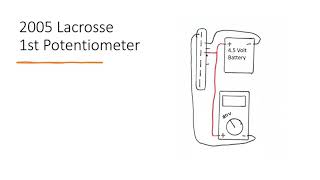
How to confirm: If the wiring connector is clean and dry, use a scan tool to monitor live data for APP Sensor 1 and APP Sensor 2. As you press the pedal, both voltages should increase smoothly and predictably. Jumps, dropouts, or non-responsive readings indicate a faulty sensor. 🎬 Watch: How to test your accelerator pedal sensor with a multimeter. A digital multimeter is often not fast enough to catch intermittent dropouts.
Typical fix: Replace the entire accelerator pedal assembly. It is typically held on by one to three screws and is a straightforward replacement.
Est. part cost: $40-$100
Rare But Worth Checking
- Damaged Wiring: Check for chafed or broken wires in the harness between the pedal assembly and the Engine Control Module (ECM), especially if the main connector is clean.
- Faulty Powertrain Control Module (PCM): This is extremely rare and should only be considered after all other possibilities, including wiring and sensors, have been exhaustively ruled out.
- Low System Voltage: On some GM vehicles, if the battery voltage drops below 10 volts or power to the ECM is lost, the throttle body's calibration may be lost, which can trigger a P2138 code. A battery test and a throttle-relearn procedure may be required.
Diagnosis Steps
- Read all fault codes with an OBD-II scanner. Note any other codes present with P2138.
- Inspect the driver's side footwell and kick panel for signs of moisture, damp carpets, or rust on metal brackets. A user on a Chevy forum noted the issue only happened after it rained.
- Following TSB #07-06-04-019F, locate and disconnect the Instrument Panel (IP) to body harness connector in the left kick panel area. Carefully inspect for any signs of water damage or corrosion on the pins.
- If corrosion is found, clean the terminals using an electronic contact cleaner and a small brush. Apply dielectric grease before reconnecting to seal out moisture. 🎬 Watch: A simple and inexpensive fix for cleaning the connector. If damage is severe, terminal replacement is necessary. Find and fix the source of the water leak (e.g., sunroof drains, windshield seal).
- If the connector is clean, inspect the wiring at the accelerator pedal connector for a tight fit and clean terminals. Apply dielectric grease.
- Use a scan tool to observe live data for APP Sensor 1 and APP Sensor 2. Press the pedal slowly from 0% to 100% and back. The voltage readings should be smooth and correlate. Any glitches or dropouts point to a bad pedal sensor.
- If sensor data is faulty, replace the accelerator pedal assembly.
- After repairs, clear the codes and perform a test drive to ensure the issue is resolved. Some vehicles may require a throttle relearn procedure after replacing components or disconnecting the battery.
Parts You'll Likely Need

- Accelerator Pedal Assembly with Sensor
(OEM #25832864)— This is the most common part to fail if wiring is not the cause. It contains the integrated APP sensors that trigger the code. Part number 25832864 is listed for many 2010-2012 models.
Trusted brands: ACDelco (GM Genuine), Dorman
OEM price range: $60-$120
Aftermarket price range: $40-$80 - Accelerator Pedal Assembly with Sensor
(OEM #15821777)— This is the pedal assembly for earlier models, typically 2005-2009. It contains the integrated APP sensors that wear out.
Trusted brands: ACDelco (GM Genuine), Dorman
OEM price range: $70-$110
Aftermarket price range: $50-$90 - IP-to-Body Harness Connector Pigtail
(OEM #PT2437 (example, verify specific application))— If the main harness connector in the kick panel has severe corrosion, the connector itself or the affected terminals will need to be replaced.
Trusted brands: ACDelco (GM Genuine)
OEM price range: $50-$70
Aftermarket price range: $20-$40
Related Codes That Often Appear With This One
- P1125 — This is another GM-specific code for Accelerator Pedal Position (APP) System Malfunction.
- P2120 — This code relates to a circuit malfunction for one of the throttle/pedal position sensors, often appearing with P2138.
- C0240 — This code indicates a problem with 'Engine Control Module (ECM) Traction Control Not Allowed', which is a secondary effect of the ECM not trusting the pedal input and disabling traction/stability control as a precaution.
Technical Service Bulletins (TSBs) & Recalls
- Bulletin #07-06-04-019F: Describes an intermittent Malfunction Indicator Lamp (MIL) with Reduced Engine Power and DTC P2138, caused by water intrusion into the IP-to-body harness connector. It lists potential leak sources as A-pillar seals, sunroof drains, and windshield/cowl sealing.
- Bulletin #07-06-04-019E: An earlier version of the same bulletin, also pointing to the harness connector as the primary cause for P2138.
- Special Coverage #14582: Not a TSB, but a warranty extension for the accelerator pedal assembly on 2009 LaCrosse models due to internal defects.
Platform-Specific Known Issues
- A widespread issue documented by GM involves water intrusion into the instrument panel-to-body harness connector, causing corrosion and setting DTC P2138. TSB #07-06-04-019F explicitly states this condition and advises inspecting this connector before replacing the pedal assembly.
- GM Special Coverage Program #14582 was issued for 2009 LaCrosse models, extending the warranty for the accelerator pedal assembly to 10 years/120,000 miles due to a high failure rate from broken internal solder connections.
Mechanic-Grade Diagnostic Values
- APP Sensor 1 Voltage (Signal) — expected: Approx. 0.88V at rest (pedal released) to 4.5V at wide-open throttle (pedal fully depressed).. Failure: Voltage is jumpy, does not change smoothly with pedal movement, or is outside the expected range.
- APP Sensor 2 Voltage (Signal) — expected: Approx. 0.45V at rest (pedal released) to 2.5V at wide-open throttle (pedal fully depressed).. Failure: Voltage does not track proportionally with Sensor 1, is jumpy, or does not change smoothly.
- APP Sensor Low Reference (Ground) Circuit — expected: Less than 100mV (0.1V) when back-probed with the sensor connected and ignition on.. Failure: Voltage significantly higher than 100mV indicates a poor ground connection, which can cause incorrect sensor readings.
- APP Sensor 5V Reference Circuit — expected: Approx. 5.0V at the sensor connector with the key on, engine off.. Failure: A lower voltage (e.g., 4.6V) indicates a wiring issue or problem with the PCM's voltage supply, which can cause correlation codes even with a good sensor.
Hidden / Shadow Codes Worth Checking
- N/A (Diagnostic Behavior): The PCM periodically pulls the APP Sensor 2 signal to ground as a circuit integrity check to ensure APP1 and APP2 are not shorted together. On a live scan tool data graph, this can appear as a momentary, regular dropout of the APP2 signal to 0V. This is normal behavior. (see via This behavior is visible when graphing live data for APP Sensor 2 on a capable scan tool. It should not be mistaken for a faulty sensor.)
Scan Tool Commands That Help
- Scan Tool (GDS2/Tech2 or equivalent): Reset ECM Learned Values / Throttle/Idle Learn Reset — This should be used after replacing the throttle body or sometimes after disconnecting the battery to clear old adaptive values before performing the manual relearn procedure.
- Manual Procedure (No Tool): Idle Relearn Procedure — After replacing the APP sensor, throttle body, or disconnecting the battery. A common procedure is to start the engine, let it idle in Park for 3 minutes, turn the engine off for 60 seconds, then restart and idle for another 3 minutes without touching the accelerator pedal.
Wiring & Ground Locations
- X305 — Large Instrument Panel (IP) to body harness connector, located in the driver's side kick panel area.. This is the primary location for water intrusion and corrosion specified in GM TSBs, directly affecting the APP sensor signal circuits that pass through it.
- G301 — Inside the left door sill, forward of the left front seat.. This is a major body ground point in the immediate vicinity of the problematic X305 connector and accelerator pedal. A poor connection here could affect the stability of the low reference (ground) circuits for the APP sensor.
- C101 — A 20-way grey, round connector.. A technician on a diagnostic forum identified this as another potential connector to inspect for poor terminal crimps or connections, in addition to the main kick panel connector, before suspecting the ECM.
Real Owner Repair Stories
- Snap-on Diagnostics Product Forums (2009 Buick LaCrosse 3.8L) — P2138, P1125, P2120 codes.
❌ Tried (didn't work) Replacing throttle body with a new one., Replacing APP sensor with a used one., Installing new connectors for APP and throttle body., Restoring the 6 wires from APP to throttle body.
✅ What actually fixed it The advice from an expert technician was that a NEW pedal assembly was the most likely fix, as used ones are unreliable. They also advised checking connector C101, soldering terminals at the ECM to ensure a good connection, and performing a voltage drop test on the circuits. The expert noted they had replaced over 60 pedals for this code but never an ECM. - ScannerDanner Forum (Jeep (similar drive-by-wire system)) — No accelerator pedal response, APP correlation codes.
❌ Tried (didn't work) Replacing the accelerator pedal assembly., Replacing the electronic throttle body.
✅ What actually fixed it The root cause was a wiring issue where the 5V reference line to APP Sensor 1 only had 4.6V. A wiggle test identified a bad spot in the harness. Repairing the wire to restore the full 5V reference solved the problem, proving both new parts were likely unnecessary. - Reddit r/MechanicAdvice (2010 Buick LaCrosse) — P2138, 'reduced speed' problem.
❌ Tried (didn't work) Replacing the accelerator pedal with a new GM part.
✅ What actually fixed it The user reported that replacing the pedal did not fix the issue, as the code returned immediately after clearing. The thread ended with the user asking for the location of the wiring connectors to check for corrosion, highlighting that the pedal replacement is not a guaranteed fix.
When the Usual Fixes Don't Work
- Multiple owner and technician reports confirm that replacing the accelerator pedal assembly, even with a new OEM part, is not a guaranteed fix for P2138. In many cases, the code returns immediately or intermittently. These instances strongly suggest that underlying wiring issues are the true root cause. These issues can include water intrusion at the IP-to-body connector (X305), poor terminal tension at other connectors like C101, or a compromised 5V reference wire delivering low voltage to the sensor. Therefore, a thorough inspection of the wiring harness and connectors between the pedal and the ECM is critical before, or in addition to, replacing the pedal assembly.
OEM Part Supersession History
15101848, 15847349→25832864— Standard part evolution and consolidation by the manufacturer.
Heads up: Part 25832864 is for 2010 and newer models and is not backward compatible with 2005-2009 models which use 15821777.
Model Year Variations Within This Range
- 2005-2009: Uses accelerator pedal assembly part number 15821777. The pedal is typically secured with three screws.
- 2010-2012: Uses accelerator pedal assembly part number 25832864. The pedal is typically secured with only one screw, making replacement faster.
Helpful Videos

The information in this article is provided for general reference and educational purposes only. Vehicle specifications, procedures, and part compatibility can vary by production date, trim level, and region. Always consult your vehicle's factory service manual and verify part numbers before purchasing or performing repairs. Safety-critical components such as airbags, seat belts, and braking systems should be installed by a qualified professional.
- Buick LACROSSE:
- 🎬 Helpful Videos
- What's Unique About the 2005-2012 Buick LACROSSE
- Diagnostic Flowchart
- Symptoms You May Notice
- Most Likely Causes
- Rare But Worth Checking
- Diagnosis Steps
- Parts You'll Likely Need
- Related Codes That Often Appear With This One
- Technical Service Bulletins (TSBs) & Recalls
- Platform-Specific Known Issues
- Mechanic-Grade Diagnostic Values
- Hidden / Shadow Codes Worth Checking
- Scan Tool Commands That Help
- Wiring & Ground Locations
- Real Owner Repair Stories
- When the Usual Fixes Don't Work
- OEM Part Supersession History
- Model Year Variations Within This Range
- 🎟️ Get 5% Off