

P2135 on 2006-2010 Hummer H3: Throttle Position Sensor Fault, Causes, and Fixes
On a 2006-2010 Hummer H3, code P2135 almost always indicates a failing electronic throttle body assembly. This triggers the 'Reduced Engine Power' and 'Service StabiliTrak' messages. Replacing the entire throttle body (e.g., ACDelco P/N 12679524) is the most common and reliable fix, with parts costing between $120 and $400. A throttle relearn procedure is required after replacement.
- P2135 on a Hummer H3 will immediately cause 'Reduced Engine Power' mode, making the vehicle unsafe for normal driving.
- The overwhelming cause is a failed electronic throttle body assembly; cleaning it is rarely a permanent fix.
- Replacing the entire throttle body is the most reliable repair, and a throttle relearn procedure must be performed afterward.
- Always check the wiring and connector to the throttle body for damage before replacing parts, as this is a possible, though less common, cause.
- This is a shared, well-documented problem with the Chevy Colorado and GMC Canyon of the same era.
What's Unique About the 2006-2010 Hummer H3
This issue is extremely common across GM's GMT355 platform trucks and SUVs, including the Hummer H3, Chevy Colorado, and GMC Canyon. The problem was so widespread that General Motors issued Technical Service Bulletin (TSB #11-06-04-007C) that detailed a specific repair involving the replacement of just the TPS cover and terminals. However, due to the high failure rate of the entire unit's electronics and motor contacts, most owners and mechanics now opt to replace the complete throttle body assembly for a more lasting repair, a sentiment echoed in numerous owner forums.
Diagnostic Flowchart
Tap your situation to follow the diagnostic path that matches what you're seeing on this vehicle.
Symptoms You May Notice
- "Reduced Engine Power" message on the dashboard.
- "Service StabiliTrak System" or "Traction Failed" message.
- Check Engine Light is on.
- Extremely limited acceleration and power, sometimes dropping to 5 MPH.
- Unstable, rough, or high idle.
- Hesitation or stalling when accelerating or coming to a stop.
- Vehicle enters limp mode when hitting a bump.
- Replacing the accelerator pedal first. On the H3, P2135 almost always points to an issue at the throttle body, not the pedal.
- Only cleaning the throttle body. While cleaning carbon buildup is good for maintenance and can fix some idle issues, it will not fix the internal electronic sensor failure that causes P2135.
Most Likely Causes
- Failing Throttle Body Assembly 🔴 High Probability The internal electronic sensors are a known weak point on this platform, as acknowledged by GM's TSB and a special coverage program that extended the warranty on this part. Wear on the internal contacts causes the two sensor signals to disagree, triggering the P2135 code.
How to confirm: Use a scan tool to monitor the live data for TPS1 and TPS2 voltages. As you slowly press the accelerator pedal (with the engine off, key on), the voltages should change smoothly and mirror each other (one increasing as the other decreases). A jump, drop, or freeze in one of the signals indicates a faulty sensor within the throttle body.
Typical fix: Replace the entire throttle body assembly. 🎬 Watch: This walkthrough shows how to diagnose and replace the assembly. After installation, a throttle relearn procedure is required to calibrate the new part with the ECM. A common tool-free relearn procedure for GM trucks involves idling the engine for 3 minutes, turning the ignition off for 60 seconds, and then idling for another 3 minutes.
Est. part cost: $120-$610 - Wiring Harness or Connector Issue 🟡 Medium Probability The wiring harness to the throttle body is exposed to engine heat and vibration, which can lead to chafed wires or loose/corroded terminals in the connector. This can cause intermittent signal loss, mimicking a failed sensor.
How to confirm: Visually inspect the wiring harness leading to the throttle body for any signs of damage, chafing, or melting, paying close attention to where it might rub against other components. Unplug the connector and check for corrosion, moisture, or backed-out pins. Wiggle the harness with the engine running to see if it triggers the fault.
Typical fix: Clean the connector terminals with electrical contact cleaner and apply dielectric grease. If terminals are damaged, the connector pigtail must be replaced. Pigtail part numbers vary by year: Standard Motor Products S-1010 (8-wire) for 2006-2007 models and S-1745 (6-wire) for 2008-2010 models are common replacements. Repair any broken or chafed wires.
Est. part cost: $15-$50 - Faulty Accelerator Pedal Position (APP) Sensor ⚪ Low Probability
How to confirm: A faulty gas pedal assembly will typically set a different code, such as P2138. However, it can occasionally cause P2135. Use a scan tool to monitor APP sensor 1 and 2 voltages to ensure they respond smoothly to pedal input.
Typical fix: Replace the entire accelerator pedal assembly, as the sensor is integrated into it. One owner on Hummer4x4Offroad.com reported replacing the pedal assembly, which did not solve the P2135 issue that was later fixed with a new throttle body.
Est. part cost: $50-$150
Rare But Worth Checking
- Faulty Powertrain Control Module (PCM): This is very rare. Before condemning the PCM, all other possibilities, especially the throttle body and its wiring, must be exhaustively ruled out. A service manual diagnostic procedure would be required.
Diagnosis Steps
- Connect a scan tool to confirm P2135 is the primary code. Note any other codes present, like P1516 or C0240.
- Check for any applicable Technical Service Bulletins (TSBs), such as #11-06-04-007C, which describes a complex terminal replacement procedure.
- Visually inspect the wiring harness and connector at the throttle body for obvious damage, corrosion, or loose connections. Wiggle the harness while monitoring sensor data.
- With the key on and engine off, use a scan tool to observe the live data for Throttle Position Sensor 1 and Throttle Position Sensor 2. The values should be different but should change smoothly and in tandem as you slowly press and release the gas pedal.
- If one sensor's reading is erratic, jumps, or is frozen, the throttle body assembly is faulty and should be replaced.
- If the wiring and sensor data appear normal, inspect the accelerator pedal sensor data in the same manner.
- After replacing the throttle body, perform the idle relearn procedure: Start the engine and let it idle in Park for 3 minutes. Turn the engine off for 60 seconds. Start the engine again and let it idle in Park for another 3 minutes. The idle should now be stable. 🎬 Watch: A visual guide to manually resetting your GM throttle body.
Parts You'll Likely Need
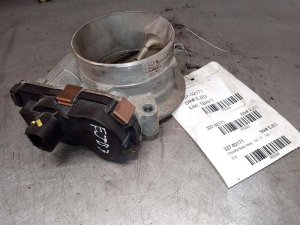
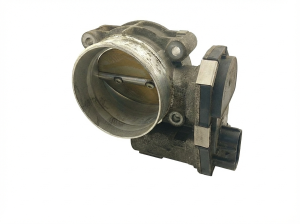
- Throttle Body Assembly
(OEM #12679524, 12629992 (Verify by VIN))— This is the most common failure point for code P2135. The internal throttle position sensors (TPS) are integrated into the assembly and are not typically sold separately.
Trusted brands: ACDelco (GM Genuine), Hitachi, Bosch, Dorman
OEM price range: $270-$550
Aftermarket price range: $120-$250 - Throttle Body Connector Pigtail
(OEM #Standard Motor Products S-1010 (2006-07) or S-1745 (2008-10))— If the diagnostic points to a bad connector (corrosion, loose pins), replacing the pigtail is necessary. Note the part differs between early and late models.
Trusted brands: ACDelco, Standard Motor Products (SMP), Dorman
OEM price range: $30-$60
Aftermarket price range: $15-$40
Related Codes That Often Appear With This One
- P1516 — This code relates to Throttle Actuator Control (TAC) performance and often appears with P2135 when the ECM detects a mismatch between the commanded and actual throttle position.
- P2101 — This code indicates a fault in the throttle actuator control motor circuit and is another common companion code pointing to a failing throttle body.
- C0240 — This ABS/StabiliTrak code means the PCM has disallowed traction control. It's a secondary code set because the stability system cannot function without reliable engine torque data, which is compromised by the P2135 fault.
Technical Service Bulletins (TSBs) & Recalls
- 11-06-04-007C: Diagnosis and Repair - Malfunction Indicator Lamp (MIL) Illuminated, Reduced Engine Power Message Displayed, DTC P2135 Set. This TSB outlines a procedure to replace the TPS cover and terminals instead of the whole throttle body.
Platform-Specific Known Issues
- GM issued Technical Service Bulletin #11-06-04-007C, which provides a procedure for replacing only the throttle position sensor cover and terminals as a potential fix. However, many owners report this is a temporary solution and prefer replacing the entire throttle body.
- A Special Coverage Adjustment (#11273A) was also issued, extending the warranty on the throttle position sensor to 10 years or 120,000 miles, highlighting the known high failure rate of this part. This program has expired for all 2006-2010 models as of the mid-2020s.
Mechanic-Grade Diagnostic Values
- TPS1 Signal Voltage (Key On, Engine Off) — expected: ~0.5V - 0.7V at closed throttle, sweeping up to ~4.0V - 4.5V at wide-open throttle.. Failure: Voltage is erratic, jumps, has dropouts, or does not sweep smoothly as the pedal is pressed.
- TPS2 Signal Voltage (Key On, Engine Off) — expected: Signal is typically inverse to TPS1 (e.g., starts high, sweeps low) and should also be smooth.. Failure: The two sensor signals disagree by more than 7-10% for more than 1 second.
- 5-Volt Reference at Throttle Body Connector — expected: 4.8-5.2 V between the 5-volt reference circuit terminal and ground.. Failure: Voltage is significantly lower or higher, indicating a wiring issue or a problem with the ECM.
- Low Reference (Ground) Circuit Resistance — expected: Less than 5 ohms between the low reference circuit terminal at the connector and a known good chassis ground.. Failure: Resistance is higher than 5 ohms, indicating a poor ground connection which can cause erratic sensor readings.
Scan Tool Commands That Help
- Tech2 / GDS2: Freeze Frame / Failure Records — Critical for intermittent faults. This function captures a snapshot of all sensor data, including the exact TPS1 and TPS2 voltages, at the moment the P2135 code was set, confirming the correlation error.
- Tech2 / GDS2: Idle Learn Reset — After replacing the throttle body, this function in the 'Module Setup' or 'Special Functions' menu resets the learned idle values in the ECM. This provides a more immediate and reliable idle calibration than the manual relearn procedure.
Wiring & Ground Locations
- Throttle Body Connector (8-wire 2006-07, 6-wire 2008-10) — Plugged directly into the throttle body, located at the front of the intake manifold.. This is the single point of failure for all signals from the TPS sensors and power to the throttle motor. Corrosion, spread pins, or chafed wires at this connector are a primary cause of P2135. A 'wiggle test' here while watching live data is a key diagnostic step.
- G103 — On the lower left side of the engine block, forward of G102.. This is a primary engine block to chassis ground. A poor connection here can introduce electrical noise and voltage offsets that affect the low reference signal for many sensors, including the TPS, potentially causing intermittent correlation faults.
- G104 — On the left side of the engine block, in front of the starter.. Another critical engine ground. Ensuring this ground is clean and tight is good practice when diagnosing any electronic throttle control issues to ensure the ECM and its sensors have a stable ground reference.
- G100 — In the engine compartment, mounted to the left front inner fender, behind the battery.. This is a main body ground point. While less likely to be the direct cause than an engine block ground, a poor connection here can cause a host of strange electrical issues.
- ECM (Engine Control Module) — Located in the right rear corner of the engine compartment.. All signals from the throttle body and accelerator pedal terminate here. In rare cases, a fault within the ECM or its connector is the cause. A repair story noted that reseating the ECM connectors was part of the final fix.
Real Owner Repair Stories
- Comment on a GM P2135 repair video (General GM Truck/Van Application) — Recurring P2135 and reduced power mode over several years.
❌ Tried (didn't work) Replacing multiple unspecified parts over several years, costing thousands of dollars.
✅ What actually fixed it The owner unplugged, cleaned with compressed air, and firmly reseated every electrical connector from the throttle body, to the ECM, and to the accelerator pedal. The 10-minute, zero-cost fix resolved the long-term issue, indicating the root cause was a poor pin connection. - AveoForum user 'Martyman' (Chevrolet Aveo (similar GM electronics)) — Throttle body codes, limp home mode (Reduced Power).
❌ Tried (didn't work) Replacing coil pack, Replacing O2 sensor, Replacing computer (ECM), Dealer service attempts
✅ What actually fixed it The owner cleaned the battery posts and discovered the main chassis ground bolt near the battery was loose. After removing the bolt, sanding the paint off the contact area, cleaning the terminal, and retightening the bolt securely, all drivability problems were cured. This highlights the sensitivity of the throttle control system to main ground integrity.
OEM Part Supersession History
12572658, 12580760→12679524— Standard part evolution and design updates by GM to improve reliability.
Heads up: The listed part numbers are generally for the I5 engine. The 5.3L V8 uses a different throttle body. Always verify the correct part number by VIN.
Model Year Variations Within This Range
- 2006: The 2006 model used the 3.5L L52 I5 engine. The throttle body connector is typically an 8-wire plug (e.g., SMP S-1010 pigtail).
- 2007-2010: From 2007 onwards, the standard engine was the 3.7L LLR I5. The throttle body connector for these years is typically a 6-wire plug (e.g., SMP S-1745 pigtail).
- 2008-2010: The 5.3L LH8 V8 engine became an option. This engine uses a completely different throttle body assembly than the I5 engines, and while it can suffer from P2135, the specific part number is different and must be verified by VIN.
Helpful Videos
Used OEM Parts in Stock


New Aftermarket Parts Available





The information in this article is provided for general reference and educational purposes only. Vehicle specifications, procedures, and part compatibility can vary by production date, trim level, and region. Always consult your vehicle's factory service manual and verify part numbers before purchasing or performing repairs. Safety-critical components such as airbags, seat belts, and braking systems should be installed by a qualified professional.
- Hummer H3:
- 🎬 Helpful Videos
- 🛍️ Shop This Part
- What's Unique About the 2006-2010 Hummer H3
- Diagnostic Flowchart
- Symptoms You May Notice
- Most Likely Causes
- Rare But Worth Checking
- Diagnosis Steps
- Parts You'll Likely Need
- Related Codes That Often Appear With This One
- Technical Service Bulletins (TSBs) & Recalls
- Platform-Specific Known Issues
- Mechanic-Grade Diagnostic Values
- Scan Tool Commands That Help
- Wiring & Ground Locations
- Real Owner Repair Stories
- OEM Part Supersession History
- Model Year Variations Within This Range
- 🎟️ Get 5% Off