

P2135 on 2008-2012 GMC Savana: Throttle Position Sensor Causes and Fixes
On a 2008-2012 GMC Savana, code P2135 almost always means the Throttle Position Sensor (TPS) on the throttle body has failed. This is a very common issue addressed by a specific GM Technical Service Bulletin and a Special Coverage Adjustment. The fix is to replace the sensor kit, not the entire throttle body, for around $40-$100 in parts. An ECM reprogram and throttle relearn are required for a complete, by-the-book repair.
- P2135 on a 2008-2012 Savana is almost certainly a bad throttle position sensor (TPS).
- Do not replace the entire throttle body; a much cheaper sensor kit (ACDelco #19259452) is available and is the manufacturer-recommended fix.
- The most common symptom is the van entering 'Reduced Engine Power' mode, making it slow and difficult to drive.
- While replacing the sensor is a straightforward DIY job, the official GM procedure also calls for an ECM reprogram, which requires professional tools.
- Always replace the throttle body gasket when performing this repair to avoid future vacuum leaks.
What's Unique About the 2008-2012 Gmc SAVANA
This particular issue is extremely common across GM trucks and vans from this era, including the Savana. The failure of the throttle position sensor is so frequent that General Motors issued a Technical Service Bulletin (TSB #11-06-04-007C) with a specific repair kit. There was also a Special Coverage Adjustment (11273A) that extended warranty coverage for this specific failure on 2008-2011 models for 10 years or 120,000 miles. Unlike many other vehicles where the entire throttle body must be replaced, for the Savana, you can typically just replace the sensor assembly itself, which is a much more affordable repair.
Diagnostic Flowchart
Tap your situation to follow the diagnostic path that matches what you're seeing on this vehicle.
Symptoms You May Notice
- "Reduced Engine Power" message on the dashboard
- Check Engine Light is on
- Vehicle has very limited acceleration (limp mode)
- Hesitation or surging when pressing the gas pedal
- Unstable or high idle
- Engine may stall unexpectedly
- Traction control or stability track warning lights may illuminate
- Replacing the entire throttle body assembly. The TSB specifically advises against this, as only the sensor kit is usually required.
- Replacing the Accelerator Pedal Position (APP) sensor. While it's part of the throttle control system, P2135 on this vehicle almost always points to the sensors on the throttle body, not the pedal.
Most Likely Causes
- Failed Throttle Position Sensor (TPS) 🔴 High Probability This is a well-documented, high-failure rate part on this GM platform, as acknowledged by the manufacturer's TSB (11-06-04-007C) and a special coverage campaign (11273A).
How to confirm: With a scan tool, observe the two TP sensor voltage readings (TP Sensor 1 and TP Sensor 2) while pressing the accelerator. If they do not change smoothly, one jumps, or one does not mirror the other (one should be roughly double the other), the sensor is bad. Given the high probability, many technicians replace it based on the code alone.
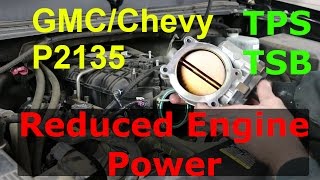
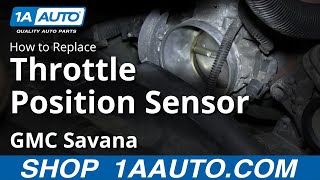
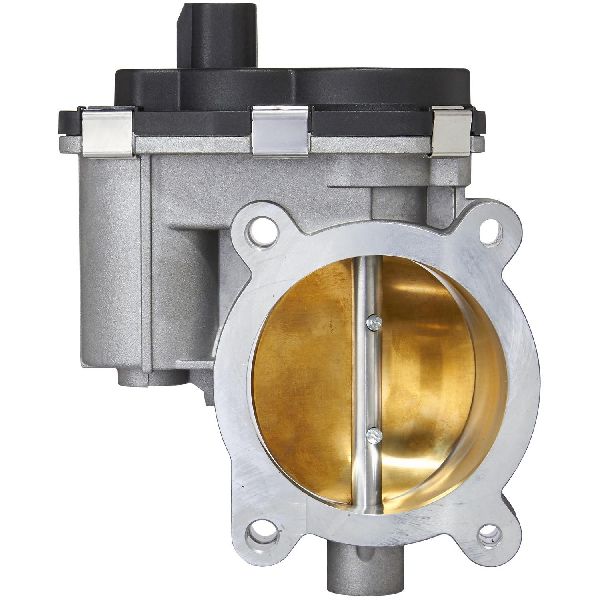
Typical fix: Replace the throttle position sensor cover/kit on the side of the throttle body. 🎬 See this walkthrough for replacing the sensor on your Savana. The ECM should be reprogrammed by a dealer or a shop with the correct tools, as per TSB 11-06-04-007C. Many DIYers skip the reflash and have success, but it is the official final step.
Est. part cost: $40-$115 - Wiring Harness or Connector Issue ⚪ Low Probability Over time, engine heat and vibration can cause wires to fray or corrode, especially at the connector to the throttle body. Some owners have found corroded wires under the main fuse box.
How to confirm: Visually inspect the wiring harness and connector going to the throttle body. Wiggle the connector and wires with the engine running to see if it affects idle or triggers the code. Check for 5-volt reference signals at the connector with a multimeter.
Typical fix: Repair the damaged section of wire or clean/replace the connector terminals. In rare cases of widespread corrosion, a new engine wiring harness may be needed.
Est. part cost: $5-$50 for connector repair, $500+ for harness
Rare But Worth Checking
- Faulty Powertrain Control Module (PCM): This is very rare. All other possibilities, especially the TPS itself and its wiring, should be exhausted before considering the PCM as the cause.
- Dirty or Binding Throttle Body: Heavy carbon buildup can cause the throttle plate to stick, which might cause a momentary disagreement between the sensors. Cleaning the throttle body is good practice during the TPS replacement, but cleaning alone will not fix an electronic P2135 code. 🎬 Watch: How to clean the throttle body and replace the sensor.
Diagnosis Steps
- Confirm code P2135 is present using an OBD-II scanner. Note any other codes like P1516, P0121, or P0220.
- Visually inspect the throttle body connector and wiring harness for any signs of damage, corrosion, or loose connections. Pay close attention to the harness where it might rub against other components.
- If using an advanced scan tool, monitor the live data for TP Sensor 1 and TP Sensor 2. The voltages should mirror each other as you slowly press the gas. A jump, drop, or freeze in one of the signals indicates a bad sensor.
- Given the TSB and high failure rate, if the wiring appears intact, the most logical step is to replace the Throttle Position Sensor kit (Part No. 19259452).
- While the throttle body is removed for the sensor replacement, clean the throttle plate and bore with throttle body cleaner and a soft brush. Do not use harsh solvents.
- After reassembly, perform a throttle relearn procedure. A common method is to start the engine and let it idle for 3 minutes, turn it off for 60 seconds, start and let it idle for another 3 minutes.
- For a complete repair according to the TSB, the ECM should be reprogrammed with the latest calibration by a professional. This step is often skipped by DIYers but is recommended by GM to prevent the code from returning.
Parts You'll Likely Need
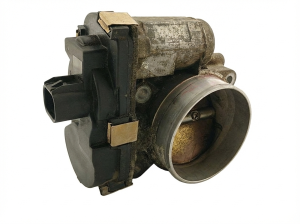
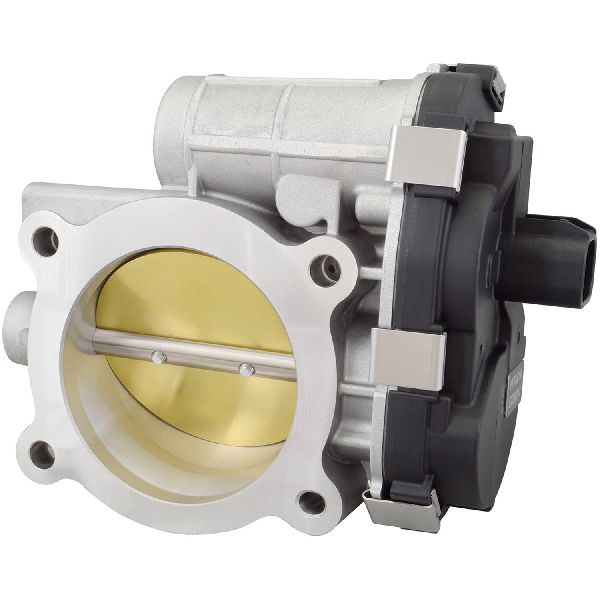
- Throttle Position Sensor Kit
(OEM #19259452)— This is the direct cause of code P2135 in the vast majority of cases for this vehicle, as documented by GM's own service bulletin.
Trusted brands: ACDelco (OEM), Dorman, Standard Motor Products (SMP)
OEM price range: $80-$115
Aftermarket price range: $40-$70 - Throttle Body Gasket
(OEM #12589235 (for V8 engines, verify by VIN))— The gasket should be replaced whenever the throttle body is removed from the intake manifold to prevent vacuum leaks. The TSB explicitly states to discard the old gasket.
Trusted brands: ACDelco, Fel-Pro, Mahle
OEM price range: $10-$20
Aftermarket price range: $5-$15
Related Codes That Often Appear With This One
- P1516
- P0121
- P0220
Technical Service Bulletins (TSBs) & Recalls
- 11-06-04-007C: Details the procedure for replacing the throttle position sensor cover and reprogramming the ECM to correct a P2135 code and a Reduced Power message. It explicitly warns not to replace the entire throttle body assembly.
- 11273A (Special Coverage Adjustment): GM acknowledged the high failure rate and extended the warranty on this part to 10 years or 120,000 miles for 2008-2011 models. While likely expired for most vehicles now, it serves as official confirmation of the defect.
Platform-Specific Known Issues
- Owner Experience: Intermittent Failure: Many owners report the P2135 code and 'Reduced Engine Power' mode appearing randomly, sometimes weeks or months apart. One owner on a Chevy forum noted the issue would disappear for a year at a time before returning. This intermittent nature can make diagnosis frustrating but still points to the eventual failure of the TPS.
- Repair Story: The Importance of the TSB: A user on the Tahoe Yukon Forum documented a two-year battle with P2135, having replaced the TPS four times, the pigtail, and even the ECM. This highlights that simply replacing the part without following the full TSB procedure (including potential ECM reflash) can lead to recurring issues for some vehicles.
- TSB 11-06-04-007C Details: The TSB is very specific, instructing technicians NOT to replace the entire throttle body. It provides a step-by-step guide for removing the old TPS cover and clips, cleaning the throttle body, installing the new sensor kit, and finally, reprogramming the ECM with an updated calibration.
Mechanic-Grade Diagnostic Values
- TP Sensor 1 Voltage (Scan Tool) — expected: Approx. 0.5V at closed throttle, rising to approx. 4.5V at wide-open throttle.. Failure: Voltage is erratic, jumps, freezes, or does not sweep smoothly as the pedal is pressed.
- TP Sensor 2 Voltage (Scan Tool) — expected: Signal should mirror TP Sensor 1, but values are not identical. The two voltages should not diverge by more than 0.2V during operation.. Failure: Voltage does not track with TP Sensor 1, or the Agree/Disagree parameter on a scan tool shows 'Disagree'.
- Throttle Actuator Motor Resistance — expected: Between 2 and 15 Ohms between terminals A and B on the throttle body.. Failure: An over-limit (OL) reading indicates an open circuit; a reading less than 1 Ohm indicates a short circuit.
- TPS Shared Circuit Resistance — expected: Approximately 1.5 kOhms between terminals C and E on the throttle body connector.. Failure: An over-limit (OL) reading indicates an open circuit; a reading less than 1 Ohm indicates a short.
Scan Tool Commands That Help
- GDS2 / Professional Scan Tool: Idle Relearn / ETCS Reset — After replacing the throttle position sensor or the entire throttle body, this function is used to reset the learned idle position and other throttle parameters in the ECM. TSB 11-06-04-007C requires clearing the DTCs after part replacement.
- GDS2 / Professional Scan Tool: Live Data Graphing: TP Sensor 1 vs TP Sensor 2 — During diagnosis, graphing both sensor voltages simultaneously while operating the accelerator pedal can make it very easy to spot a glitch, spike, or flat-line in one sensor's signal that indicates failure.
Wiring & Ground Locations
- Throttle Body Connector — Connected directly to the throttle body at the front of the engine's intake manifold.. This is the primary connection point for the two throttle position sensors and the throttle actuator motor. Corrosion or loose pins here are a common cause of P2135. The pinout is typically: G: TP Sensor 1 Signal (Dark Green), F: TP Sensor 2 Signal (Purple), E: 5 Volt Reference (Light Blue/Black), B: Low Reference/Ground (Black/White).
- G102 — On the left rear of the engine block.. This ground is used by the ignition coils. While not directly tied to the TPS, a poor engine ground can introduce electrical noise that may affect various sensor readings, including the TPS low reference circuit.
- G103 — Located at the left rear of the engine compartment on the cowl, above the brake booster.. This is a critical ground point for the Body Control Module (BCM) and the Data Link Connector (DLC). A fault here can cause widespread communication issues and erroneous codes.
- ECM (Engine Control Module) — Typically located on the left side of the engine compartment, often near the driver's side fender.. The ECM receives the voltage signals from the TPS and makes the correlation check. All wiring from the throttle body ultimately terminates here.
Real Owner Repair Stories
- YouTube comment on a P2135 repair video (Not specified, but GM truck/van implied) — Recurring P2135 code for years, with associated reduced power mode.
❌ Tried (didn't work) Replacing multiple parts, spending thousands of dollars.
✅ What actually fixed it The owner finally fixed the issue by reseating every wiring harness connector between the throttle body and the gas pedal, including both plugs on the ECM. They also blew out and wiped the connectors. This suggests the root cause was a poor pin connection (fretting corrosion) rather than a failed part. - Axle's Garage YouTube Video (2010 Chevy Silverado 1500 4.8L) — Sporadic but worsening P2135, Check Engine Light, Stability Track error, Traction Control error, and Reduced Power (limp mode).
❌ Tried (didn't work) Clearing the code with a scanner (temporary fix), Disconnecting the battery (temporary fix)
✅ What actually fixed it The problem was fixed by replacing the throttle position sensor kit on the side of the original throttle body, rather than the entire assembly. The mechanic noted this is the correct fix 95% of the time and that skipping the dealer ECM reflash is common and usually successful.
OEM Part Supersession History
Unknown, multiple revisions likely existed.→19259452— This part number is the subject of TSB 11-06-04-007C and is the official repair kit for the widespread P2135 issue on this platform. It contains the updated sensor cover, clips, and gasket.
Model Year Variations Within This Range
- 2011: According to TSB 11-06-04-007C, the required ECM reprogram for 2011 models also includes an updated engine oil life monitor (OLM) algorithm, which is not a factor for earlier years.
Helpful Videos


Used OEM Parts in Stock


New Aftermarket Parts Available




The information in this article is provided for general reference and educational purposes only. Vehicle specifications, procedures, and part compatibility can vary by production date, trim level, and region. Always consult your vehicle's factory service manual and verify part numbers before purchasing or performing repairs. Safety-critical components such as airbags, seat belts, and braking systems should be installed by a qualified professional.
- Gmc SAVANA:
- 🎬 Helpful Videos
- 🛍️ Shop This Part
- What's Unique About the 2008-2012 Gmc SAVANA
- Diagnostic Flowchart
- Symptoms You May Notice
- Most Likely Causes
- Rare But Worth Checking
- Diagnosis Steps
- Parts You'll Likely Need
- Related Codes That Often Appear With This One
- Technical Service Bulletins (TSBs) & Recalls
- Platform-Specific Known Issues
- Mechanic-Grade Diagnostic Values
- Scan Tool Commands That Help
- Wiring & Ground Locations
- Real Owner Repair Stories
- OEM Part Supersession History
- Model Year Variations Within This Range
- 🎟️ Get 5% Off