

P2135 on 2008-2010 Chevrolet Silverado 2500: Reduced Power Causes and Fixes
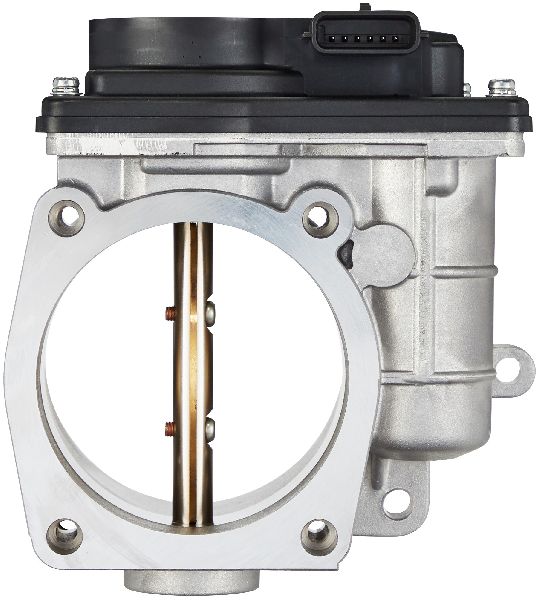
On a 2008-2010 Silverado 2500, code P2135 almost always means the throttle position sensor (TPS) has failed. This sensor is part of the throttle body assembly. The most common fix is replacing the entire throttle body, which costs around $150-$350 for the part and is a straightforward DIY job for many owners. A throttle relearn procedure is required after replacement, which can often be done without special tools.
- P2135 on your Silverado will cause the 'Reduced Engine Power' message and make the truck unsafe for normal highway driving.
- The cause is almost always a faulty throttle body assembly, which contains the failing sensors.
- Do not replace the gas pedal sensor; this is a common misdiagnosis for this code.
- A DIY replacement of the throttle body is manageable for many owners and requires basic tools. A 'throttle relearn' procedure is necessary after installation, which can often be done without special tools by following a specific idle sequence.
What's Unique About the 2008-2010 Chevrolet SILVERADO 2500
This issue is extremely common on GM's GMT900 platform trucks and SUVs from this era, including the Silverado 2500. The failure of the throttle position sensors was so frequent that GM issued a Technical Service Bulletin (TSB #11-06-04-007C) and a special coverage program to address it. While the original TSB outlined a procedure to replace just the sensor cover (Kit P/N 19259452) and reprogram the computer, the more common and lasting repair today is to replace the entire throttle body assembly.
Diagnostic Flowchart
Tap your situation to follow the diagnostic path that matches what you're seeing on this vehicle.
Symptoms You May Notice
- "Reduced Engine Power" message on the dashboard
- Check Engine Light is on
- "Service Stabilitrak" or "Service Traction Control" message may appear with the Reduced Power warning.
- Severely limited acceleration and top speed (limp mode)
- Unstable, rough, or high idle
- Hesitation or surging during acceleration.
- Engine may stall, especially after coming to a stop.
- Replacing the Accelerator Pedal Position (APP) Sensor. The P2135 code specifically points to a correlation error between the two sensors on the throttle body itself. A faulty gas pedal sensor typically sets a different code, such as P2138.
- Cleaning the throttle body. While cleaning carbon buildup from a dirty throttle body is good maintenance and can solve some idle issues, it will not fix the electronic failure of the internal sensors that causes P2135.
Most Likely Causes
- Failing Throttle Body Assembly 🔴 High Probability The integrated throttle position sensors (TPS) are a known weak point on these GM trucks, as acknowledged by manufacturer TSB #11-06-04-007C. Over time, the internal electronic contacts wear out, causing the voltage signals to become erratic and trigger the correlation fault. The failure is so common that some owners carry a spare throttle body.
How to confirm: Using a scan tool, monitor the live data for TP Sensor 1 and TP Sensor 2. With the key on and engine off, slowly press the accelerator pedal. The voltage values should move smoothly and inversely. For example, TPS1 may read ~4.0-4.5V at closed throttle and ~0.5-0.7V at wide open, while TPS2 reads the opposite. Any jumps, drops, or flat spots in one sensor's reading indicates a faulty throttle body. The two signals should remain within a specific calibrated range of each other.
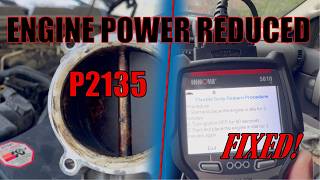
Typical fix: Replace the entire throttle body assembly. After replacement, a throttle relearn procedure is required. 🎬 Watch this guide for the sensor replacement and relearn process. While GM's TSB suggests replacing only the sensor cover (Kit P/N 19259452), most mechanics and owners opt to replace the whole unit for a more durable repair.
Est. part cost: $150-$350 - Wiring Harness or Connector Issue ⚪ Low Probability The wiring harness leading to the throttle body is subject to engine heat and vibration, which can cause wires to chafe or pins in the connector to become loose or corroded. Fretting corrosion on the terminal pins is a known issue.
How to confirm: Visually inspect the wiring harness for any signs of rubbing, melting, or damage. Unplug the 8-pin connector from the throttle body and check for corrosion, moisture, or backed-out pins. A "wiggle test" on the harness while monitoring live sensor data on a scan tool can reveal an intermittent connection. In some cases, simply unplugging, cleaning with compressed air, and firmly reseating all related connectors (at the throttle body, pedal, and ECM) has resolved the issue.
Typical fix: Repair the damaged section of wire or clean/replace the connector pigtail. Specific pins to test with a multimeter are Pin G (TP Sensor 1 Signal, Dark Green wire) and Pin F (TP Sensor 2 Signal, Purple wire).
Est. part cost: $10-$50
Rare But Worth Checking
- Faulty Powertrain Control Module (PCM): This is very rare. Before condemning the PCM, all other possibilities, especially the throttle body and its wiring, must be exhaustively ruled out. A misdiagnosis here is costly. The official TSB includes steps to test PCM circuits if a new sensor doesn't fix the issue.
Diagnosis Steps
- Read the trouble codes with an OBD-II scanner to confirm P2135 is present. Note any other codes.
- Using the scanner's live data function, monitor the values for 'TP Sensor 1' and 'TP Sensor 2'.
- With the engine off and key on, slowly press and release the accelerator pedal. Watch the sensor values. They should move in a smooth, correlated, and inverse manner. Any spikes, drops, or flat spots in one sensor's reading points to a bad throttle body.
- If the sensor data seems inconclusive, perform a visual inspection. Turn the ignition off. Disconnect the throttle body electrical connector and inspect the 8 pins for corrosion, bent pins, or moisture.
- Inspect the wiring harness leading to the throttle body for any signs of chafing, melting, or physical damage, paying close attention to where it might rub against other components.
- If wiring and live data point to a sensor failure, the most reliable repair is to replace the entire throttle body assembly. Alternatively, follow TSB #11-06-04-007C to replace only the sensor cover (P/N 19259452), but be aware this requires an ECM reprogram at a dealership for 2008-2010 models.
- After replacement, perform the throttle relearn procedure. This can be done without a scan tool: With the vehicle in Park, start the engine and let it idle for 3 minutes. Turn the engine off for 60 seconds. Start the engine again and let it idle for another 3 minutes. The idle should now be stable.
- Clear any remaining codes with the scanner.
Parts You'll Likely Need
- Throttle Body Assembly
(OEM #12580760)— This is the most common cause of P2135, as the failing throttle position sensors are integrated into the assembly. Replacing the entire unit is the standard, most reliable repair. This part number was superseded by 12601387 and later 12629992.
Trusted brands: ACDelco, Hitachi, Bosch, Dorman
OEM price range: $250-$400
Aftermarket price range: $150-$250 - Throttle Position Sensor Kit
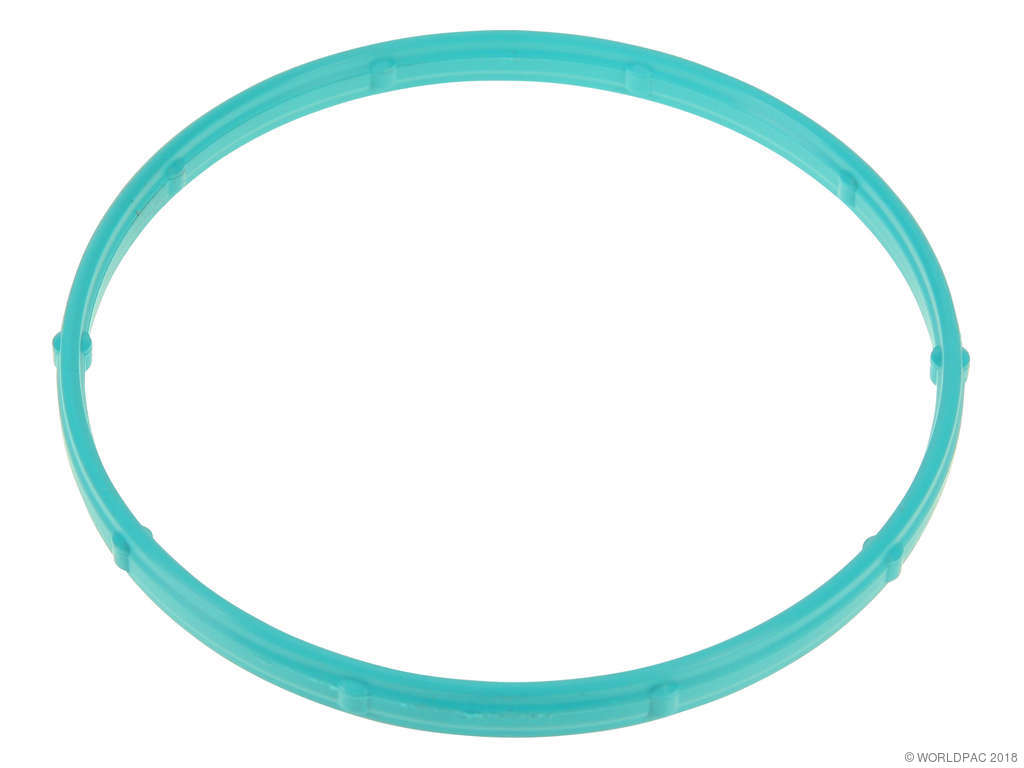
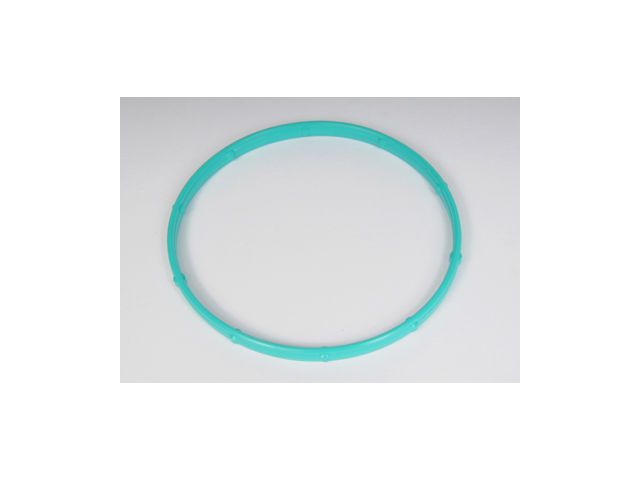
(OEM #19259452)— This is the less common, TSB-specified repair. It includes a new sensor cover, clips, and gasket to replace just the failed electronic component on the side of the throttle body. This is a cheaper option but may be less durable and requires an ECM reprogram on 2008-2010 models.
Trusted brands: ACDelco, Standard Motor Products
OEM price range: $80-$130
Aftermarket price range: $40-$70
Related Codes That Often Appear With This One
- P1516 — This code relates to the Throttle Actuator Control (TAC) module performance and can be triggered as a result of the sensor correlation failure.
- P2101 — This code indicates a performance problem with the throttle actuator control motor, which is often a secondary fault caused by the primary P2135 sensor issue.
- P0120 — This is a more general code for 'Throttle/Pedal Position Sensor 'A' Circuit' and can appear alongside P2135 when the primary sensor fails.
Technical Service Bulletins (TSBs) & Recalls
- 11-06-04-007C: 'Diagnosis and Repair - Malfunction Indicator Lamp (MIL) Illuminated, Reduced Engine Power Message Displayed, DTC P2135 Set.' Details replacing the TP sensor cover and explicitly notes that an ECM reprogram is required for 2008-2010 models.
- 11273A / 11273B: 'Special Coverage Adjustment – Throttle Position Sensor Replacement.' Extended warranty coverage for the condition to 10 years or 120,000 miles.
Platform-Specific Known Issues
- GM issued Technical Service Bulletin #11-06-04-007C which details a procedure for replacing only the throttle position sensor cover. Crucially, the TSB states that for 2008-2010 models, the ECM *must* be reprogrammed with the latest software after this repair, a step that requires a dealer or properly equipped shop.
- A Special Coverage Adjustment (No. 11273A/B) was also issued, extending the warranty on the throttle position sensor to 10 years or 120,000 miles. This program has since expired for all 2008-2010 vehicles but confirms the widespread nature of the defect.
Mechanic-Grade Diagnostic Values
- TP Sensor 1 Signal Voltage (Key On, Engine Off, Closed Throttle) — expected: ~4.0 - 4.5V. Failure: Voltage is erratic, drops out, or does not change smoothly as the pedal is depressed.
- TP Sensor 2 Signal Voltage (Key On, Engine Off, Closed Throttle) — expected: ~0.5 - 0.7V. Failure: Voltage is erratic, spikes, or does not move inversely to TP Sensor 1.
- 5-Volt Reference at Throttle Body Connector — expected: 4.8 - 5.2V. Failure: Voltage is low or absent, indicating a wiring or PCM issue.
Scan Tool Commands That Help
- Tech2 / GDS2: Idle Learn Reset — This function must be used after replacing the throttle body or TPS sensor to reset all learned idle airflow and throttle position values in the ECM. Failure to do so can result in a high or unstable idle.
- Tech2 / GDS2 with SPS (Service Programming System): ECM Reprogramming/Software Update — TSB #11-06-04-007C requires that the ECM be reprogrammed with the latest software calibration after replacing the TPS sensor cover. This update contains diagnostic enhancements for P2135.
Wiring & Ground Locations
- Throttle Body Connector (8-pin) — Connected to the driver's side of the throttle body assembly at the front of the intake manifold.. This is the primary connection for both TP sensors. Loose pins, corrosion, or chafed wires at this connector are a common secondary cause of P2135. Pin G (Dark Green) is TP Sensor 1 Signal, Pin F (Purple) is TP Sensor 2 Signal, Pin E (Gray) is 5V Reference, and Pin B (Black/White) is Low Reference/Ground.
- G103 / G104 — Main engine-to-chassis grounds. G103 is typically on the left front of the engine block. G104 is often on the front of the left cylinder head.. A poor engine ground can introduce electrical noise and create voltage offsets, causing the ECM to see a correlation fault between sensors even when the sensors themselves are good. Cleaning these grounds is a critical step if a new throttle body doesn't fix the code.
- ECM Ground — A critical ground for the engine computer is located on the back of the driver's side cylinder head.. This is the main ground for the computer that interprets all sensor data. If this ground is loose or corroded, the reference voltage for the sensors can become unstable, leading to correlation codes like P2135.
Real Owner Repair Stories
- Tahoe Yukon Forum user (2007-2014 GM SUV/Truck (GMT900)) — P2135 code, Reduced Engine Power mode.
❌ Tried (didn't work) Replacing the throttle body assembly alone.
✅ What actually fixed it The problem persisted after a new throttle body was installed. The final fix was to also replace the throttle body connector pigtail. The combination of a new throttle body AND a new connector resolved the issue, suggesting the original problem was a combination of a failing sensor and a faulty connector. - 2CarPros Forum User (2009 Chevrolet Aveo (similar electronic throttle control system)) — P2135, stalling, jerking, loss of acceleration.
❌ Tried (didn't work) Replaced throttle body 4 times., Replaced accelerator pedal twice.
✅ What actually fixed it The user was advised that the recurring issue was likely not the parts themselves, but an underlying wiring issue causing an intermittent voltage variation that was not being properly diagnosed before parts were replaced. The resolution was to perform a detailed wiring and connector inspection rather than continuing to replace major components.
OEM Part Supersession History
12580760→12601387, which was then superseded by 12629992.— GM updated the part to improve reliability and address the high failure rate of the internal sensors.
Heads up: The newest part number (12629992) is the recommended replacement for all previous versions and is fully compatible.
Model Year Variations Within This Range
- 2008-2010: When performing the TSB repair (replacing only the sensor cover, P/N 19259452), the Engine Control Module (ECM) on these specific model years MUST be reprogrammed with the latest software calibration. This requires a dealer or a shop with GM's Service Programming System (SPS). This step is not required for later model years.
Helpful Videos
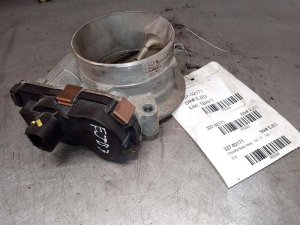
Used OEM Parts in Stock

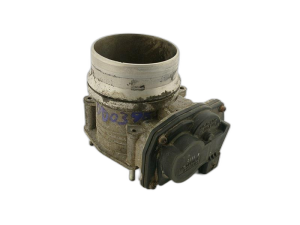
New Aftermarket Parts Available


The information in this article is provided for general reference and educational purposes only. Vehicle specifications, procedures, and part compatibility can vary by production date, trim level, and region. Always consult your vehicle's factory service manual and verify part numbers before purchasing or performing repairs. Safety-critical components such as airbags, seat belts, and braking systems should be installed by a qualified professional.
- Chevrolet SILVERADO 2500:
- 🎬 Helpful Videos
- 🛍️ Shop This Part
- What's Unique About the 2008-2010 Chevrolet SILVERADO 2500
- Diagnostic Flowchart
- Symptoms You May Notice
- Most Likely Causes
- Rare But Worth Checking
- Diagnosis Steps
- Parts You'll Likely Need
- Related Codes That Often Appear With This One
- Technical Service Bulletins (TSBs) & Recalls
- Platform-Specific Known Issues
- Mechanic-Grade Diagnostic Values
- Scan Tool Commands That Help
- Wiring & Ground Locations
- Real Owner Repair Stories
- OEM Part Supersession History
- Model Year Variations Within This Range
- 🎟️ Get 5% Off