

P2135 on 2005-2009 Chevrolet Express: Causes and Fixes for Reduced Engine Power
On a 2005-2009 Chevy Express, code P2135 almost always points to a failing throttle body assembly or its integrated throttle position sensor (TPS). This is a very common GM issue that triggers the 'Reduced Engine Power' warning and limits acceleration. The most common and reliable fix is to replace the entire throttle body assembly, which is a DIY-friendly job costing between $150 and $300 for the part. While a TSB exists to replace only the sensor, most find replacing the whole unit more practi
- P2135 on a 2005-2009 Express will almost certainly trigger the 'Reduced Engine Power' message and make the van difficult to drive.
- The problem is overwhelmingly likely to be a faulty throttle body assembly, a known weak point on this platform and its relatives.
- Before replacing any parts, inspect the wiring and connector to the throttle body for damage, including performing a 'wiggle test' on the wires, as this is a possible, though less common, cause.
- Do not replace the gas pedal (APP sensor); this is a common misdiagnosis that will not fix the P2135 code.
- Replacing the throttle body is a straightforward DIY job that can be completed with basic hand tools in under an hour. A throttle relearn procedure is necessary afterward.
What's Unique About the 2005-2009 Chevrolet EXPRESS

This is a notoriously common issue on many GM trucks and vans from this era, including the Chevrolet Express and its platform-mate, the GMC Savana. The problem is so well-known that General Motors issued a Technical Service Bulletin (TSB #11-06-04-007C) that specifically addresses DTC P2135 and the 'Reduced Engine Power' message. The TSB outlines a repair that involves replacing just the throttle position sensor cover and terminals, acknowledging a specific weakness in the original part's electrical contacts. However, many owners and mechanics find it more practical and reliable to replace the entire throttle body assembly, as the sensor itself is often the point of failure and separating it can be tedious.
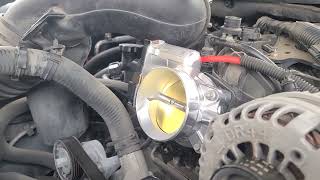
🎬 Watch this walkthrough of the Express throttle body replacement.Diagnostic Flowchart
Tap your situation to follow the diagnostic path that matches what you're seeing on this vehicle.
Symptoms You May Notice
- "Reduced Engine Power" message on the dashboard
- Check Engine Light (Malfunction Indicator Lamp) is on
- Severely limited acceleration (limp mode), may not exceed 15 mph
- Vehicle will not accelerate past a low speed
- Hesitation or surging during acceleration
- Unstable, high, or surging idle
- Engine may stall when stopped
- Replacing the Accelerator Pedal Position (APP) Sensor. While the APP sensor is part of the throttle control system, it typically sets different codes (like P2138). P2135 specifically points to a correlation fault between the two sensors on the throttle body itself. Multiple owner accounts confirm replacing the pedal does not fix this specific code.
Most Likely Causes

- Faulty Throttle Body Assembly (with integrated Throttle Position Sensors) 🔴 High Probability This is a well-documented failure point on this platform, as acknowledged by GM's own Technical Service Bulletin (TSB #11-06-04-007C). The internal sensors or their electrical contacts fail, causing their voltage readings to disagree. This is so common that many technicians will replace the component based on the code alone after a quick wiring check.
How to confirm: Use a scan tool to monitor live data for TP Sensor 1 and TP Sensor 2. The voltage readings should be different but track each other smoothly in a mirror-like fashion as the accelerator is pressed (one high-to-low, the other low-to-high). A jump, drop, or frozen value from one sensor while the other moves indicates a faulty throttle body/sensor assembly.
Typical fix: Replace the entire throttle body assembly. While the TSB outlines replacing just the sensor cover/kit (ACDelco #19259452), most find it easier and more reliable to replace the complete unit. A throttle relearn procedure is required after installation.
Est. part cost: $150-$300 - Damaged Wiring or Connector at Throttle Body 🟡 Medium Probability The wiring harness in the engine bay is exposed to heat and vibration, which can lead to chafed wires, loose pins, or corrosion in the connector over time. An older GM bulletin (PIP3089B) noted that a wire can break inside the insulation with no visible damage, typically 1 to 4 inches from the connector. Another known issue is fretting corrosion on the connector pins, which can be addressed by applying dielectric lubricant.
How to confirm: Visually inspect the wiring harness leading to the throttle body for any signs of damage, such as cracks, melting, or chafing against brackets like the purge solenoid bracket. Unplug the connector and check for corrosion, moisture, or backed-out pins. Perform a 'wiggle test' on each individual wire near the connector while monitoring live sensor data on a scan tool to see if the signal cuts out.
Typical fix: Repair the damaged section of wiring or replace the connector pigtail. Apply dielectric lubricant to the connector pins to prevent future fretting corrosion.
Est. part cost: $15-$50
Rare But Worth Checking
- Faulty Engine Control Module (ECM): This is extremely rare. Before condemning the ECM, all other possibilities, especially the throttle body and wiring, must be exhaustively ruled out. Some TSBs also recommend an ECM software update after replacing the TPS, which can only be done by a dealer or with a capable pass-thru tool.
- Dirty or Binding Throttle Body: Heavy carbon buildup can cause the throttle plate to stick, which might cause a momentary disagreement between the sensors. Cleaning the throttle body is good practice during any related repair, but cleaning alone will almost never fix a persistent electronic P2135 code.
Diagnosis Steps
- Read the trouble codes with an OBD-II scanner. Confirm P2135 is present, and note any other related codes like P0121 or P1516.
- Using a scan tool with live data, monitor the voltages of 'TP Sensor 1' and 'TP Sensor 2'.
- With the key on and engine off, have a helper slowly press and release the accelerator pedal. The two TP sensor voltage values should change smoothly and inversely. One will typically sweep from low-to-high (e.g., ~0.5V to ~4.5V) and the other from high-to-low. Watch for any jumps, dropouts, or flat spots in the voltage readings. A glitch in one of the signals confirms a faulty throttle body.
- If the live data is inconclusive, perform a thorough visual inspection of the throttle body connector and its wiring harness. Unplug the connector and check for bent pins, corrosion, or moisture. Look for chafing or melting on the harness.
- Perform a 'wiggle test' by gently tugging and flexing each wire between the harness and the throttle body connector while watching the live TP sensor data. A fluctuation in voltage indicates a broken wire inside the insulation.
- Check critical ground locations for the ECM and related circuits, such as G102 (left rear of engine) and G103 (right rear of engine), for tightness and corrosion.
- If the wiring and grounds are good and the live data shows a fault, the throttle body assembly is the defective component and should be replaced.
- After replacing the throttle body, clear the codes. Perform a throttle relearn procedure. A common GM procedure is: Turn ignition ON (engine off) for 3 minutes. Turn ignition OFF for 60 seconds. Turn ignition ON (engine off) for 3 minutes. Turn ignition OFF for 60 seconds. The ECM has now relearned the closed throttle position. Start the engine and check for proper idle and throttle response.
Parts You'll Likely Need

- Throttle Body Assembly
(OEM #12580760, 217-3156 (ACDelco numbers, verify by VIN))— This is the most common cause of P2135. The internal throttle position sensors (TPS) are integrated into the assembly and fail, causing a voltage correlation error. Replacing the entire unit is the standard and most reliable repair.
Trusted brands: ACDelco (GM Genuine), Hitachi, Bosch, Dorman
OEM price range: $200-$300
Aftermarket price range: $150-$250 - Throttle Position Sensor Kit
(OEM #ACDelco 19259452, Dorman 977-000)— For those following TSB #11-06-04-007C, this kit allows for the replacement of just the sensor cover, terminals, and gasket. This is a less common repair path than replacing the whole throttle body but is the specific fix outlined by GM.
Trusted brands: ACDelco, Dorman, Standard Motor Products (TH445)
OEM price range: $100-$150
Aftermarket price range: $70-$120
Related Codes That Often Appear With This One
- P0121: Throttle/Pedal Position Sensor/Switch 'A' Circuit Performance
- P1516: Throttle Actuator Control (TAC) Module Throttle Actuator Position Performance
- P2119: Throttle Actuator Control Throttle Body Range/Performance
- P2101: Throttle Actuator Control Motor Circuit Range/Performance
Technical Service Bulletins (TSBs) & Recalls
- Bulletin #11-06-04-007C: Diagnosis and Repair - Malfunction Indicator Lamp (MIL) Illuminated, Reduced Engine Power Message Displayed, DTC P2135 Set.
- Bulletin #PIP3089B: SES Light and Reduced Engine Power with a DTC P1516... and P2135 May Also Be Present. (Mentions broken wire in harness).
Platform-Specific Known Issues
- GM issued Technical Service Bulletin #11-06-04-007C which details a procedure for replacing only the throttle position sensor cover and terminals to fix this code. This confirms it's a known issue with the sensor component itself. The TSB explicitly warns not to drop the throttle body during the procedure, as any impact can damage the internal gears, requiring full replacement.
- A related bulletin for earlier models (PIP3089B) points to a broken wire inside the insulation near the throttle body connector as a potential cause, requiring a 'wiggle test' to diagnose.
- Fretting corrosion on the electrical connector pins is a known GM issue that can cause this code. Applying dielectric lubricant during repair is recommended.
Mechanic-Grade Diagnostic Values
- TP Sensor 1 Voltage (Key On, Engine Off) — expected: Sweeps smoothly from approx. 0.5V (closed throttle) to 4.5V (wide-open throttle).. Failure: Voltage jumps, drops to zero, or does not change when the pedal is pressed.
- TP Sensor 2 Voltage (Key On, Engine Off) — expected: Sweeps smoothly from approx. 4.5V (closed throttle) to 0.5V (wide-open throttle).. Failure: Voltage jumps, drops to zero, or does not change when the pedal is pressed. Must correlate inversely with Sensor 1.
- 5-Volt Reference at Throttle Body Connector — expected: Approx. 5.0V at Pin E (Gray wire).. Failure: Voltage is significantly lower or higher than 5.0V, indicating a wiring or ECM issue.
Scan Tool Commands That Help
- GDS2 (GM Tech Tool): Throttle Body Idle relearn and Air Flow Compensation Reset — After replacing the throttle body or cleaning it, this function must be performed to reset learned values and prevent idle issues or a P1101 code from setting.
- GDS2 (GM Tech Tool): Module Setup / Relearn — If the ECM is reprogrammed or replaced, a relearn procedure is required to ensure it communicates correctly with the new throttle body.
Wiring & Ground Locations

- G102 — On the left (driver's side) rear of the engine block/cylinder head.. This is a primary engine ground. A loose or corroded connection here can cause erratic sensor readings and various electrical faults, including P2135.
- G103 — On the right (passenger's side) rear of the engine block/cylinder head.. This is another critical engine ground point. Like G102, poor contact can lead to unstable sensor voltages and trigger correlation codes.
- Throttle Body Connector — 8-pin connector directly on the electronic throttle body.. This is the direct connection for both TP sensors and the throttle actuator motor. It is prone to fretting corrosion, loose pins, and harness chafing nearby, making it a primary inspection point.
Real Owner Repair Stories
- Chevy HHR Network Forum (2010 Chevrolet HHR 2.2L with 45,000 miles (Note: Different vehicle but same GM engine family and code)) — Car started running rough, dash lights for low power, traction control, and airbag flashed. Check engine light stayed on with code P2135.
❌ Tried (didn't work) Having Autozone check the battery and charging system (they were fine).
✅ What actually fixed it The user noted that for this code, unplugging the TPS connector to check for loose or pushed-out pins is a key step, as low-voltage connection problems are a frequent cause. While the final fix wasn't posted by the original user, the thread consensus pointed toward either a bad throttle body or a wiring connection issue, not the pedal sensor. - YouTube - Tom's Garage (2011 GMC Savana) — Check engine light on, 'Reduced Power' message displayed, codes P2135 and P2119 stored.
❌ Tried (didn't work) Initial diagnosis pointed to the common throttle body failure.
✅ What actually fixed it The technician replaced only the throttle position sensor (TPS) on the side of the throttle body, following the GM special coverage adjustment/TSB. After replacement, an ECM reprogram was performed to complete the repair. This confirms the sensor itself is often the point of failure and can be replaced separately from the entire throttle body assembly.
OEM Part Supersession History
12580760→12679524— Standard part number update and revision by General Motors.12572658→12580760— Earlier part number that was replaced by 12580760.
Helpful Videos



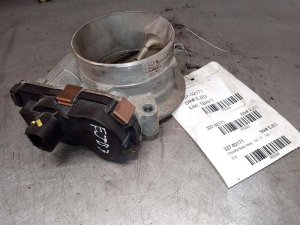
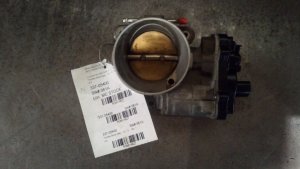
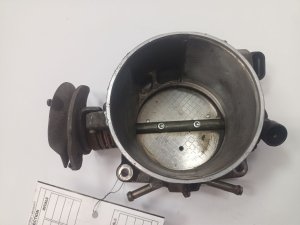
We Have This Part in Stock




The information in this article is provided for general reference and educational purposes only. Vehicle specifications, procedures, and part compatibility can vary by production date, trim level, and region. Always consult your vehicle's factory service manual and verify part numbers before purchasing or performing repairs. Safety-critical components such as airbags, seat belts, and braking systems should be installed by a qualified professional.
- Chevrolet EXPRESS:
- 🎬 Helpful Videos
- 🛍️ Shop This Part
- What's Unique About the 2005-2009 Chevrolet EXPRESS
- Diagnostic Flowchart
- Symptoms You May Notice
- Most Likely Causes
- Rare But Worth Checking
- Diagnosis Steps
- Parts You'll Likely Need
- Related Codes That Often Appear With This One
- Technical Service Bulletins (TSBs) & Recalls
- Platform-Specific Known Issues
- Mechanic-Grade Diagnostic Values
- Scan Tool Commands That Help
- Wiring & Ground Locations
- Real Owner Repair Stories
- OEM Part Supersession History
- 🎟️ Get 5% Off