

P2135 on 2005-2011 Chevrolet Colorado: Throttle Position Sensor Causes and Fixes
On a 2005-2011 Colorado, code P2135 almost always points to a failing throttle body assembly. This triggers a "Reduced Power" message and severe driving limitations. While GM issued a TSB to first try replacing just the sensor cover, a full throttle body replacement is the most common and reliable long-term fix, costing around $100-$250 for the part.
- P2135 on a 2005-2011 Colorado is a serious code that will put your truck in "Reduced Power" mode.
- The overwhelming cause is a faulty throttle body with failing internal sensors, though GM recommends trying to replace just the sensor cover first (TSB #11-06-04-007C).
- Before buying parts, check the wiring and connector at the throttle body for damage and verify correct voltage and ground signals.
- Replacing the entire throttle body is a common DIY-friendly repair and the most reliable long-term fix according to many owners.
- After replacement, a specific throttle relearn procedure is necessary but can be done without special tools.
What's Unique About the 2005-2011 Chevrolet COLORADO

The first-generation Chevrolet Colorado, along with its platform mates (GMC Canyon, Hummer H3), is notorious for electronic throttle body failures. The problem is so common that GM issued Technical Service Bulletin #11-06-04-007C, which provides a procedure to replace only the throttle position sensor cover as a first attempt at a fix. However, extensive owner experiences show that wear on the internal electronic contacts often means a complete throttle body replacement is the only permanent solution. Some owners also qualified for a special warranty extension (10 years / 120,000 miles) for this specific issue.
Diagnostic Flowchart

Tap your situation to follow the diagnostic path that matches what you're seeing on this vehicle.
Symptoms You May Notice
- "Reduced Engine Power" message on the dashboard.
- "Service Stabilitrak / Traction Failed" message may also appear.
- Check Engine Light is on.
- Vehicle has very poor acceleration and won't go over a low speed (limp mode).
- Unstable, surging, or high idle.
- Hesitation or surging when trying to accelerate.
- Engine may stall when coming to a stop.
- The issue can be intermittent, sometimes triggered by bumps, temperature changes, or after a long idle.
- Replacing the Accelerator Pedal Position (APP) sensor. While the APP sensor can cause similar symptoms, P2135 specifically points to a correlation fault between the two sensors on the throttle body itself, not the pedal.
Most Likely Causes

- Faulty Throttle Body Assembly 🔴 High Probability The integrated throttle position sensors are a known high-failure item on this platform, as acknowledged by TSBs and extensive owner reports. Internal electronic contacts wear out, causing the sensor signals to become erratic and disagree.
How to confirm: Use a scan tool to monitor the live data for TP Sensor 1 and TP Sensor 2. As you slowly press the gas pedal (with the engine off, key on), the voltages should change smoothly and in opposition (one rising, one falling). Any jumps, dropouts, or erratic readings indicate a faulty sensor. Since the sensors are integrated, this condemns the entire throttle body.
Typical fix: Replace the entire throttle body assembly. 🎬 Follow this step-by-step guide to replace your throttle body. This is the most common and lasting repair reported by owners, often after less-permanent fixes have failed.
Est. part cost: $100-$250 - Faulty Throttle Position Sensor Cover / Terminals 🟡 Medium Probability GM identified this as a specific failure point and issued TSB #11-06-04-007C. The TSB directs technicians to replace the sensor cover and its terminals as a first step before replacing the entire throttle body.
How to confirm: This is difficult to confirm without replacement. If wiring checks out, performing the TSB is the next logical step. The TSB procedure involves carefully inspecting terminals and replacing the cover and gasket. For 2008-2010 models, an ECM reprogram is also required after replacement.
Typical fix: Replace the throttle position sensor cover, clips, and gasket following the procedure in TSB #11-06-04-007C. The ACDelco kit part number is 19259452.
Est. part cost: $60-$130 - Damaged Wiring or Connector 🟡 Medium Probability The wiring harness connector at the throttle body is subject to engine heat and vibration, which can lead to corrosion, fretting of the pins, or loose connections over time.
How to confirm: Visually inspect the throttle body connector for corrosion, backed-out pins, or damaged wires. With the connector unplugged (and ECM powered down), use a multimeter to check for stable 5-volt reference at terminal E and good ground (less than 5 ohms) at terminal C. Wiggling the harness while watching live sensor data can also reveal intermittent connection issues.
Typical fix: Clean the connector terminals with contact cleaner and apply dielectric grease. If a wire is broken or a pin is damaged, the connector pigtail must be replaced. Common pigtail part numbers include PT2628 and 645-800.
Est. part cost: $15-$40
Rare But Worth Checking
- Powertrain Control Module (PCM) Failure: This is very rare. Before condemning the PCM, all other possibilities, especially the throttle body, its wiring, and the TSB procedure, must be exhaustively ruled out.
- Faulty Fan Clutch: A failing electronic fan clutch can short out the 5-volt reference circuit it shares with the throttle position sensors. A user on the GMTNation forum reported that unplugging their fan clutch temporarily resolved the P2135 code, pointing to the fan clutch as the root cause.
Diagnosis Steps
- Read the trouble codes with an OBD-II scanner to confirm P2135 is present.
- Visually inspect the wiring harness and connector at the throttle body for any obvious damage, corrosion, or loose connections.
- With the key on and engine off, use a scan tool with live data to graph TP Sensor 1 and TP Sensor 2 voltages.
- Slowly press and release the accelerator pedal, watching the graphs. The voltage readings should be smooth, with no spikes or dropouts.
- If the data looks suspect, perform a wiring check. Disconnect the throttle body connector. With the key on, use a multimeter to verify 4.8-5.2 volts between terminal E (5V Reference) and ground.
- With the key off, check for less than 5 ohms of resistance between terminal C (Low Reference) and a good chassis ground.
- If wiring and power/ground are good, the next step according to GM is to follow TSB #11-06-04-007C (replace the TPS cover).
- If the TSB procedure does not resolve the issue, or if the sensor signals were clearly erratic in step 4, the throttle body assembly is faulty and should be replaced.
- After replacement, perform a throttle relearn procedure. A common method is: Start engine and idle for 3 minutes. Turn engine off for 60 seconds. Start engine and idle for another 3 minutes. The PCM should now have relearned the new throttle's idle and off-idle positions.
Parts You'll Likely Need

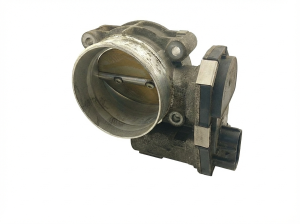
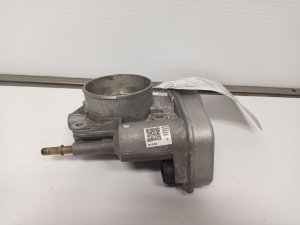
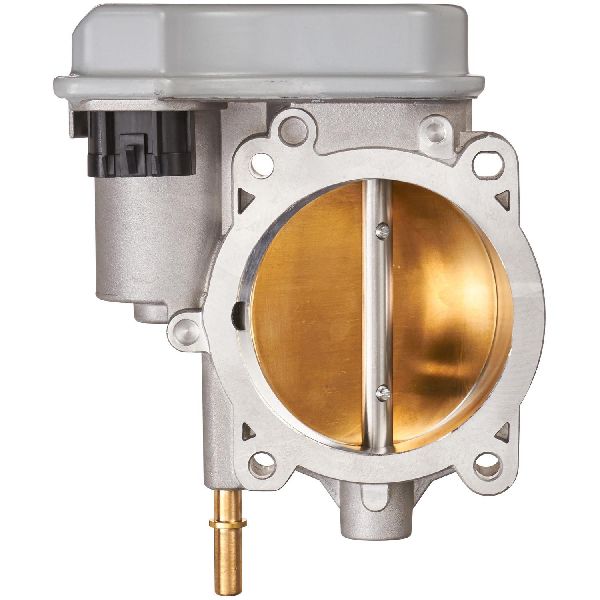
- Throttle Body Assembly
(OEM #ACDelco 217-3106 (for 2.9L I4) or 12694877 / 217-2293 (for 3.7L I5))— This is the most common and permanent fix. The assembly includes the integrated throttle position sensors that fail and cause the correlation error. Many owners replace this after other attempts fail.
Trusted brands: ACDelco, Bosch, Hitachi
OEM price range: $180-$250
Aftermarket price range: $100-$180 - Throttle Position Sensor Cover Kit
(OEM #ACDelco 19259452)— This is the official GM-recommended first-step repair outlined in TSB #11-06-04-007C to address the P2135 code before replacing the entire throttle body.
Trusted brands: ACDelco
OEM price range: $110-$130
Aftermarket price range: $60-$90 - Throttle Body Connector Pigtail
(OEM #ACDelco PT2628)— If the connector or wiring at the throttle body is damaged from heat or vibration, replacing the pigtail is necessary to ensure a solid connection.
Trusted brands: ACDelco, Dorman
OEM price range: $30-$45
Aftermarket price range: $15-$25
Related Codes That Often Appear With This One
- P0651 (5-Volt Reference 2 Circuit)
- P1516 (Throttle Actuator Control (TAC) Module Throttle Actuator Position Performance)
- P2101 (Control Module Throttle Actuator Position Performance)
Technical Service Bulletins (TSBs) & Recalls
- Bulletin #11-06-04-007C: Diagnosis and Repair - Malfunction Indicator Lamp (MIL) Illuminated, Reduced Engine Power Message Displayed, DTC P2135 Set. This TSB outlines the procedure for replacing the throttle position sensor cover and reprogramming the ECM as a first-step repair.
Platform-Specific Known Issues
- TSB #11-06-04-007C Procedure: GM issued a specific bulletin to address P2135 by replacing the throttle position sensor cover, not the whole throttle body. This was the official first line of defense, though many owners report the problem returning until the entire assembly is replaced. For 2008-2011 models, this repair also requires an ECM software update at a dealership.
- Real-World Repair Story: On Hummer4x4Offroad.com, a user with a 2009 H3 (3.7L) detailed their multi-year battle with an intermittent P2135 code. They tried spraying contact cleaner, replacing the TPS sensor, and even the accelerator pedal assembly. The issue would disappear for months but always return. The problem was only permanently solved after replacing the entire throttle body assembly.
Mechanic-Grade Diagnostic Values
- 5-Volt Reference Circuit Voltage — expected: 4.8 - 5.2 Volts DC. Failure: Reading below 4.8V or above 5.2V indicates a short or open in the circuit, or a faulty ECM.
- Low Reference Circuit Resistance to Ground — expected: Less than 5.0 Ohms. Failure: A reading greater than 5.0 Ohms indicates an open or high resistance in the ground circuit.
- TP Sensor 1 Voltage Range (Scan Tool) — expected: 0.27 - 4.67 Volts. Failure: Voltage is stuck or falls outside this range as the pedal is pressed.
- TP Sensor 2 Voltage Range (Scan Tool) — expected: 0.31 - 4.7 Volts. Failure: Voltage is stuck or falls outside this range as the pedal is pressed.
- TP Sensor 1-2 Correlation Disagreement Threshold — expected: Less than 7-10%. Failure: The ECM detects that the two sensor signals disagree by more than 7-10% for over 1 second, triggering the code.
- TPS 1 Internal Resistance (2004-2006 2.8L) — expected: 2,000 - 4,000 Ohms (2K-4K Ω). Failure: Reading shows an open circuit (infinite resistance) or a short (near zero resistance).
Scan Tool Commands That Help

- Tech2 / GDS2 / Professional Scan Tool: Live Data Parameter: 'TP Sensor 1 and 2 Agree/Disagree' — This is the primary data PID to monitor when diagnosing P2135. While slowly operating the accelerator pedal, this parameter should always display 'Agree'. If it switches to 'Disagree' at any point, it confirms a correlation fault.
- N/A - Manual Procedure: Throttle Body Relearn / Idle Learn Procedure — This procedure is required after replacing the throttle body assembly or disconnecting the battery to allow the ECM to learn the new sensor's idle and off-idle positions. Failure to perform this can result in a high or unstable idle.
Wiring & Ground Locations
- Throttle Body Connector (X108) — Directly on the throttle body assembly at the front of the engine.. This is the central connection point for all sensor signals and power. Key pins for testing are C (Low Reference/Ground), D (TP Sensor 1 Signal), and E (5V Reference).
- G101 — Lower left (driver's) side of the engine block.. This is a primary engine ground point that provides the ground path for the Engine Control Module (ECM). A poor connection at G101 can cause erratic ECM behavior and phantom codes, including P2135.
- G103 — On the cowl in the left rear of the engine compartment, often near the brake booster.. This is a major body and module ground point. While G101 is the direct ECM ground, poor body grounds can create electrical noise and voltage offsets that may affect sensitive sensor readings.
"I Checked Everything" — The Actual Cause
- A smoke test or visual inspection for vacuum leaks will come back clean for P2135, as it is an electrical correlation fault, not a vacuum issue. A notable instance is when a faulty electronic fan clutch shorts the 5-volt reference circuit it shares with the throttle position sensor. All tests on the throttle body and its direct wiring may pass, but the true cause is an entirely different component pulling down the shared circuit voltage.
OEM Part Supersession History
TSB #11-06-04-007B→TSB #11-06-04-007C— The bulletin was updated to include additional model years (2011).
Heads up: The procedure remains the same, but the vehicle applicability list was expanded.
Model Year Variations Within This Range
- 2008-2011: When performing the TSB #11-06-04-007C procedure (replacing the TPS cover), these model years may require an ECM software update at a dealership to calibrate for the new sensor cover.
- 2004-2006 vs 2007-2012: The base engines were updated in 2007. The 2.8L I4 and 3.5L I5 were replaced by the 2.9L I4 and 3.7L I5. This change resulted in different throttle body part numbers between the early and late first-generation models.
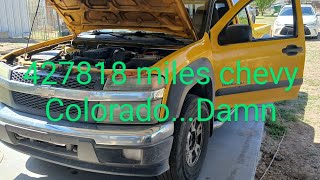
Helpful Videos

Used OEM Parts in Stock


New Aftermarket Parts Available




The information in this article is provided for general reference and educational purposes only. Vehicle specifications, procedures, and part compatibility can vary by production date, trim level, and region. Always consult your vehicle's factory service manual and verify part numbers before purchasing or performing repairs. Safety-critical components such as airbags, seat belts, and braking systems should be installed by a qualified professional.
- Chevrolet COLORADO:
- 🎬 Helpful Videos
- 🛍️ Shop This Part
- What's Unique About the 2005-2011 Chevrolet COLORADO
- Diagnostic Flowchart
- Symptoms You May Notice
- Most Likely Causes
- Rare But Worth Checking
- Diagnosis Steps
- Parts You'll Likely Need
- Related Codes That Often Appear With This One
- Technical Service Bulletins (TSBs) & Recalls
- Platform-Specific Known Issues
- Mechanic-Grade Diagnostic Values
- Scan Tool Commands That Help
- Wiring & Ground Locations
- "I Checked Everything" — The Actual Cause
- OEM Part Supersession History
- Model Year Variations Within This Range
- 🎟️ Get 5% Off