

P2127 on 2015-2022 Ram 1500: Accelerator Pedal Sensor Circuit Low Fixes
This code means the accelerator pedal position sensor is sending a low voltage signal to the truck's computer. The most common fix is replacing the entire accelerator pedal assembly. Always check the wiring and connector first, as a bad connection or a stressed harness (especially during turns) can mimic a failed sensor.
- P2127 points to a fault in the accelerator pedal's position sensor circuit, not the throttle body.
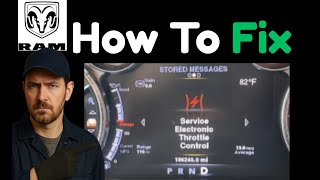
- Symptoms are severe, typically involving a flashing 'lightning bolt' light and the truck entering a low-power 'limp mode'.
- The most common fix is replacing the entire accelerator pedal assembly.
- Always inspect the wiring harness and connector for damage before buying parts, as this is a known issue.
- Do not replace the pedal unless you have confirmed the code is active and not just set from unplugging the sensor during inspection.
What's Unique About the 2015-2022 Ram 1500

The 2015-2022 Ram 1500 spans two distinct generations, the 4th Gen (DS) and 5th Gen (DT), but the function of the drive-by-wire accelerator pedal is fundamentally the same. For these trucks, TSBs specifically warn technicians to perform thorough diagnostics before replacing the pedal assembly. Disconnecting the pedal connector during testing can set this code, leading to misdiagnosis if the code wasn't active beforehand. Owner forums frequently mention intermittent issues related to wiring. One well-documented case on RamForum.com describes the ETC light and limp mode only activating during left turns, strongly suggesting a wiring harness is being stressed or chafed by the steering column or other moving parts.
Diagnostic Flowchart

Tap your situation to follow the diagnostic path that matches what you're seeing on this vehicle.
Generation note: This range covers the end of the fourth generation (DS chassis, 2015-2018) and the beginning of the fifth generation (DT chassis, 2019-2022). While the pedal assemblies and part numbers differ, the diagnostic principles for code P2127 are the same across both generations. The key difference for a DIYer is ensuring the correct part number is ordered for their specific generation and pedal type (fixed vs. adjustable).
Symptoms You May Notice

- Flashing red Electronic Throttle Control (ETC) 'lightning bolt' light
- Check Engine Light (Malfunction Indicator Lamp) is on.
- Vehicle enters 'limp mode' with drastically reduced engine power and acceleration.
- Little to no response from the accelerator pedal.
- Rough or unstable idle.
- Hesitation or surging during acceleration.
- Vehicle will not accelerate over a certain low speed or RPM.
- Replacing the Throttle Body: This code specifically points to the driver's input (the pedal sensor), not the throttle body itself. While throttle issues can cause similar symptoms, P2127 is an input-side code related to the pedal's 'E' circuit.
- Replacing the Pedal without Diagnosis: TSB #9003413 warns that the code can be set simply by unplugging the connector. It's critical to confirm the code is active and that wiring is intact before replacing the pedal assembly.
Most Likely Causes
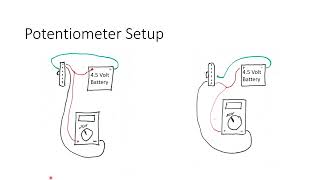
- Failed Accelerator Pedal Position (APP) Sensor Assembly 🔴 High Probability The APP sensor is a wearable electronic component. Over time, the internal resistive strips (potentiometers) can wear out or develop dead spots, causing erratic or low voltage signals. It is a very common failure point on these trucks.
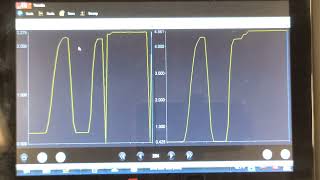
How to confirm: Using a scan tool, monitor the live data for APP Sensor 1 and APP Sensor 2. As you press the pedal, both voltages should sweep smoothly without glitches or dropouts. For P2127, you are looking for a reading from Sensor 2 that is stuck low, erratic, or doesn't change. A normal APP Sensor 2 should sweep smoothly from approximately 0.22 volts at rest to over 2.31 volts at full throttle.
Typical fix: Replace the entire accelerator pedal assembly. It is a single, non-serviceable unit that contains both sensors.
Est. part cost: $80-$250 - Wiring Harness or Connector Issue 🟡 Medium Probability TSB #9003413 specifically calls out checking wiring and connectors. Wires can chafe, break, or corrode, and pins in the connector at the pedal or PCM can become loose or corroded, causing a low voltage reading. A forum user on RamForum.com noted their P2127 and limp mode only occurred during left turns, pointing to a stressed wire in the harness near the steering column. Another user reported temporarily fixing an intermittent P2127 by simply unplugging and replugging the pedal connector, indicating a poor connection.
How to confirm: Visually inspect the wiring harness running to the accelerator pedal for any signs of damage, pinching, or chafing, especially where it passes through the firewall or near moving parts. Disconnect the connector (with the battery disconnected) and check for corrosion, moisture, or pushed-out pins. Apply dielectric grease upon reassembly. Perform a continuity and short-to-ground test on the signal, 5-volt reference, and ground wires between the pedal and the PCM.
Typical fix: Repair the damaged section of the wiring harness or clean/replace the connector.
Est. part cost: $10-$100
Rare But Worth Checking
- Faulty Powertrain Control Module (PCM): This is uncommon. Before condemning the PCM, all other possibilities must be exhaustively ruled out. A RamForum.com user traced their persistent P2127 to a faulty PCM after replacing the pedal and throttle body. Their issue was complicated by a short in a shared 5-volt reference circuit to the transmission, which may have damaged the PCM.
- Interference from Aftermarket Floor Mats: NHTSA Campaign W63 (Recall 20V513000) was issued for some 2019-2020 models where all-weather floor mats could interfere with the pedal. While this recall was for the pedal not returning to idle, any physical obstruction could potentially cause sensor reading issues.
- Short in a Shared 5-Volt Reference Circuit: Other sensors can share the same 5-volt reference circuit from the PCM. A short in another component, such as a transmission solenoid or another engine sensor, can pull the voltage down for the entire circuit, triggering the P2127 code even if the pedal sensor and its dedicated wiring are good. A forum user experienced this when a short in the transmission solenoid harness plug caused the P2127 code to appear.
Diagnosis Steps
- Read the codes with an OBD-II scanner and confirm P2127 is active. Note any other codes present, especially P2122 or P2138.
- Check for any Technical Service Bulletins (TSBs) related to this code for your specific year and model.
- Inspect the area around the accelerator pedal for obstructions, such as floor mats.
- With the ignition on (engine off), use a scan tool to view live data for APP Sensor 1 and APP Sensor 2. Press the pedal slowly to the floor and release it. Both voltage readings should increase and decrease smoothly. For P2127, look for a reading from Sensor 2 that is stuck low, erratic, or doesn't change. A normal APP Sensor 2 should read approx. 0.22V at idle and sweep to over 2.31V at wide-open throttle.
- If scan tool data is inconclusive, turn the ignition off and disconnect the APP Sensor harness connector. Check for 4.5-5.2 volts on the 5-volt supply circuit in the harness connector with the ignition on.
- Visually inspect the electrical connector at the pedal assembly. Look for loose pins, corrosion, or damage. Clean and apply dielectric grease before reconnecting.
- If the connector is okay, test the wiring. Disconnect the pedal and the PCM and check for continuity on the signal wire (K29 circuit), 5-volt reference wire (F856 circuit), and ground wire. Also, check for any shorts to ground or power in the signal wire.
- If the wiring and connector are confirmed to be good, the accelerator pedal assembly is the most likely culprit and should be replaced.
- After replacement, clear the codes. Perform a pedal relearn procedure. A common method is to turn the ignition to 'ON' (not start), wait for dash lights to settle, slowly press the pedal to the floor, slowly release it fully, then turn the ignition 'OFF'. Some scan tools also have a specific ETC Relearn function.
Parts You'll Likely Need

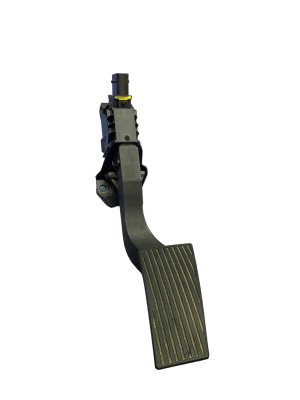
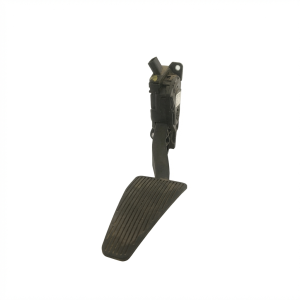
- Accelerator Pedal Assembly
(OEM #68164259AC (4th Gen DS, Fixed Pedals), 68433986AA (5th Gen DT, check fitment))— This is the most common cause of P2127. The assembly contains the non-serviceable sensors that fail internally. It is critical to verify if the truck has fixed or power-adjustable pedals, as the parts are not interchangeable.
Trusted brands: Mopar, Dorman, Standard Motor Products
OEM price range: $150-$250
Aftermarket price range: $80-$180
Related Codes That Often Appear With This One
- P2122 — P2122 is 'Accelerator Pedal Position Sensor 1 Circuit Low'. Since the pedal assembly has two sensors for redundancy, it's common for a failing pedal or a wiring issue (like a bad ground or 5V reference) to affect both sensor circuits, triggering both codes simultaneously.
- P2138 — P2138 is 'APP Sensor 1/2 Correlation'. This code sets when the PCM sees that the signals from the two pedal sensors do not agree with each other. A failure in one sensor circuit (causing P2127) will cause its voltage to be out of sync with the other, triggering P2138 as the PCM can't trust the conflicting inputs.
- P0653 — P0653 is 'Sensor Reference Voltage 'B' Circuit High'. In some cases, a short or issue in one sensor can affect the entire 5-volt reference circuit, causing codes for other unrelated sensors that share that circuit. A short to ground in the APP sensor circuit could also potentially cause related reference voltage codes.
Technical Service Bulletins (TSBs) & Recalls
- S2308000147: Malfunction Indicator Lamp (MIL) On, Electronic Throttle Control (ETC) Lamp Flashes, Diagnostic Trouble Code (DTC) P2127 Accelerator Pedal Position Circuit Low
- 9003413: Advises checking wiring and connectors and ensuring codes are active before replacing the accelerator pedal, as disconnecting it can set P2122 and P2127.
Platform-Specific Known Issues
- TSB #S2308000147 explicitly links P2127 to the Malfunction Indicator Lamp (MIL) and a flashing Electronic Throttle Control (ETC) lamp.
- TSB #9003413 advises technicians to follow service manual diagnostic procedures and check wiring before replacing the accelerator pedal, noting that disconnecting the pedal can set codes P2122 and P2127.
Mechanic-Grade Diagnostic Values
- APP Sensor 2 Signal Voltage (Live Data) — expected: Approx. 0.22V at idle, sweeping smoothly to over 2.31V at wide-open throttle.. Failure: Voltage is consistently below 0.25V, does not change with pedal movement, or has dropouts.
- APP Sensor 5-Volt Supply Circuit (at harness connector) — expected: 4.5 - 5.2 volts with ignition on, engine off.. Failure: Voltage is below 4.5V, indicating an open, short to ground, or PCM fault.
- APP Sensor Signal Circuit (short to ground test) — expected: Infinite resistance (OL) between the signal wire and chassis ground.. Failure: Resistance is below 100 ohms, indicating a short to ground in the harness.
- APP Sensor Signal Circuit Continuity (harness test) — expected: Less than 10 ohms between the APP sensor connector pin and the corresponding PCM connector pin.. Failure: High resistance or an open circuit (OL), indicating a broken wire.
Scan Tool Commands That Help
- wiTECH or equivalent professional scanner: Learn ETC (Electronic Throttle Control) — This function is required after replacing the accelerator pedal assembly or throttle body to make the PCM learn the new component's electrical parameters and range of motion.
- Professional Scan Tool (e.g., iCarsoft, Thinkscan): TPS/APP Relearn — Used after replacing the pedal assembly to recalibrate the sensor signals. The tool guides the user through steps like turning the key on, pressing the pedal, and holding it.
Wiring & Ground Locations

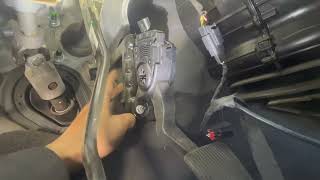
- APP Sensor Connector — Directly on the top of the accelerator pedal assembly, under the driver's side dashboard.. This is the primary connection point for all APP sensor signals. A loose connection, corrosion, or pushed-out pins here are a common cause of intermittent low voltage codes like P2127.
- PCM Connector C2, Pin 91 — On the Powertrain Control Module (PCM), which is typically located in the engine bay.. This is the specific pin where the APP Sensor 2 Signal (Circuit K29, WT/BR wire) terminates at the PCM. Testing continuity to this pin is essential for diagnosing a wiring fault.
- PCM Connector C2, Pin 92 — On the Powertrain Control Module (PCM) in the engine bay.. This is the pin for the APP Sensor 1 Signal (Circuit K23, BR/WT wire). It's relevant when P2122 is also present.
- PCM Connector C2, Pin 93 — On the Powertrain Control Module (PCM) in the engine bay.. This pin provides the 5 Volt Supply (Circuit K852, BR/VT wire) to the APP sensor. A fault here would affect both APP sensors.
- PCM Connector C2, Pin 42 — On the Powertrain Control Module (PCM) in the engine bay.. This is the Sensor Ground pin (Circuit K914, BR/WT wire). A poor ground connection here can cause floating or incorrect voltage readings from the APP sensor.
Real Owner Repair Stories
- YouTube user 'Honest V's Auto' (2012 Ram 1500 5.7L) — Check engine light on with codes P2122, P2127, and P2138.
❌ Tried (didn't work) The video directly proceeds to replacement, implying diagnosis pointed to the pedal.
✅ What actually fixed it Replacing the entire accelerator pedal assembly with a new part from O'Reilly Auto Parts. After replacement, the codes were cleared with a scan tool and did not return. The repair involved removing two 10mm bolts and disconnecting the single electrical connector.
Helpful Videos

We Have This Part in Stock


The information in this article is provided for general reference and educational purposes only. Vehicle specifications, procedures, and part compatibility can vary by production date, trim level, and region. Always consult your vehicle's factory service manual and verify part numbers before purchasing or performing repairs. Safety-critical components such as airbags, seat belts, and braking systems should be installed by a qualified professional.
- Ram 1500:
- 🎬 Helpful Videos
- 🛍️ Shop This Part
- What's Unique About the 2015-2022 Ram 1500
- Diagnostic Flowchart
- Symptoms You May Notice
- Most Likely Causes
- Rare But Worth Checking
- Diagnosis Steps
- Parts You'll Likely Need
- Related Codes That Often Appear With This One
- Technical Service Bulletins (TSBs) & Recalls
- Platform-Specific Known Issues
- Mechanic-Grade Diagnostic Values
- Scan Tool Commands That Help
- Wiring & Ground Locations
- Real Owner Repair Stories
- 🎟️ Get 5% Off