

P2125 on 2007-2011 GMC Sierra: Accelerator Pedal Sensor 'E' Circuit Causes and Fixes
On a 2007-2011 GMC Sierra, code P2125 almost always indicates a problem with the accelerator pedal assembly or its connector, causing the truck to enter 'Reduced Engine Power' mode. Before replacing the pedal (OEM Part #25832864), thoroughly inspect the electrical connector for loose pins as specified in GM TSB #PIP3783D. A 'wiggle test' on the connector while monitoring sensor voltage is a key diagnostic step. If the connector is secure, replacing the accelerator pedal assembly is the most comm
- P2125 on a 2007-2011 Sierra will cause the truck to enter 'Reduced Engine Power' mode.
- Always check the electrical connector at the accelerator pedal for loose pins (poor terminal tension) before buying parts, as this is a known GM issue (TSB #PIP3783D).
- The most likely part to fail is the complete accelerator pedal assembly, which is a simple DIY replacement.
- Do not confuse this pedal code with a throttle body code; they are separate parts with different functions and fault codes.
What's Unique About the 2007-2011 Gmc SIERRA
The GMT900 platform, which includes the 2007-2011 Sierra and its siblings like the Chevrolet Silverado, Tahoe, and Cadillac Escalade, is known for electrical issues related to the accelerator pedal. General Motors released Technical Service Bulletin #PIP3783D specifically because of codes like P2125. The bulletin advises technicians that the root cause is often not the sensor itself, but poor electrical contact ('terminal tension') inside the sensor's connector. The TSB also points to potential issues at major inline body connectors, C109/X109 (under the hood fuse block) and C205/X205 (under the instrument panel), making a full circuit inspection crucial before replacing parts.
Diagnostic Flowchart
Tap your situation to follow the diagnostic path that matches what you're seeing on this vehicle.
Generation note: The 2007 model year was a transition. This issue primarily affects the 'new body style' GMT900 platform (2007-2013/14). The 'old body style' GMT800, sold as the 'Sierra Classic' in 2007, may also experience this code, but the TSB and common complaints are overwhelmingly associated with the GMT900 generation.
Symptoms You May Notice
- "Reduced Engine Power" message on the dashboard
- Check Engine Light is on
- Poor or no throttle response
- Vehicle will not accelerate properly
- Unstable or high idle speed
- "Service Stabilitrak" message may also appear
- Hesitation or stalling when pressing the accelerator
- Issue may be triggered or worsened by hitting bumps in the road
- Replacing the Throttle Body. P2125 is a code for the accelerator pedal sensor inside the cabin, not the throttle position sensor (TPS) on the throttle body at the engine. While a bad throttle body can cause similar symptoms like 'Reduced Engine Power', it will set different codes (e.g., P1516, P2135). Many owners and even some shops unnecessarily replace the throttle body when P2125 is present.
Most Likely Causes
- Poor Terminal Tension at APP Sensor Connector 🔴 High Probability This is a known issue documented by GM in TSB #PIP3783D. The female terminals in the connector can lose their grip on the male pins of the sensor, causing an intermittent connection. The connector's location in the driver's footwell makes it susceptible to being kicked, moisture, and abrasion from floor mats.
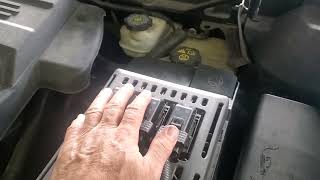
How to confirm: Disconnect the electrical connector from the accelerator pedal assembly. Visually inspect the terminals for any signs of corrosion or spreading. A 'wiggle test' on the harness while monitoring live APP sensor 2 voltage on a scan tool can reveal intermittent faults; any voltage drops or spikes confirm a bad connection. 🎬 See how to diagnose intermittent power issues on the GMT900 platform.
Typical fix: Carefully use a terminal pick tool to tighten the female terminals in the connector. Applying dielectric grease can help prevent future corrosion. If terminals are damaged or the issue persists, replacing the connector pigtail is the recommended repair. Common pigtail part numbers include ACDelco PT2712 and Dorman 645-595.
Est. part cost: $15-$50 - Faulty Accelerator Pedal Position (APP) Sensor 🔴 High Probability The sensor is an electronic component that wears out over time from constant use. It is sold as a complete assembly with the pedal.
How to confirm: If the connector and wiring are confirmed to be good, but live data on a scan tool shows erratic, jumping, or no voltage change from the APP sensor when the pedal is pressed, the sensor itself has failed. The voltage for APP Sensor 2 should be roughly 50% of APP Sensor 1's voltage and both should move smoothly.
Typical fix: Replace the entire accelerator pedal assembly. This is typically a bolt-in, plug-and-play part held by a few bolts (often requiring a T30 socket). The OEM part number is 25832864.
Est. part cost: $60-$150 - Damaged Wiring Harness 🟡 Medium Probability The wiring to the pedal can be damaged by foot traffic, floor mats, or chafing against sharp edges under the dashboard. TSB #PIP3783D also notes that inline connectors X109 (underhood) and X205 (under-dash) can be sources of corrosion or poor connection.
How to confirm: Visually inspect the wiring harness leading to the accelerator pedal for any signs of cuts, chafing, or breaks. Perform a continuity test on each wire between the pedal connector and the ECM. Wiggle the main engine harness near the underhood fuse block to see if it affects sensor voltage readings.
Typical fix: Repair the damaged section of wire with a new piece of wire and solder/heat shrink connections. If an inline connector is the issue, it may need to be cleaned or replaced.
Est. part cost: $5-$20
Rare But Worth Checking
- Faulty Engine Control Module (ECM): This is extremely rare. The ECM should only be considered after all other possibilities, including the sensor, connector, and all related wiring, have been exhaustively tested and proven to be good. One owner on a forum reported this as the final fix after replacing all other components.
- Poor Engine/Body Ground: A loose or corroded main ground strap can cause a host of intermittent electrical issues, including 'Reduced Engine Power' mode. In one documented case for a similar GM truck, the fix was repairing a broken ground wire near the passenger side of the intake manifold. Another owner fixed similar issues by replacing a frayed engine-to-body ground strap. Checking and cleaning main ground points like G103 (cowl), G104 (back of cylinder head), and G200/G201 (A-pillars) is a valid, low-cost diagnostic step.
Diagnosis Steps
- Scan the vehicle for all DTCs. Note P2125 and any other related codes like P2138.
- Visually inspect the accelerator pedal assembly and its electrical connector for any obvious damage.
- With the ignition on and engine off, use a scan tool to monitor live data for APP Sensor 1 and APP Sensor 2. At rest, they should show steady, different voltages. Per TSB PIP3783D, the expected range for APP Sensor 2 (Circuit 'E') is between 0.24V and 4.49V.
- Slowly press and release the accelerator pedal. Both sensor readings should change smoothly and correspond with each other (e.g., APP2 voltage should be close to 50% of APP1 voltage). Any jumps, dropouts, or flat spots indicate a problem.
- Perform a 'wiggle test' by gently wiggling the connector and harness at the pedal while watching the live data to see if the fault can be recreated. Any voltage spikes or drops confirm a connection issue.
- Disconnect the APP sensor connector. Inspect the terminals for corrosion, damage, or spreading (poor terminal tension) as per TSB #PIP3783D.
- If the connector terminals are loose, attempt to tighten them with a terminal tool or replace the connector pigtail (e.g., ACDelco PT2712).
- If the connector and wiring are good but the sensor data is faulty, replace the accelerator pedal assembly (OEM #25832864).
- After replacement, clear the codes and perform a test drive to ensure the fix was successful. A specific throttle relearn procedure is typically not required for a pedal replacement on these trucks.
Parts You'll Likely Need
- Accelerator Pedal Assembly
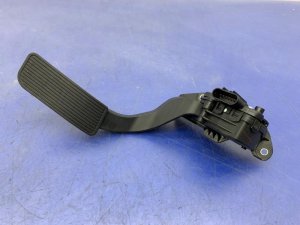
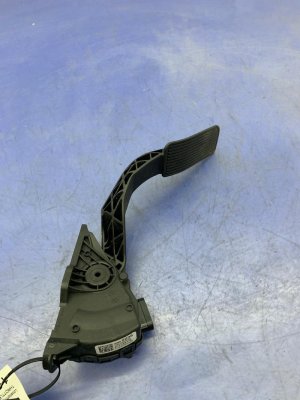
(OEM #25832864)— This is the most common fix when the electrical connector is confirmed to be in good condition. The sensor is integrated into the pedal assembly and is not sold separately. This part number supersedes older numbers 15101848 and 15847349.
Trusted brands: ACDelco (GM Genuine), Dorman (e.g., 699-105), Standard Motor Products (SMP)
OEM price range: $95-$150
Aftermarket price range: $60-$100 - Accelerator Pedal Sensor Connector Pigtail
(OEM #ACDelco PT2712 / GM 13584094)— If the diagnosis points to poor terminal tension or a damaged connector housing, replacing the pigtail is the correct and most durable repair, as recommended by GM.
Trusted brands: ACDelco, Dorman (e.g., 645-595), Standard Motor Products (e.g., S-1479)
OEM price range: $25-$50
Aftermarket price range: $15-$35
Related Codes That Often Appear With This One
- P2138 — This code indicates a correlation problem between the two sensors (APP1 and APP2) inside the pedal assembly. It is very common to see with P2125 as it means the two signals are disagreeing, which is a direct result of one sensor's circuit malfunctioning.
- P2120 — A general code for the Throttle/Pedal Position Sensor/Switch 'D'/'E' circuit. It often appears alongside more specific circuit codes like P2125.
- P2122 — Indicates low voltage on the APP Sensor 'D' circuit (APP Sensor 1).
- P2127 — Indicates low voltage on the APP Sensor 'E' circuit (APP Sensor 2), directly related to P2125.
Technical Service Bulletins (TSBs) & Recalls
- PIP3783D: Advises technicians to inspect the Accelerator Pedal Position (APP) circuits for poor terminal tension when codes P2120, P2122, P2123, P2125, P2127, P2128, and/or P2138 are present. Also mentions checking inline connectors X109 and X205.
Platform-Specific Known Issues
- A known issue, documented in TSB #PIP3783D, is poor terminal tension in the accelerator pedal position sensor's electrical connector, leading to intermittent signal loss and the P2125 code. The bulletin also directs technicians to check inline connectors C109/X109 and C205/X205 for similar issues.
Mechanic-Grade Diagnostic Values
- APP Sensor 2 ('E' Circuit) Signal Voltage — expected: Between 0.24V and 4.49V, changing smoothly with pedal movement.. Failure: Voltage is stuck, erratic, or reads less than 0.235V or more than 4.487V.
- APP Sensor 5-Volt Reference Circuit Voltage (at connector) — expected: Between 4.8V and 5.2V.. Failure: Voltage is less than 4.54V or more than 5.21V, indicating a wiring or ECM issue.
- APP Sensor Connector Pinout (6-Pin Connector) — expected: Pin 1: APP1 5V Ref, Pin 2: APP1 Low Ref, Pin 3: APP1 Signal, Pin 4: APP2 5V Ref, Pin 5: APP2 Low Ref, Pin 6: APP2 Signal.. Failure: Testing the wrong pins will lead to an incorrect diagnosis. P2125 relates to the circuit on Pin 6.
- APP Sensor Internal Resistance — expected: Typical values range from 1 kΩ to 2 kΩ between signal and reference pins.. Failure: Values significantly outside this range suggest an open or short within the sensor.
Scan Tool Commands That Help
- Tech2 / GDS2 or equivalent professional scanner: Module Communication Test / PCM Self-Test — After checking wiring and sensor data, this bidirectional command requests the PCM to self-test its throttle-position inputs. A failure here can point towards an internal PCM fault, though this is rare.
Wiring & Ground Locations
- X205 / C205 — Under the Instrument Panel Upper Trim Panel, near the base of the windshield.. This is a major inline IP-to-body harness connector. TSB #PIP3783D and TSB #07-06-04-019F identify it as a potential site for corrosion or poor pin tension, often due to water leaks from the A-pillar or windshield, which can interrupt the APP sensor signals.
- X109 / C109 — On the left side of the engine compartment, below the underhood fuse block.. This is another major inline connector where the APP sensor circuits pass through. TSB #PIP3783D recommends inspecting it for corrosion or poor connections if the fault isn't found at the pedal.
- G103 — At the left rear of the engine compartment on the cowl, above the brake booster.. This is a primary ground for the Body Control Module (BCM) and Instrument Panel Cluster (IPC). A poor connection here can cause a wide range of strange electrical issues, including data communication errors that could be related to APP sensor faults.
- G104 — On the back of the left (driver's side) cylinder head.. This is a primary engine-to-chassis ground. A loose or corroded connection here can create a floating ground, causing erratic voltage readings across multiple engine sensors, including the 5-volt reference circuits for the APP.
Real Owner Repair Stories
- Vertex AI Search result citing 'Fixing With Friends' YouTube video (2008 Buick Lucerne 3.8L (similar GM platform and codes)) — Erratic limp mode, Reduced Power message, codes P1125, P2120, P2125.
❌ Tried (didn't work) Replacing the accelerator pedal assembly with an aftermarket part.
✅ What actually fixed it The 5-volt reference wire for APP sensor 1 had melted insulation where the harness ran across the intake manifold, causing it to short against the engine when hot. Repairing the wire resolved all codes. - Vertex AI Search result citing TSB #07-06-04-019F (2007-2011 GM Truck/SUV) — Intermittent 'Reduced Engine Power', codes P2120, P2125, P2138.
❌ Tried (didn't work) Replacing the accelerator pedal assembly., Replacing the pedal connector pigtail.
✅ What actually fixed it Water intrusion from a clogged sunroof drain or leaking body seam caused corrosion in the IP-to-body harness connector (X205). The fix was to cut the affected APP sensor wires before and after the connector and splice in new wires, completely bypassing the corroded pins. - Vertex AI Search result (2007-2014 GM Truck/SUV) — Reduced Power mode, code P2125.
❌ Tried (didn't work) Checking the APP sensor and connector at the pedal.
✅ What actually fixed it A section of the main engine wiring harness had chafed through on a valve cover in the engine bay, causing a short circuit in one of the APP sensor wires. Repairing the chafed wires and protecting the harness fixed the issue.
When the Usual Fixes Don't Work
- While replacing the accelerator pedal assembly or its pigtail connector are the most common fixes for P2125, numerous owner-documented repairs show these actions failing to resolve the issue. In these cases, the actual root cause was found further 'upstream' in the wiring harness. Multiple reports confirm the problem was a section of the engine harness chafing through on a valve cover or the intake manifold, causing an intermittent short. Another significant counter-narrative involves water leaks from clogged sunroof drains or bad body seams, which cause corrosion in a major under-dash connector (X205) that the pedal wiring passes through. These instances highlight that if a new pedal or pigtail doesn't fix the code, a full circuit integrity check from the pedal to the ECM, including inspecting all inline connectors and harness routing, is mandatory.
OEM Part Supersession History
15101848, 15847349→25832864— Standard part revision and consolidation by GM.
Heads up: The new part number (25832864) is the correct service replacement for the entire 2007-2011 range and is fully compatible.
Model Year Variations Within This Range
- 2007: The 2007 model year included both the old GMT800 body style (sold as 'Classic') and the new GMT900 body style. TSB #PIP3783D and the associated common failures with the pedal connector and wiring are specific to the 'New Body Style' GMT900 platform. While a GMT800 can log a P2125, the diagnosis and common failure points are different.
Helpful Videos
We Have This Part in Stock

The information in this article is provided for general reference and educational purposes only. Vehicle specifications, procedures, and part compatibility can vary by production date, trim level, and region. Always consult your vehicle's factory service manual and verify part numbers before purchasing or performing repairs. Safety-critical components such as airbags, seat belts, and braking systems should be installed by a qualified professional.
- Gmc SIERRA:
- 🎬 Helpful Videos
- 🛍️ Shop This Part
- What's Unique About the 2007-2011 Gmc SIERRA
- Diagnostic Flowchart
- Symptoms You May Notice
- Most Likely Causes
- Rare But Worth Checking
- Diagnosis Steps
- Parts You'll Likely Need
- Related Codes That Often Appear With This One
- Technical Service Bulletins (TSBs) & Recalls
- Platform-Specific Known Issues
- Mechanic-Grade Diagnostic Values
- Scan Tool Commands That Help
- Wiring & Ground Locations
- Real Owner Repair Stories
- When the Usual Fixes Don't Work
- OEM Part Supersession History
- Model Year Variations Within This Range
- 🎟️ Get 5% Off