

P2125 on 2007-2014 Chevrolet Suburban: Reduced Power Causes and Fixes
This code almost always points to a faulty accelerator pedal position (APP) sensor, which is part of the gas pedal assembly. Before replacing the pedal, inspect its electrical connector for loose pins, as this is a known issue documented by GM. A new pedal assembly costs between $60 and $120 and is a simple DIY replacement.
- P2125 on your Suburban will almost certainly cause the 'Reduced Engine Power' warning, making the vehicle very slow and unsafe for normal driving.
- The most likely cause is a failed sensor inside the gas pedal assembly.
- Before buying any parts, follow GM's own advice (TSB #PIP3783D) and inspect the pedal's electrical connector for loose pins. A 'wiggle test' is highly effective.
- Replacing the accelerator pedal assembly is a simple, DIY-friendly job that can be done in under an hour with basic tools, typically just a T30 socket.
- Do not confuse this with a throttle body problem; P2125 points specifically to the pedal assembly or its wiring. Many owners waste money replacing the throttle body unnecessarily.
What's Unique About the 2007-2014 Chevrolet SUBURBAN
On this generation of GM trucks and SUVs (GMT900 platform), a common cause for P2125 and related codes is poor electrical contact in the accelerator pedal's connector. GM issued a Technical Service Bulletin (TSB #PIP3783D) specifically advising technicians to check for poor terminal tension in the APP sensor circuits before replacing parts. This means a simple connector check could save you from buying a new pedal assembly. Furthermore, the wiring harness in the driver's footwell is susceptible to damage from moisture, abrasion, or being kicked, which can also trigger this code. Other GM bulletins point to potential engine wiring harness chafe points on the cylinder head or nearby brackets that can cause a variety of electrical issues.
Diagnostic Flowchart
Tap your situation to follow the diagnostic path that matches what you're seeing on this vehicle.
Symptoms You May Notice
- "Reduced Engine Power" message on the dashboard.
- Illuminated Check Engine Light.
- Significant loss of acceleration or sluggish throttle response.
- Vehicle will not accelerate properly (limp mode).
- Hesitation or surging during acceleration.
- Unresponsive or 'dead' accelerator pedal.
- Engine may stall when pressing the pedal at low speeds.
- Replacing the throttle body. The throttle body is at the engine, while this code points to the accelerator pedal inside the cabin. Owners often confuse the two, but P2125 is specific to the pedal circuit. Many forum posts detail owners replacing the throttle body multiple times with no resolution before realizing the issue was the pedal, connector, or wiring.
Most Likely Causes
- Faulty Accelerator Pedal Position (APP) Sensor Assembly 🔴 High Probability The electronic sensors integrated into the pedal assembly are a common failure point over time due to wear on the internal potentiometers.
How to confirm: Use an OBD-II scanner to monitor the live data for APP Sensor 1 and APP Sensor 2. As you press the pedal, the voltage readings should be smooth and correlate. Jumps, dropouts, or a static reading on one sensor indicates a failed pedal assembly. A review for the ACDelco replacement part noted it solved their acceleration issue immediately.
Typical fix: Replace the entire accelerator pedal assembly. The sensor is not sold separately. This is a simple DIY job requiring only a T30 socket and about 15 minutes.
Est. part cost: $60-$120 - Poor Terminal Tension or Corrosion at the APP Sensor Connector 🟡 Medium Probability GM issued TSB #PIP3783D specifically for this issue on these vehicles, indicating it's a known problem. The connector is located in the driver's footwell, where it can be kicked or exposed to moisture.
How to confirm: Visually inspect the electrical connector at the accelerator pedal. Check for loose, bent, or corroded pins. Wiggle the connector while monitoring live sensor data with a scan tool to see if the signal changes or drops out. If it does, the connection is faulty.
Typical fix: Clean the connector terminals and apply dielectric grease. If terminals are too loose, they may need to be carefully re-tensioned or the connector pigtail may need to be replaced. Pigtail kits like Dorman 645-595 or Standard Motor Products S-1479 are available for this repair.
Est. part cost: $0-$35 - Damaged Wiring Harness ⚪ Low Probability Wires in the driver's footwell can be damaged by abrasion from floor mats, moisture, or accidental kicks. In a video for a similar GM vehicle, a technician found five completely severed wires in a harness that was rubbing against the valve cover, causing identical codes after the owner had already replaced the pedal and throttle body. GM has also issued bulletins about engine wiring harness chafe points on the cylinder head or nearby brackets.
How to confirm: Perform a visual inspection of the harness running from the pedal to where it joins the main loom. If no visible damage is found, use a multimeter to check for continuity and shorts between the APP connector and the PCM connector. A technician in one video demonstrated pulling the entire harness out through the firewall to repair it on a workbench.
Typical fix: Repair the broken or shorted section of wire using solder and heat shrink.
Est. part cost: $5-$15
Rare But Worth Checking
- Faulty Powertrain Control Module (PCM): This is very rare. The PCM should only be considered after all other possibilities, including the pedal, connector, and wiring, have been definitively ruled out. One forum user, after replacing the pedal, throttle body, TAC module, and wiring, concluded the PCM must be the issue, illustrating the frustration and expense of chasing this as a final step.
- Poor Ground Connection: A loose or corroded ground wire, particularly the main engine or body grounds (like G103 or G104), can cause a host of electrical issues, including APP sensor codes. One owner fixed a persistent 'Reduced Engine Power' issue that occurred over bumps by locating and tightening a small black ground wire on the passenger side of the intake manifold.
Diagnosis Steps
- Read all fault codes with an OBD-II scanner. Note any other codes that are present, especially P2138 or other P212x codes.
- Access the accelerator pedal assembly under the driver's side dashboard.
- Per TSB #PIP3783D, carefully inspect the electrical connector at the pedal. Check for loose pins, corrosion, or damage. Ensure it is fully seated.
- With the key on and engine off, use a scanner to view live data for APP Sensor 1 and APP Sensor 2.
- Slowly press and release the gas pedal. Both sensor voltage readings should change smoothly 🎬 Watch: How to use wiring diagrams to pinpoint sensor faults. and without dropouts. One sensor's voltage will typically rise while the other falls. For example, Sensor 1 might sweep from ~0.9V to ~3.1V while Sensor 2 sweeps from ~3.1V to ~2.6V.
- Perform a 'wiggle test': While watching the live data, wiggle the connector and harness at the pedal. If the voltage readings jump or drop out, you have found a connection or wiring issue.
- If a sensor's reading is erratic, stuck, or does not change, and the connector is confirmed to be good, the accelerator pedal assembly is faulty.
- If the pedal is replaced and the issue persists, perform a continuity check on the wires between the pedal connector and the PCM to rule out a wiring break. Also inspect engine and body grounds for looseness or corrosion, specifically G103 (front of right cylinder head) and G104 (rear of left cylinder head).
Parts You'll Likely Need
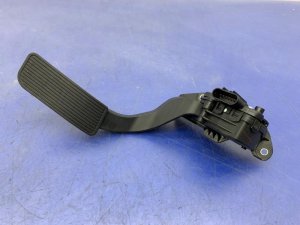
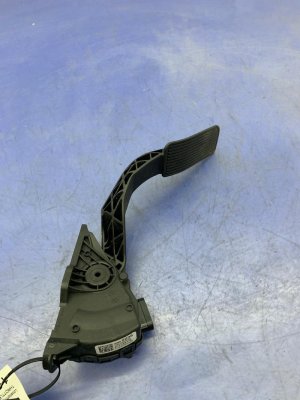
- Accelerator Pedal with Position Sensor
(OEM #25832864)— This is the most common fix. The sensors are integrated into the pedal assembly and cannot be replaced individually. This part number fits many Suburbans in this year range, but always verify with your VIN. This part number supersedes 15101848 and 15847349.
Trusted brands: ACDelco (GM Genuine), Standard Motor Products, Dorman (e.g., 699-105)
OEM price range: $90-$140
Aftermarket price range: $60-$90 - APP Sensor Connector Pigtail
(OEM #PT2712 (ACDelco))— If the connector itself is damaged or the terminals have lost tension and cannot be repaired, replacing the pigtail is the next step. This involves cutting the old connector off and splicing the new one in.
Trusted brands: ACDelco, Dorman 645-595, Standard Motor Products S-1479
OEM price range: $30-$45
Aftermarket price range: $15-$25
Related Codes That Often Appear With This One
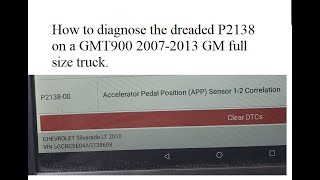
- P2138 — This code indicates a voltage correlation problem between APP Sensor 1 and APP Sensor 2. It's very common to see with other APP sensor circuit codes like P2125 and is mentioned in the same TSB.
- P2120 — This is another APP sensor circuit code ('D' circuit). It often appears with P2125 when there is a connector or sensor failure.
- P2122, P2123, P2127, P2128 — These are all specific circuit fault codes for the two APP sensors (low and high voltage for each sensor). The TSB #PIP3783D lists all of these codes as being related to the same potential wiring and sensor issues.
Technical Service Bulletins (TSBs) & Recalls
- PIP3783D: Mentions that codes P2120, P2122, P2123, P2125, P2127, P2128, and/or P2138 can be caused by poor terminal tension in the Accelerator Pedal Position (APP) circuits, leading to a Service Engine Soon lamp or a reduced engine power message.
Platform-Specific Known Issues
- A known issue, documented in TSB #PIP3783D, is poor terminal tension in the APP sensor connector, which can mimic the symptoms of a failed sensor. This should always be checked before replacing the pedal assembly.
- The GMT900 platform can suffer from various electrical gremlins, and a loose or corroded ground is a potential cause for this code that should not be overlooked, especially if the fault appears when hitting bumps.
Mechanic-Grade Diagnostic Values
- APP Sensor 2 Signal Voltage (Scan Tool) — expected: 0.24V - 4.49V, changing smoothly with pedal movement.. Failure: Voltage is less than 0.24V or more than 4.49V for more than 0.5 seconds.
- APP Sensor 2 5-Volt Reference Voltage (Scan Tool) — expected: 4.54V - 5.21V. Failure: Voltage is less than 4.54V or more than 5.21V.
- APP Sensor 1 Signal Voltage (Scan Tool) — expected: 0.32V - 4.75V, changing smoothly with pedal movement.. Failure: Voltage is less than 0.325V or more than 4.75V for more than 0.4 seconds.
Scan Tool Commands That Help
- GDS2 or equivalent professional scan tool: Live Data Display > Engine Control Module (ECM) > APP Sensor 1 / APP Sensor 2 Voltage — This is the primary diagnostic step to visually confirm if the sensor signals are smooth, correlated, and within the expected voltage range while pressing the accelerator pedal. It is also used during a 'wiggle test' of the harness and connector.
- GDS2 or manual procedure: Idle Learn Reset / Throttle Relearn — After replacing the accelerator pedal, throttle body, or disconnecting the PCM or battery, it is good practice to perform an idle relearn procedure. This allows the ECM to re-establish baseline values for the new components, ensuring smooth idle and throttle response.
Wiring & Ground Locations
- G103 — On the front of the right-side (passenger side) cylinder head.. This is a primary engine ground. A poor connection here can cause erratic voltage and sensor readings for multiple engine components, including the 5-volt reference circuits used by the APP sensor.
- G104 — On the rear of the left-side (driver side) cylinder head, near the firewall.. This ground strap connects the engine block to the chassis/body. An intermittent connection here can cause the voltage potential between the engine and body to fluctuate, leading to unreliable sensor readings, especially for sensors grounded to the engine block whose signals are read by a body-mounted module.
- Engine Harness Chafe Point — Inspect the engine wiring harness for contact at the front corner of the left-hand cylinder head, the drive belt idler pulley bracket, or the oil dipstick tube bracket.. A GM bulletin identifies these as potential areas where the harness can rub through, causing shorts to ground for any of the circuits within, including the APP sensor circuits. This can lead to intermittent and difficult-to-diagnose codes.
Real Owner Repair Stories
- Chevrolet Forum user experience (1999 Suburban (GMT400, but demonstrates a common principle)) — All lights and gauges flicker on and off, engine and all power sometimes goes out for a few seconds.
❌ Tried (didn't work) Initial confusion about the cause.
✅ What actually fixed it The user identified a frayed and deteriorating engine-to-body ground strap that was touching the exhaust manifold. Replacing this critical ground strap is the required fix for such symptoms, as a good ground is critical for all vehicle electronics. - Common forum narrative (2007-2014 GM Truck/SUV) — Reduced Engine Power message, P2125 and/or P2138 codes, sluggish acceleration.
❌ Tried (didn't work) Replacing the throttle body assembly., Clearing codes, only to have them return.
✅ What actually fixed it In many documented cases, the final fix was replacing the entire accelerator pedal assembly. However, a significant number of cases were resolved by addressing the connector at the pedal, either by cleaning it, applying dielectric grease, re-tensioning the pins per TSB PIP3783D, or replacing the connector pigtail.
OEM Part Supersession History
15101848, 15847349→25832864 (ACDelco/GM Genuine)— Part revision and consolidation by the manufacturer.
Heads up: The newer part number is the correct service replacement. Aftermarket parts like Dorman 699-105 or Standard Motor Products are designed to cross-reference to the latest OEM number. Be aware that quality of non-OEM electronic parts can be inconsistent, with some technicians and owners reporting higher failure rates with certain aftermarket brands.
Helpful Videos
We Have This Part in Stock

The information in this article is provided for general reference and educational purposes only. Vehicle specifications, procedures, and part compatibility can vary by production date, trim level, and region. Always consult your vehicle's factory service manual and verify part numbers before purchasing or performing repairs. Safety-critical components such as airbags, seat belts, and braking systems should be installed by a qualified professional.
- Chevrolet SUBURBAN:
- 🎬 Helpful Videos
- 🛍️ Shop This Part
- What's Unique About the 2007-2014 Chevrolet SUBURBAN
- Diagnostic Flowchart
- Symptoms You May Notice
- Most Likely Causes
- Rare But Worth Checking
- Diagnosis Steps
- Parts You'll Likely Need
- Related Codes That Often Appear With This One
- Technical Service Bulletins (TSBs) & Recalls
- Platform-Specific Known Issues
- Mechanic-Grade Diagnostic Values
- Scan Tool Commands That Help
- Wiring & Ground Locations
- Real Owner Repair Stories
- OEM Part Supersession History
- 🎟️ Get 5% Off