

P2123 on 2007-2014 GMC Yukon: Throttle/Pedal Position Sensor 'D' Circuit High Input Causes & Fixes
On a 2007-2014 GMC Yukon, code P2123 is most often caused by a failing accelerator pedal position (APP) sensor assembly or a known issue with poor electrical terminal tension in its connector. This triggers a 'Reduced Engine Power' message. Replacing the pedal assembly is a common, straightforward DIY fix, but inspecting the wiring and connectors first is critical to avoid a misdiagnosis.
- P2123 on a 2007-2014 Yukon almost always points to the accelerator pedal assembly or its wiring.
- The most common symptom is the 'Reduced Engine Power' message, which severely limits vehicle speed.
- Before replacing the pedal, inspect the electrical connector for loose terminals, as this is a known issue documented by GM.
- Replacing the accelerator pedal assembly is a straightforward DIY job that requires basic tools and about 30 minutes.
- Do not mistake this for a throttle body problem; the code specifically relates to the pedal sensor circuit.
What's Unique About the 2007-2014 Gmc YUKON
The GMT900 platform, which includes the 2007-2014 Yukon, is known for issues with the accelerator pedal position (APP) sensor system. A General Motors Technical Service Bulletin (TSB #PIP3783D) specifically calls out poor terminal tension in the APP sensor's electrical connector as a common cause for this and related codes. This means the problem is often not the sensor itself, but the quality of the electrical connection to it, which can become intermittent and trigger faults. Another TSB for this platform (07-06-04-019F) points to water intrusion and corrosion in the main instrument panel-to-body harness connector as a major cause of these codes, which can be easily misdiagnosed as a bad pedal.
Diagnostic Flowchart
Tap your situation to follow the diagnostic path that matches what you're seeing on this vehicle.
Symptoms You May Notice
- "Reduced Engine Power" message on the dashboard.
- Check Engine Light (Malfunction Indicator Lamp) is on.
- "Service StabiliTrak" or "Traction Control Off" message may appear simultaneously.
- Poor, sluggish, or no throttle response.
- Vehicle will not accelerate past a certain low speed (e.g., 20-25 mph).
- Unstable, rough, or high engine idle.
- Hesitation or lag when pressing the accelerator pedal.
- Replacing the throttle body. A throttle body issue will typically set different trouble codes, such as P2135 or P1516. P2123 specifically points to a problem in the accelerator pedal circuit ('D' circuit), not the throttle body itself.
Most Likely Causes
- Failing Accelerator Pedal Position (APP) Sensor Assembly 🔴 High Probability The internal sensors are integrated into the pedal assembly and wear out over time, leading to erratic voltage signals. It's a common failure item on this platform and must be replaced as a single unit.
How to confirm: Using a scan tool with live data, monitor the APP Sensor 1 and APP Sensor 2 voltages while pressing the pedal. For P2123, APP Sensor 1 (often a Dark Blue wire on pin E) will read abnormally high (stuck near 5 volts) or won't change smoothly. The two sensors should have inverse or corresponding smooth voltage sweeps; a jumpy or stuck reading indicates failure.
Typical fix: Replace the entire accelerator pedal assembly, which includes the integrated sensors. This is a simple DIY job requiring only a 10mm socket or T30 Torx bit and takes under 30 minutes.
Est. part cost: $50-$150 - Poor Terminal Tension at the APP Sensor Connector 🔴 High Probability As documented in TSB #PIP3783D, the female terminals in the harness connector can loosen over time, causing an intermittent or poor connection to the sensor pins. This creates high resistance, which the PCM interprets as a high voltage signal.
How to confirm: Disconnect the connector at the accelerator pedal. Visually inspect for corrosion or damage. Use the correct terminal test probes (e.g., J-35616-14) to check the grip (tension) of each female terminal on a male pin. A wiggle test on the connector while monitoring live data can also expose the fault.
Typical fix: If terminal tension is poor, the official fix is to replace the affected terminals and ensure a secure connection. Some may opt to replace the connector pigtail. Applying dielectric grease can help prevent future moisture intrusion and corrosion.
Est. part cost: $15-$40 - Damaged Wiring or Corroded Connectors (X205, X109) 🟡 Medium Probability The wiring harness can be damaged, chafed, or experience corrosion, especially at intermediate connectors between the pedal and the PCM. TSBs point to connectors C109/X109 and C205/X205 as potential trouble spots. Water leaks from windshield seals or roof antennas can drip into the driver-side kick panel, corroding the main IP-to-body harness connector, a well-documented cause of this code.
How to confirm: Perform a continuity and resistance check on the APP sensor circuit wires (specifically the Dark Blue wire for APP Sensor 1 Signal) between the pedal connector and the PCM connector. Inspect the large harness connectors in the driver's kick panel for any signs of green or white corrosion.
Typical fix: Repair the specific section of damaged wire by soldering in a new piece and protecting it with heat shrink. If a connector is corroded, it must be cleaned with electrical contact cleaner or the affected terminals replaced.
Est. part cost: $5-$50
Rare But Worth Checking
- Faulty Powertrain Control Module (PCM): This is very rare. Before condemning the PCM (an E38 ECM in these trucks), all other possibilities, including the sensor, all wiring, and all connectors, must be exhaustively ruled out. A PCM failure might also be accompanied by other unrelated trouble codes or require a software update to fix calibration issues.
Diagnosis Steps
- Read all stored DTCs with an OBD-II scanner. Note any other codes present, especially P2138, P2122, P2127, or P2128.
- Observe live data from APP Sensor 1 and APP Sensor 2 on the scanner. With the key on and engine off, press and release the accelerator pedal slowly. Both voltage readings should move smoothly. For P2123, you are looking for a reading on APP Sensor 1 that is stuck high (e.g., near 5V) or reads significantly higher than expected.
- Turn the vehicle off and disconnect the battery.
- Access the accelerator pedal assembly and disconnect its 6-pin electrical connector by pulling out the gray locking tab first.
- Inspect the connector terminals (both male pins on the pedal and female terminals in the harness) for corrosion, damage, or signs of water intrusion.
- Following the guidance in TSB #PIP3783D, carefully check the terminal tension of the female pins in the harness connector. A loose connection is a very common cause of this code.
- CRITICAL: Inspect the large IP-to-body harness connector (often black or gray) located in the driver's side kick panel area. Disconnect it and check thoroughly for any green or white corrosion caused by water leaks, as noted in TSB 07-06-04-019F.
- If no wiring or connector issues are found, the APP sensor (pedal assembly) is the most likely culprit. Replace the accelerator pedal assembly. It is typically held on by two 10mm nuts or T30 Torx bolts.
- After replacement, reconnect the battery, clear the codes, and perform a test drive. A throttle relearn procedure may be recommended but is often not necessary as the system self-calibrates.
Parts You'll Likely Need
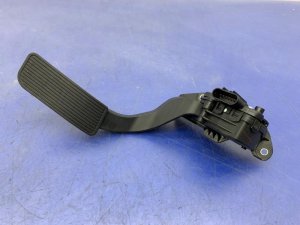
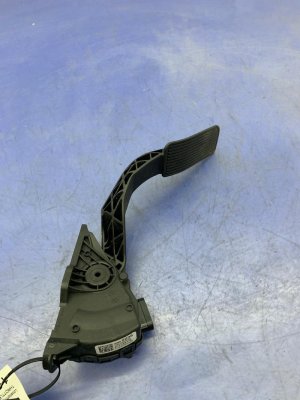
- Accelerator Pedal Assembly
(OEM #25832864 (superseded by newer numbers like 19417903 or 23362231))— This is the most common fix, as the internal sensors fail and are not serviced separately. The entire pedal unit must be replaced. Verify if you have power-adjustable pedals (RPO code JF4) as the part is different.
Trusted brands: ACDelco, Dorman (e.g., 699-105), Standard Motor Products
OEM price range: $100-$180
Aftermarket price range: $50-$120
Related Codes That Often Appear With This One
- P2122 — This code indicates 'APP Sensor 'D' Circuit Low Input.' Seeing it with P2123 can point to a very erratic sensor or a wiring issue where the connection is intermittent, causing the voltage to fluctuate between being too high and too low.
- P2127 — This code is for 'APP Sensor 'E' Circuit Low Input,' which corresponds to the second sensor (APP Sensor 2) in the pedal assembly. A problem in the shared wiring (e.g., 5V reference or ground) or a corroded main connector could affect both sensors.
- P2128 — This is the 'High Input' counterpart to P2127 for APP Sensor 2. Seeing P2123 and P2128 together strongly suggests a wiring issue common to both sensor circuits, like a short to voltage or a bad ground connection.
- P2138 — This code indicates a 'Voltage Correlation' error between the two APP sensors (Sensor 1 vs Sensor 2). It is very common to see this with other APP codes, as the computer sets it when the signals from the two sensors don't match each other as expected, which is a direct result of one sensor reporting an erroneously high voltage.
Technical Service Bulletins (TSBs) & Recalls
- PIP3783D: Addresses multiple APP sensor codes (P2120, P2122, P2123, P2125, P2127, P2128, P2138) caused by poor terminal tension in the sensor's electrical connector or related harness connecto
Platform-Specific Known Issues
- A known issue, documented in TSB #PIP3783D, involves poor terminal tension in the APP sensor electrical connector, leading to intermittent signals and triggering codes like P2123.
- A highly common but often misdiagnosed issue is water intrusion into the cabin, which corrodes the main IP-to-body harness connector in the driver's kick panel, causing identical symptoms. This is detailed in TSB 07-06-04-019F.
- In a specific forum case, a user with P2123 found the cause to be a loose main harness connector (X205) located behind the upper instrument panel trim, which caused several open circuits.
Mechanic-Grade Diagnostic Values
- APP Sensor 1 Signal Voltage (D-Circuit) — expected: Approx. 0.6 - 0.9V with pedal released, sweeping smoothly to 3.9 - 4.7V when fully depressed.. Failure: For P2123, the voltage is stuck high (often near 5.0V) or does not change with pedal movement.
- APP Sensor 2 Signal Voltage (E-Circuit) — expected: Approx. 0.3 - 0.6V with pedal released, sweeping smoothly to 1.95 - 2.4V when fully depressed.. Failure: Voltage does not correlate with Sensor 1, or shows jumps, dropouts, or flat spots.
- 5-Volt Reference at APP Connector — expected: Approximately 5.0 volts with Key On, Engine Off.. Failure: Voltage is significantly lower than 4.8V or higher than 5.2V, indicating a circuit or PCM issue.
- Low Reference (Ground) Circuit Resistance — expected: Less than 5.0 ohms between the ground pin at the APP connector and a known-good chassis ground.. Failure: Resistance is 5.0 ohms or higher, indicating a poor ground connection.
Scan Tool Commands That Help
- Manual Procedure (No Scan Tool): Idle Learn / Throttle Relearn Procedure — After replacing the accelerator pedal assembly, throttle body, or disconnecting the vehicle's battery. This allows the ECM to relearn the new baseline idle position. An incomplete relearn can cause idle issues.
Wiring & Ground Locations
- IP-to-Body Harness Connector — Located in the driver's side kick panel area, near the floor.. This is a notorious failure point documented in TSB 07-06-04-019F. Water leaks from the A-pillar, sunroof, or windshield can drip onto this connector, causing corrosion that creates a short or high resistance in the APP sensor circuits, directly causing P2123 and related codes.
- C109 / X109 — On the left side of the engine compartment, located below the underhood fuse block.. This is a major pass-through connector for the APP sensor circuits. TSB PIP3783D identifies it as a potential location for corrosion, water intrusion, or poor pin tension that can interrupt the pedal signal to the PCM.
- C205 / X205 — Located under the upper instrument panel trim panel, near the windshield defroster grille.. Another critical pass-through connector for the APP circuits mentioned in TSB PIP3783D. A poor connection here can cause an intermittent loss of signal from the pedal.
- G103 — Located at the left rear of the engine compartment on the cowl, above the brake booster.. This is a primary body and module ground. While not exclusively for the APP sensor, a poor connection at this major ground point can introduce electrical noise and voltage issues across multiple systems, including the PCM and its sensor inputs.
- G104 — Located on the rear of the left (driver's side) cylinder head.. This is a primary engine-to-chassis ground point. A loose or corroded ground strap here can cause a variety of difficult-to-diagnose electrical issues and sensor faults.
Real Owner Repair Stories
- Tahoe Yukon Forum user (2007-2014 GM Truck/SUV) — Intermittent 'Reduced Engine Power' and APP sensor codes.
❌ Tried (didn't work) Initial diagnosis pointed towards the common APP sensor or wiring harness issues.
✅ What actually fixed it The user removed the underhood fuse box to access the connectors underneath (related to C109/X109). They found dirt and corrosion on the terminals both within and under the fuse box. Cleaning all related connectors with electrical contact cleaner resolved the codes and symptoms permanently.
OEM Part Supersession History
15101848, 15847349→25832864— Part consolidation and potential minor revisions by the manufacturer.
Heads up: Part number 25832864 is specified for vehicles WITH power-adjustable pedals (RPO code JF4). A different part is required for fixed-pedal models. Always verify the correct part using the vehicle's VIN.
Model Year Variations Within This Range
- 2007-2014: The underlying causes for P2123 (failing pedal, poor terminal tension, water intrusion at connectors) are consistent across the entire 2007-2014 generation. No significant design changes affecting this specific fault have been noted within this year range. The primary variation is the pedal part number depending on the presence of power-adjustable pedals (RPO JF4), not the model year.
We Have This Part in Stock

The information in this article is provided for general reference and educational purposes only. Vehicle specifications, procedures, and part compatibility can vary by production date, trim level, and region. Always consult your vehicle's factory service manual and verify part numbers before purchasing or performing repairs. Safety-critical components such as airbags, seat belts, and braking systems should be installed by a qualified professional.
- Gmc YUKON:
- 🛍️ Shop This Part
- What's Unique About the 2007-2014 Gmc YUKON
- Diagnostic Flowchart
- Symptoms You May Notice
- Most Likely Causes
- Rare But Worth Checking
- Diagnosis Steps
- Parts You'll Likely Need
- Related Codes That Often Appear With This One
- Technical Service Bulletins (TSBs) & Recalls
- Platform-Specific Known Issues
- Mechanic-Grade Diagnostic Values
- Scan Tool Commands That Help
- Wiring & Ground Locations
- Real Owner Repair Stories
- OEM Part Supersession History
- Model Year Variations Within This Range
- 🎟️ Get 5% Off