

P2122 on 2015-2019 Ram 3500: Accelerator Pedal Sensor Circuit Low Causes and Fixes
This code almost always points to a failing accelerator pedal assembly. Before replacing it, check the wiring and connector for damage as recommended by Ram's technical service bulletins. A new pedal assembly is a simple DIY fix.
- P2122 on a 2015-2019 Ram 3500 indicates a low voltage signal from the primary sensor in the accelerator pedal assembly.
- Symptoms are serious and include the truck entering a low-power 'limp mode,' making it unsafe for normal driving.
- The most common fix is replacing the entire accelerator pedal assembly, which is a simple DIY job (1/5 difficulty).
- Before replacing the pedal, always follow Ram's TSB advice: inspect the wiring and connector for damage, as this is a known cause of the fault. [TSB #9004225, TSB #9003413]
- After replacement, perform a simple, tool-free pedal relearn procedure to sync the new part with the truck's computer.
What's Unique About the 2015-2019 Ram 3500
For this generation of Ram HD trucks, the accelerator pedal position sensor (APPS) is an integrated, non-serviceable part of the pedal assembly. Manufacturer Technical Service Bulletins (TSBs) for this platform specifically warn technicians to thoroughly check wiring and connectors before replacing the pedal. [TSB #9004225, TSB #9003413] The TSBs note that disconnecting the pedal during diagnosis can set codes P2122 and P2127, so it's crucial to confirm the code is active and not just a result of a diagnostic procedure. [TSB #9004225, TSB #9003413] Some owners have reported the issue occurring intermittently after vacuuming the driver's side floor, suggesting the connector can be easily bumped or dislodged. A critical distinction is whether the truck has power-adjustable pedals, as the pedal assemblies for fixed and adjustable systems are not interchangeable.
Diagnostic Flowchart
Tap your situation to follow the diagnostic path that matches what you're seeing on this vehicle.
Symptoms You May Notice
- Check Engine Light is on
- Electronic Throttle Control (ETC) or 'red lightning bolt' warning light is on or flashing
- Vehicle enters 'limp mode' with drastically reduced power and acceleration
- No or delayed throttle response
- Engine will not rev past a certain RPM (e.g., 1500 RPM)
- Truck feels like it "hit a wall" power-wise, then power may suddenly return
- In some cases, the truck may seem stuck in a single gear, like 3rd gear
- Replacing the throttle body. The throttle body is at the engine, while this code points to the accelerator pedal inside the cabin.
- Replacing the accelerator pedal without first checking the wiring and connector, as explicitly warned against in manufacturer TSBs. 🎬 Watch: Why you should check the wiring before buying a pedal. [TSB #9004225, TSB #9003413]
Most Likely Causes
- Faulty Accelerator Pedal Position Sensor (APPS) Assembly 🔴 High Probability The sensor is integrated into the pedal assembly and subject to wear over time from constant use. It is not a separately replaceable component, requiring the entire pedal assembly to be replaced.
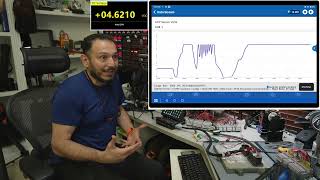
How to confirm: With a scan tool, monitor the live data for APP Sensor 1 voltage. It will likely read an abnormally low, fixed voltage (e.g., under 0.25V) that doesn't change when the pedal is pressed. A properly functioning pedal should show a smooth voltage transition from approximately 0.5V - 0.8V at rest to over 4.0V when fully depressed.
Typical fix: Replace the entire accelerator pedal assembly. After installation, perform a pedal relearn procedure.
Est. part cost: $150-$250 - Damaged Wiring or Poor Connection 🟡 Medium Probability The wiring harness leading to the pedal is located in the driver's footwell, where it can be kicked, snagged by floor mats, or have its connector bumped loose during cleaning. In trucks with power-adjustable pedals, the harness can get pinched or chafed in the adjustment mechanism, causing an open or short in the signal wire. Ram TSBs specifically highlight this as a key check. [TSB #9004225, TSB #9003413]
How to confirm: Visually inspect the wiring harness from the pedal to where it enters the main loom. Wiggle the connector and harness with the engine on (or key on, engine off while monitoring live data) to see if it triggers 🎬 Watch a full diagnostic walkthrough for no throttle response issues. the fault or causes the voltage to fluctuate. Use a multimeter to check for a 5-volt reference (typically between 4.9V and 5.1V) and a good ground at the connector. Check for continuity on the signal wire between the pedal connector and the ECM connector; resistance should be below 5.0 ohms.
Typical fix: Repair the damaged section of wire or clean and secure the connector. In one documented case, a zip tie was used to secure the harness away from a pinch point after repair.
Est. part cost: $10-$50 - Aftermarket Throttle Controller Interference ⚪ Low Probability Devices like a 'Pedal Commander' plug in between the pedal and the factory harness to modify the throttle signal. A faulty unit, poor connection, or even changing modes mid-drive can cause the computer to reject the signal and throw this code.
How to confirm: If an aftermarket throttle controller is installed, remove it completely and plug the factory harness directly back into the pedal. Clear codes and see if the problem returns.
Typical fix: Remove the faulty aftermarket device.
Est. part cost: $0
Rare But Worth Checking
- Faulty Powertrain Control Module (PCM): This is very rare. The PCM should only be suspected after the pedal assembly and all related wiring have been definitively ruled out.
- Low Battery Voltage: A weak or failing battery (below 12.4V with engine off) can cause a variety of unpredictable electronic faults, including low voltage signals from sensors. Always ensure system voltage is stable before diagnosing sensor circuits.
Diagnosis Steps
- Connect an OBD-II scanner and confirm P2122 is active. Check for other related codes like P2127 or P2138.
- Observe the live data for 'APP Sensor 1' voltage. It will likely be below 0.25V.
- Visually inspect the accelerator pedal's electrical connector and wiring harness for any obvious damage, looseness, or corrosion. Pay close attention to where the harness might be kicked, pinched by adjustable pedals, or snagged by floor mats.
- If an aftermarket throttle controller is present, remove it entirely.
- As per TSBs #9004225 and #9003413, ensure the code is active before proceeding. Disconnect the pedal connector. With the ignition on (engine off), use a multimeter to check for a 5V reference (between 4.9V and 5.1V) and a good ground at the harness plug. The connector has 6 pins.
- If power and ground are good, perform a continuity test on the signal wire (circuit K23) between the pedal connector and the ECM connector. Resistance should be less than 5.0 ohms.
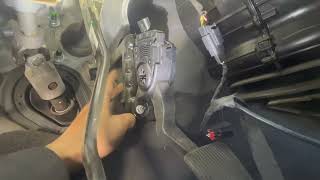
- If power, ground, and signal wire continuity are all good, the issue is almost certainly the pedal assembly itself. Replace the accelerator pedal assembly, which is typically held on by two 10mm bolts. 🎬 See how easy it is to swap the pedal assembly yourself.
- After replacement, perform the pedal calibration/relearn procedure: Turn the ignition to 'ON' (without starting), slowly press the pedal to the floor, slowly release it, then turn the ignition 'OFF'. Some service manuals note that a scan tool's 'ETC RELEARN' function should be used.
- Clear all codes with the scanner and test drive to ensure the repair was successful.
Parts You'll Likely Need
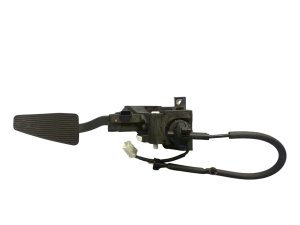
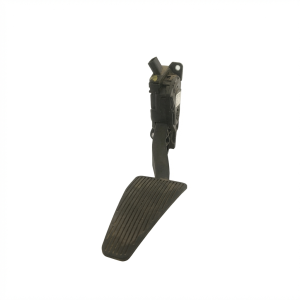
- Accelerator Pedal Assembly
(OEM #68163932AC, 68044317AD (supercedes 68044317AB, 68044317AC))— This is the most common failure point for code P2122. The position sensor is integrated into the pedal assembly and cannot be replaced separately.
Trusted brands: Mopar, Dorman, HELLA, Standard Motor Products
OEM price range: $200-$250
Aftermarket price range: $150-$200
Related Codes That Often Appear With This One
- P2127 — This code is for 'APP Sensor 2 Circuit Low'. Since the pedal has two sensors, it's common for a wiring or connector issue to affect both, or for the entire assembly to fail, triggering faults for both circuits.
- P2138 — This code indicates a 'Voltage Correlation' error between APP Sensor 1 and APP Sensor 2. The ECM sets this when the signals from the two sensors don't match its expected ratio, which can happen if one sensor fails and sends a low signal (P2122).
- P2299 — This code for 'Brake Pedal Position / Accelerator Pedal Position Incompatible' is mentioned in the same TSBs. It can be set if the ECM sees a throttle request while the brake is also applied, a condition that can arise from sensor faults. [TSB #9004225, TSB #9003413]
Technical Service Bulletins (TSBs) & Recalls
- 9004225: 2019 VEHICLE SPEED CONTROL (dated 2020-02-26)
- 9003413: 2015 VEHICLE SPEED CONTROL (dated 2017-06-14)
Platform-Specific Known Issues
- TSB #9004225 and #9003413: Both bulletins warn that P2122 and P2127 can be set if the accelerator pedal connector is disconnected during diagnosis. They stress the importance of checking wiring and connectors and ensuring the code is active before replacing the pedal assembly.
- Harness Vulnerability: Owners on forums frequently report that the wiring harness in the driver's footwell is susceptible to being kicked or having its connector dislodged, causing intermittent P2122 codes. For trucks with power-adjustable pedals, the harness can also be pinched by the pedal's movement mechanism.
Mechanic-Grade Diagnostic Values
- APP Sensor 1 Voltage (Scan Tool, KOEO) — expected: Approx. 0.5V - 0.8V at idle, rising smoothly to >4.0V at full pedal.. Failure: Voltage is fixed below 0.25V.
- 5-Volt Supply at Pedal Connector (KOEO) — expected: 4.9V to 5.1V.. Failure: Voltage is below 4.9V or absent.
- Signal Wire Continuity (APP to ECM) — expected: Below 5.0 ohms.. Failure: Resistance is higher than 5.0 ohms, indicating an open or high resistance in the wire.
- Signal Wire Short to Ground — expected: Infinite resistance (OL).. Failure: Resistance is below 100 ohms, indicating a short to ground.
Scan Tool Commands That Help
- wiTECH / AlfaOBD / Professional Scan Tool: ETC RELEARN — After replacing the accelerator pedal assembly to calibrate the new sensor's idle and wide-open throttle positions with the ECM. While a manual procedure exists, using the scan tool function is the manufacturer-recommended method.
- AlfaOBD: Active Diagnostics and Parameter Monitoring — For advanced, dealer-level diagnostics to monitor specific ECU parameters beyond generic OBD-II, which can help differentiate between an intermittent sensor fault and a wiring issue.
Wiring & Ground Locations
- APP Sensor Connector — At the top of the accelerator pedal assembly inside the driver's side footwell.. This is the primary connection point. It is vulnerable to being kicked, dislodged by floor mats, or corroded from moisture.
- Adjustable Pedal Harness — The wiring that runs along the adjustable pedal mechanism under the dash.. This harness is a known chafe point. The movement of the pedals can pinch or rub through the insulation of the sensor wires, causing a short or open circuit.
- Main Body Ground — On the core support near the battery, under the driver's side dash, and on the frame forward of the upper control arm.. A poor body or engine ground can cause floating voltages and unpredictable sensor readings. While not a primary cause, it should be checked if other electrical issues are present.
- K23 Circuit — The wire for the APP Sensor No. 1 Signal running from the pedal connector to the ECM.. This is the specific circuit that sets code P2122. Testing its continuity and for shorts to ground is a key diagnostic step.
- K852 Circuit — The wire for the 5-Volt Supply running from the ECM to the pedal connector.. This circuit provides the reference voltage for the sensor. If it's open or shorted, the sensor cannot send a valid signal.
Real Owner Repair Stories
- YouTube channel 'Repairs101' (Dodge/Chrysler vehicle with adjustable pedals (specific model not stated, but procedure is identical for Ram)) — P2122 code, delayed acceleration, vehicle in limp mode.
❌ Tried (didn't work) The previous mechanic had replaced the throttle body, which did not fix the issue.
✅ What actually fixed it The wiring harness for the adjustable pedals was found to be pinched and smashed by the pedal adjustment mechanism. The damaged wire was repaired, and the harness was secured with a zip tie to prevent it from getting caught again. The original pedal assembly was not faulty. - RamForum.com user 'Jebb' (2017 Ram 1500 5.7 Hemi (16,000 miles)) — Intermittent 'Service ETC' light, limp mode, truck seemed stuck in one gear. Code P2122 stored. Happened twice after coming to a stop.
❌ Tried (didn't work) Clearing the code (it returned)., Checking battery and terminals (battery was new).
✅ What actually fixed it The user noted the problem started after vacuuming the truck. The community pointed to the pedal's electrical connector being bumped or loosened. After checking and securing the connector, the issue was implicitly resolved as the user did not report further problems after following this advice.
OEM Part Supersession History
68044317AB, 68044317AC→68044317AD— Internal design revisions to improve sensor longevity and resistance to electronic noise or wear. Supersessions typically address known failure patterns.
Heads up: These part numbers are for a specific pedal type (e.g., fixed or adjustable). It is critical to order the part based on the vehicle's specific configuration, not just the code.
Model Year Variations Within This Range
- 2015-2019: The primary variation is the presence of power-adjustable pedals. Trucks with this option have a different pedal assembly (e.g., Mopar PN series 53034160xx) and a more complex wiring harness that is susceptible to getting pinched during pedal movement. Fixed-pedal trucks use a different part number and have a simpler, less vulnerable harness.
Helpful Videos
We Have This Part in Stock


The information in this article is provided for general reference and educational purposes only. Vehicle specifications, procedures, and part compatibility can vary by production date, trim level, and region. Always consult your vehicle's factory service manual and verify part numbers before purchasing or performing repairs. Safety-critical components such as airbags, seat belts, and braking systems should be installed by a qualified professional.
- Ram 3500:
- 🎬 Helpful Videos
- 🛍️ Shop This Part
- What's Unique About the 2015-2019 Ram 3500
- Diagnostic Flowchart
- Symptoms You May Notice
- Most Likely Causes
- Rare But Worth Checking
- Diagnosis Steps
- Parts You'll Likely Need
- Related Codes That Often Appear With This One
- Technical Service Bulletins (TSBs) & Recalls
- Platform-Specific Known Issues
- Mechanic-Grade Diagnostic Values
- Scan Tool Commands That Help
- Wiring & Ground Locations
- Real Owner Repair Stories
- OEM Part Supersession History
- Model Year Variations Within This Range
- 🎟️ Get 5% Off