

P2122 on 2007-2014 GMC Yukon XL: APP Sensor Circuit Low Causes & Fixes
On a 2007-2014 GMC Yukon XL, code P2122 is most often caused by a faulty accelerator pedal position (APP) sensor, which is part of the accelerator pedal assembly. A wiring issue is the second most likely cause. Replacing the pedal assembly is a common and effective fix.
- P2122 on a 2007-2014 Yukon XL almost always points to a problem with the accelerator pedal assembly or its wiring.
- The most common fix is to replace the entire accelerator pedal assembly, which is a DIY-friendly job held in by two 10mm bolts.
- Before replacing parts, inspect the wiring connector at the pedal for damage or loose pins, as this is a known issue noted in a GM service bulletin.
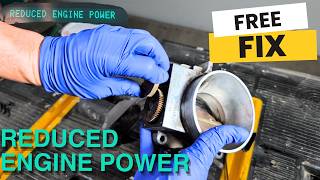
- Driving with this code is not recommended due to the 'Reduced Engine Power' mode, which can be unsafe in traffic.
What's Unique About the 2007-2014 Gmc YUKON XL
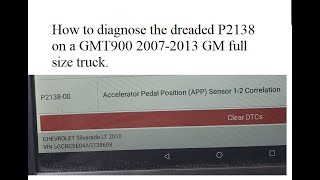
The GMT900 platform, which includes the 2007-2014 Yukon XL, Chevrolet Tahoe, Suburban, and Cadillac Escalade, is known for issues related to the accelerator pedal position (APP) sensor and its wiring. General Motors issued a Technical Service Bulletin (TSB #PIP3783D) 🎬 Watch: Detailed diagnostic walkthrough for P2138 and GMT900 wiring issues. specifically pointing to poor terminal tension in the APP sensor's electrical connector as a common source of this and related codes. This suggests that for these trucks, checking the wiring and connector is just as important as inspecting the pedal sensor itself. Water intrusion near the driver's kick panel has also been noted by owners as a potential cause for similar issues.
Diagnostic Flowchart
Tap your situation to follow the diagnostic path that matches what you're seeing on this vehicle.
Symptoms You May Notice
- "Reduced Engine Power" message on the dashboard
- Check Engine Light is on
- Vehicle has very limited acceleration or poor throttle response
- Vehicle may be speed-limited, sometimes to 30-40 mph
- Hesitation or stalling when pressing the accelerator
- Unresponsive accelerator pedal
- Traction control or StabiliTrak light may also illuminate
- Replacing the throttle body. The throttle body has its own position sensors (which can set code P2135), but P2122 specifically points to a problem with the accelerator pedal sensor circuit, not the throttle body itself.
Most Likely Causes
- Faulty Accelerator Pedal Position (APP) Sensor 🔴 High Probability This is a very common failure part on many modern drive-by-wire vehicles, including the Yukon XL and its platform mates. The sensor is integrated into the pedal assembly and wears out over time, with failures becoming more common in vehicles over 100,000 miles.
How to confirm: Use a scan tool to monitor the live voltage of APP Sensor 1 and APP Sensor 2. As you press the pedal, the voltages should change smoothly. A reading for Sensor 1 (often the 'D' circuit) that is stuck low, drops out, or doesn't change indicates a faulty sensor.
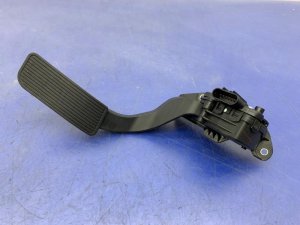
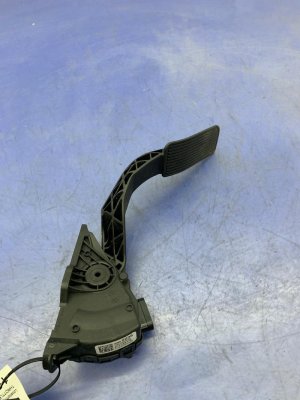
Typical fix: Replace the entire accelerator pedal assembly. It is sold as a single unit with the sensors integrated and is held on by two 10mm bolts.
Est. part cost: $50-$150 - Wiring or Connector Issue 🟡 Medium Probability GM TSB #PIP3783D specifically calls out "poor terminal tension" in the APP sensor circuits for this vehicle generation. The connector pins can become loose, causing an intermittent or constant low voltage signal. Corrosion, chafed wires from rubbing, or a poorly repaired/spliced pigtail are also common culprits found by owners.
How to confirm: Visually inspect the wiring harness and the 6-pin connector at the accelerator pedal for any signs of damage, corrosion, or loose pins. Wiggle the connector and harness while monitoring live sensor data on a scan tool to see if the voltage reading changes or cuts out, which would indicate a connection issue.
Typical fix: Repair the damaged section of wire, clean the connector terminals, or replace the connector pigtail. If terminal tension is poor, carefully tightening the female pins or replacing the connector may be necessary.
Est. part cost: $10-$40
Rare But Worth Checking
- Faulty Powertrain Control Module (PCM): This is very rare. The PCM should only be considered after definitively ruling out the APP sensor and all related wiring. A PCM failure can sometimes cause this code, but it's the least likely culprit.
Diagnosis Steps
- Read all fault codes with an OBD-II scanner. Note any other codes present, especially P2127 or P2138, as they strongly point to the pedal assembly.
- Use the scanner's live data function to monitor the voltage of both APP Sensor 1 and APP Sensor 2.
- Press the accelerator pedal slowly and watch the voltage readings. They should increase smoothly and in correlation with each other. Look for any voltage drops, spikes, or flat spots on the 'D' circuit (APP Sensor 1). A reading below ~0.2V at rest or that doesn't change smoothly is a red flag.
- Turn the vehicle off. Visually inspect the electrical connector and wiring harness at the top of the accelerator pedal. Look for loose pins, corrosion, or damaged wires.
- Per TSB #PIP3783D, pay close attention to the terminal tension in the connector. The female pins should grip the male pins tightly. If they feel loose, this is a likely cause.
- If the wiring and connector appear to be in good condition and the live data points to a sensor failure, the accelerator pedal assembly is the most likely cause.
- If the pedal assembly is replaced and the code returns, a more in-depth circuit test with a multimeter is needed to check for a short to ground or an open circuit between the pedal connector and the PCM.
- Some owners report that disconnecting the battery for 15 minutes during the pedal swap helps the computer reset and recognize the new part without a formal relearn procedure.
Parts You'll Likely Need
- Accelerator Pedal Assembly
(OEM #22742315, 25832864)— This is the most common fix for P2122. The assembly contains the integrated Accelerator Pedal Position (APP) sensors that fail and cause the code. It is a non-serviceable unit.
Trusted brands: ACDelco, GM Genuine, Dorman, Standard Motor Products
OEM price range: $100-$150
Aftermarket price range: $50-$100
Related Codes That Often Appear With This One
- P2127 — This code is for 'APP Sensor 'E' Circuit Low'. Since the pedal has two sensors for redundancy, it's common for both to be flagged if there's a connector, wiring, or internal sensor problem affecting the whole assembly.
- P2138 — This code indicates a 'Throttle/Pedal Position Sensor/Switch D/E Voltage Correlation' error. The PCM is seeing a disagreement between the two pedal sensors' signals, which is a very common companion code to P2122 and a strong indicator of a failing pedal assembly.
- P2120, P2123, P2125, P2128 — These are all related to the APP sensor circuits (Sensor D/E, high/low faults). The presence of any of these codes alongside P2122 reinforces that the fault lies within the accelerator pedal assembly or its connection to the PCM.
Technical Service Bulletins (TSBs) & Recalls
- PIP3783D: Addresses multiple APP sensor codes (including P2122) and recommends inspecting the circuits for poor terminal tension. This is a key diagnostic step for the GMT900 platform.
Platform-Specific Known Issues
- A GM Technical Service Bulletin (TSB #PIP3783D) exists for this issue, advising technicians to inspect the Accelerator Pedal Position circuits for poor terminal tension when codes like P2122 are present.
- An owner complaint filed with the NHTSA (ODI #11230769) for a 2008 model shows a diagnosis of codes P2122, P2138, and P2128, further confirming the common grouping of these APP sensor codes.
- Multiple owners on TahoeYukonForum.com have documented their struggles with P2138 (a related code), with many confirming that replacing the pedal assembly fixed the issue, while others found issues with spliced wiring harnesses from previous repairs.
Mechanic-Grade Diagnostic Values
- APP Sensor 1 (D Circuit) Voltage — expected: Approx. 0.7-0.8V at idle (pedal released), rising to approx. 3.8-4.4V at wide-open throttle.. Failure: A reading below 0.125V or 0.17V will trigger the P2122 code. The voltage should increase smoothly with no dropouts when the pedal is pressed.
- APP Sensor 2 (E Circuit) Voltage — expected: Approx. 0.275-0.475V at idle (pedal released), rising to approx. 1.75-2.35V at wide-open throttle. Typically, Sensor 2 voltage is about half of Sensor 1's voltage.. Failure: While not directly for P2122, an erratic reading on this sensor will set a companion code like P2127 or P2138 and indicates a faulty pedal assembly.
- 5-Volt Reference at APP Connector — expected: 4.5 to 5.5 Volts at both 5V reference pins (F and C) with the key on, engine off.. Failure: A voltage below 4.5V indicates a problem with the PCM or a short on the 5V reference circuit.
Scan Tool Commands That Help
- Tech2/GDS2 or equivalent professional scanner: Idle Learn / Throttle Relearn — While not always required for an APP sensor replacement, if the idle is erratic after the repair, performing an Idle Learn Reset can help. This is more commonly needed after cleaning or replacing the throttle body, but can be useful if other system parameters were affected.
Wiring & Ground Locations
- APP Sensor Connector (6-Pin) — At the top of the accelerator pedal assembly, under the driver's side dashboard.. This is the primary connection point. TSB #PIP3783D specifically mentions checking for poor terminal tension here. The pinout is: Pin A: Low Reference, Pin B: APP Sensor 2 Signal, Pin C: 5-Volt Reference 2, Pin D: Low Reference, Pin E: APP Sensor 1 Signal, Pin F: 5-Volt Reference 1. P2122 relates to the signal from Pin E.
- G103 / G105 (example ground locations) — Commonly found on the engine block or on the frame near the front of the engine compartment. Specific location can vary slightly by year and engine.. The APP sensor circuits (Low Reference wires) terminate at a ground connection. A corroded, loose, or damaged ground can cause fluctuating or low voltage readings, mimicking a sensor failure. Verifying the integrity of the main engine-to-chassis grounds is a critical step if wiring issues are suspected.
Real Owner Repair Stories
- JaguarForums user zReeDx (on a different vehicle, but same codes/symptoms) (2017 Jaguar F-Type R) — Car randomly enters limp mode, especially in sport mode. Codes P2138 and P2122 present.
❌ Tried (didn't work) Replaced accelerator pedal assembly with a used part., A shop suspected corrosion in the main harness but gave up.
✅ What actually fixed it A second shop spliced in a new pigtail connector for the accelerator pedal sensor, resolving the issue that a previous pedal replacement and dealer visit could not fix. This highlights the importance of the connector itself, as cited in GM's TSB. - EFILive Forum user (2010 Chevrolet Camaro (similar GM electronics)) — Reduced Power Mode with codes P2138/P2122, occurring intermittently during hard acceleration or sometimes on startup.
❌ Tried (didn't work) Initial diagnosis pointed towards throttle body or pedal sensor.
✅ What actually fixed it The issue was resolved with a custom-made extension harness for the throttle body, suggesting the factory harness had an intermittent break or pin tension issue that only manifested under specific conditions (engine movement during acceleration). This reinforces that wiring, not just the sensor, is a major culprit.
OEM Part Supersession History
15101848, 15847349→25832864— Standard part evolution and consolidation by GM. The newer part number is the current replacement for a wide range of GM trucks and SUVs from this era.
Heads up: Part 22742315 is also listed for these vehicles but is typically for models without adjustable pedals. Part 25832864 is for vehicles *with* adjustable pedals. Visual confirmation or checking the vehicle's RPO codes is recommended before ordering.
Helpful Videos
We Have This Part in Stock

The information in this article is provided for general reference and educational purposes only. Vehicle specifications, procedures, and part compatibility can vary by production date, trim level, and region. Always consult your vehicle's factory service manual and verify part numbers before purchasing or performing repairs. Safety-critical components such as airbags, seat belts, and braking systems should be installed by a qualified professional.
- Gmc YUKON XL:
- 🎬 Helpful Videos
- 🛍️ Shop This Part
- What's Unique About the 2007-2014 Gmc YUKON XL
- Diagnostic Flowchart
- Symptoms You May Notice
- Most Likely Causes
- Rare But Worth Checking
- Diagnosis Steps
- Parts You'll Likely Need
- Related Codes That Often Appear With This One
- Technical Service Bulletins (TSBs) & Recalls
- Platform-Specific Known Issues
- Mechanic-Grade Diagnostic Values
- Scan Tool Commands That Help
- Wiring & Ground Locations
- Real Owner Repair Stories
- OEM Part Supersession History
- 🎟️ Get 5% Off