

P2122 on 2007-2014 GMC Yukon: Accelerator Pedal Sensor 'D' Circuit Low Causes and Fixes
On a 2007-2014 GMC Yukon, code P2122 almost always points to a problem with the Accelerator Pedal Position (APP) sensor. Before replacing the pedal assembly, inspect the electrical connector for poor terminal tension or corrosion, a known issue cited in GM Technical Service Bulletin #PIP3783D. If the wiring is good, a new pedal assembly costs between $60 and $140. This issue is common across the entire GMT900 platform, including the Chevrolet Tahoe, Suburban, Silverado, and Cadillac Escalade.
- P2122 on a 2007-2014 Yukon means the accelerator pedal's position sensor circuit is sending a low voltage signal.
- The most common symptoms are a 'Reduced Engine Power' message and severely limited acceleration.
- **Crucially, check the electrical connector at the pedal for loose pins or corrosion before buying any parts**, as this is a known GM issue outlined in a service bulletin.
- If the wiring is good, the fix is to replace the entire accelerator pedal assembly, which is a simple DIY job that takes less than 30 minutes.
- The correct OEM part number for the pedal assembly is typically 25832864.
What's Unique About the 2007-2014 Gmc YUKON
For this generation of GMC Yukon and related GM trucks/SUVs on the GMT900 platform, the root cause of P2122 is frequently not the pedal sensor itself, but rather a poor electrical connection to it. General Motors issued a Technical Service Bulletin (PIP3783D) specifically highlighting that poor terminal tension in the APP sensor's wiring harness connector can cause intermittent low voltage signals and trigger this code. Owners should always inspect the wiring and connector integrity before spending money on a new pedal assembly. Another documented issue is wiring damage from a misplaced sheet metal screw near the driver's side fender wall, which can pierce the APP sensor harness and cause a short to ground.
Diagnostic Flowchart
Tap your situation to follow the diagnostic path that matches what you're seeing on this vehicle.
Symptoms You May Notice
- Check Engine Light is on
- "Reduced Engine Power" message displayed on the dashboard
- Vehicle has very limited acceleration or poor throttle response
- Vehicle speed may be limited to 30-40 mph
- Hesitation or stalling when pressing the gas pedal
- Traction control light may also illuminate
- Unstable or high idle speed.
- Replacing the Throttle Body. The throttle body has its own position sensor (TPS), but code P2122 specifically relates to the accelerator pedal assembly in the cabin, not the throttle body on the engine. A throttle body issue typically sets a P2135 code, though it can sometimes appear alongside pedal codes.
Most Likely Causes
- Poor Terminal Tension at APP Sensor Connector 🔴 High Probability This is a well-documented issue for this platform, as confirmed by GM's own Technical Service Bulletin #PIP3783D. Over time, the female terminals in the connector can lose their grip on the male pins of the sensor, causing intermittent voltage drops.
How to confirm: Visually inspect the connector for corrosion or backed-out pins. Use the correct terminal test probes (often called pin-drag testers) to check for proper tension on each wire at the APP sensor connector. A simple wiggle test of the connector while monitoring live data can also reveal the issue.
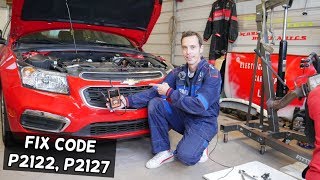
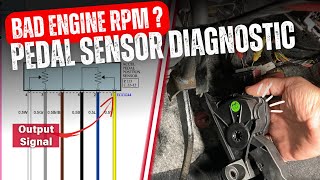
Typical fix: Clean the connector terminals. If tension is poor, the affected terminals may need to be replaced or the entire connector pigtail can be replaced. 🎬 See how to diagnose and fix these common pedal codes. Some owners have had success carefully re-tensioning the existing female terminals with a small pick.
Est. part cost: $15-$40 for a new pigtail connector - Faulty Accelerator Pedal Position (APP) Sensor Assembly 🟡 Medium Probability The electronic sensor is integrated into the pedal assembly and can fail internally over time, which is a common issue on these trucks after 100,000 miles. Aftermarket replacements have been reported to be faulty out of the box, so using a quality OEM or reputable aftermarket brand is recommended.
How to confirm: If the wiring and connector are confirmed to be good, use a scan tool to monitor the APP Sensor 1 and Sensor 2 voltage readings while slowly pressing and releasing the pedal. A faulty sensor will show erratic voltage, dropouts, or a signal that doesn't sweep smoothly. For example, one sensor should sweep up from ~1V to ~4V, while the other sweeps in the opposite direction; any sudden jumps or flat spots indicate a bad pedal.
Typical fix: Replace the entire accelerator pedal assembly. The sensor is not sold separately. This is a simple DIY job requiring only a 10mm socket.
Est. part cost: $60-$140 - Damaged Wiring Harness ⚪ Low Probability Wiring in the driver's footwell can be subject to damage from foot traffic or corrosion from water intrusion, a known issue near the driver's side kick panel on these vehicles. A specific, documented failure point is a sheet metal screw from the fender wall piercing the harness, shorting the APP sensor wire to ground.
How to confirm: Perform a continuity and resistance test on the signal, ground, and 5-volt reference wires between the APP sensor connector and the PCM. Wiggle the harness during testing to expose intermittent faults. Specifically check the area near the power distribution box for any piercing screws or chafed wires.
Typical fix: Repair the specific section of damaged wire. In the case of the screw, remove it and repair the pierced wire (often a blue wire in the harness).
Est. part cost: $5-$20 for wiring repair supplies
Rare But Worth Checking
- Faulty Powertrain Control Module (PCM): This is extremely rare. The PCM should only be suspected after all other possibilities, including wiring and the sensor itself, have been definitively ruled out.
- Outdated PCM Software Calibration: In some cases, manufacturers release software updates that adjust the acceptable voltage window for the APP sensor. An outdated calibration could misinterpret a normal sensor voltage as being too low.
Diagnosis Steps
- Scan the PCM for any other stored trouble codes. Address other codes first if they are present, but prioritize pedal-related codes like P2122, P2127, and P2138.
- Visually inspect the accelerator pedal assembly, its electrical connector, and the nearby wiring for any obvious signs of damage, looseness, or corrosion. Check for water intrusion on the floor.
- As per TSB #PIP3783D, carefully check the terminal tension at the APP sensor connector. Loose pins are a very common cause of this code. Wiggle the connector while the engine is running to see if it triggers the 'Reduced Engine Power' mode.
- Using a scan tool with live data capability, monitor the voltage PIDs for APP Sensor 1 and APP Sensor 2.
- Slowly press and release the accelerator pedal. The voltage for both sensors should sweep smoothly with no glitches or dropouts. One should sweep from low to high voltage (e.g., ~1V to ~4V), and the other from high to low. A reading below 0.2V on the 'D' circuit is a key indicator.
- If a voltage reading is consistently low, erratic, or doesn't change with pedal movement, and the wiring/connector integrity has been confirmed, the accelerator pedal assembly is faulty.
- If the sensor and its direct connector/wiring are good, check for wiring issues further up the harness. Inspect the harness near the driver's side fender and power distribution box for any chafing or piercing objects, like a rogue sheet metal screw.
- Perform continuity checks on the APP sensor circuits between the pedal connector and the PCM if a wiring fault is suspected.
Parts You'll Likely Need
- Accelerator Pedal Assembly
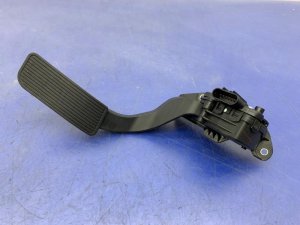
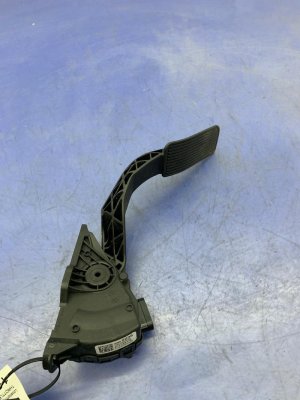
(OEM #25832864 (For models with adjustable pedals), 19418303 (Non-adjustable))— This assembly contains the integrated electronic sensors that fail and trigger code P2122. It is the most common part replaced to fix this issue after wiring problems are ruled out. Note that models with and without adjustable pedals use different parts.
Trusted brands: ACDelco, Dorman, Standard Motor Products (SMP), NTK
OEM price range: $95-$141
Aftermarket price range: $60-$95 - APP Sensor Connector Pigtail — If the cause is poor terminal tension or a damaged connector, replacing the pigtail is often the most reliable repair instead of trying to fix individual terminals.
Trusted brands: ACDelco PT2628, Dorman 645-800
OEM price range: $30-$45
Aftermarket price range: $15-$30
Related Codes That Often Appear With This One
- P2127 — P2127 is 'Throttle/Pedal Position Sensor/Switch 'E' Circuit Low'. The pedal assembly has two sensors for redundancy. P2122 and P2127 often appear together, indicating a problem affecting both sensor circuits, such as a faulty connector or pedal assembly.
- P2138 — P2138 is 'Throttle/Pedal Position Sensor/Switch 'D'/'E' Voltage Correlation'. This code sets when the signals from the two pedal sensors do not agree with each other, which is a common result of one sensor failing or its circuit having an issue (as indicated by P2122).
- P2135 — P2135 is 'Throttle Position Sensor 'A'/'B' Voltage Correlation' and relates to the throttle body. It can sometimes be triggered as a secondary code because the PCM is receiving conflicting information between the driver's request (from the faulty pedal) and the throttle's actual position. It's recommended to fix the pedal-related codes (P2122, P2127, P2138) first.
Technical Service Bulletins (TSBs) & Recalls
- PIP3783D: Addresses Service Engine Soon light, Reduced Engine Power, and multiple APP sensor DTCs (including P2122) caused by poor terminal tension in the sensor's electrical connector.
Platform-Specific Known Issues
- A known issue, documented in GM TSB #PIP3783D, is poor terminal tension in the APP sensor electrical connector, which can cause intermittent signal loss and trigger this code without the pedal itself being faulty.
- Water leaks into the cabin near the driver's side kick panel can sometimes lead to corrosion on wiring harnesses in that area, potentially affecting the APP sensor circuits.
- A specific documented case on a 2007 Silverado involved a shee
Mechanic-Grade Diagnostic Values
- APP Sensor 5-Volt Reference Circuit Voltage — expected: 4.8V to 5.2V with key on, engine off.. Failure: Voltage below 4.5V or absent indicates an open/short in the reference circuit or a PCM fault.
- APP Sensor Signal Voltage (Scan Tool) — expected: Should be between 0.32V and 4.75V and sweep smoothly as the pedal is pressed.. Failure: A reading below 0.25V at any point indicates a fault condition for P2122. Any spikes, dropouts, or flat spots during the sweep indicate a failing sensor.
- APP Sensor Low Reference (Ground) Circuit — expected: Less than 0.1V (100mV) when tested against a known good ground.. Failure: Voltage significantly higher than 0.1V indicates a poor ground connection, which can cause the signal voltage to be skewed.
Scan Tool Commands That Help
- Tech2 / GDS2: Live Data - APP Sensor 1 & 2 Voltage — This is the primary function used to diagnose P2122. It allows the technician to view the voltage signals from both sensors within the pedal assembly in real-time as the pedal is operated. This is used to confirm if the signal is dropping out, erratic, or consistently low, which points to a faulty pedal or wiring issue.
- Generic OBD-II Scanner: Erase Codes — After replacing the accelerator pedal assembly or repairing a wiring issue, the stored fault codes must be cleared. On these vehicles, a specific 'relearn' procedure is not typically required; clearing the codes and cycling the ignition is usually sufficient for the PCM to recognize the new component.
Wiring & Ground Locations
- APP Sensor Connector (X209) — At the top of the accelerator pedal assembly inside the driver's side footwell.. This 6-pin connector is the primary failure point for this code due to poor terminal tension, as noted in TSB PIP3783D. All voltage and signal tests begin here.
- Pin E (Dark Blue wire) — On the 6-pin APP sensor connector.. This is the signal wire for APP Sensor 1. A low voltage reading on this specific circuit is what triggers the P2122 code.
- Pin F (White/Black wire) — On the 6-pin APP sensor connector.. This is the 5-volt reference wire for APP Sensor 1. A stable 5V must be present on this pin for the sensor to operate correctly.
- Pin D (Brown wire) — On the 6-pin APP sensor connector.. This is the low reference (ground) wire for APP Sensor 1. A poor connection here can cause incorrect voltage readings.
- G104 — Located on the left rear of the engine block/cylinder head.. This is a major engine ground point. While not the direct ground for the APP sensor (which is provided by the PCM), a poor connection at G104 can cause electrical noise and voltage offsets that may affect various sensor readings, including the APP.
Real Owner Repair Stories
- YouTube channel 'GK7 Garage' (Chevrolet vehicle (similar GMT900 platform)) — Check engine light, traction control light, and codes P2122, P2138, and P2135.
❌ Tried (didn't work) Initial diagnosis pointed towards either the pedal or the throttle body.
✅ What actually fixed it Replacing the accelerator pedal assembly with a Standard Motor Products aftermarket part resolved all codes. The owner noted the replacement part was a physically updated and more robust design compared to the original. After installation and clearing the codes, throttle response was restored.
OEM Part Supersession History
15101848, 15847349→25832864— Part consolidation and potential design updates by GM.
Heads up: Part 25832864 is for models WITH adjustable pedals. It is not compatible with vehicles that have fixed pedals.
Helpful Videos
We Have This Part in Stock

The information in this article is provided for general reference and educational purposes only. Vehicle specifications, procedures, and part compatibility can vary by production date, trim level, and region. Always consult your vehicle's factory service manual and verify part numbers before purchasing or performing repairs. Safety-critical components such as airbags, seat belts, and braking systems should be installed by a qualified professional.
- Gmc YUKON:
- 🎬 Helpful Videos
- 🛍️ Shop This Part
- What's Unique About the 2007-2014 Gmc YUKON
- Diagnostic Flowchart
- Symptoms You May Notice
- Most Likely Causes
- Rare But Worth Checking
- Diagnosis Steps
- Parts You'll Likely Need
- Related Codes That Often Appear With This One
- Technical Service Bulletins (TSBs) & Recalls
- Platform-Specific Known Issues
- Mechanic-Grade Diagnostic Values
- Scan Tool Commands That Help
- Wiring & Ground Locations
- Real Owner Repair Stories
- OEM Part Supersession History
- 🎟️ Get 5% Off