

P2120 on 2007-2014 GMC Yukon XL: Pedal Sensor 'D' Circuit Causes and Fixes
Code P2120 on a 2007-2014 GMC Yukon XL almost always points to a problem with the accelerator pedal's wiring or the pedal assembly itself. Before replacing the pedal, inspect the connector for poor terminal tension, a known issue cited in GM Technical Service Bulletin #PIP3783D. If the wiring is secure, replacing the accelerator pedal assembly (OEM Part No. 25832864) is the next likely fix.
- P2120 on a 2007-2014 Yukon XL means there's a fault in the accelerator pedal's electronic sensor circuit.
- The most common symptom is the 'Reduced Engine Power' warning, which severely limits vehicle speed.
- Always check the wiring connector at the pedal for loose pins (poor terminal tension) before buying any parts, as this is a known GM issue (TSB #PIP3783D).
- If the wiring is good, the fix is to replace the entire accelerator pedal assembly, which is a straightforward DIY job.
- Do not confuse this issue with a bad throttle body, which typically sets different trouble codes.
What's Unique About the 2007-2014 Gmc YUKON XL
On this generation of GMC trucks and SUVs (GMT900 platform), the wiring leading to the accelerator pedal is a known weak point. General Motors issued a Technical Service Bulletin (PIP3783D) specifically advising technicians to check for poor pin tension in the accelerator pedal position sensor's electrical connector before replacing any parts. This suggests the connection itself is often a bigger problem than the sensor. This issue is common across platform mates like the Chevrolet Tahoe, Suburban, Silverado, and Cadillac Escalade.
Diagnostic Flowchart
Tap your situation to follow the diagnostic path that matches what you're seeing on this vehicle.
Symptoms You May Notice
- "Reduced Engine Power" message on the dashboard
- Check Engine Light (Malfunction Indicator Lamp) is on
- Poor or no throttle response
- Hesitation or stumbling during acceleration
- Vehicle speed is severely limited ('limp mode')
- Service Stabilitrak warning message may also appear
- Replacing the throttle body. While a faulty throttle body can also cause a 'Reduced Engine Power' message, it typically sets different codes (like P1516 or P2135). Codes P2120, P2122, P2123, P2125, P2127, P2128, and P2138 specifically point to the accelerator pedal sensor circuits.
Most Likely Causes
- Poor Terminal Tension at APP Sensor Connector 🔴 High Probability This is a documented issue for this platform, as cited in GM TSB #PIP3783D. The female terminals in the 6-pin connector can lose their grip on the male pins of the sensor over time due to vibration and heat cycles.
How to confirm: With the key off, disconnect the electrical connector at the accelerator pedal assembly. Visually inspect the pins and terminals for corrosion or damage. Gently re-insert a male pin (or a special terminal testing tool) to feel for a snug fit. A loose connection is a confirmed fault. Wiggling the connector or harness with the engine running while a helper monitors live data on a scan tool may show the voltage signal dropping out.
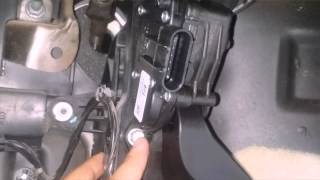
Typical fix: If terminal tension is poor, the affected terminal(s) in the connector pigtail need to be replaced. A more common and reliable fix is replacing the entire connector pigtail. 🎬 See how to fix the reduced engine power message yourself. The ACDelco pigtail part number is often cited as 13584094.
Est. part cost: $15-$45 - Failed Accelerator Pedal Position (APP) Sensor Assembly 🟡 Medium Probability The sensor is an electronic component that can wear out over time. It is sold as a complete assembly with the pedal and is not serviceable separately.
How to confirm: If the wiring and connector are confirmed to be good, use a scan tool to monitor the APP Sensor 1 and APP Sensor 2 voltage readings while slowly pressing and releasing the pedal. The voltage should change smoothly with no dropouts or spikes. A jumpy, unresponsive, or non-correlating signal between the two sensors (which often sets P2138) indicates a failed sensor assembly.
Typical fix: Replace the entire accelerator pedal assembly. It is a bolt-on part held by two bolts. 🎬 Watch: A quick walkthrough on replacing the accelerator pedal assembly. The common OEM part number is ACDelco/GM 25832864, which supersedes older numbers like 15101848 and 15847349.
Est. part cost: $60-$150 - Damaged Wiring Harness ⚪ Low Probability Wires can be damaged by chafing against sharp edges under the dash, previous improper repairs, or corrosion from water intrusion. A related TSB for code P2138 mentions that water leaks into the instrument panel (IP) to body harness connector can cause these faults. Aftermarket installations (like for amplifiers) routed through the firewall grommet can also damage the nearby pedal harness.
How to confirm: Visually inspect the wiring harness running from the pedal assembly towards the firewall and ECM. Check for any signs of chafing, pinching, or breaks. A continuity test with a multimeter from the APP sensor connector to the ECM connector is the definitive test. Wiggling the harness at key points, like the J1 connector at the ECM, while monitoring scan tool data can also reveal intermittent opens or shorts.
Typical fix: Repair the damaged section of wire with a new piece of wire and solder/heat shrink connections. If corrosion is found in a major connector block, it may need to be cleaned or replaced.
Est. part cost: $5-$25
Rare But Worth Checking
- Faulty Engine Control Module (ECM): This is extremely rare. The ECM should only be considered after all other possibilities, including all wiring, connectors, and the sensor itself, have been exhaustively ruled out.
Diagnosis Steps
- Read all stored DTCs with an OBD-II scanner. Note any other codes that are present, especially P2138 or other pedal-related codes.
- Turn the ignition off. Locate the accelerator pedal assembly under the driver's side dashboard.
- Visually inspect the electrical connector and wiring harness for any obvious signs of damage, corrosion, or looseness.
- Disconnect the connector. Carefully inspect the female terminals inside the connector for any signs of being spread open or corroded. This is the 'poor terminal tension' issue mentioned in TSB #PIP3783D.
- If the connector and terminals look good, reconnect it. Use a scan tool with live data capability to view the voltage from APP Sensor 1 and APP Sensor 2.
- With the key on and engine off, slowly press the gas pedal to the floor and release it. Watch the voltage readings. They should move in a smooth, linear fashion without any sudden jumps or dropouts. One sensor will sweep up in voltage while the other sweeps down.
- While monitoring live data, gently wiggle the harness at the pedal connector, along the dash, and at the J1 connector of the ECM (located on the driver's side of the engine bay) to see if the voltage signal becomes erratic.
- If the voltage signal is erratic, jumpy, or unresponsive, and the wiring/connectors are confirmed to be good, the accelerator pedal assembly is the most likely culprit.
- If the wiring is suspected, perform a continuity test on each of the 6 wires between the APP sensor connector and the ECM connector to rule out an open or short circuit.
Parts You'll Likely Need
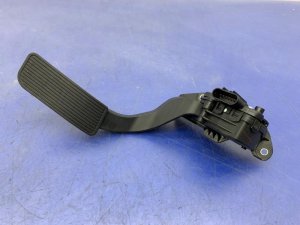
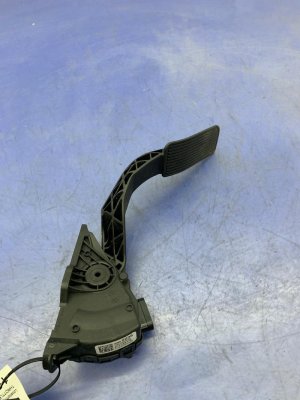
- Accelerator Pedal Assembly
(OEM #25832864)— This is the most common part to fail if the wiring connector is not the issue. The sensor is integrated into the pedal assembly and is not sold separately. Part number 25832864 is the current GM/ACDelco part, replacing 15101848 and 15847349.
Trusted brands: ACDelco (OEM), Standard Motor Products (APS265), NGK/NTK (AD0456), Dorman
OEM price range: $95-$150
Aftermarket price range: $60-$120 - Accelerator Pedal Position Sensor Connector
(OEM #13584094 (Pigtail Kit))— Required if the original connector is damaged or suffering from poor terminal tension as described in TSB #PIP3783D. This is a 6-pin Delphi GT 150 series connector.
Trusted brands: ACDelco, Dorman, Standard Motor Products, EFI Connection
OEM price range: $30-$50
Aftermarket price range: $10-$30
Related Codes That Often Appear With This One
- P2122 — Indicates a low voltage fault in the APP sensor 1 circuit.
- P2123 — Indicates a high voltage fault in the APP sensor 1 circuit.
- P2125 — Indicates a fault in the second APP sensor circuit ('E').
- P2127 — Indicates a low voltage fault in the second APP sensor circuit ('E').
- P2128 — Indicates a high voltage fault in the second APP sensor circuit ('E').
- P2138 — Indicates a correlation error between the two APP sensors. This is a very common related code that frequently appears with the others 🎬 Watch: The real fix for code P2138 and reduced power. when the pedal assembly fails.
Technical Service Bulletins (TSBs) & Recalls
- PIP3783D: Advises technicians to check for a Service Engine Soon lamp, reduced engine power message, and codes P2120, P2122, P2123, P2125, P2127, P2128, and/or P2138. The bulletin directs inspection of the Accelerator Pedal Position circuits for poor terminal tension.
Platform-Specific Known Issues
- A known issue documented in TSB #PIP3783D points directly to poor terminal tension in the accelerator pedal position sensor connector as a primary cause for this code and related symptoms.
- A related TSB for code P2138 notes that water intrusion into the instrument panel-to-body harness connector is a possible cause, suggesting owners check for water leaks near the driver's side A-pillar or firewall.
Mechanic-Grade Diagnostic Values
- APP Sensor 1 (Circuit 'D') Voltage — expected: Approx. 0.6V - 0.9V at pedal rest (idle), sweeping smoothly up to ~4.5V at full pedal press.. Failure: Voltage is stuck, jumps erratically, or is outside the 0.24V - 4.49V range for more than 0.5 seconds.
- APP Sensor 2 (Circuit 'E') Voltage — expected: Approx. 4.0V - 4.5V at pedal rest (idle), sweeping smoothly down to ~0.3V - 0.5V at full pedal press.. Failure: Voltage is stuck, jumps erratically, or does not move in opposition to Sensor 1. Often sets P2138.
- 5-Volt Reference at APP Connector — expected: 4.8V - 5.2V at both 5V reference pins (Pins B and E) with key on, engine off.. Failure: Voltage below 4.8V or above 5.2V indicates a problem with the ECM or the reference circuit, possibly shared with other sensors.
- Low Reference (Ground) Circuit Resistance — expected: Less than 5 ohms between the ground pins at the APP connector (Pins C and F) and a known good chassis ground.. Failure: Resistance greater than 5 ohms indicates an open or high resistance in the ground circuit, which can cause floating voltage readings.
Scan Tool Commands That Help
- Tech2 / GDS2: Freeze Frame / Failure Records — This is not a command, but a critical data set to review. It captures a snapshot of all sensor data at the exact moment the P2120 code was set. This can reveal if the fault occurred during a specific event, like hitting a bump (suggesting a wiring issue) or at a certain pedal angle (suggesting a sensor dead spot).
Wiring & Ground Locations
- G218 — Behind the driver's side kick panel, near the A-pillar.. This is a major instrument panel ground point. A loose or corroded connection here can cause a floating ground for multiple dash components, including the circuits related to the APP sensor, leading to erratic voltage readings and codes like P2120.
- G103 — On the front of the right-side cylinder head in the engine bay.. This is a primary engine ground point. While not directly for the APP sensor, a poor engine ground can affect the ECM's reference voltages and cause a host of sensor-related codes.
- X115 — The 6-pin electrical connector at the Accelerator Pedal Assembly itself.. This is the primary connection point for the sensor. It is the subject of TSB #PIP3783D for poor terminal tension and is the first place to check for damage or corrosion.
- ECM J1/X1 Connector — The Engine Control Module (ECM) is located on the driver's side of the engine bay. This is one of its main multi-pin connectors.. The six wires from the APP sensor terminate at this connector. A backed-out pin or corrosion at the ECM connector can cause a P2120 code even if the pedal, pigtail, and harness are all good.
Real Owner Repair Stories
- Tahoe Yukon Forum user report (2007 Chevrolet Tahoe (GMT900 platform-mate)) — Reduced Engine Power, codes P2120, P2125, P2138.
❌ Tried (didn't work) Replacing the accelerator pedal assembly, Replacing the pigtail connector
✅ What actually fixed it Discovered a chafed wire in the harness near the emergency brake pedal mechanism. The sharp metal of the brake assembly had worn through the insulation, causing an intermittent short. Repairing the wire resolved all codes. - Forum user report (2008 GMC Sierra (GMT900 platform-mate)) — Intermittent 'Reduced Engine Power' message, P2120 and P2138 codes.
❌ Tried (didn't work) Replacing the accelerator pedal assembly
✅ What actually fixed it The problem was traced to a poor ground connection. Cleaning the main engine-to-chassis ground strap and the G107 ground point on the engine block provided a stable ground for the ECM and resolved the voltage fluctuation issues. - Dealer technician anecdote (2009 Chevrolet Suburban (GMT900 platform-mate)) — Persistent P2120 code after pedal and pigtail replacement.
❌ Tried (didn't work) New accelerator pedal assembly, New APP sensor pigtail connector, Visual harness inspection
✅ What actually fixed it The technician found that several pins in the main J1/X1 connector at the Engine Control Module (ECM) had slightly backed out. Unplugging the connector and carefully re-seating each individual pin with a terminal tool created a secure connection and permanently fixed the fault.
OEM Part Supersession History
15101848→15847349— Part number consolidation and potential minor design revision by the manufacturer.15847349→25832864— Current production part number. This is the most common replacement part number now supplied by GM/ACDelco.
Model Year Variations Within This Range
- 2007-2014: The fundamental design of the accelerator pedal assembly, its wiring, and the diagnostic approach for code P2120 remained consistent throughout the GMT900 platform's lifecycle. The same part numbers (including supersessions) and TSBs apply to all years in this range.
Helpful Videos

We Have This Part in Stock

The information in this article is provided for general reference and educational purposes only. Vehicle specifications, procedures, and part compatibility can vary by production date, trim level, and region. Always consult your vehicle's factory service manual and verify part numbers before purchasing or performing repairs. Safety-critical components such as airbags, seat belts, and braking systems should be installed by a qualified professional.
- Gmc YUKON XL:
- 🎬 Helpful Videos
- 🛍️ Shop This Part
- What's Unique About the 2007-2014 Gmc YUKON XL
- Diagnostic Flowchart
- Symptoms You May Notice
- Most Likely Causes
- Rare But Worth Checking
- Diagnosis Steps
- Parts You'll Likely Need
- Related Codes That Often Appear With This One
- Technical Service Bulletins (TSBs) & Recalls
- Platform-Specific Known Issues
- Mechanic-Grade Diagnostic Values
- Scan Tool Commands That Help
- Wiring & Ground Locations
- Real Owner Repair Stories
- OEM Part Supersession History
- Model Year Variations Within This Range
- 🎟️ Get 5% Off