

P2120 on 2007-2014 Chevrolet Suburban: Causes and Fixes for Pedal Sensor Faults
On a 2007-2014 Suburban, code P2120 almost always points to a faulty accelerator pedal position (APP) sensor or a wiring issue. The most common fix is replacing the entire accelerator pedal assembly. Expect to pay $70-$150 for an OEM-quality part and spend less than an hour on this simple DIY replacement. Before replacing parts, inspect the wiring harness connectors for loose terminals or corrosion, a known issue on this platform.
- P2120 on a 2007-2014 Suburban is a serious code that will likely put the truck in 'Reduced Engine Power' mode.
- The most likely cause is a failed accelerator pedal assembly, which is a simple and relatively inexpensive part to replace yourself (OEM Part #25832864).
- Before replacing the pedal, always follow GM's advice from TSB #PIP3783D and check the wiring connector at the pedal, ECM, and specific inline body connectors for loose terminals or corrosion, as this is a known issue.
- Do not overlook simple causes like damaged wiring from chafing or rodents, and check for loose or corroded main ground straps, which can also trigger this fault.
- Do not confuse this pedal sensor code with a throttle body code; they are different parts with different diagnostic codes.
What's Unique About the 2007-2014 Chevrolet SUBURBAN
For this generation of GM trucks and SUVs (GMT900 platform), the most significant issue related to code P2120 is well-documented by GM itself. Technical Service Bulletin #PIP3783D specifically calls out that intermittent 'Reduced Engine Power' messages and a host of pedal sensor codes, including P2120, are often caused by poor electrical terminal tension in the wiring harness connectors, not necessarily a failed sensor. The TSB directs technicians to check for poor terminal tension at the APP sensor and ECM connectors, and also inspects inline harness connectors like C109/X109 (under the fuse block) and C205/X205 (under the instrument panel trim) for corrosion or improper seating. Another TSB, #07-06-04-019F, points to water intrusion in the instrument panel-to-body harness connector 🎬 Watch: How to fix water intrusion in the harness connector. as a cause for these codes.
Diagnostic Flowchart
Tap your situation to follow the diagnostic path that matches what you're seeing on this vehicle.
Symptoms You May Notice
- Check Engine Light is on
- "Reduced Engine Power" message displayed on the instrument cluster
- "Service StabiliTrak" message may appear simultaneously
- "Service Traction Control" message may appear
- Poor, delayed, or no throttle response
- Vehicle will not accelerate properly or has limited speed
- Engine may idle higher than normal
- Engine may stall or hesitate
- Replacing the Throttle Body: P2120 specifically relates to the driver's accelerator *pedal* sensor, not the throttle body on the engine. The throttle body has its own set of diagnostic codes (like P1516 or P2135). While throttle body issues can also cause 'Reduced Engine Power', they will not set code P2120.
Most Likely Causes
- Faulty Accelerator Pedal Position (APP) Sensor Assembly 🔴 High Probability The APP sensor is a high-use electronic component (a dual potentiometer) that wears out over time. It is integrated directly into the accelerator pedal assembly and is not sold separately by GM.
How to confirm: Using a scan tool, monitor the live data for APP Sensor 1 and APP Sensor 2. As you press the pedal, both voltages should change smoothly and correlate with each other. A typical range is ~0.5V at rest to ~4.5V at full press. If one signal is erratic, drops out, is stuck at 0V or 5V, or doesn't move smoothly, the sensor assembly is bad.
Typical fix: Replace the entire accelerator pedal assembly. It is a simple bolt-in, plug-and-play part held by a few 10mm nuts.
Est. part cost: $70-$150 - Poor Terminal Tension or Damaged Wiring 🔴 High Probability As identified in TSB #PIP3783D, the female terminals in the connectors for the APP sensor or at the ECM can become loose, causing intermittent connections. The harness near the pedal can also be kicked or stressed. In other cases, the harness can chafe against brackets in the engine bay, causing shorts. Water intrusion into body harness connectors is also a known cause.
How to confirm: Visually inspect the connector at the accelerator pedal. With the battery disconnected, use appropriate terminal test probes to check for a snug fit on the male pins of the sensor. Perform a 'wiggle test' on the harness at the pedal, at the ECM, and at known problem connectors (C109/X109, C205/X205) while monitoring live data to see if the signal cuts out. One owner on a Chevy forum found seven chewed wires in the harness after an intermittent P0641 code caused similar issues.
Typical fix: If terminals are loose, they may need to be carefully re-tensioned or the connector pigtail may need to be replaced. Repair any chafed or broken wires with solder and heat shrink. In severe cases of harness damage, some owners bypass the factory connectors and run new wires directly from the pedal to the ECM.
Est. part cost: $15-$40 for a new connector pigtail
Rare But Worth Checking
- Faulty Engine Control Module (ECM): This is very rare. The ECM should only be considered a potential cause after the APP sensor and all related wiring have been thoroughly tested and confirmed to be good. Some diagnostic procedures note that if P2120 or P2125 are the *only* codes set, the ECM may be the culprit.
- Poor Ground Connections: A loose or corroded ground strap, particularly the main engine-to-chassis ground, can cause a host of intermittent electrical issues, including APP sensor codes. One Silverado owner fixed a persistent 'Reduced Engine Power' issue by finding and tightening a loose ground wire on the passenger side of the intake.
Diagnosis Steps
- Read all diagnostic trouble codes (DTCs) with an OBD-II scanner. Note any other codes present, especially P2122, P2123, P2125, or P2138.
- Using the scanner's live data function, observe the voltage readings for both APP Sensor 1 and APP Sensor 2. The readings should be around 0.5V at idle and rise smoothly to over 4.0V at full pedal press. The two sensors should show agreement on the scan tool.
- Watch for any glitches, spikes, or dropouts in the voltage readings as you slowly press and release the pedal. Any inconsistency points to a failing sensor.
- Perform a 'wiggle test': while watching the live data, gently wiggle the wiring harness and connector at the accelerator pedal. If the voltage readings fluctuate wildly, you have a wiring or connection issue. Extend this test to the ECM connectors and known inline connectors (C109/X109, C205/X205) as per TSB #PIP3783D.
- Visually inspect the connector pins at the pedal for corrosion, moisture, or damage. Check for proper terminal tension using the correct test probes.
- Inspect engine bay and under-dash wiring harnesses for any signs of chafing, melting, or rodent damage. A 2003 Tahoe owner found seven chewed wires near the firewall grommet causing these exact codes.
- Check main engine and body ground connections for tightness and corrosion. A loose ground can cause erratic sensor behavior.
- If the wiring and connectors are confirmed to be good but the sensor data is erratic, the accelerator pedal assembly is faulty and needs to be replaced.
- After repair, clear the codes and perform a test drive. An idle relearn procedure may be necessary, which can often be completed by driving the vehicle in stop-and-go traffic.
Parts You'll Likely Need
- Accelerator Pedal Assembly with Sensor
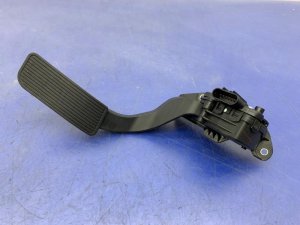
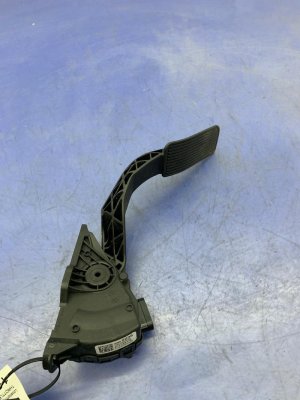
(OEM #25832864)— This is the most common failure point for code P2120. The sensor is integrated into the pedal assembly and is not sold separately by the OEM. Part number 25832864 is a common replacement for this platform.
Trusted brands: ACDelco (GM Genuine), Standard Motor Products, Dorman
OEM price range: $100-$150
Aftermarket price range: $70-$120
Related Codes That Often Appear With This One
- P2122 — Indicates 'D' circuit low voltage, often appearing with the general circuit fault P2120.
- P2123 — Indicates 'D' circuit high voltage, another specific fault related to P2120.
- P2125 — A fault in the second pedal sensor circuit ('E' circuit), indicating a problem with the entire pedal assembly.
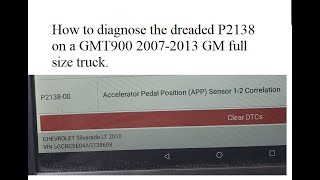
- P2138 — Indicates a voltage correlation error between the two pedal sensors 🎬 Watch: Pinpoint the fault using wiring diagrams and live data. ('D' & 'E' circuits), which is a very common companion code. All these codes are mentioned together in TSB #PIP3783D.
Technical Service Bulletins (TSBs) & Recalls
- PIP3783D: Addresses vehicles with a Service Engine Soon light, Reduced Engine Power message, and APP sensor DTCs (including P2120). It advises technicians to inspect the Accelerator Pedal Position circuits for poor terminal tension at the sensor, ECM, and inline connectors C109/X109 and C205/X205.
- 07-06-04-019F: Points to water intrusion into the instrument panel (IP) to body harness connector as a a potential cause for intermittent APP sensor DTCs and Reduced Engine Power messages.
Platform-Specific Known Issues
- A known issue on this platform is poor terminal tension at the APP sensor connector or other inline harness connectors (C109/X109, C205/X205), which can cause intermittent signal loss and trigger P2120 without the sensor itself being faulty. This is documented in GM TSB #PIP3783D.
- Water intrusion into the instrument panel (IP) to body harness connector is another known cause of intermittent APP sensor codes, as detailed in TSB #07-06-04-019F.
- Harness chafing against metal brackets in the engine bay, such as the EVAP purge valve bracket, can lead to shorts to ground and trigger these codes.
Mechanic-Grade Diagnostic Values
- APP Sensor 1 (D Circuit) Signal Voltage — expected: 0.35V - 4.75V, changing smoothly with pedal input.. Failure: The ECM will set P2120 if the voltage is less than 0.24V or more than 4.49V for more than 0.1 seconds.
- APP Sensor 2 (E Circuit) Signal Voltage — expected: 0.32V - 4.75V, changing smoothly with pedal input.. Failure: A fault in this circuit would set a different code (e.g., P2125), but its voltage should correlate with Sensor 1.
- 5-Volt Reference Circuit at APP Connector — expected: Between 4.8V and 5.2V with key on, engine off.. Failure: Voltage outside this range indicates a problem with the ECM or a short/open in the reference wire.
- Low Reference (Ground) Circuit at APP Connector — expected: Less than 5 Ohms of resistance to a known good chassis ground.. Failure: High resistance (or an open circuit) indicates a bad ground connection, which can cause erratic sensor readings.
- APP Sensor Internal Resistance (Sensor Disconnected) — expected: Between ~1.5 kΩ and ~5.0 kΩ depending on which pins are tested and pedal position. The key is seeing a smooth change in resistance as the pedal is moved, not a specific number.. Failure: An open circuit (OL), a short (0 Ω), or erratic/jumping resistance values when moving the pedal indicates a failed sensor.
Scan Tool Commands That Help
- GDS2/Tech2: Accelerator Pedal Position Relearn — This function is typically not required for a simple pedal replacement on this platform. The ECM will self-calibrate the new sensor's range. However, if issues persist after replacement, a technician may use this function to reset learned values as a diagnostic step.
Wiring & Ground Locations
- APP Sensor Connector (X209) — At the top of the accelerator pedal assembly, under the driver's side dashboard.. This is the primary connection point. TSB PIP3783D specifically calls out checking for poor terminal tension here. The pins are: Pin 1: APP Sensor 2 Signal, Pin 2: 5V Reference (for Sensor 2), Pin 3: Low Reference (Ground for Sensor 2), Pin 4: APP Sensor 1 Signal (D Circuit), Pin 5: Low Reference (Ground for Sensor 1), Pin 6: 5V Reference (for Sensor 1).
- G102 & G103 — G102 is on the rear of the left cylinder head. G103 is on the front of the right cylinder head.. These are primary engine block grounds. A poor connection at these points can create voltage offsets and electrical noise, disrupting the sensitive 5V reference and sensor signal circuits supplied by the ECM.
- G218 — Located on the left side of the instrument panel support, behind the driver's side kick panel/trim.. This is a critical body and instrument panel ground. It serves as a ground point for the Body Control Module (BCM) and other interior electronics. A poor connection here can cause a wide range of bizarre electrical issues, including those affecting sensor data communication.
- Underhood Fuse Block (X50A) — Located on the driver's side of the engine bay.. This fuse block is not just a collection of fuses; it's a major electrical junction. The APP sensor circuits pass through it. Corrosion or internal breaks within the multi-layered circuit board of the fuse block can cause intermittent opens or high resistance on the 5V reference or signal lines, leading to APP codes.
Real Owner Repair Stories
- Tahoe Yukon Forum user (2007 Suburban) — Reduced Engine Power, Service Stabilitrak, codes P2138, P2120, P2125.
❌ Tried (didn't work) Replaced accelerator pedal assembly twice, Replaced throttle body, Cleaned ground connections, Checked wiring harness for chafing
✅ What actually fixed it The problem was finally resolved by replacing the underhood fuse block. The original fuse block had internal corrosion causing an intermittent connection for the sensor circuits. - Chevrolet Forum user (2007 Suburban LTZ) — Reduced Engine Power, multiple APP sensor codes.
❌ Tried (didn't work) Replacing the accelerator pedal assembly
✅ What actually fixed it The user found that the wiring harness had been rubbing against the sharp metal edge of the parking brake pedal support bracket, eventually wearing through the insulation on multiple wires. Repairing the damaged wires with solder and heat shrink and re-routing the harness away from the bracket solved the problem permanently.
OEM Part Supersession History
15839024→25832864— GM often supersedes parts to consolidate inventory or incorporate minor improvements in materials or design. 25832864 is the most current direct replacement for the original part number on this platform.
Helpful Videos

We Have This Part in Stock

The information in this article is provided for general reference and educational purposes only. Vehicle specifications, procedures, and part compatibility can vary by production date, trim level, and region. Always consult your vehicle's factory service manual and verify part numbers before purchasing or performing repairs. Safety-critical components such as airbags, seat belts, and braking systems should be installed by a qualified professional.
- Chevrolet SUBURBAN:
- 🎬 Helpful Videos
- 🛍️ Shop This Part
- What's Unique About the 2007-2014 Chevrolet SUBURBAN
- Diagnostic Flowchart
- Symptoms You May Notice
- Most Likely Causes
- Rare But Worth Checking
- Diagnosis Steps
- Parts You'll Likely Need
- Related Codes That Often Appear With This One
- Technical Service Bulletins (TSBs) & Recalls
- Platform-Specific Known Issues
- Mechanic-Grade Diagnostic Values
- Scan Tool Commands That Help
- Wiring & Ground Locations
- Real Owner Repair Stories
- OEM Part Supersession History
- 🎟️ Get 5% Off