

P2120 on 2007-2011 Chevrolet Silverado: Causes and Fixes for Reduced Engine Power
On a 2007-2011 Silverado, code P2120 almost always points to the accelerator pedal assembly or its wiring. This triggers the 'Reduced Engine Power' warning. Before replacing the pedal assembly (around $100-$140), inspect the electrical connector for loose pins, a known issue covered by GM Technical Service Bulletin #PIP3783D. Also, inspect the small black ground wire on the passenger side of the intake manifold, as it is known to break and cause these exact symptoms.
- P2120 on a 2007-2011 Silverado is a serious code that will likely put the truck into 'Reduced Engine Power' mode.
- Before buying any parts, ALWAYS inspect the electrical connector at the gas pedal for loose-fitting terminals, as this is a known GM issue covered by TSB #PIP3783D.
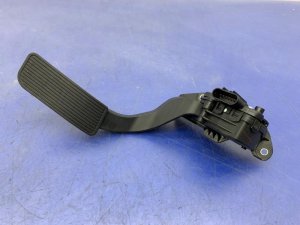
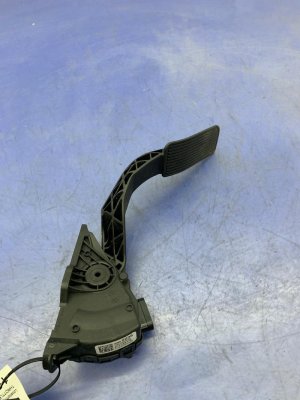
- The most common part needed to fix this code is the complete accelerator pedal assembly, which includes the non-serviceable sensor.
- Do not confuse this pedal sensor code with a throttle body code; they are different parts with different functions.
What's Unique About the 2007-2011 Chevrolet SILVERADO
The GMT900 platform Silverados and their siblings (Sierra, Tahoe, Yukon) are known for developing poor electrical connections at the accelerator pedal. General Motors issued a Technical Service Bulletin (TSB #PIP3783D) specifically highlighting that poor terminal tension in the APP sensor's wiring connector can cause this code and lead to a 'Reduced Engine Power' message. Furthermore, a small black ground wire in the harness on the passenger side of the intake manifold is notorious for corroding and breaking, causing intermittent signal loss that mimics a failed pedal sensor.
Diagnostic Flowchart
Tap your situation to follow the diagnostic path that matches what you're seeing on this vehicle.
Generation note: This range covers the second generation (GMT900) of the Silverado, from 2007.5 to 2013. The 2007 model year was a split, also including the first generation 'Classic' (GMT800). This issue is most commonly associated with the GMT900 platform and its shared electrical systems.
Symptoms You May Notice
- "Reduced Engine Power" message on the dashboard.
- Check Engine Light or Service Engine Soon light is on.
- Poor, delayed, or no throttle response.
- Vehicle will not accelerate past a certain low speed (limp mode).
- Engine may only idle.
- Gauges and lights may flicker or act erratically when the fault occurs, especially when hitting a bump (indicative of a wiring/ground issue).
- Replacing the Throttle Body. P2120 specifically refers to a fault in the accelerator *pedal* sensor circuit, not the throttle position sensor (TPS) located on the throttle body. While throttle body issues can also cause 'Reduced Engine Power', they will set different trouble codes (like P1516).
Most Likely Causes
- Poor Terminal Tension at APP Sensor Connector 🔴 High Probability This is a well-documented issue for this platform, as confirmed by GM's own Technical Service Bulletin #PIP3783D, which covers codes P2120, P2122, P2123, P2125, P2127, P2128, and P2138.
How to confirm: With the ignition off, disconnect the electrical connector at the accelerator pedal. Visually inspect the female terminals for being spread too far apart or for any signs of corrosion. A 'wiggle test' on the harness while monitoring sensor data on a scan tool can also show signal dropouts.
Typical fix: Carefully use a terminal pick tool to tighten the female pins in the connector to ensure a snug fit on the sensor's male pins. In some cases, replacing the connector pigtail is necessary. Common pigtails include Dorman 85186 and ACDelco PT1035.
Est. part cost: $0-$30 - Faulty Accelerator Pedal Position (APP) Sensor 🔴 High Probability The sensor is an electronic component that wears out over time from constant use. Many owners report that only a genuine ACDelco replacement part provides a long-term solution, as some aftermarket sensors can fail prematurely or not calibrate correctly.
How to confirm: If the wiring and connectors are good, the sensor itself is the next likely culprit. A scan tool can monitor the voltage from APP Sensor 1 and APP Sensor 2. APP1 should sweep smoothly from ~0.5-1.1V to ~2.6-4.5V, while APP2 does the opposite. Any jumps, dropouts, or signals outside the 0.24V-4.49V range can trigger the code. A multimeter can also be used to check the sensor's internal resistance.
Typical fix: Replace the entire accelerator pedal assembly, as the sensor is integrated into it. The repair involves removing two bolts and the electrical connector. 🎬 See this walkthrough on how to replace the pedal assembly.
Est. part cost: $60-$150 - Broken Ground Wire at Intake Manifold 🟡 Medium Probability A specific small black ground wire, part of the main engine harness on the passenger side of the intake manifold, is known to corrode and break at its eyelet terminal. This failure is often intermittent and triggered by bumps, causing symptoms identical to a bad pedal sensor.
How to confirm: Locate the wiring harness on the passenger side of the intake manifold. Find the small black wire that grounds to the engine block. Gently tug on it; if it's broken, it will pull apart easily. Wiggling this wire 🎬 Watch: How to find and fix this common ground wire issue. with the engine running may also reproduce the 'Reduced Engine Power' message.
Typical fix: Cut the broken wire, crimp on a new eyelet terminal, and re-secure it to a clean ground point on the engine block. Soldering the new terminal is recommended for a durable repair.
Est. part cost: $1-$10 - Damaged Wiring Harness ⚪ Low Probability Wires can chafe, break, or corrode anywhere between the pedal and the Engine Control Module (ECM). Rodent damage is also a possibility, especially where the harness passes through the firewall.
How to confirm: Perform a continuity and resistance test on the signal, reference, and ground wires between the APP sensor connector and the ECM connector. Visually inspect the harness for any obvious damage, especially where it passes through the firewall or near sharp edges. Also check major ground points like G103 (front of passenger cylinder head) and G104 (rear driver's side of engine).
Typical fix: Repair the specific broken or shorted wire(s) in the harness.
Est. part cost: $5-$25
Rare But Worth Checking
- Water Intrusion in IP-to-Body Connector: On GMT900 trucks, water can leak into the cabin and corrode the large Instrument Panel (IP) to body harness connector, typically located in the driver's kick panel area above the emergency brake. This corrosion can cause intermittent APP sensor codes (especially P2138) and other strange electrical issues. This is a known issue addressed in other TSBs.
- Faulty Engine Control Module (ECM): This is very rare and should only be considered after all wiring, grounds, and the APP sensor have been thoroughly tested and ruled out.
Diagnosis Steps
- Read all stored DTCs with an OBD-II scanner. Note any other codes that appear with P2120, especially P2138.
- Check for Technical Service Bulletins (TSBs). TSB #PIP3783D directly addresses this code and points to checking terminal tension in the APP connector.
- Visually inspect the wiring harness and connector at the accelerator pedal assembly for any signs of damage, corrosion, or looseness.
- Perform a 'wiggle test' on the pedal connector and the engine harness (especially near the passenger side intake manifold) with the key on, monitoring for any change in symptoms or live data.
- Inspect the small black ground wire on the passenger side of the intake manifold. Gently tug it to see if it is broken internally at the connector.
- As per the TSB, carefully inspect the female terminals in the APP sensor connector for poor tension. This is a very common cause.
- Use a scan tool to observe live data for the APP Sensor 1 and APP Sensor 2 voltages. Both should read a steady voltage at rest and increase/decrease smoothly as the pedal is depressed, with no spikes or dropouts. 🎬 Watch: A professional diagnosis of APP sensor voltage and signal issues.
- If the signal is erratic or missing, and the connector terminals are tight, use a multimeter to check for the correct 5-volt reference and a good ground at the connector.
- If power, ground, and connector integrity are good, the accelerator pedal assembly is the most likely failed component. It is often recommended to use an OEM ACDelco part for reliability.
- If replacing the pedal does not resolve the issue, perform a continuity check on the harness between the pedal and the ECM and inspect major ground locations (G103, G104) before suspecting a faulty ECM.
Parts You'll Likely Need
- Accelerator Pedal Assembly with Position Sensor
(OEM #25832864)— This assembly contains the integrated APP sensor, which is the most common part to fail after wiring and ground issues are ruled out. Using a genuine ACDelco part is highly recommended.
Trusted brands: ACDelco (GM Genuine), Dorman, Standard Motor Products, NGK/NTK
OEM price range: $95-$145
Aftermarket price range: $60-$100
Related Codes That Often Appear With This One
- P2122 — Indicates APP Sensor 1 Circuit Low Voltage, often set together with P2120 due to the same wiring or sensor fault.
- P2123 — Indicates APP Sensor 1 Circuit High Voltage, another related code pointing to the same component.
- P2125 — Indicates a fault in the second APP sensor circuit ('E'), suggesting a problem with the pedal assembly or its connector.
- P2127 — Indicates APP Sensor 2 Circuit Low Voltage.
- P2128 — Indicates APP Sensor 2 Circuit High Voltage.
- P2138 — Indicates an APP Sensor 1-2 Correlation error, meaning the signals from the two pedal sensors don't match, which is a very common companion code to P2120 and often points to the same root causes like wiring or grounds.
Technical Service Bulletins (TSBs) & Recalls
- PIP3783D: Addresses Service Engine Soon light, Reduced Engine Power, and DTCs P2120, P2122, P2123, P2125, P2127, P2128, and/or P2138. Advises technicians to inspect the Accelerator Pedal Position circuits for poor terminal tension at the connector.
Platform-Specific Known Issues
- A primary documented issue is poor terminal tension in the APP sensor electrical connector, leading to intermittent signal loss and triggering P2120 and Reduced Engine Power mode, as outlined in TSB #PIP3783D.
- A frequently reported failure is a small, black ground wire breaking away from its terminal on the passenger side of the intake manifold, causing intermittent loss of throttle control, especially when hitting bumps.
- Water leaks into the cabin can cause corrosion in the main IP-to-body harness connector located in the driver's side kick panel, leading to various electrical faults including APP sensor codes.
Mechanic-Grade Diagnostic Values
- APP Sensor 1 ('D' Circuit) Voltage — expected: Approx. 0.5-1.1V with pedal released, sweeping smoothly to approx. 2.6-4.5V when fully depressed.. Failure: Voltage is less than 0.24V or more than 4.49V for over 0.5 seconds. Any spikes, dropouts, or non-linear response during pedal movement indicates a fault.
- APP Sensor 2 ('E' Circuit) Voltage — expected: Approx. 1.2-2.0V with pedal released, sweeping smoothly to approx. 3.4-5.3V when fully depressed. Note: This sensor often sweeps in the same direction as Sensor 1 on this platform, but at a different voltage level.. Failure: Voltage is less than 0.24V or more than 4.49V for over 0.5 seconds. On a scan tool, the two sensor signals should show a consistent correlation.
- 5-Volt Reference at APP Connector — expected: Between 4.8V and 5.2V with key on, engine off.. Failure: Voltage below 4.8V or above 5.2V points to a wiring issue or a fault in the ECM.
- Low Reference (Ground) Circuit at APP Connector — expected: Near 0V, with resistance to a known good ground being less than 3 ohms.. Failure: Voltage significantly above 0V or high resistance indicates a poor ground connection, which is a common cause of this code.
Scan Tool Commands That Help
- GM Tech 2 / GDS2 or equivalent professional scanner: Idle Relearn Procedure / Throttle/Idle Learn — After replacing the accelerator pedal assembly or throttle body, an idle relearn may be required. While P2120 is a pedal code, it's often seen with throttle body codes. The relearn resets idle parameters in the ECM. A manual procedure also exists: let the engine idle for 3 minutes, turn off for 60 seconds, then idle again for 3 minutes.
- GM Tech 2 or equivalent: Live Data Monitoring (APP Sensor 1, APP Sensor 2) — This is the primary diagnostic step. A technician watches the voltage readings of both APP sensors in real-time while pressing the pedal. The data should show two smooth, correlating voltage sweeps without any glitches or dropouts. This can instantly reveal if the sensor is faulty or if a wiring issue is present (e.g., voltage drops out during a wiggle test).
Wiring & Ground Locations
- G103 — On the front of the passenger side cylinder head.. This is a major engine and component ground. While not the most common culprit for P2120, a loose or corroded G103 can cause a host of erratic sensor readings and codes.
- G104 — On the rear of the driver's side of the engine block.. Another critical engine ground point. Verifying its integrity is part of a thorough wiring diagnosis when chasing intermittent electrical faults.
- Broken Ground Splice (Intake Manifold) — A small black wire in the main engine harness that runs along the passenger side of the intake manifold. It often breaks at the eyelet terminal where it bolts to the engine.. This is a very common, often-missed cause of P2120 and related codes. It provides a ground path for multiple sensors, and its failure directly mimics a bad APP sensor, often intermittently when hitting bumps.
- APP Sensor Connector (X209) — The 6-pin electrical connector that plugs directly into the accelerator pedal assembly.. This is the single most common point of failure. The female terminals inside this connector lose tension over time, causing a poor connection to the sensor pins, as documented in TSB #PIP3783D.
- IP-to-Body Connector (X500/X600) — Large harness connectors located in the driver's (X500) and passenger's (X600) A-pillar/kick panel area.. Water leaks from a bad cowl or windshield seal can drip onto these connectors, causing corrosion and a wide range of electrical faults, including APP sensor codes.
Real Owner Repair Stories
- YouTube video by a DIY mechanic (GMT900-era Chevrolet Truck/SUV) — Reduced Engine Power message, multiple throttle-related DTCs.
❌ Tried (didn't work) Ran multiple new, extra ground wires from various points on the engine bay to the chassis.
✅ What actually fixed it The mechanic found a small, single black ground wire in the harness on the passenger side of the intake manifold. Wiggling this specific wire caused the fuel pump relay to click and triggered the fault. The wire was broken inside its insulation near the eyelet connector. Repairing this single wire by crimping on a new terminal and re-securing it solved the problem completely. - Chevy HHR Forum (similar drive-by-wire system) (2007 Chevrolet HHR) — Recurring "Reduced Engine Power" message, loss of power while driving.
❌ Tried (didn't work) Replaced the gas pedal sensor., Replaced the transmission sensor., Replaced the throttle sensor.
✅ What actually fixed it A GM notice led the dealer to inspect the wiring harness behind the driver's side kick panel. The wires were found to be heavily corroded due to a water leak into the cabin. Replacing the corroded wiring harness section resolved all the symptoms.
OEM Part Supersession History
15847349, 15101848→25832864— Standard part evolution, likely for improved durability or material changes.
Heads up: For 2011 models specifically, some parts catalogs note 'w/Tin Connector', suggesting a possible mid-generation change in connector material. Ensure the replacement part matches the vehicle's connector type.
Model Year Variations Within This Range
- 2011: Some parts suppliers specify a distinction for 2011 models needing a pedal assembly 'w/Tin Connector'. This implies there may have been a change from a previous connector pin material (e.g., brass) to tin. While the parts are often physically interchangeable, using mismatched metals can potentially lead to fretting corrosion over time. It is best practice to match the new part's connector type to the original.
Helpful Videos
We Have This Part in Stock

The information in this article is provided for general reference and educational purposes only. Vehicle specifications, procedures, and part compatibility can vary by production date, trim level, and region. Always consult your vehicle's factory service manual and verify part numbers before purchasing or performing repairs. Safety-critical components such as airbags, seat belts, and braking systems should be installed by a qualified professional.
- Chevrolet SILVERADO:
- 🎬 Helpful Videos
- 🛍️ Shop This Part
- What's Unique About the 2007-2011 Chevrolet SILVERADO
- Diagnostic Flowchart
- Symptoms You May Notice
- Most Likely Causes
- Rare But Worth Checking
- Diagnosis Steps
- Parts You'll Likely Need
- Related Codes That Often Appear With This One
- Technical Service Bulletins (TSBs) & Recalls
- Platform-Specific Known Issues
- Mechanic-Grade Diagnostic Values
- Scan Tool Commands That Help
- Wiring & Ground Locations
- Real Owner Repair Stories
- OEM Part Supersession History
- Model Year Variations Within This Range
- 🎟️ Get 5% Off