

P2119 on 2014-2018 Chevrolet Corvette: Throttle Body Range/Performance Causes and Fixes
Code P2119 on a C7 Corvette usually points to a problem with the electronic throttle body, often due to carbon buildup or internal failure. Cleaning the throttle body is a common first step, but replacement is often necessary. Expect costs from $150 for a DIY cleaning to over $500 for a shop replacement.
- P2119 on a C7 Corvette almost always relates to the electronic throttle body.
- Always start with the cheapest and easiest fix: a thorough cleaning of the throttle body.
- Check the wiring and connector at the throttle body for damage before buying expensive parts.
- If cleaning doesn't work, replacing the entire throttle body assembly is the most likely solution.
- A throttle relearn procedure is often required after cleaning, replacing, or disconnecting the battery.
What's Unique About the 2014-2018 Chevrolet CORVETTE
On the C7 Corvette, like many modern GM vehicles with direct injection, the P2119 code is frequently associated with the throttle body assembly itself. A GM Technical Service Bulletin (PIP4578B) covering 2006-2018 Corvettes specifically links this code to issues like idle surge and reduced power mode, particularly on higher mileage vehicles, reinforcing the throttle body as a primary focus. The bulletin explains that as carbon from the PCV system builds up, the PCM learns to compensate by adjusting the throttle angle; however, if the buildup becomes excessive, it can cause this fault. Owners on CorvetteForum often report that simply cleaning the throttle body can sometimes resolve the issue, though complete replacement is a common final fix.
Diagnostic Flowchart
Tap your situation to follow the diagnostic path that matches what you're seeing on this vehicle.
Symptoms You May Notice
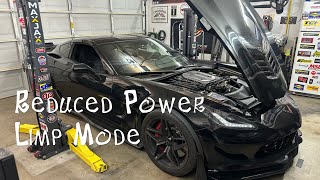
- Reduced Engine Power message on the dash 🎬 Watch: How to fix reduced power limp mode on your Corvette
- Check Engine Light is on
- Poor or delayed throttle response
- Rough, unstable, or high idle
- Vehicle may only idle and not accelerate
- In some cases, the engine may stall
- Car may get stuck in one driving mode (e.g., Tour)
- Accelerator Pedal Position (APP) Sensor: While the APP sensor is part of the throttle control system, it will typically set its own specific codes (like P2138) if it fails. P2119 points more directly to a performance or range issue at the throttle body itself.
Most Likely Causes
- Dirty or Sticking Throttle Body 🔴 High Probability Carbon and oil vapor from the PCV system can bake onto the throttle plate and bore because direct injection engines don't have fuel washing them clean. This buildup physically restricts the plate's movement. TSB PIP4578B for this model year directly attributes P2119 on high-mileage vehicles to this carbon accumulation.
How to confirm: Remove the air intake tube from the throttle body and visually inspect for a ring of black carbon buildup, especially around the edges where the throttle plate seats.
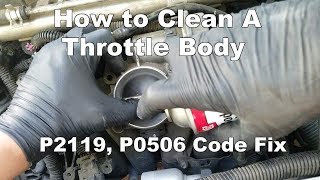
Typical fix: Clean the throttle body bore and plate thoroughly with a dedicated throttle body cleaner and a soft, lint-free cloth. Do not use harsh tools. 🎬 See this walkthrough on how to properly clean your throttle body An 'Idle Learn' procedure is required afterward to reset the PCM's learned values.
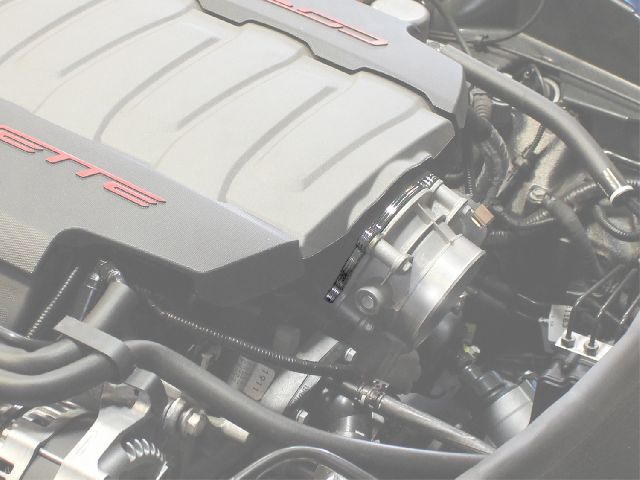
Est. part cost: $10-$20 - Failing Throttle Body Assembly 🔴 High Probability The internal DC motor, plastic gears, or integrated position sensor within the throttle body can fail electronically or mechanically over time. This is a common failure point for modern electronic throttle bodies, requiring replacement of the entire sealed unit.
How to confirm: If cleaning doesn't resolve the code and wiring is good, the assembly is the likely culprit. A scan tool can command the throttle open/closed to test response; a mismatch between commanded and actual position points to failure. A user on CorvetteForum confirmed a bad throttle body motor via a static resistance test after getting codes P2101 and P1516.
Typical fix: Replace the entire throttle body assembly. The most common OEM part number for the C7's LT1 engine is ACDelco 12670839. An idle relearn procedure must be performed after replacement.
Est. part cost: $200-$450 - Wiring or Connector Issue 🟡 Medium Probability Engine vibration and heat can cause the wiring harness leading to the throttle body to chafe or the connector pins to become loose or corroded.
How to confirm: Visually inspect the wiring harness for any signs of damage, melting, or corrosion. With the engine running, carefully wiggle the connector and harness to see if it triggers the fault or causes the engine to stumble. A CorvetteForum user reported fixing their issue by replacing a pigtail connector with heat-cracked wires near the throttle body plug.
Typical fix: Repair the damaged section of wire or replace the connector pigtail. GM offers service kits for this purpose on some models.
Est. part cost: $20-$60
Rare But Worth Checking
- Low Battery Voltage or Poor Ground: Corvette electronics are highly sensitive to voltage fluctuations. A weak or dying battery, or a bad ground connection, can cause a variety of seemingly unrelated electronic faults, including throttle control codes. One owner on CorvetteForum reported P2119 appeared immediately after a battery change, suggesting a voltage spike or relearn issue.
- Faulty Powertrain Control Module (PCM): This is very rare. Before suspecting the PCM, all other possibilities—throttle body, wiring, grounds, and sensors—must be exhaustively ruled out. A faulty PCM will typically present with multiple other, unrelated codes.
Diagnosis Steps
- Scan for Codes: Read the code with an OBD-II scanner and note any other codes present. TSB PIP4578B lists P0068, P0121, P1516, P2101, and P2176 as related codes that reinforce a throttle body issue.
- Inspect the Throttle Body: Remove the intake duct and visually inspect the throttle plate and bore for heavy carbon buildup. Check for any physical obstruction.
- Clean the Throttle Body: If dirty, clean it thoroughly using a dedicated throttle body cleaner and a microfiber towel. Manually open the plate to clean the edges. Do not spray cleaner directly into a connected throttle body; apply to a rag first.
- Check Wiring and Connectors: Inspect the wiring harness going to the throttle body for any signs of damage, chafing, or loose connections. Unplug the connector and check for corrosion on the pins. Wiggle the harness with the engine running to check for intermittent faults.
- Perform Idle Relearn Procedure: After cleaning, replacement, or a battery disconnect, an idle relearn is mandatory. A common manual method involves letting the car idle for 3 minutes, turning it off for 60 seconds, and idling for another 3 minutes. Driving the car with several decelerations may also work. A scan tool provides the most reliable method.
- Test with Scan Tool: Use a bidirectional scan tool to monitor the commanded vs. actual throttle position percentages (TP%). If they don't match or the actual position is erratic or slow to respond, the throttle body is likely faulty.
- Replace Throttle Body: If the above steps do not resolve the issue, replace the throttle body assembly with a new part, such as ACDelco 12670839.
- Final Relearn and Test Drive: After replacement, perform the idle relearn procedure again and test drive the vehicle to ensure the code does not return.
Parts You'll Likely Need
- Throttle Body Assembly
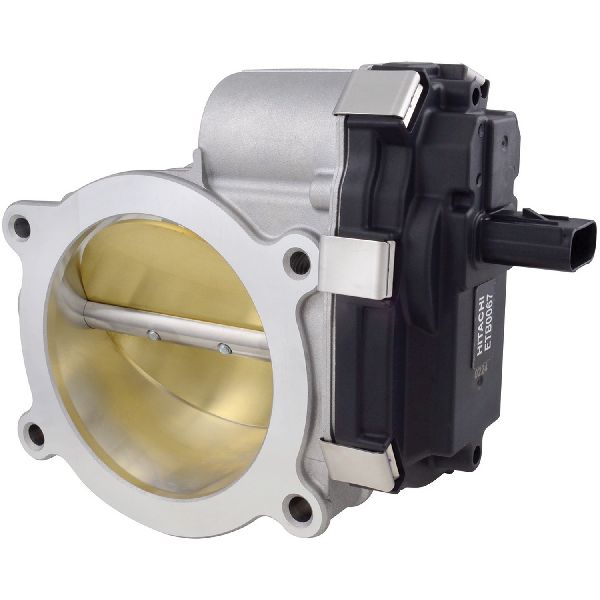
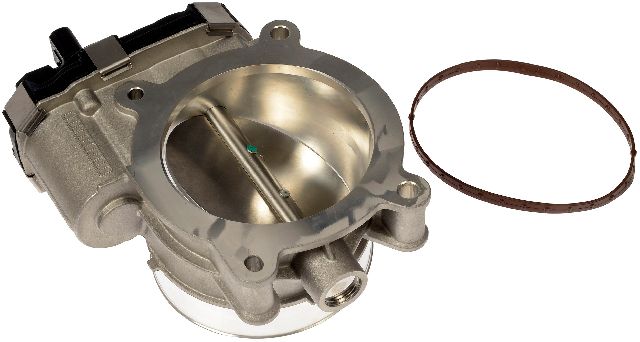
(OEM #12670839)— This is the most common cause of P2119 when cleaning and wiring checks fail. The internal motor or sensor fails, requiring replacement of the whole unit.
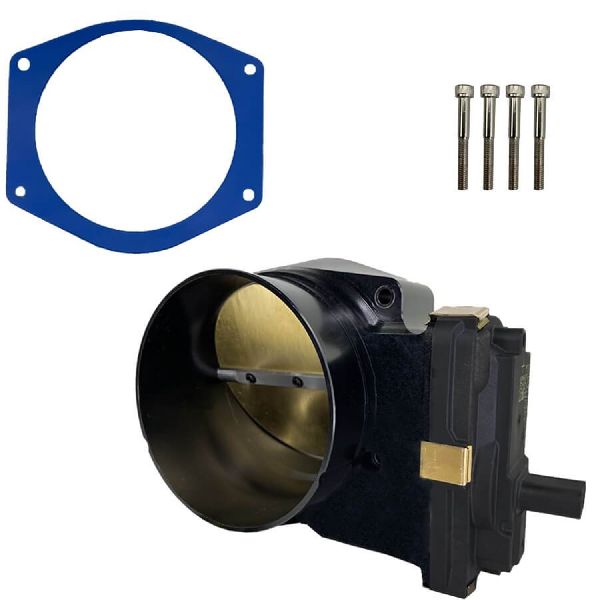
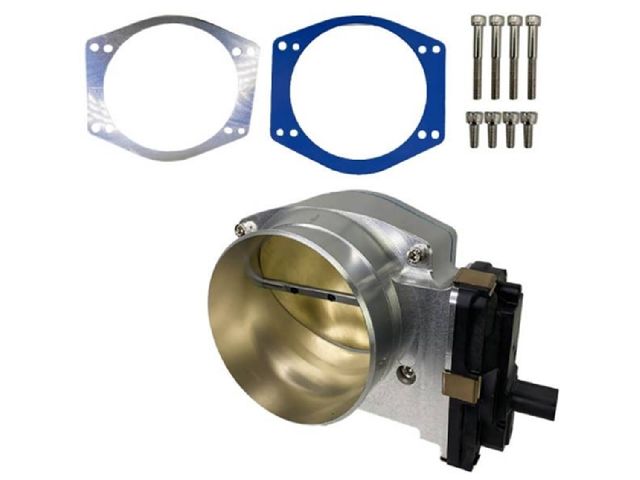
Trusted brands: ACDelco (GM Genuine Parts), Bosch, BBK (Aftermarket Performance)
OEM price range: $300-$450
Aftermarket price range: $200-$350 - Throttle Body Cleaner — Often, the only thing needed is a thorough cleaning to remove carbon buildup that restricts the throttle plate's movement, as recommended by GM's TSB.
Trusted brands: CRC, Berryman, ACDelco Top Engine Cleaner
OEM price range: $10-$20
Aftermarket price range: $10-$20
Related Codes That Often Appear With This One
- P0068 — Relates to a mismatch between MAP/MAF sensor readings and throttle position. Both can be triggered by a faulty or dirty throttle body. This code is specifically mentioned in TSB PIP4578B.
- P1516 — A GM-specific code for Throttle Actuator Control (TAC) Module Throttle Actuator Position Performance. It's very closely related to P2119 and often appears alongside it.
- P2101 — This code means 'Throttle Actuator Control Motor Circuit Range/Performance' and directly points to an issue with the motor inside the throttle body. It is also listed in TSB PIP4578B.
- P2176 — This code is for 'Throttle Actuator Control System - Idle Position Not Learned'. It often appears after a battery disconnect or throttle body replacement if a relearn procedure isn't performed correctly.
Technical Service Bulletins (TSBs) & Recalls
- PIP4578B: Addresses DTCs P0068, P0121, P1516, P2101, P2119, and/or P2176 related to idle surge and reduced power mode. It applies to a wide range of GM V8 vehicles from 2006-2018, including the Corvette. The bulletin explicitly states that carbon buildup can cause the issue and details the cleaning and relearn procedure.
Platform-Specific Known Issues
- A Technical Service Bulletin (PIP4578B) was issued for 2006-2018 Corvettes that specifically mentions P2119 in conjunction with idle surge and reduced engine power. It states that on high-mileage vehicles, carbon buildup is a primary cause and the fix is to clean the throttle body and perform an idle learn reset.
Mechanic-Grade Diagnostic Values
- Throttle Position Sensor (TPS) Voltage — expected: Should rise smoothly from ~0.5V at idle to ~4.5V at wide-open throttle.. Failure: Voltage readings that are jumpy, inconsistent, flat, or outside the expected 0.5V-4.5V range indicate a faulty sensor.
- Throttle Actuator Control (TAC) Motor Power Supply — expected: Should remain steady between 11.5V and 13.5V with the engine running.. Failure: Persistent low voltage (<11.5V) suggests a problem with the power supply circuit or a bad ground, not necessarily the throttle body itself.
- Throttle Body Connector 5V Reference — expected: A 5-volt reference signal should be present at the throttle position sensor connector with the key on, engine off.. Failure: Absence of the 5V reference signal points to a wiring issue or a problem with the PCM.
Scan Tool Commands That Help
- GDS2 / Professional Scan Tool: Idle Learn Reset — This function, found in the 'Module Setup' menu, should be used after cleaning or replacing the throttle body to force the ECM to relearn idle airflow values. Failing to perform this reset can cause persistent high idle or related DTCs like P2176.
- Bidirectional Scan Tool: Throttle Actuator Test — This allows a technician to command the throttle plate to open and close, verifying the actuator motor's function. If the plate doesn't move or fails to reach the commanded angle, it confirms a fault within the throttle body assembly.
Wiring & Ground Locations
- G103 — On the C5, located at the left rear of the engine compartment on the cowl, above the brake booster. While C7 locations may vary slightly, this area is a critical grounding point for the BCM and DLC, which communicate with the throttle system.. A poor ground at G103 can disrupt communication between various control modules, including the PCM, potentially causing erroneous throttle-related codes.
- G104 (or similar engine block ground) — On related GM engine platforms, this ground is located on the rear of the cylinder bank and is a primary ground for the Engine Control Module (ECM). On C7s, a critical engine-to-frame ground is located near the starter.. The ECM directly controls the throttle body. A compromised ECM ground can lead to incorrect voltage readings and faulty actuator commands, directly causing codes like P1516 and P2119.
- Throttle Body Connector (X125 on some diagrams) — The 6-pin electrical connector plugged directly into the throttle body assembly.. This is the direct interface for power, ground, and signal wires for both the throttle position sensors and the actuator motor. Corrosion, spread pins, or wire damage at this connector are common causes of intermittent throttle faults.
Real Owner Repair Stories
- CorvetteForum user (C7 Z06) — Reduced Engine Power message with codes P1516 and P2101.
❌ Tried (didn't work) Cleaning the throttle body.
✅ What actually fixed it The user discovered the throttle body butterfly plate was not closing properly and was off-center. After manually centering the plate using its two small adjustment bolts and clearing the codes, the problem was resolved. - CorvetteForum user (C6 Z06) — P2119 code appeared after a battery change, causing a lumpy start and poor initial throttle response.
❌ Tried (didn't work) Clearing the code (it returned).
✅ What actually fixed it The issue was resolved by performing a throttle learn procedure. The voltage fluctuation from the battery change likely erased the PCM's learned values, necessitating the relearn.
When the Usual Fixes Don't Work
- While cleaning the throttle body is the most common first step, in some cases, the act of cleaning or disconnecting the battery can trigger the code if an idle relearn procedure is not performed correctly afterward. One owner on CorvetteForum experienced P2119 for the first time immediately following a battery replacement, and the fix was not a new part, but performing the throttle relearn procedure to reset the PCM's stored values. This highlights that the problem can sometimes be logical (in the software) rather than physical (a dirty or failed part).
OEM Part Supersession History
12620241 (Used on earlier GM models)→12670839— GM regularly updates part designs to integrate new materials and technologies for improved reliability and performance.
Heads up: While older throttle bodies might physically bolt on, the internal electronics and calibration may differ. Using an incorrect part number can lead to persistent codes and drivability issues. It's critical to use the specified part for the C7, which is 12670839.
Helpful Videos
Used OEM Parts in Stock

New Aftermarket Parts Available


The information in this article is provided for general reference and educational purposes only. Vehicle specifications, procedures, and part compatibility can vary by production date, trim level, and region. Always consult your vehicle's factory service manual and verify part numbers before purchasing or performing repairs. Safety-critical components such as airbags, seat belts, and braking systems should be installed by a qualified professional.
- Chevrolet CORVETTE:
- 🎬 Helpful Videos
- 🛍️ Shop This Part
- What's Unique About the 2014-2018 Chevrolet CORVETTE
- Diagnostic Flowchart
- Symptoms You May Notice
- Most Likely Causes
- Rare But Worth Checking
- Diagnosis Steps
- Parts You'll Likely Need
- Related Codes That Often Appear With This One
- Technical Service Bulletins (TSBs) & Recalls
- Platform-Specific Known Issues
- Mechanic-Grade Diagnostic Values
- Scan Tool Commands That Help
- Wiring & Ground Locations
- Real Owner Repair Stories
- When the Usual Fixes Don't Work
- OEM Part Supersession History
- 🎟️ Get 5% Off