

P2119 on 2007-2013 Chevrolet Avalanche: Throttle Body Performance Causes and Fixes
On a 2007-2013 Avalanche, code P2119 almost always points to a dirty or failing electronic throttle body. This often triggers a 'Reduced Engine Power' warning. Cleaning the throttle body is a common first step, but if that fails, replacing the assembly for about $150-$300 is the definitive fix. A throttle relearn procedure is mandatory after cleaning or replacement.
- P2119 on your Avalanche is a serious code that will likely put the truck in 'Reduced Engine Power' mode, making it unsafe for normal driving.
- The most common cause is a dirty throttle body sticking from carbon buildup, a known issue on these GM V8 engines.
- Cleaning the throttle body is the first step, but a 'throttle relearn' procedure is mandatory afterward. Failure to do so can result in a high or erratic idle.
- If cleaning doesn't work, replacing the entire throttle body assembly is the definitive fix.
- This issue is shared across many 2007-2014 GM trucks and SUVs with V8 engines, including the Silverado, Sierra, Tahoe, and Yukon.
What's Unique About the 2007-2013 Chevrolet AVALANCHE
The 2007-2013 Chevrolet Avalanche uses a Gen IV V8 engine with a 'drive-by-wire' electronic throttle control system. As noted in GM's own Technical Service Bulletin (TSB) #PIP4578B, these engines, particularly at high mileage, are prone to carbon and oil vapor buildup in the throttle body. This buildup can make the throttle plate sticky, causing it to move slower than the computer expects, which directly triggers the P2119 code and associated 'Reduced Engine Power' mode. The internal grease in the throttle body's gearbox can also harden over time, causing similar sticking issues, especially in cold weather.
Diagnostic Flowchart
Tap your situation to follow the diagnostic path that matches what you're seeing on this vehicle.
Symptoms You May Notice
- Check Engine Light is on
- "Reduced Engine Power" or "Limp Mode" is activated
- "Service Stabilitrak" message may also appear with the Reduced Power warning.
- Poor, hesitant, or delayed acceleration
- Unstable, surging, or high idle, especially after cleaning or replacement without a relearn
- Engine may stall at low speeds or when stopping
- Replacing the Accelerator Pedal Position (APP) sensor. While the APP sensor is part of the throttle control system, P2119 specifically points to a performance/range issue at the throttle body itself, not the pedal. Codes like P2135 are more directly related to sensor correlation issues that could involve the pedal, but P2119 is focused on the throttle blade's actual movement.
Most Likely Causes
- Dirty or Clogged Throttle Body 🔴 High Probability As documented in TSB #PIP4578B, carbon and oil vapor buildup is a common issue on these high-mileage GM V8 engines, causing the throttle plate to stick. In some cases, the internal grease in the actuator's gearbox can harden, causing similar symptoms, especially on cold days.
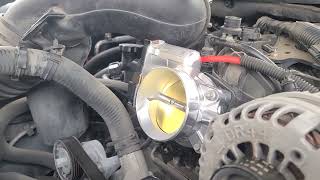
How to confirm: Remove the air intake hose from the throttle body and visually inspect the throttle plate and bore for a thick, black layer of carbon. The plate should move smoothly by hand.
Typical fix: Clean the throttle body thoroughly with a dedicated throttle body cleaner, a soft cloth, and a brush. For a deeper fix, the plastic side cover can be removed to clean out old, hardened grease and apply new high-temperature synthetic grease to the internal gears. A throttle relearn procedure MUST be performed afterward.
Est. part cost: $5-$20 - Failing Throttle Body Assembly 🟡 Medium Probability The internal electric motor or the integrated Throttle Position Sensors (TPS) can wear out or fail electronically over time, leading to correlation errors and performance issues that cleaning cannot fix.
How to confirm: If cleaning the throttle body (including re-greasing the gears) does not resolve the code, the issue is almost certainly an internal electronic failure. A mechanic can use a scan tool to monitor commanded vs. actual throttle position to confirm erratic behavior.
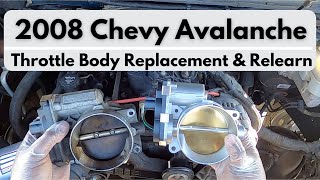
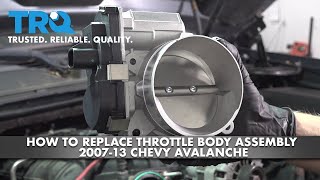
Typical fix: Replace the entire throttle body assembly. This is a bolt-on part that includes the new motor and sensors. An idle relearn is required after installation. 🎬 See this step-by-step throttle body replacement and relearn walkthrough.
Est. part cost: $150-$300 - Wiring or Connector Issue ⚪ Low Probability Engine vibration and heat can, over many years, cause wires to fray or the main 8-pin connector at the throttle body to become loose or corroded, causing intermittent signals.
How to confirm: Visually inspect the wiring harness leading to the throttle body for any signs of damage (chafing, melting). Unplug the connector and check for corrosion or backed-out pins.
Typical fix: Repair the damaged section of wiring or clean/replace the connector pigtail.
Est. part cost: $10-$50
Rare But Worth Checking
- Faulty Powertrain Control Module (PCM): This is extremely rare and should only be considered after all other possibilities, including the throttle body and wiring, have been definitively ruled out. Usually, other codes would be present if the PCM were failing.
Diagnosis Steps
- Scan the vehicle for all OBD-II codes. Note any other codes that appear alongside P2119, especially P2135, P1516, or P0121.
- Disconnect the negative battery terminal for safety.
- Remove the air intake duct from the throttle body. This usually involves loosening two worm clamps with a flat-blade screwdriver.
- Visually inspect the throttle bore and plate for heavy carbon buildup. Manually push the plate open to check for stickiness or binding.
- If dirty, clean the throttle body thoroughly using a dedicated throttle body cleaner and a soft cloth or brush. Manually open the plate to clean all surfaces. Ensure no cleaner gets into the electronic components.
- Reconnect the intake duct and the negative battery terminal.
- Perform a throttle relearn procedure. TSB #PIP4578B warns that failure to perform an 'idle learn reset' with a scan tool after cleaning can cause the issue to return. If a scan tool is unavailable, a manual relearn can be attempted: Start the engine and let it idle in Park for 3 minutes. Turn the engine off for 60 seconds. Start the engine again and let it idle in Park for another 3 minutes. The idle should stabilize.
- If the manual relearn fails or idle is still high, a short drive cycle including speeds over 45 MPH with several decelerations may be required.
- Clear the codes and test drive the vehicle. If the code returns after a thorough cleaning and successful relearn, the throttle body assembly itself is faulty and needs replacement.
- If the code persists after replacement, inspect the wiring harness and connector between the PCM and throttle body for damage, corrosion, or loose pins. Also inspect key engine ground locations like G103 and G104.
Parts You'll Likely Need
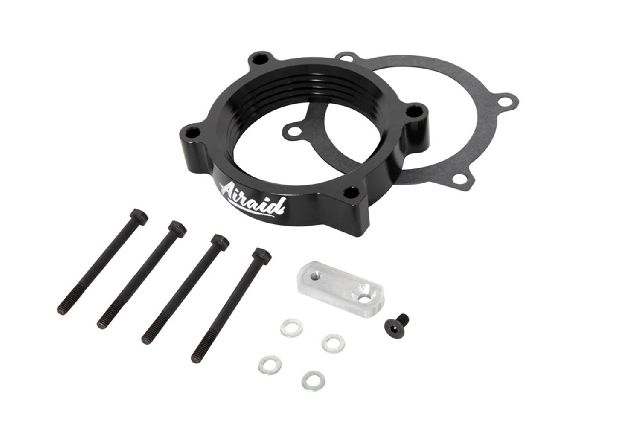
- Throttle Body Assembly
(OEM #12605109 (superseded by 19420707))— This is the most common fix when cleaning the original unit fails. It contains the throttle plate, actuator motor, and position sensor in one unit.
Trusted brands: ACDelco (GM Genuine), Dorman, SKP, Hitachi, TRQ
OEM price range: $250-$350
Aftermarket price range: $150-$250 - Throttle Body Gasket
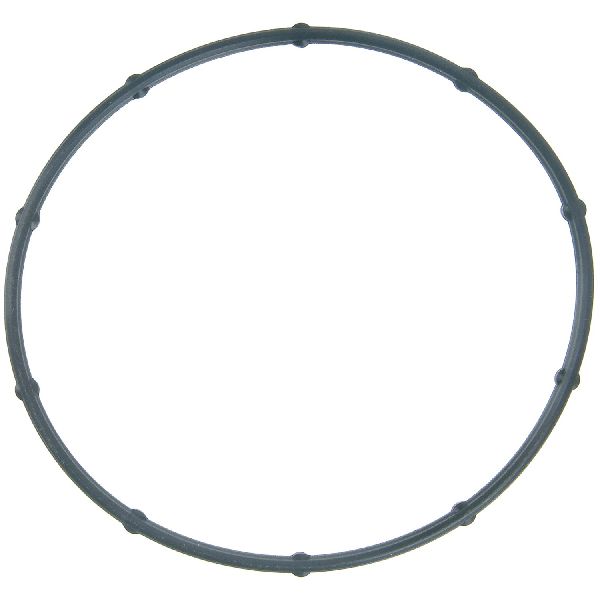
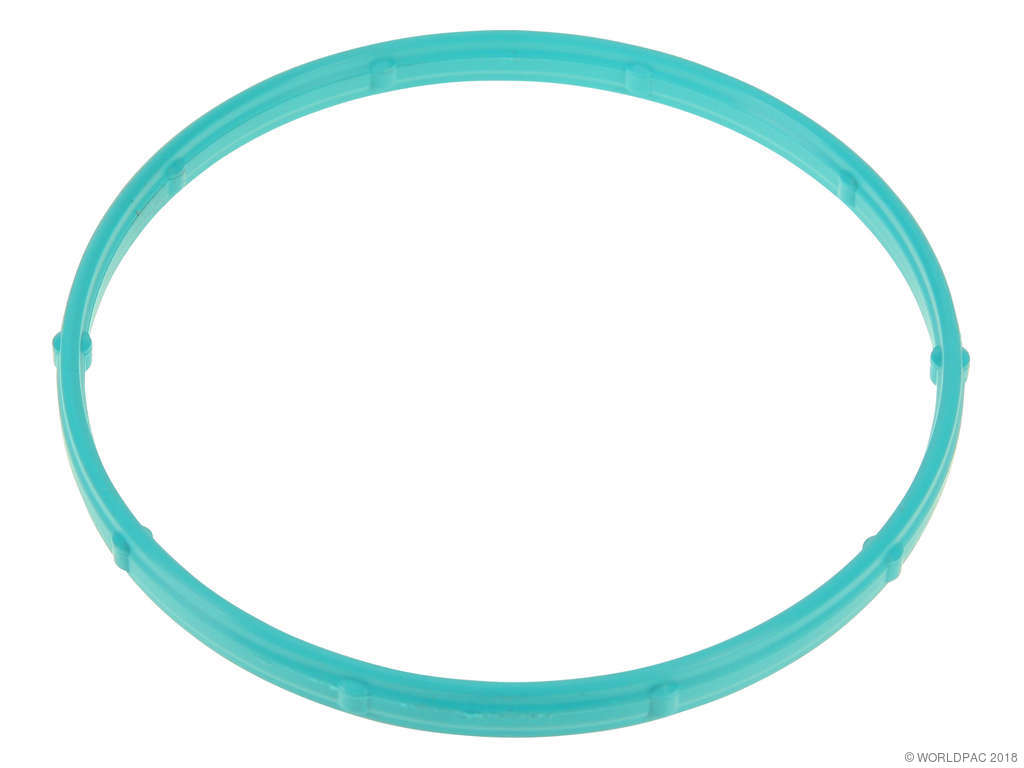
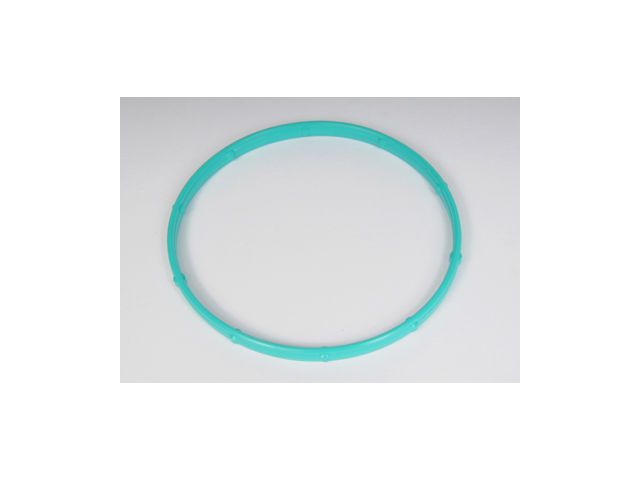
(OEM #Mahle G31974 (example))— It is best practice to replace the gasket anytime the throttle body is removed to prevent vacuum leaks. Some new throttle bodies include one.
Trusted brands: ACDelco, Mahle, Fel-Pro
OEM price range: $10-$20
Aftermarket price range: $5-$15 - Throttle Body Cleaner — Required for the first and most common diagnostic/repair step, which is cleaning the throttle plate and bore.
Trusted brands: CRC, Berryman, WD-40
Aftermarket price range: $5-$15
Related Codes That Often Appear With This One
- P0121 — This code for 'Throttle/Pedal Position Sensor 'A' Circuit Range/Performance' is often seen with P2119 as they both relate to throttle position. TSB #PIP4578B lists it as a common companion code.
- P1516 — A GM-specific code indicating the PCM has detected a throttle actuator control (TAC) module performance issue, often triggering limp mode. It is frequently caused by the same sticky throttle plate.
- P2101 — This code for 'Throttle Actuator 'A' Control Motor Circuit Range/Performance' points directly to a problem with the motor inside the throttle body and is also mentioned in TSB #PIP4578B.
- P2176 — This code indicates the PCM has not learned the throttle body's minimum position, often appearing after a battery disconnect or throttle body replacement without a proper relearn procedure.
- P2135 — Indicates a correlation error between the two internal throttle position sensors. It is extremely common to see this code alongside P2119, and together they almost always condemn the throttle body assembly.
Technical Service Bulletins (TSBs) & Recalls
- PIP4578B: Addresses idle surge, reduced engine power, and DTCs including P2119, P0068, P0121, P1516, P2101, and P2176 on high-mileage vehicles. It identifies carbon buildup as the cause and mandates an 'idle learn reset' with a scan tool after cleaning.
Platform-Specific Known Issues
- Per TSB #PIP4578B, high-mileage 2007-2013 Avalanches are particularly susceptible to this code due to carbon buildup, leading to idle surge and Reduced Engine Power mode. The TSB explicitly states that after cleaning, an 'idle learn reset' must be performed with a scan tool (like a Tech 2) to prevent the PCM from over-compensating for the now-clean throttle, which can cause new idle-related codes.
Mechanic-Grade Diagnostic Values
- Throttle Position Sensor 1 (TP1) Signal Voltage — expected: Above 4.0V at closed throttle, decreasing as throttle opens.. Failure: Voltage does not sweep smoothly, is out of range, or does not oppose TP2.
- Throttle Position Sensor 2 (TP2) Signal Voltage — expected: Below 1.0V at closed throttle, increasing as throttle opens.. Failure: Voltage does not sweep smoothly, is out of range, or does not oppose TP1.
- Throttle Actuator Supply Voltage — expected: 11.5V – 13.5V with the engine running.. Failure: Persistent voltage below 11.5V indicates a power supply or ground issue upstream of the throttle body.
Scan Tool Commands That Help
- GM Tech 2 / GDS2: Idle Learn Reset — This must be used after cleaning or replacing the throttle body to reset the learned throttle angle in the ECM. Failure to do so can cause high idle, surging, or a return of the P2119/P2176 codes. It is found under 'Special Functions' or 'Module Set Up'.
- GM Tech 2 / GDS2: Output Control / Throttle Position Control — This bidirectional test allows a technician to command the throttle plate to specific percentages (e.g., 10%, 25%, 50%) while observing the actual position reported by the sensors. It is used to confirm if the actuator motor is weak or if the plate is binding mechanically.
Wiring & Ground Locations
- G103 — On the front of the passenger side cylinder head, where a ground strap connects to a stud.. This is a primary engine and PCM ground. A poor connection here can cause erratic sensor readings and insufficient voltage to the throttle actuator control system, mimicking a throttle body failure.
- G104 — On the front of the driver's side cylinder head.. This is another critical engine ground point. Like G103, corrosion or a loose connection can lead to various electrical issues, including throttle control faults.
- Throttle Body Connector — The 8-pin electrical connector plugged directly into the electronic throttle body assembly.. This connector provides power, ground, and signal lines for the actuator motor and both position sensors. It is prone to heat and vibration, which can cause pins to back out or wires to become brittle, leading to intermittent P2119 codes.
Real Owner Repair Stories
- YouTube channel 'Ultimate DIY' (2008 Chevrolet Avalanche) — Check Engine Light, traction control light, 'Reduced Engine Power' message, and the truck would coast to a stop.
❌ Tried (didn't work) The owner immediately suspected the throttle body and did not report trying other fixes first.
✅ What actually fixed it Replacing the entire throttle body assembly and performing an idle relearn procedure (first with a scan tool, then confirming the manual procedure) cleared the codes and resolved the issue. - YouTube channel 'RJ's Garage' (Chevrolet Avalanche (year not specified, but GMT900 body style)) — Multiple codes including P2119, P2135, and P0121.
❌ Tried (didn't work) The video implies that cleaning is an option, but the user proceeds directly to replacement for a definitive fix.
✅ What actually fixed it Replacing the complete throttle body assembly successfully cleared all stored trouble codes.
When the Usual Fixes Don't Work
- While cleaning or replacing the throttle body is the fix for P2119 in the vast majority of cases, if the code returns immediately after a new part is installed and a relearn is performed, the root cause is likely not the throttle body itself. In these instances, the diagnostic focus must shift to the integrity of the electrical pathway. A thorough inspection of the wiring harness for chafing or damage, checking for backed-out pins at the throttle body and PCM connectors, and verifying the integrity of engine grounds (specifically G103 and G104) is the critical next step.
OEM Part Supersession History
12605109→19420707— Standard part number update by GM. The parts are functionally identical for this application.
Heads up: While a direct swap on the Avalanche, be aware that on other GM LS applications (like Corvette or Camaro), there were 'silver blade' and 'gold blade' versions that could have electronic incompatibilities with certain ECMs. The Avalanche uses a specific 8-pin truck throttle body.
Model Year Variations Within This Range
- 2008-2011: GM issued a Special Coverage Adjustment (TSB 11273A) for these model years that extended the warranty on the throttle position sensor to 10 years or 120,000 miles. While likely expired now, this officially acknowledges a higher failure rate for the sensor component in these specific years.
Helpful Videos
Used OEM Parts in Stock


New Aftermarket Parts Available


The information in this article is provided for general reference and educational purposes only. Vehicle specifications, procedures, and part compatibility can vary by production date, trim level, and region. Always consult your vehicle's factory service manual and verify part numbers before purchasing or performing repairs. Safety-critical components such as airbags, seat belts, and braking systems should be installed by a qualified professional.
- Chevrolet AVALANCHE:
- 🎬 Helpful Videos
- 🛍️ Shop This Part
- What's Unique About the 2007-2013 Chevrolet AVALANCHE
- Diagnostic Flowchart
- Symptoms You May Notice
- Most Likely Causes
- Rare But Worth Checking
- Diagnosis Steps
- Parts You'll Likely Need
- Related Codes That Often Appear With This One
- Technical Service Bulletins (TSBs) & Recalls
- Platform-Specific Known Issues
- Mechanic-Grade Diagnostic Values
- Scan Tool Commands That Help
- Wiring & Ground Locations
- Real Owner Repair Stories
- When the Usual Fixes Don't Work
- OEM Part Supersession History
- Model Year Variations Within This Range
- 🎟️ Get 5% Off