

P2119 on 2007-2014 Cadillac CTS: Throttle Body Range/Performance Causes and Fixes
On a 2007-2014 Cadillac CTS, code P2119 is almost always caused by a dirty throttle body restricting the movement of the throttle plate. Carbon buildup, a common issue on the direct-injected V6 engines, prevents the throttle from closing properly. Cleaning the throttle body and performing an idle relearn procedure is the most common fix, costing under $20 for a can of cleaner and about an hour of time.
- P2119 on a 2007-2014 CTS almost always points to an issue with the throttle body, not the gas pedal.
- The most likely cause is carbon buildup restricting the throttle plate. Start by cleaning the throttle body.
- After cleaning or replacing the throttle body, you MUST perform an idle relearn procedure for the fix to be effective.
- This code will trigger 'Reduced Engine Power' mode, so while the car is drivable, it should be repaired promptly for safety and performance.
- If cleaning doesn't work, the entire throttle body assembly usually needs to be replaced.
What's Unique About the 2007-2014 Cadillac CTS
On this generation of Cadillac CTS, particularly those with the 3.6L direct-injection V6 engines (LLT and LFX), the electronic throttle bodies are highly susceptible to carbon buildup. Unlike port-injected engines, DI engines don't have fuel washing over the intake valves and throttle body, allowing oil vapors from the PCV system and other contaminants to bake onto the throttle plate and bore. This buildup physically restricts the plate's movement, directly causing the P2119 code and associated symptoms like 'Reduced Engine Power'. A GM Technical Service Bulletin (TSB PIP4578B) specifically addresses this exact issue, linking it to carbon accumulation and outlining the proper cleaning and relearn procedure.
Diagnostic Flowchart
Tap your situation to follow the diagnostic path that matches what you're seeing on this vehicle.
Generation note: This range covers the end of the first-generation CTS (2007) and the entire second-generation (2008-2014). The throttle body design and the tendency for carbon buildup are common across both generations and their respective V6 engines (LY7, LLT, LFX). The issue is particularly prevalent in the direct-injected LLT and LFX engines from 2008 onward.
Symptoms You May Notice
- "Reduced Engine Power" message on the dash
- Check Engine Light is on
- Idle surge or rough, unstable idle
- Poor or delayed acceleration
- Engine stalling, especially when coming to a stop
- Hesitation during light throttle application or when pulling away from a stop
- Unusually high or low idle speed
- Vehicle may not accelerate past a certain low speed
- Replacing the Accelerator Pedal Position (APP) sensor. While the APP sensor is part of the throttle control system, P2119 specifically points to a problem at the throttle body itself (a disagreement between commanded and actual position). Other codes, like P2138, usually accompany a failing APP sensor.
Most Likely Causes
- Dirty Throttle Body 🔴 High Probability As noted in TSB PIP4578B, carbon can accumulate in the throttle body on high-mileage vehicles, physically blocking the throttle plate from moving freely or closing completely. The direct-injection design of the 3.6L V6 exacerbates this. The ECM learns to compensate for this buildup over time, but a sudden change (like a piece of carbon breaking loose) or excessive accumulation can trigger the code.
How to confirm: Remove the intake air duct from the throttle body and visually inspect the throttle plate and bore for a thick, black, sticky layer of carbon, especially around the edges where the plate seats.
Typical fix: Thoroughly clean the throttle body bore and plate with a dedicated throttle body cleaner and a soft cloth or brush. An idle relearn procedure must be performed afterward to reset the ECM's learned values.
Est. part cost: $10-$20 - Failing Throttle Body Assembly 🟡 Medium Probability The internal electronic components, including the actuator motor and integrated throttle position sensor (TPS), can fail over time due to heat and vibration. Wear on the internal plastic gears can also cause erratic movement. This is the next logical step if a thorough cleaning does not resolve the code.
How to confirm: After a thorough cleaning and idle relearn, if the code returns quickly, it points to an internal electronic or mechanical failure. A scan tool can be used to command the throttle open and closed to check for smooth operation and to monitor TPS voltage for dropouts. Resistance checks can also be performed on the TPS and motor pins.
Typical fix: Replace the entire throttle body assembly. This part contains the actuator motor and position sensors. Ensure the correct part number is used, as there are variations.
Est. part cost: $120-$300 - Wiring or Connector Issue ⚪ Low Probability Engine vibration and heat can cause wires to chafe or connector pins to become loose or corroded over many years. GM has issued bulletins for harness chafing on various models, where the harness can rub against brackets, the shock tower, or control arms.
How to confirm: Inspect the wiring harness and connector at the throttle body for any signs of damage, corrosion, or loose pins. Wiggle the connector with the engine running to see if it affects idle. Trace the harness as far back as possible, looking for contact points with engine or chassis components.
Typical fix: Repair the damaged section of the harness or clean/replace the connector. Secure the harness away from any sharp edges or moving parts with zip ties and protective conduit.
Est. part cost: $5-$50
Rare But Worth Checking
- Physical Obstruction: In a documented case involving a 2008 CTS, leaves and debris from a mouse nest were found lodged in the throttle body, preventing the plate from closing and triggering P2119. This can happen if the air filter housing is not properly secured or if the air filter is damaged.
- Faulty Powertrain Control Module (PCM): A PCM failure is extremely rare but possible. This should only be considered after all other possibilities, including the throttle body and wiring, have been definitively ruled out. Usually, other codes would be present if the PCM were failing.
Diagnosis Steps
- Check for other stored diagnostic trouble codes that could provide more context, especially P2176, P1516, or P2101.
- Remove the intake duct and visually inspect the throttle body for heavy carbon buildup or any foreign objects obstructing the throttle plate.
- If dirty, disconnect the battery. Unbolt and remove the throttle body for a more thorough cleaning. Use a dedicated throttle body cleaner and a soft cloth/brush to clean the bore and both sides of the plate. Manually move the plate to clean the seating surfaces.
- Reinstall the throttle body with a new gasket. Reconnect the battery.
- After cleaning, perform a 'Throttle/Idle Learn Reset' procedure. A common method for GM vehicles without a scan tool is to start the engine and let it idle in Park for 3 minutes, then turn it off for 60 seconds. Repeat this cycle 2-3 times. A short drive cycle may also be required. A scan tool provides a more direct way to perform the reset.
- If the code persists, inspect the throttle body electrical connector and wiring harness for any visible damage, corrosion, or loose connections. Check for common chafing points.
- Using a scan tool, monitor the live data for Commanded vs. Actual throttle position (TPS 1 and TPS 2). If they do not track together or the actual position is erratic, the throttle body assembly is likely faulty.
- If all other steps fail, consider replacing the throttle body assembly with a quality part like ACDelco.
Parts You'll Likely Need
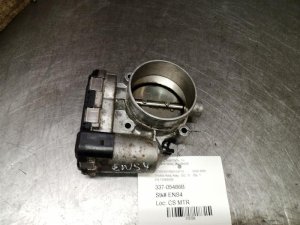
- Throttle Body Assembly
(OEM #12616668 (ACDelco))— This is the most common repair if cleaning fails. The assembly includes the non-serviceable internal motor and position sensors that are the typical failure points.
Trusted brands: ACDelco, Bosch, Hitachi
OEM price range: $200-$350
Aftermarket price range: $120-$250 - Throttle Body Cleaner — This is the first and most likely fix. Carbon buildup is the primary cause of this code on high-mileage GM vehicles.
Trusted brands: CRC, Berryman, Gumout
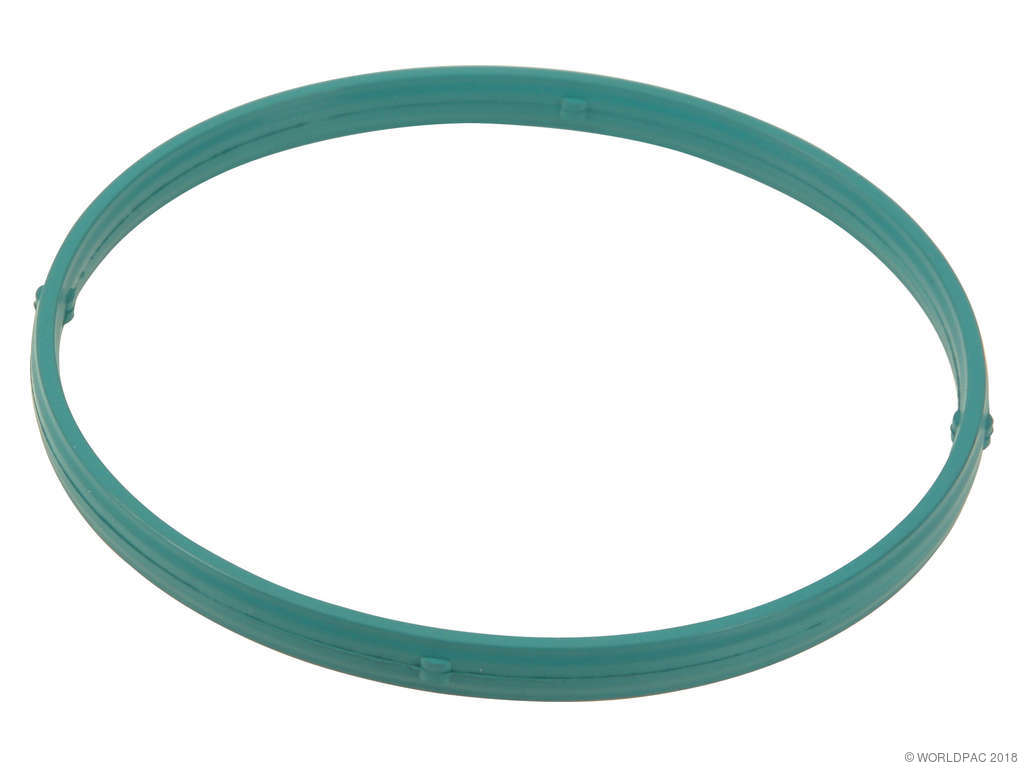
Aftermarket price range: $10-$20 - Throttle Body Gasket — A new gasket should always be used when the throttle body is removed for cleaning or replacement to prevent vacuum leaks.
Trusted brands: ACDelco, Fel-Pro
OEM price range: $10-$20
Aftermarket price range: $5-$15
Related Codes That Often Appear With This One
- P0068 — MAP/MAF - Throttle Position Correlation. The ECM sees a mismatch between airflow and throttle position. This code is explicitly mentioned in TSB PIP4578B alongside P2119.
- P1516 — Throttle Actuator Control (TAC) Module Throttle Actuator Position Performance. A GM-specific code indicating the commanded throttle position doesn't match the actual one. Also mentioned in TSB PIP4578B.
- P2101 — Control Module Throttle Actuator Control Motor Circuit Range/Performance. This points to an electrical issue with the motor inside the throttle body. Also mentioned in TSB PIP4578B.
- P2176 — Throttle Actuator Control System - Idle Position Not Learned. This code often appears after cleaning or replacing the throttle body if the idle relearn procedure is not performed correctly.
- P0506 / P0507 — Idle Air Control System RPM Lower/Higher Than Expected. These codes can set if the throttle plate is stuck slightly open or closed due to carbon, or if the idle learn is not reset after cleaning.
Technical Service Bulletins (TSBs) & Recalls
- PIP4578B: Addresses idle surge, reduced engine power, and DTCs including P2119 on high-mileage vehicles due to carbon buildup in the throttle body. The official fix is cleaning and performing an idle learn reset.
- 14582: Special Coverage Adjustment extending the warranty on the throttle body assembly to 10 years/120,000 miles for certain GM vehicles, including the 2008-2011 CTS, due to throttle position sensor issues causing rough running and reduced power.
Platform-Specific Known Issues
- A GM Technical Service Bulletin (PIP4578B) directly addresses P2119, along with other codes, on high-mileage vehicles. It states that carbon buildup can cause idle surge and reduced engine power, confirming that a dirty throttle body is the primary cause on this platform.
Mechanic-Grade Diagnostic Values
- Throttle Position Sensor (TPS) Voltage (Live Data) — expected: Rises smoothly from ~0.5V at idle to ~4.5V at wide-open throttle.. Failure: Voltage that is flat, has spikes, or shows gaps indicates a failing TPS.
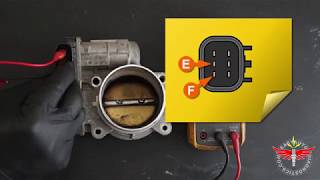
- Throttle Actuator Control (TAC) Motor Resistance — expected: Approximately 2 to 15 Ohms between terminals A and B.. Failure: A reading of less than 1 Ohm indicates a short, while a very high or infinite reading (OL) indicates an open circuit in the motor.
- TPS 1 & 2 Shared Resistance — expected: Approximately 1.5 kOhms between terminals C and E.. Failure: A reading of less than 1 Ohm or an open circuit (OL) indicates a defective throttle body.
- TPS 1 Resistance Sweep — expected: Resistance between terminals D and E should increase as the throttle plate is opened and decrease as it is closed.. Failure: The resistance value stays stuck or has gaps during the sweep, indicating a bad sensor track.
- TPS 2 Resistance Sweep — expected: Resistance between terminals E and F should decrease as the throttle plate is opened and increase as it is closed.. Failure: The resistance value stays stuck or has gaps during the sweep, indicating a bad sensor track.
Scan Tool Commands That Help
- GM Tech2 / GDS2: Throttle Actuator Test — This bidirectional control commands the throttle plate to open and close, allowing a technician to visually and audibly confirm if the actuator motor is working or sticking at certain points.
- GM Tech2 / GDS2: Throttle/Idle Learn — This function must be used after cleaning or replacing the throttle body to reset the learned idle position and airflow values in the ECM. Failure to perform this relearn is a common cause for the code to return or for new codes like P2176 to appear.
Wiring & Ground Locations
- G101 — On the left radiator support.. This is a primary engine compartment ground. A loose or corroded connection here can cause intermittent and difficult-to-diagnose electrical issues for multiple engine sensors and actuators, including the throttle body.
- G104 — On the right front of the engine compartment.. Similar to G101, this is another critical engine ground point. Poor grounding can lead to incorrect voltage readings and erratic behavior from the electronic throttle control system.
- G132 — At the rear of the right cylinder bank.. A ground located directly on the engine block is crucial for the ECM and its related sensors. Verifying this ground is clean and tight is a key step when diagnosing electrical faults.
- Throttle Body Connector — Directly on the throttle body assembly, typically a 6-pin connector.. This is the primary connection point for power, ground, and signal wires for the dual TPS sensors and the actuator motor. It should be inspected for corrosion, backed-out pins, or wire damage right at the connector body.
Real Owner Repair Stories
- YouTube video by 'dannytheman' (2008 Cadillac CTS 3.6L) — Car was running very poorly and had set three throttle body-related codes (P2101, P2176, P2119).
❌ Tried (didn't work) The initial diagnosis pointed directly to a throttle body problem based on the codes.
✅ What actually fixed it The technician found that the air cleaner housing screws were missing, allowing mice to build a nest. Leaves and other debris from the nest were sucked into the intake and physically jammed the throttle plate, preventing it from moving correctly. Cleaning the debris out of the throttle body resolved the issue.
OEM Part Supersession History
12616668→12694871— Standard part evolution for improved reliability or manufacturing changes.
Heads up: The new part number (12694871) is the direct replacement for the old one (12616668) and should be fully compatible.12571081 (Old Design)→ACDelco 217-2253 (Stamped 12589056)— Design update for early model year (2004-2005) LY7 engines.
Heads up: When replacing the old design throttle body (12571081) on a 2004-2005 CTS, a new gasket (12581398) and a new harness adapter (88988585) must be used.
Model Year Variations Within This Range
- 2007 (First Gen): The 2007 model primarily used the 3.6L LY7 port-injected V6. While still susceptible to P2119, the cause is less frequently severe carbon buildup compared to later engines, as fuel spray helps clean the intake path. Electrical failure of the throttle body is comparatively more common.
- 2008-2011 (Second Gen): These years used the 3.6L LLT direct-injected V6. This engine is highly prone to carbon buildup on the throttle body and intake valves because there is no fuel washing over them. This makes a dirty throttle body the most probable cause for P2119.
- 2012-2014 (Second Gen Refresh): These years used the updated 3.6L LFX direct-injected V6. While an evolution of the LLT with integrated exhaust manifolds and other changes, it retains the direct-injection design and remains highly susceptible to the same carbon buildup issues causing P2119.
Helpful Videos


Used OEM Parts in Stock




New Aftermarket Parts Available




The information in this article is provided for general reference and educational purposes only. Vehicle specifications, procedures, and part compatibility can vary by production date, trim level, and region. Always consult your vehicle's factory service manual and verify part numbers before purchasing or performing repairs. Safety-critical components such as airbags, seat belts, and braking systems should be installed by a qualified professional.
- Cadillac CTS:
- 🎬 Helpful Videos
- 🛍️ Shop This Part
- What's Unique About the 2007-2014 Cadillac CTS
- Diagnostic Flowchart
- Symptoms You May Notice
- Most Likely Causes
- Rare But Worth Checking
- Diagnosis Steps
- Parts You'll Likely Need
- Related Codes That Often Appear With This One
- Technical Service Bulletins (TSBs) & Recalls
- Platform-Specific Known Issues
- Mechanic-Grade Diagnostic Values
- Scan Tool Commands That Help
- Wiring & Ground Locations
- Real Owner Repair Stories
- OEM Part Supersession History
- Model Year Variations Within This Range
- 🎟️ Get 5% Off