

P2118 on 2009-2015 Toyota RAV4: Throttle Control Motor Fixes
For a 2009-2015 Toyota RAV4, code P2118 is most often caused by a blown 10A ETCS fuse, especially after a jump-start or battery replacement. This is a very inexpensive fix, costing only a few dollars for a new fuse. If the fuse is intact, the throttle body may need cleaning or replacement.
- Before any other diagnosis, check the 10A 'ETCS' fuse in the engine bay fuse box, especially if the battery was recently dead or jump-started.
- If the fuse is good, the next step is to inspect and clean the throttle body of any carbon buildup.
- Driving with this code is not recommended for long distances as the vehicle will have severely limited power.
- If the fuse and cleaning do not fix the problem, the entire throttle body assembly will likely need to be replaced.
What's Unique About the 2009-2015 Toyota RAV4

On many Toyota vehicles of this era, including the RAV4, the P2118 code is notoriously linked to a blown 10-amp 'ETCS' (Electronic Throttle Control System) fuse. This often happens after the vehicle's battery has died and been jump-started, or if the jumper cables were connected incorrectly, causing a voltage spike. While the underlying issue could still be a faulty throttle body, checking this specific fuse first can save significant time and money. This issue is so common that numerous owner forums and repair videos specifically call it out as the first step.
🎬 Watch: How to fix P2118 on a 2011 RAV4Diagnostic Flowchart

Tap your situation to follow the diagnostic path that matches what you're seeing on this vehicle.
Generation note: This range covers the end of the third generation (XA30, 2009-2012) and the start of the fourth generation (XA40, 2013-2015). The P2118 code and its common causes, particularly the ETCS fuse issue, are relevant to both generations. However, specific part numbers for the throttle body will differ between the 2.5L 4-cylinder (2AR-FE) and 3.5L V6 (2GR-FE) engines, as well as between generations.
Symptoms You May Notice

- Check Engine Light is on.
- Vehicle enters 'limp mode' with very limited power.
- No response or delayed response when pressing the accelerator pedal.
- VSC (Vehicle Stability Control) and 4WD warning lights may also illuminate.
- Engine will not rev past a low RPM, such as 1600-1800 RPM.
- Engine may stall or have a rough idle.
- Car moves very slowly even with the accelerator pedal pressed to the floor.
- Replacing the accelerator pedal position (APP) sensor. While related to throttle control, the P2118 code specifically points to the motor current at the throttle body, not the pedal sensor. A failing pedal sensor would typically set different codes.
Most Likely Causes

- Blown ETCS Fuse 🔴 High Probability This is a very common issue on Toyotas after a battery jump-start or replacement. A voltage spike during the jump, especially if connected incorrectly, can blow the sensitive 10A fuse for the Electronic Throttle Control System.
How to confirm: Locate the fuse box in the engine bay, typically near the driver's side headlight. The cover diagram will show the location of the 'ETCS' fuse. Pull the 10A fuse and visually inspect if the metal strip inside is broken. A multimeter can also be used to check for continuity, which should be below 1 Ω.
Typical fix: Replace the blown 10A fuse with a new one of the same rating. Toyota often includes spare fuses within the fuse box itself. After replacement, clear the DTCs with a scan tool.
Est. part cost: $1-$5 - Dirty or Sticking Throttle Body 🟡 Medium Probability Carbon and gunk can build up in the throttle body over time, restricting the movement of the throttle plate. This makes the motor work harder to open and close it, drawing excessive current and triggering P2118.
How to confirm: Remove the air intake hose from the throttle body and inspect the throttle plate and bore for black carbon deposits. Manually push the plate (with the engine off) to see if it moves smoothly or sticks.
Typical fix: Clean the throttle body thoroughly with a dedicated throttle body cleaner and a soft cloth or brush. Do not spray directly on the electronics. After cleaning, a throttle body relearn procedure may be necessary, which can sometimes be accomplished by disconnecting the battery for 15 minutes or driving the vehicle.
Est. part cost: $10-$20 - Failed Throttle Body Assembly ⚪ Low Probability The internal electric motor or position sensor within the throttle body assembly can fail electronically or mechanically over time. This is less common than the fuse or a dirty throttle body.
How to confirm: If the ETCS fuse is good and the throttle body is clean, but the code persists and symptoms remain, the throttle body assembly is the next likely culprit. A diagnostic scan tool can be used to monitor throttle position sensor voltage for erratic readings. Listening for unusual noises from the motor during operation can also indicate failure. A resistance check across the motor terminals can be performed; one service manual for a 2AR-FE engine specifies a range of 0.3 to 100 ohms.
Typical fix: Replace the entire throttle body assembly. The motor and sensors are typically not sold separately. This is a bolt-on part that is generally accessible after removing the air intake ducting.
Est. part cost: $200-$600
Rare But Worth Checking
- Wiring Harness or Connector Issue: Damage to the wiring or a corroded/loose connector at the throttle body or under the fuse box can cause an open or short in the circuit, leading to a loss of power or incorrect signals. This has been noted on vehicles with prior accident damage in the engine bay.
- Faulty ECM (Engine Control Module): In very rare cases, the driver circuit within the ECM that controls the throttle body can fail. This should only be considered after all other possibilities, including wiring, have been exhaustively ruled out.
- Low Battery Voltage or Poor Ground: A failing battery or corroded battery terminals/ground straps can cause low voltage to the entire system. The ECM monitors the ETCS power supply, and if voltage drops below a certain threshold (e.g., 4V), it will trigger P2118 as a fail-safe.
Diagnosis Steps
- Check for a blown 10A 'ETCS' fuse in the engine bay fuse box. This is the most common cause, especially after a jump-start. Replace if blown.
- If the fuse is good, check the battery voltage. A weak or failing battery can cause this code. Voltage should be above 12.4V with the engine off.
- If the fuse is good, inspect the throttle body wiring harness and connector for any signs of damage, corrosion, or loose pins.
- Remove the intake boot and inspect the throttle body for heavy carbon buildup. Check if the throttle plate moves freely by hand (engine off).
- If dirty, clean the throttle body thoroughly with appropriate cleaner.
- After cleaning or replacement, clear the codes with a scan tool. Then, perform an idle relearn procedure. This can sometimes be done by disconnecting the battery for a few minutes, or by following a specific sequence of key cycles and idling the engine.
- If the code returns, use a multimeter to check for proper voltage and ground at the throttle body connector according to your vehicle's service manual. Check for continuity between the ETCS fuse and the ECM.
- If all wiring and power supply are confirmed to be good, the throttle body assembly itself has likely failed and requires replacement.
Parts You'll Likely Need
- ETCS Fuse (10A)
(OEM #SU003-02423 or 90982-10001 (Verify type, typically a low-profile mini fuse))— This 10-amp fuse is the most frequent failure point for this code on Toyotas, often blowing after a jump-start.
Trusted brands: Toyota Genuine Parts, Bussmann, Littlefuse
OEM price range: $1-$5
Aftermarket price range: $1-$5 - Electronic Throttle Body Assembly
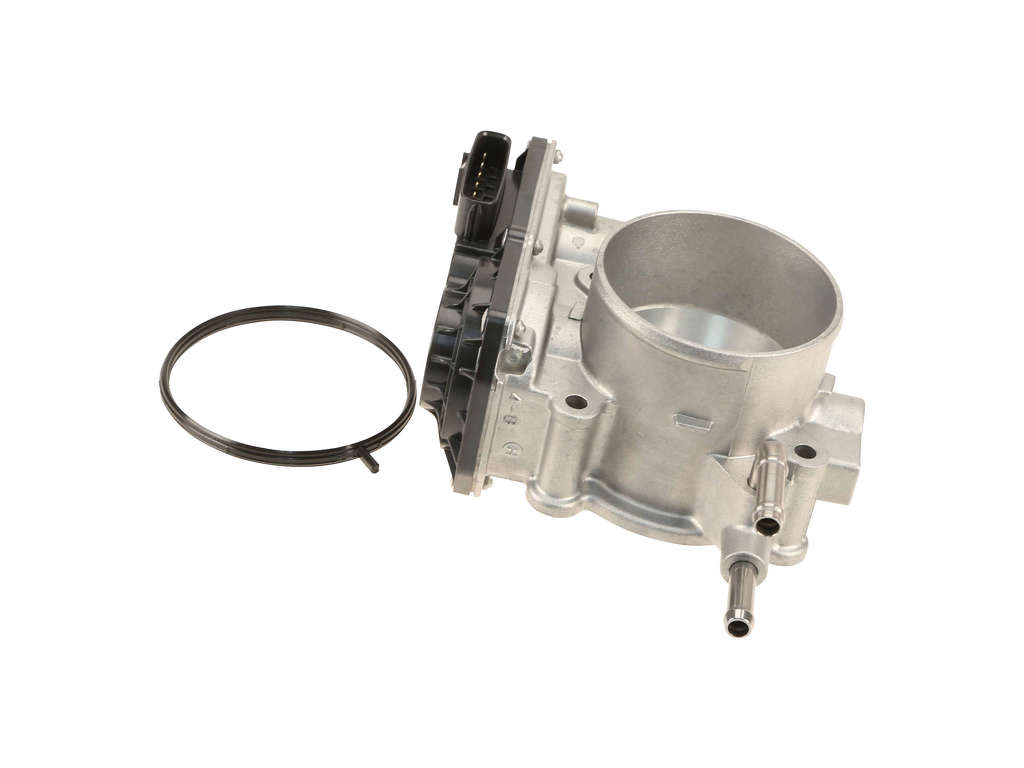
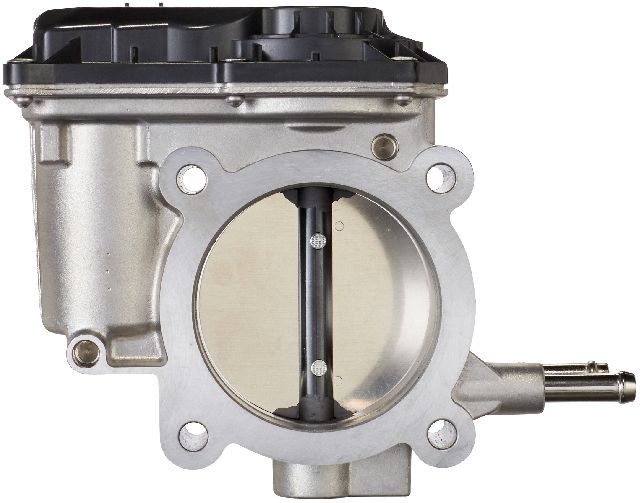
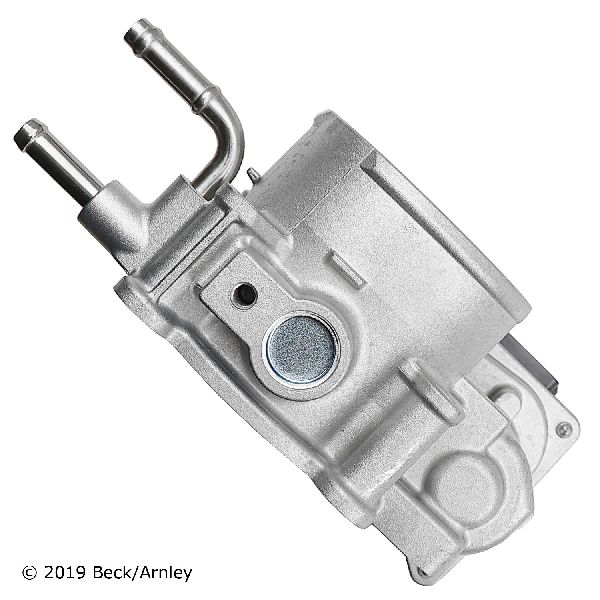
(OEM #For 2.5L (2AR-FE): 22030-36010, 22030-0V010. For 3.5L V6 (2GR-FE): 22030-31030, 22030-0P050. (Part numbers can supersede; always verify with VIN).)— If the fuse is intact and cleaning doesn't resolve the issue, the internal motor or sensor has likely failed, requiring replacement of the complete assembly.
Trusted brands: Toyota (Denso), Aisin, SKP
OEM price range: $400-$600
Aftermarket price range: $90-$350
Related Codes That Often Appear With This One
- C1201 — This code indicates an Engine Control System Malfunction and is often set as a secondary, informational code when a critical powertrain fault like P2118 occurs, triggering the VSC light.
Technical Service Bulletins (TSBs) & Recalls
- T-TT-0321-15: A Technical Tip from Toyota acknowledging customer complaints of MIL ON with DTC P2118 on the 2009 RAV4.
Platform-Specific Known Issues
- Technical Service Tip T-TT-0321-15: Issued for the 2009 RAV4, this is a 'Technical Tip' from Toyota to its technicians. It acknowledges customer complaints of a Check Engine Light (MIL ON) with DTC P2118 stored. It serves as an official confirmation of the issue's existence but does not provide a detailed repair procedure beyond standard diagnostics.
- Fuse Box Location and Type: On the XA30 and XA40 RAV4, the engine bay fuse box is located on the driver's side. The ETCS fuse is a 10A low-profile mini fuse. The fuse box lid has a diagram, and often contains spare fuses in designated slots, which can be used for the repair.
Mechanic-Grade Diagnostic Values
- Throttle Body Motor Resistance — expected: 0.3 Ω to 100 Ω at 20°C (68°F). Failure: A reading outside this range indicates a faulty throttle body motor, requiring replacement of the assembly.
- ETCS Power Supply Voltage (+BM) — expected: 9V to 14V. Failure: The ECM will set P2118 if the voltage drops below 4V for 0.8 seconds or more. This indicates a fault in the power supply circuit.
- Continuity from ETCS fuse terminal to ECM (+BM pin) — expected: Below 1 Ω. Failure: Resistance above 1 Ω indicates an open or high resistance in the wiring harness between the fuse box and the ECM.
- Resistance from ETCS fuse terminal to Body Ground — expected: 10 kΩ or higher. Failure: A low resistance reading indicates a short to ground in the harness.
Scan Tool Commands That Help
- Toyota Techstream: Data List Parameter: +BM Voltage — Use this to monitor the power supply voltage to the ETCS system in real-time. This helps confirm if low voltage is the trigger for the P2118 code, as the ECM logs the fault when this value drops below 4V.
- Toyota Techstream: Utility: All Readiness — After performing a repair, use this function and select DTC P2118 to run the internal monitor. This allows you to confirm if the fix was successful without extensive driving.
- Toyota Techstream: Clear DTCs — Always clear the diagnostic trouble codes after replacing the ETCS fuse or any other component. The limp mode may not reset until the codes are cleared.
Wiring & Ground Locations
- Engine Compartment Ground Points — For the XA30 generation, important grounds are on the front right side of the apron (EA), the intake side of the cylinder block (EB), and the left side of the cylinder head (EC).. A poor engine or ECM ground can cause a voltage drop across the entire system, potentially triggering a P2118 code even if the power supply wiring is intact.
- Throttle Body Connector — Connected directly to the electronic throttle body, accessible after removing the engine cover and air intake ducting.. This is the primary connection point for the throttle motor. The two thicker gauge wires are for the motor itself. Check for corrosion, backed-out pins, or damage, especially after any front-end service or accident.
- Under-Fuse-Box Connector — A large white connector harness located underneath the engine bay fuse box.. In vehicles with prior front-end damage, this connector can become loose. This can interrupt power to the ETCS circuit, mimicking a blown fuse but passing a simple fuse check. Wiggling this connector may cause the fault to appear or disappear.
Real Owner Repair Stories
- Toyota Owners Club Forum User (2006 RAV4) — After incorrectly jump-starting the vehicle, it would start but had three warning lights on (Malfunction, VSC, 4WD) and the accelerator pedal had no effect. The car would only move very slowly.
❌ Tried (didn't work) Replacing the battery.
✅ What actually fixed it Replacing the blown 10A ETCS fuse in the engine bay fuse box. - YouTube Channel 'Pinoy Mechanic Canada' (2016 Toyota RAV4) — After a battery replacement by an apprentice, the check engine and traction control lights were on, and the accelerator pedal was unresponsive. Code P2118 was stored.
❌ Tried (didn't work) Replacing the vehicle battery.
✅ What actually fixed it The technician identified the blown 10A ETCS fuse, replaced it, cleared the codes, and the throttle response was restored. - YouTube Channel 'P2118 throttle actuator motor circuit problem in Lexus/toyota fixed' (Lexus (similar Toyota platform)) — P2118 code would appear intermittently, especially after going over bumps. The car would lose acceleration. The ETCS fuse was intact.
❌ Tried (didn't work) Replacing the throttle body (twice)., Replacing the accelerator pedal., Replacing the ECU.
✅ What actually fixed it The technician found a loose power feed connector underneath the engine bay fuse box, likely from a previous accident repair. Securing the connector resolved the intermittent power loss to the ETCS circuit and fixed the problem permanently.
When the Usual Fixes Don't Work
- While the vast majority of P2118 cases on these vehicles are a simple fuse replacement, there are documented instances where the fix is more complex. In one case involving a similar Toyota platform, the ETCS fuse was good, and even replacing the throttle body and a supposedly repaired ECM did not fix the issue initially. The problem was eventually traced back to a deeper wiring or module communication fault that presented with a P2102 code after further work, indicating that a persistent P2118 can sometimes be a symptom of a more complex electrical issue beyond the fuse. In another case, a loose connector under the fuse box from a previous accident repair was the culprit, causing an intermittent power loss that was difficult to diagnose because the fuse itself was never blown.
OEM Part Supersession History
22030-36010→22030-0V010— Standard part revision and consolidation by Toyota.
Heads up: The new part number (22030-0V010) is a direct replacement for the old one (22030-36010) for the 2.5L (2AR-FE) engine and is backward compatible.
Model Year Variations Within This Range
- 2009-2012 (XA30) vs 2013-2015 (XA40): While the common causes of P2118 are the same, the physical routing of wiring harnesses and the specific ECM pin locations may differ. Always refer to a wiring diagram specific to the vehicle's model year. For example, wiring diagrams for a 2013 RAV4 are distinct from earlier models.
Helpful Videos

Used OEM Parts in Stock


New Aftermarket Parts Available



The information in this article is provided for general reference and educational purposes only. Vehicle specifications, procedures, and part compatibility can vary by production date, trim level, and region. Always consult your vehicle's factory service manual and verify part numbers before purchasing or performing repairs. Safety-critical components such as airbags, seat belts, and braking systems should be installed by a qualified professional.
- Toyota RAV4:
- 🎬 Helpful Videos
- 🛍️ Shop This Part
- What's Unique About the 2009-2015 Toyota RAV4
- Diagnostic Flowchart
- Symptoms You May Notice
- Most Likely Causes
- Rare But Worth Checking
- Diagnosis Steps
- Parts You'll Likely Need
- Related Codes That Often Appear With This One
- Technical Service Bulletins (TSBs) & Recalls
- Platform-Specific Known Issues
- Mechanic-Grade Diagnostic Values
- Scan Tool Commands That Help
- Wiring & Ground Locations
- Real Owner Repair Stories
- When the Usual Fixes Don't Work
- OEM Part Supersession History
- Model Year Variations Within This Range
- 🎟️ Get 5% Off