

OBD-II Code P2115: Throttle/Pedal Position Sensor 'D' Minimum Stop Performance
The Ultimate Expert Guide to Diagnosing and Fixing P2115
- Code P2115 triggers a protective 'limp mode' that caps engine speed at 3,000 RPM, making the vehicle unsafe to drive.
- Clean the throttle body bore and plate with a $10 dedicated solvent before spending $300+ on replacement parts.
- Test the Accelerator Pedal Position (APP) sensor for smooth 0.5V to 4.5V voltage sweeps to rule out a faulty gas pedal.
- Diagnose companion code P2135 first if present, as resolving this voltage correlation error typically clears P2115 automatically.
- Perform a mandatory electronic throttle relearn procedure using a bidirectional scan tool after any repair to prevent the code from returning.
What Does P2115 Mean?

P2115 means your car's Powertrain Control Module (PCM) has detected a critical performance error in the electronic throttle control system. Specifically, a sensor designated as 'D' is not reporting the correct voltage when the throttle blade is supposed to be at its minimum stop (fully closed). Because the PCM 🎬 Watch: A quick overview of the P2115 error code cannot trust the sensor's reading for the closed-throttle position, it defaults to a fail-safe mode to prevent unintended acceleration.
Technical definition: The official SAE/OBD-II definition is "Throttle/Pedal Position Sensor 'D' Minimum Stop Performance." This indicates the PCM has detected that the sensor's reported voltage falls outside the expected range when the throttle is commanded to its minimum stop or is at rest. The 'D' sensor is one of several redundant sensors (labeled A, B, D, E) that the PCM uses to cross-check the throttle plate's actual position against the driver's request from the accelerator pedal.
Can I Drive With P2115?

No — Do Not Drive. Driving is not recommended. Your vehicle's computer has activated a protective 'limp-home mode,' which severely restricts performance to prevent potential engine or transmission damage. This mode typically limits engine RPMs to 2,000-3,000 and vehicle speed to 35-45 mph. Continuing to drive, especially for long distances, causes transmission overheating and component failures, leading to expensive repairs. Pull over safely and have the vehicle towed for diagnosis.
Common Causes

- Dirty or Obstructed Throttle Body (Very Common) — Carbon, oil, and sludge build up inside the throttle body, physically preventing the throttle plate from closing completely. This physical obstruction stops the sensor from reporting its expected minimum voltage reading, causing the PCM to flag a performance fault.
- Faulty Electronic Throttle Body Assembly (Very Common) — The internal Throttle Position Sensors (TPS) or the electric actuator motor fail. On most modern cars, these components are integrated, requiring complete throttle body replacement.
- Faulty Accelerator Pedal Position (APP) Sensor (Common) — The sensor connected to the gas pedal fails to translate foot pressure into a smooth voltage signal. The PCM detects a discrepancy between the APP sensor and throttle body sensors, triggering P2115.
- Wiring or Connector Issues (Less Common) — The wiring harness or electrical connectors for the throttle body or accelerator pedal sensor suffer from chafing, corrosion, or loose pins. This causes intermittent signal loss, shorts, or high resistance.
- Software or Calibration Mismatch (Less Common) — The PCM's learned values for the throttle's minimum and maximum positions no longer match the sensor's actual output due to component wear. A software update or relearn procedure corrects this mismatch.
- Weak or Failing Battery (Rare) — A battery with low or unstable voltage causes widespread, intermittent electrical problems. The sensitive electronics in the throttle control system require a stable 5-volt reference to operate correctly.
- Powertrain Control Module (PCM) Failure (Very Rare) — The vehicle's main computer fails. This is a last resort diagnosis after all sensors, wiring, and mechanical issues are thoroughly tested and eliminated.
Symptoms

- Reduced Engine Power ('Limp Mode') — The vehicle severely restricts acceleration and illuminates a 'Wrench' or 'Throttle Control' warning light to prevent uncontrolled acceleration.
- Hesitation, Stalling, or Unstable Idle — The engine hesitates, stumbles, or stalls during acceleration, and idle surges erratically due to incorrect throttle plate positioning.
- No Throttle Response — Pressing the gas pedal yields no response, and engine speed remains at idle.
- Cruise Control Inoperative — The PCM disables cruise control as a safety precaution because it cannot trust the throttle control signals.
- Check Engine Light is On (also visible on scanner) — The Malfunction Indicator Lamp (MIL) illuminates, often accompanied by companion throttle codes.
Diagnostic Flowchart
Tap your situation to follow the diagnostic path that matches what you're seeing on this code.
Common Fixes & Costs
- Clean Throttle Body — Parts: $5-$15, Labor: $75-$150, ~0.8 hr book time (DIY)
- Replace Electronic Throttle Body Assembly — Parts: $200-$700, Labor: $100-$300, ~1.5 hr book time (Intermediate)
- Replace Accelerator Pedal Position (APP) Sensor — Parts: $70-$500+, Labor: $50-$150, ~0.7 hr book time (DIY)
- Repair Wiring or Connector — Parts: $10-$50, Labor: $100-$300, ~1.8 hr book time (Intermediate)
- PCM Reprogramming or Replacement — Parts: $0-$1200, Labor: $100-$250, ~1.2 hr book time (Professional)
Used vs. New Parts: Buying Guide
When a used part is worth it: For a common, high-cost part like an electronic throttle body, a used OEM unit from a low-mileage, accident-damaged vehicle is a cost-effective option for older vehicles.
Donor-vehicle mileage cap: roughly under 80000 miles for the part to have meaningful remaining life.
Donor quality checklist:
- Verify the part number matches exactly; electronic components are often not interchangeable between model years.
- Source from a reputable salvage yard that offers at least a 30-90 day warranty.
- Inspect the electrical connector for any signs of corrosion, and the throttle bore for unusual scoring or damage.
Decision logic:
- If Vehicle is less than 5 years old or has low mileage (<60k) → Buy a new OEM part to ensure longevity and compatibility. The savings from a used part do not outweigh the risk.
- If Vehicle is over 10 years old and the budget is tight → A used OEM part is a reasonable choice. Avoid aftermarket 'new' parts from unknown brands, as their internal electronics are unreliable.
- If The part has a known high failure rate for your specific model (check TSBs) → Favor a new OEM part, as it may be an updated design that corrects the original flaw. A used part likely has the same defect.
Warranty tradeoff: Used parts typically come with a 30-90 day part-only warranty. New aftermarket parts often have a 1-year to limited lifetime warranty. New OEM parts carry a 1-2 year warranty, but are the most expensive.
Worst-case if a used part fails: $200-$400 if a used part fails shortly after installation, representing repeat labor costs plus the cost of another replacement part.
What Happens If You Wait — Timeline
- Immediate (First Occurrence): The PCM detects a critical fault, illuminates the Check Engine and/or Wrench light, and immediately forces the vehicle into 'limp mode'. Throttle response is gone, and engine RPM is limited to 2,000-3,000. (MPG impact: 10-25% (due to being stuck in a low gear and inefficient RPM range)% · Added cost: $100-$300 if a tow is required to get off a busy road.)
- 1-5 attempts to 'reset': Owner restarts the car, which sometimes temporarily clears limp mode. However, the underlying electrical or mechanical fault remains. The car re-enters limp mode unpredictably, creating a dangerous situation in traffic. (MPG impact: N/A (driving is unsafe and not recommended)% · Added cost: $0, but the risk of an accident is high.)
- 1-2 months of intermittent driving: If the vehicle is driven repeatedly in limp mode, the transmission is put under significant strain. Being locked in 2nd or 3rd gear causes excessive heat buildup and clutch wear, especially in stop-and-go traffic. Transmission fluid life is drastically shortened. (MPG impact: 15-30%% · Added cost: $500-$1500 for potential damage to transmission solenoids or the valve body due to overheating and stress.)
- 3+ months of continued use: Prolonged operation in limp mode leads to catastrophic transmission failure. The constant overheating and stress burns out clutch packs completely. Additionally, an incorrect throttle reading leads to a persistently rich or lean fuel mixture, damaging the catalytic converter over time. (MPG impact: N/A (vehicle is likely undrivable)% · Added cost: $2,500-$5,000+ for a complete transmission rebuild and/or catalytic converter replacement.)
Cost of Not Fixing It
- Immediate: Vehicle is stuck in 'limp mode' with severely reduced power, making it unsafe to drive in normal traffic. Risk of being stranded. (Added cost: $100-$300 (for a tow))
- 1-3 months: Consistently driving in limp mode strains the transmission, as it locks in a single gear (often 2nd or 3rd), leading to overheating and premature wear of clutches and fluid. (Added cost: $500-$1500 (for transmission solenoid/valve body repair))
- 6+ months: Catastrophic transmission failure occurs due to prolonged overheating and stress. An incorrect air/fuel mixture from the faulty throttle reading damages the catalytic converter over time. (Added cost: $2500-$5000+ (for complete transmission rebuild/replacement and catalytic converter replacement))
Diagnosis Steps
- Scan for Codes and Review Freeze Frame Data
Use an OBD-II scanner to confirm P2115 and check for companion codes like P2135 or P0122. Review freeze-frame data to identify the exact engine speed, load, and temperature when the fault occurred.
Tools: OBD-II Scanner (Beginner) - Inspect and Clean the Throttle Body
Remove the air intake hose and inspect the throttle plate for carbon buildup. Clean the bore and plate thoroughly using throttle body cleaner and a soft brush until the plate snaps shut smoothly.
Tools: Screwdriver/Socket Set, Throttle Body Cleaner, Rag/Brush (Intermediate) - Visually Inspect Wiring and Connectors
Examine the wiring harnesses and connectors at the throttle body and accelerator pedal. Look for chafed wires, corroded pins, or water intrusion, and gently wiggle the harness while idling to test for intermittent faults.
Tools: Flashlight (Beginner) - Check Sensor Voltage with Scan Tool (Live Data)
Monitor the throttle position (TP) and accelerator pedal position (APP) sensor voltages using a scan tool. Slowly press the accelerator with the key on and engine off; voltages must rise smoothly without spikes or dropouts.
Tools: Advanced OBD-II Scanner (Intermediate) - Perform a Throttle Relearn Procedure
Execute a throttle relearn procedure using a bidirectional scan tool or vehicle-specific key sequence. This resets the PCM's learned minimum and maximum stop positions, which is mandatory after cleaning or replacing parts.
Tools: OBD-II Scanner (sometimes), Vehicle-Specific Instructions (Intermediate) - Test Sensor Voltage with a Multimeter (Pro Tip)
Backprobe the sensor's signal wire to verify a steady 5.0V reference and solid ground. Sweep the throttle manually; the signal voltage must increase linearly from ~0.5V at closed throttle to ~4.5V at wide-open throttle.
Tools: Digital Multimeter, Vehicle-Specific Wiring Diagram, Backprobe Kit (Advanced) - Test Sensor Resistance with a Multimeter
Unplug the sensor and measure resistance across the signal pin while sweeping the throttle. The resistance must change smoothly; dropouts confirm a failed internal resistive track.
Tools: Digital Multimeter, Vehicle-Specific Wiring Diagram (Advanced) - Analyze Sensor Waveform with an Oscilloscope (Pro Tip)
Connect an oscilloscope to the sensor's signal wire to catch intermittent dropouts or electrical noise that a multimeter misses. A healthy sensor produces a clean, sweeping waveform.
Tools: Digital Storage Oscilloscope, Wiring Diagram (Professional) - Test the Powertrain Control Module (PCM)
If all sensors, wiring, and mechanical components pass testing, take the vehicle to a professional shop equipped with an advanced bidirectional scan tool to verify PCM integrity.
Tools: Advanced Diagnostic Equipment (Professional)
When This Code Triggers (Freeze-Frame Conditions)
- Engine Coolant Temp: 180-200°F (The fault often occurs when the engine is fully warmed up and operating in closed-loop mode.)
- RPM: 700-2500 (The code triggers at idle (if the throttle plate can't close) or during light acceleration/deceleration when the PCM expects precise throttle movements.)
- Engine Load: 20-50% (Often occurs under light to moderate load, such as steady-state cruising or gentle acceleration.)
- Vehicle Speed: 0-45 mph (The fault sets either from a stop (at idle) or during city/suburban driving speeds as the throttle position is constantly adjusted.)
Related Codes
- P2135 — This is the most common companion code, meaning 'Throttle/Pedal Position Sensor/Switch A/B Voltage Correlation.' P2135 indicates the two primary sensors are disagreeing with each other. This disagreement often forces the PCM to set P2115 as a secondary, fail-safe code. Diagnosing the root cause of P2135 typically resolves P2115.
- P0122 — This code means 'Throttle Position Sensor 'A' Circuit Low Input.' It points directly to an electrical failure (like a short to ground or open circuit) in the primary sensor. P2115 is a performance code set by a mechanical issue, whereas P0122 specifically indicates an electrical circuit voltage below specification.
- P0222 — This is 'Throttle Position Sensor 'B' Circuit Low Input.' It is the same type of electrical fault as P0122 but for the secondary, redundant sensor circuit. Seeing P0122 or P0222 helps pinpoint which internal throttle position sensor has an electrical fault.
- P2116 — This code is for 'Throttle/Pedal Position Sensor 'E' Minimum Stop Performance.' It often appears with P2115 on certain makes (like Dodge/Ram) and points to a failure in the redundant accelerator pedal sensors, reinforcing that the issue lies within the pedal assembly itself.
Climate & Environmental Factors
- High Humidity / Water Intrusion: Moisture accelerates corrosion on the electrical connector pins for the throttle body and accelerator pedal sensor. This corrosion creates high resistance, leading to erratic voltage signals that trigger P2115.
- Cold Weather: In extremely cold temperatures, moisture inside the throttle body freezes, causing the throttle plate to stick or move sluggishly. This prevents it from returning to the minimum stop position.
How to Talk to a Mechanic About This Code
Say this: "I have a P2115 code and my car is in limp mode. I'd like a diagnostic that starts with the least expensive causes first. Please inspect and clean the throttle body and test the accelerator pedal position sensor before quoting a full throttle body replacement."
This shows you've done your research and understand the common causes. It directs the mechanic to perform specific, logical diagnostic steps rather than immediately jumping to the most expensive repair, which saves you money on both diagnostic time and parts.
Avoid saying:
- 'My car is acting weird and the check engine light is on.'
- 'Just replace the throttle body.'
- 'I have a P2115, just fix it.'
Questions to ask before authorizing the repair:
- Did you test the Accelerator Pedal Position (APP) sensor and check its wiring?
- Can you confirm if a throttle relearn procedure is required after this repair and if that's included in the labor cost?
- If the throttle body needs replacement, what is the warranty on the new part and your labor?
Where to Take It: Dealer vs Independent vs Chain
- Dealer:
Recommended if your vehicle is known for software issues or TSBs related to this code. Otherwise, a qualified independent shop is more cost-effective.
Best for: Vehicles under warranty, Vehicles with known TSBs or recalls related to the throttle body (e.g., Ford, GM), Complex cases where a PCM software update might be the required fix (e.g., Hyundai/Kia)
Downsides: Highest labor rates, May default to replacing the entire throttle body assembly even if a simpler fix is possible (Typical cost: +50% vs. baseline) - Independent Shop:
Best fit for most P2115 repairs, especially if the cause is a dirty throttle body or a clear-cut part failure. Ensure they have a scan tool capable of performing the throttle relearn procedure.
Best for: Out-of-warranty vehicles, Straightforward part replacements like the throttle body or accelerator pedal sensor, Customers looking for better value
Downsides: May not have access to the latest manufacturer software updates, Diagnostic capabilities vary, so choose a shop with good reviews and modern equipment (Typical cost: +0% vs. baseline) - Chain Shop:
Use with caution. Acceptable for a simple throttle body cleaning or pedal sensor replacement, but avoid for in-depth diagnosis as they are more likely to replace parts unnecessarily.
Best for: Basic diagnostics (reading the code), Simple part swaps if the diagnosis is already certain
Downsides: Technician skill and diagnostic equipment are inconsistent, May lack the expertise for nuanced electronic issues or required relearn procedures (Typical cost: -10% vs. baseline)
When to Walk Away From the Repair
If the total estimated repair cost for P2115 exceeds 50% of your car's private-party value (check Kelley Blue Book or Edmunds), it's time to seriously consider selling or trading it in.
- Car worth $3500, fix is $800: Fix it. The repair cost is well under the 50% threshold and restores critical functionality.
- Car worth $4000, fix is $2200: Walk away. The repair cost is over 50% of the car's value. This is a poor investment.
- Car worth $10000, fix is $1000: Fix it. This is a reasonable cost to maintain a more valuable vehicle.
What Scan Tool You Need for This Code
Minimum: A scan tool that reads live sensor data for the throttle and pedal position sensors, and most importantly, performs the electronic throttle relearn (ETR) or idle learn reset function.
A basic $20 code reader only confirms the P2115 code. It cannot show you the live voltage data needed to see if a sensor is failing, nor can it perform the mandatory throttle relearn procedure required after cleaning or replacing the throttle body. Without the relearn function, the code likely returns immediately after the repair.
Budget: BlueDriver Pro (~$100) — Reads and clears codes, views live data from the throttle and pedal sensors, and accesses freeze frame data. However, it lacks the bidirectional capability to perform the throttle relearn procedure on all vehicle models.
Mid-range: Foxwell NT510 Elite (~$180) — Offers manufacturer-specific diagnostics, graphs live sensor data, and explicitly includes the throttle position sensor reset and relearn function for many makes like Honda, GM, etc.
Professional: Autel MaxiCOM MK808 / MK808Z (~$500) — Provides full bidirectional control, allowing it to command the throttle body and perform the necessary idle/throttle relearn procedures on a wide range of vehicles. This is a professional-level tool that ensures the job is completed correctly.
Rent vs buy: For a one-time fix, some auto parts stores rent basic scanners, but they typically do not have the required throttle relearn function. If you plan to perform the repair yourself, buying a mid-range scanner like the Foxwell or XTOOL D7 is a good investment, as the cost of the tool is often less than one trip to the dealer for a diagnostic and relearn procedure.
How to Clear the Code After You Fix It
- Use an OBD-II scan tool to clear all diagnostic trouble codes (DTCs).
- Perform the vehicle-specific throttle relearn procedure as per the service manual.
- Drive the vehicle through a complete drive cycle to allow the readiness monitors to set.
Drive cycle (~20 minutes): A generic drive cycle includes: 1) Cold start and idle for 2-3 minutes. 2) Drive in stop-and-go city traffic for 10 minutes, including several accelerations and decelerations. 3) Drive at a steady highway speed (55-60 mph) for 5-10 minutes. 4) Allow the vehicle to cool down completely.
Readiness monitors affected: Comprehensive Component Monitor (CCM), Catalyst (CAT) Monitor, Evaporative System (EVAP) Monitor, Oxygen (O2) Sensor Monitor
Before emissions retest: drive at least 50 miles to fully set monitors.
Watch out for:
- Simply disconnecting the battery clears the code but also erases all readiness monitors, guaranteeing an emissions test failure until a full drive cycle is completed.
- The code returns immediately if the underlying mechanical or electrical fault is not properly fixed.
- Forgetting to perform the mandatory throttle relearn procedure after a repair is the most common reason for the code to return.
Will This Fail Emissions / State Inspection?
Yes — this code typically fails an OBD-II emissions inspection.
- California: A vehicle with an active P2115 code results in an automatic smog check failure. All required readiness monitors must be set to 'Ready' before a test can be passed, which requires driving after a repair.
- New York: The NYS inspection includes an OBD-II scan. An illuminated Check Engine Light and an active code like P2115 is an automatic failure. If repairs are made, the vehicle may be eligible for a 10-day extension to complete the drive cycle.
- Texas: In the 17 counties requiring emissions testing, an active P2115 code causes the vehicle to fail the OBD-II portion of the inspection.
Most Commonly Affected Vehicles
- Dodge/Ram 1500, Charger, Durango (2003-2013) — Particularly common on the 5.7L Hemi engine. Often presents with a cluster of codes including P2115, P2116, P2122, and P2166, frequently pointing to a faulty accelerator pedal assembly.
- Ford Focus, Fusion, Escape (2010-2016) — These models are notorious for throttle body failures that cause limp mode. Ford issued customer satisfaction program 13N03 and multiple TSBs for these issues, often requiring replacement of the throttle body.
- Chevrolet/GM Cruze, Equinox, Malibu, Silverado (2010-2017) — Frequently experience issues with both the accelerator pedal sensor and the throttle body. Code P2135 is a very common companion. TSB 07-06-04-019G addresses intermittent reduced power by inspecting/replacing the APP sensor connector and assembly.
- Hyundai Sonata, Elantra (2011-2017) — Throttle body and APP sensor failures are a known issue. Before replacing parts, check for PCM software updates, as Hyundai has released several to correct overly sensitive diagnostic logic that can trigger these codes.
- Nissan Altima, Sentra, Rogue (2007-2015) — Throttle body and accelerator pedal sensor problems are common. A throttle relearn procedure is critical after any repair. In some cases, a faulty brake light switch can cause related throttle issues on these vehicles.
- Subaru Forester, Outback, Impreza (2005-2014) — On many of these models, the issue is traced to a failing throttle body assembly. TSB 11-81-07R addresses a similar issue on some models, indicating a known pattern of failure.
- Kia Optima, Sorento (2011-2015) — Sharing platforms with Hyundai, these Kia models are also prone to throttle body and pedal sensor faults. Recall SC115 (NHTSA Campaign ID 15V089000) was issued for some 2016 Sorento models for an improperly soldered accelerator pedal assembly that could cause a loss of acceleration.
- Toyota Corolla, Camry, RAV4 (2002-2010) — While generally reliable, some models from this era experienced accelerator pedal sensor failures that were part of a large-scale recall. The issue could cause the pedal to become stuck or slow to return.
- Chrysler 200, Town & Country (2011-2014) — These vehicles can exhibit erratic accelerator pedal sensor voltage, leading to this code and a non-responsive throttle. Diagnosis often points to replacing the APP sensor assembly followed by an ETC relearn.
Manufacturer-Specific Notes
- Dodge/Chrysler/Ram: On some models, the scan tool data for the second accelerator pedal sensor (APP2) shows a voltage drop to zero even on a healthy sensor. Technicians must be aware of this and not replace parts based solely on this misleading data without further testing.
- Ford: Always check for applicable TSBs and customer satisfaction programs (e.g., 13N03). A software update or a specific revised throttle body part number is often required for a permanent fix, as the original parts were known to be faulty.
- GM/Chevrolet: A common failure point is the plastic connector at the Accelerator Pedal Position (APP) sensor. TSB 07-06-04-019G recommends inspecting this connector for fretting corrosion at the terminals and applying dielectric grease or replacing the connector pigtail.
- Hyundai/Kia: Before replacing any hardware, check for Powertrain Control Module (PCM) software updates. Hyundai/Kia released multiple updates to revise the diagnostic logic and prevent false codes from being set due to overly sensitive parameters.
- Nissan: On some Nissan models, an unrelated component failure, such as a faulty brake light switch or A/C pressure sensor, causes the PCM to cut the 5-volt reference signal shared by the accelerator pedal, triggering throttle-related codes as a secondary fault.
Real Owner Stories
2013 Chevy Cruze 1.4L with P2135 & P2115
Car suddenly went into 'Reduced Engine Power' mode with the Stabilitrak light on. Codes P2135 and P2115 appeared.
What they tried:
- Replaced the negative battery cable three weeks prior.
- Verified battery voltage was good.
- Initial thought was to replace the throttle body.
Outcome: The issue for many Chevy Cruze models is a failed PCV check valve inside the intake manifold, which causes a vacuum leak that the system misinterprets as a throttle issue. The fix is to replace the intake manifold or install an aftermarket PCV fix kit.
Lesson: On GM 1.4L Turbo engines, throttle codes like P2135/P2115 are often symptoms of a known PCV system failure. Investigate PCV-related TSBs and warranty extensions before spending money on a throttle body.
2011 Ford Fusion with limp mode
Vehicle intermittently entered limp mode with the wrench light illuminated. Engine power and speed were severely reduced.
What they tried:
- Took the vehicle to a dealer for diagnosis.
Outcome: The dealer identified a faulty throttle body due to contamination on the internal motor contacts. The repair was covered under Ford's Customer Satisfaction Program 13N03, which extended the throttle body warranty to 10 years or 150,000 miles. The throttle body was replaced and the powertrain software was updated at no charge.
Lesson: If you own a Ford from the 2009-2013 era and experience limp mode, check for Customer Satisfaction Program 13N03 before paying for a repair. A known defect in the throttle body is the likely cause, and Ford may cover the replacement.
2003 Dodge Ram 1500 5.7L Hemi with multiple throttle codes
Truck started but had zero throttle response; gas pedal did nothing. A cluster of codes appeared, including P2115, P2116, P2166, and P2167, and the 'lightning bolt' warning light was on.
What they tried:
- Replaced the accelerator pedal assembly and the throttle body with new OEM parts.
- Tried a battery disconnect relearn procedure, which did not work.
- Verified 5-volt reference at the pedal connector.
Outcome: The problem was resolved only after a professional shop performed a specific 'ETC Relearn' procedure using a high-level scan tool (Autel Ultra). The new parts would not function correctly until the PCM's learned values were forcibly reset for the new components.
Lesson: Simply replacing the throttle body or pedal sensor is not enough. A mandatory, scan-tool-initiated relearn procedure is often required, especially on Dodge/Chrysler vehicles. Do not assume a new part is faulty until the relearn has been successfully performed.
2008 GM vehicle with intermittent P2138 and limp mode
Vehicle would intermittently go into 'Reduced Engine Power' mode, especially after rain or a car wash. Code P2138 (APP Sensor Correlation) was present, which often triggers P2115.
What they tried:
- Owner was considering replacing the accelerator pedal assembly.
Outcome: The root cause was a water leak. As described in GM TSB #07-06-04-019G, water was leaking past a bad windshield seal, running down the A-pillar, and corroding the IP-to-body harness connector in the driver's kick panel. The fix was to repair the water leak and clean or replace the corroded connector, not the pedal itself.
Lesson: If throttle problems appear with wet weather, immediately suspect a water leak. On many GM vehicles, TSB #07-06-04-019 points directly to a corroded kick panel connector as the cause of pedal sensor codes. Do not replace the pedal assembly until this connector has been inspected.
How to Prevent This Code From Triggering
- Clean the Throttle Body Periodically (Every 60,000 - 75,000 miles, or if you notice a rough idle.) — Carbon and oil residue from the PCV system builds up, restricting airflow and causing the throttle plate to stick. Regular cleaning prevents this buildup from reaching a level where it physically blocks the plate from closing to its minimum stop.
- Use High-Quality Air Filters and Replace Regularly (Per your vehicle's maintenance schedule (typically 15,000-30,000 miles).) — A clean air filter prevents dirt and debris from entering the intake system. This reduces abrasive wear on the throttle plate and bore and keeps contaminants from mixing with oil vapors to form sludge.
- Apply Dielectric Grease to Key Connectors (During any related repair or inspection.) — Applying a small amount of dielectric grease to the weather seals of the throttle body and accelerator pedal sensor connectors helps prevent moisture intrusion. This inhibits the corrosion that causes intermittent signal failures.
- Address Engine Oil Leaks and Excessive Blow-by (As soon as they are detected.) — A faulty PCV system or worn piston rings increases the amount of oil vapor sent into the intake. This oil vapor is the primary ingredient that forms carbon deposits on the throttle body. Fixing the root cause slows the rate at which the throttle body gets dirty.
Frequently Asked Questions
What is the most common misdiagnosis for P2115?
The most common mistake is immediately replacing the expensive throttle body without a full diagnosis. Always clean the throttle body first, inspect all wiring, and test the accelerator pedal sensor. Failing to perform the mandatory throttle relearn procedure after a repair guarantees the code will return immediately.
I replaced the throttle body and the code came back. What now?
If a new throttle body fails to clear the code, verify the mandatory throttle relearn procedure was completed successfully. Next, test the Accelerator Pedal Position (APP) sensor and inspect its wiring harness for corrosion. Finally, check for available PCM software updates or a weak battery before suspecting a failed computer.
Can I just replace the sensor instead of the whole throttle body?
On most vehicles made since the mid-2000s, the throttle position sensors are integrated into the throttle body and are not sold as separate, replaceable parts. In these cases, you must replace the entire throttle body assembly.
Will clearing the code fix the problem?
No, clearing the code only turns off the check engine light temporarily. Because P2115 is a hard fault related to system performance, the PCM detects the problem on the next key cycle and immediately forces the car back into limp mode.
How can a dirty throttle body cause an electrical-sounding code?
The code flags a 'minimum stop performance' error. If carbon buildup physically prevents the throttle plate from closing to its true minimum stop, the sensor's voltage reading at idle exceeds the computer's pre-programmed expected value. The computer interprets this disagreement as a sensor performance failure.
What's the difference between the Throttle Position Sensor (TPS) and Accelerator Pedal Position (APP) Sensor?
The APP sensor connects to the gas pedal to register your acceleration request, while the TPS mounts on the throttle body to measure the actual throttle plate angle. The PCM constantly compares these two signals to ensure safe operation. A failure or mismatch in either sensor triggers P2115.
How do you perform a throttle relearn procedure?
The procedure varies widely by manufacturer, ranging from a simple sequence of key turns to timed pedal presses. Many modern vehicles require a professional bidirectional scan tool to initiate the relearn function. Always consult a factory repair manual for your specific vehicle's exact steps.
Key Takeaways
- Code P2115 triggers a protective 'limp mode' that caps engine speed at 3,000 RPM, making the vehicle unsafe to drive.
- Clean the throttle body bore and plate with a $10 dedicated solvent before spending $300+ on replacement parts.
- Test the Accelerator Pedal Position (APP) sensor for smooth 0.5V to 4.5V voltage sweeps to rule out a faulty gas pedal.
- Diagnose companion code P2135 first if present, as resolving this voltage correlation error typically clears P2115 automatically.
- Perform a mandatory electronic throttle relearn procedure using a bidirectional scan tool after any repair to prevent the code from returning.
Helpful Videos
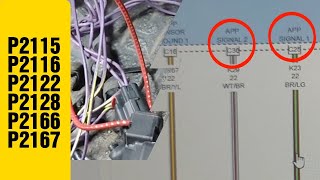
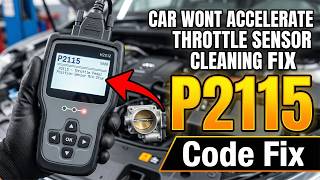
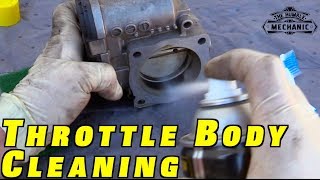
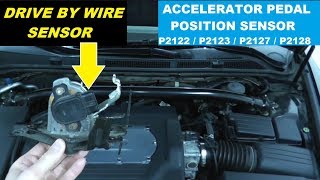

The information in this article is provided for general reference and educational purposes only. Vehicle specifications, procedures, and part compatibility can vary by production date, trim level, and region. Always consult your vehicle's factory service manual and verify part numbers before purchasing or performing repairs. Safety-critical components such as airbags, seat belts, and braking systems should be installed by a qualified professional.
- 🎬 Helpful Videos
- What Does P2115 Mean?
- Can I Drive With P2115?
- Common Causes
- Symptoms
- Diagnostic Flowchart
- Common Fixes & Costs
- Used vs. New Parts: Buying Guide
- What Happens If You Wait — Timeline
- Cost of Not Fixing It
- Diagnosis Steps
- When This Code Triggers (Freeze-Frame Conditions)
- Related Codes
- Climate & Environmental Factors
- How to Talk to a Mechanic About This Code
- Where to Take It: Dealer vs Independent vs Chain
- When to Walk Away From the Repair
- What Scan Tool You Need for This Code
- How to Clear the Code After You Fix It
- Will This Fail Emissions / State Inspection?
- Most Commonly Affected Vehicles
- Manufacturer-Specific Notes
- Real Owner Stories
- 2013 Chevy Cruze 1.4L with P2135 & P2115
- 2011 Ford Fusion with limp mode
- 2003 Dodge Ram 1500 5.7L Hemi with multiple throttle codes
- 2008 GM vehicle with intermittent P2138 and limp mode
- How to Prevent This Code From Triggering
- Frequently Asked Questions
- What is the most common misdiagnosis for P2115?
- I replaced the throttle body and the code came back. What now?
- Can I just replace the sensor instead of the whole throttle body?
- Will clearing the code fix the problem?
- How can a dirty throttle body cause an electrical-sounding code?
- What's the difference between the Throttle Position Sensor (TPS) and Accelerator Pedal Position (APP) Sensor?
- How do you perform a throttle relearn procedure?
- Key Takeaways
- 🎟️ Get 5% Off