

P2110 on 2013-2020 Ram 1500: Throttle Actuator Control System - Forced Limited RPM Fixes
Code P2110 puts your Ram 1500 into a reduced power "limp mode" because the computer has detected a serious fault in the electronic throttle control system. This code is an action, not a specific fault; it means the PCM is limiting RPM to protect the engine. The most common cause is a failing electronic throttle body, which typically costs $150-$350 for the part. Other codes present alongside P2110 will point to the root cause.
- P2110 means your Ram is in a protective 'limp mode' due to a throttle system fault; it is not the root cause itself.
- Always check for other diagnostic codes, as they will guide you to the actual failed component.
- The most common repair for a P2110 on this truck is to replace the entire electronic throttle body assembly.
- Before replacing parts, always inspect the wiring and connector at the throttle body for damage.
- After replacing the throttle body, a specific 'ETC Relearn' procedure is necessary for proper operation.
What's Unique About the 2013-2020 Ram 1500

On the Ram 1500, P2110 is overwhelmingly a direct result of a failing electronic throttle body. While wiring or sensor issues can be the cause, the throttle body assembly itself is the most frequent point of failure due to wear on its internal motor and position sensors. A specific Technical Service Bulletin (TSB 09-023-13, which supersedes 0902323) also notes that in cold weather, ice can form in the throttle body from PCV system moisture, triggering this code along with P2072 or P2118. This is a known issue and should be a primary consideration during diagnosis in colder climates, especially if the fault occurs during a cold start.
Diagnostic Flowchart
Tap your situation to follow the diagnostic path that matches what you're seeing on this vehicle.
Generation note: This range covers the late fourth-generation (2013-2018 and 2019 'Classic') and the early fifth-generation (2019-2020) Ram 1500. While the electronic throttle control system functions similarly, the specific throttle body part numbers may differ, especially with the introduction of the 5.7L Hemi with eTorque. Always verify the part number with your truck's VIN. The core issue of throttle body failure remains consistent across these years.
Symptoms You May Notice
- Vehicle enters "limp mode" with severely reduced power
- Check Engine Light is on
- Electronic Throttle Control (ETC) warning light (a red lightning bolt symbol) is illuminated or flashing
- Very slow or delayed throttle response
- Engine RPM is limited (e.g., won't rev past 2500-3000 RPM)
- Rough or unstable idle
- Stalling, especially when coming to a stop
- Vehicle may not start in freezing temperatures
- Replacing the Accelerator Pedal Position (APP) Sensor. While the APP sensor is part of the drive-by-wire system, P2110 and its common companion codes (like P2118) point specifically to a problem at the throttle body actuator or its circuit, not the pedal. A faulty APP sensor would typically set its own specific codes.
Most Likely Causes

- Failing Electronic Throttle Body 🔴 High Probability The internal electronic components, including the DC motor, plastic gears, and dual throttle position sensors (TPS), are known to wear out or fail over time, leading to erratic signals, sticking, or complete mechanical failure. This is the most common repair for P2110 on this platform.
How to confirm: Scan for accompanying codes like P2118 (Throttle Motor Current Performance) or P2101. Use a scan tool to monitor throttle position sensor voltages (TP1/TP2) for glitches or dropouts as the pedal is pressed. A throttle follower test with a bidirectional scanner can also confirm a malfunction. Manually moving the throttle plate (with the engine off) may reveal a sticking or gritty feeling.
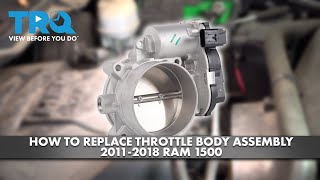
Typical fix: Replace the entire throttle body assembly. 🎬 Watch: Step-by-step guide to replacing the throttle body assembly. A throttle relearn procedure is required after installation.
Est. part cost: $150-$350 - Wiring or Connector Issues 🟡 Medium Probability The wiring harness leading to the throttle body is subject to engine vibration and heat, which can cause wires to chafe against brackets or other components. The connector pins can also become loose, corroded, or pushed out, leading to intermittent connections.
How to confirm: Visually inspect the wiring harness for any signs of damage, pinching, or melting, paying close attention to where it routes near the engine. Wiggle the connector at the throttle body with the engine running to see if it induces a stall or triggers the fault. Use a multimeter to check for continuity and resistance on the ETC motor circuits (typically K447 and K448 wires).
Typical fix: Repair the damaged section of the wiring harness or clean/replace the connector pigtail. Apply dielectric grease to the connector to prevent future corrosion.
Est. part cost: $20-$60 - Throttle Body Icing ⚪ Low Probability As documented in TSB #09-023-13, moisture from the PCV system can freeze on the throttle plate in very cold weather (typically below -7°C / 20°F), causing it to stick. This is a well-documented issue in cold climates.
How to confirm: Check the freeze frame data with a scan tool to see if the fault occurred at a very low ambient temperature. Visually inspect the throttle plate for ice after removing the intake tube. This condition is often accompanied by code P2072 (Ice Blockage) or P2118.
Typical fix: Allow the engine to warm up and thaw the ice. The TSB outlines a more permanent fix involving drying the PCV and intake system and installing an updated make-up air hose and air cleaner lid (Throttle Freeze Kit P/N 68631360AA).
Est. part cost: $0 - $150
Rare But Worth Checking
- Powertrain Control Module (PCM) Failure: This is extremely rare. Before condemning the PCM, all other possibilities, including the throttle body and its entire circuit, must be exhaustively tested. In some cases, a faulty PCM can incorrectly report throttle body issues. A PCM replacement requires programming to the vehicle's VIN.
Diagnosis Steps
- Connect an OBD-II scanner and retrieve all stored fault codes. Prioritize diagnosing codes other than P2110, as they will point to the root cause.
- Analyze freeze frame data to note the conditions (especially ambient temperature) when the code was set. Very cold temps point towards potential icing.
- Inspect the throttle body electrical connector for corrosion, damage, or loose pins. Check the wiring harness for any signs of chafing, pinching, or breaks between the throttle body and the PCM.
- With the ignition on and engine off, have a helper slowly press the accelerator pedal. Listen for smooth motor operation at the throttle body and watch for smooth movement of the plate (intake tube removed).
- Using a scan tool with live data, monitor the two throttle position sensor (TPS) voltages as the pedal is slowly pressed (engine off, key on). The voltages should increase smoothly with no jumps or dropouts. One should sweep from low to high, the other from high to low.
- If available on your scan tool, perform a 'Throttle Follower Test' or similar bidirectional control to command the throttle plate to move. Observe if it moves smoothly or sticks.
- If icing is suspected, remove the air intake tube and inspect the throttle plate and bore for any ice buildup.
- If all wiring and tests point to an internal fault, replace the entire throttle body assembly.
- After replacement, perform the 'ETC Relearn' procedure. This can sometimes be done without a scan tool by turning the key to 'ON' (not start) for 10 seconds, then slowly pressing the gas pedal to the floor and releasing it, then starting the engine. However, a scan tool-initiated relearn is the most reliable method.
Parts You'll Likely Need

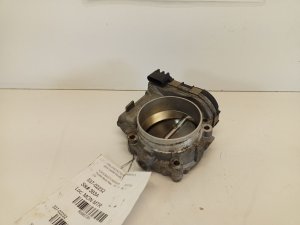
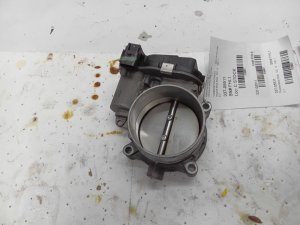
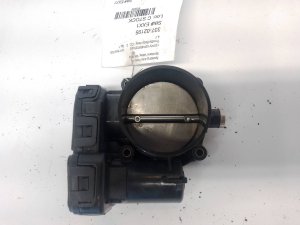
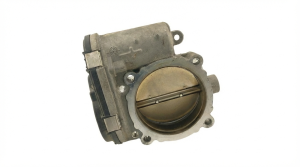
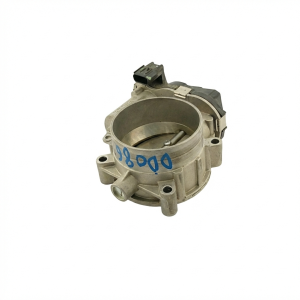
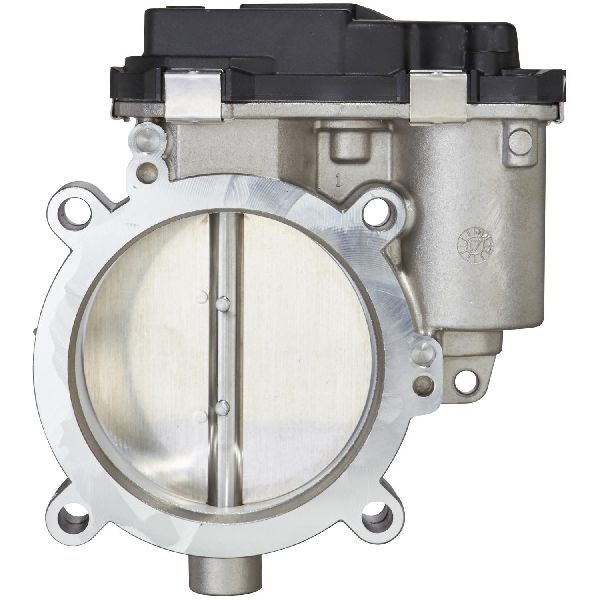
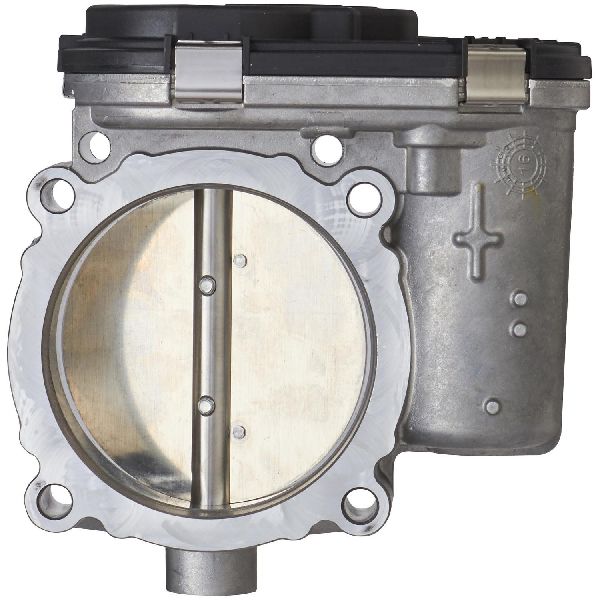
- Electronic Throttle Body
(OEM #53034251AD)— This is the most common point of failure that triggers the P2110 code. The internal motor or position sensors fail, requiring replacement of the complete assembly. This part number supersedes 53034251AB and 53034251AC.
Trusted brands: Mopar, Dorman, Cardone, Bosch, Hitachi
OEM price range: $240-$510
Aftermarket price range: $150-$280
Related Codes That Often Appear With This One
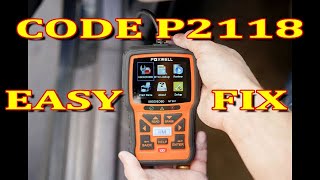
- P2118 — Stands for 'Throttle Actuator Control Motor Current Performance.' This code directly indicates a problem with the electric motor inside the throttle body, which is a common reason for the PCM to trigger the P2110 limp mode. 🎬 Watch this video to help troubleshoot and fix code P2118.
- P2101 — Stands for 'Throttle Actuator 'A' Control Motor Circuit Range/Performance.' Similar to P2118, this points to an electrical or performance issue with the throttle body motor.
- P2072 — Stands for 'Electronic Throttle Control System - Ice Blockage.' As cited in TSB #09-023-13, this code appears with P2110 when the issue is caused by ice forming on the throttle plate.
- P2111 — Stands for 'Throttle Actuator Control System - Stuck Open.' This indicates the PCM detected the throttle plate is open when it should be closed, often caused by physical binding or a sensor fault.
Technical Service Bulletins (TSBs) & Recalls
- 09-023-13 (Supersedes 0902323): Addresses DTCs P2072, P2110, or P2118 related to potential ice blockage in the electronic throttle control system in cold weather. The repair involves drying the intake and PCV system and installing a kit with an updated air hose and air cleaner lid.
Platform-Specific Known Issues
- A Technical Service Bulletin (TSB #09-023-13) was issued for some 2013 models, noting that P2110 can be set along with P2072 due to ice blocking the electronic throttle control system in certain weather conditions. The fix involves installing a 'Throttle Freeze Kit'.
- Owners on forums like RamForum.com frequently report this code appearing suddenly, putting the truck in limp mode. The overwhelming consensus from owner experiences is that replacing the throttle body resolves the issue.
- Another common issue on the 5.7L Hemi is cracked exhaust manifolds, which can cause exhaust leaks and ticking noises but is unrelated to P2110.
Mechanic-Grade Diagnostic Values
- Resistance of ETC Motor — expected: 2.5 to 25 Ohms. Failure: A reading outside this range indicates a faulty throttle body motor.
- Resistance of ETC motor circuits (K447 & K448) — expected: Below 5.0 Ohms. Failure: Resistance above 5.0 Ohms indicates an open or high resistance in the wiring between the PCM and the throttle body.
- Resistance to ground on ETC motor circuits (K447 & K448) — expected: Above 100 Ohms. Failure: Resistance below 100 Ohms indicates a short to ground in the wiring harness.
- Throttle Position Sensor (TPS) Voltage Sweep — expected: A smooth, linear response from approximately 0.5V (closed) to 4.5V (wide-open).. Failure: Any jumps, dropouts, or non-linear readings indicate a failing sensor within the throttle body.
- ETC Motor Current Draw (via bidirectional scan tool) — expected: 0.8–2.5 Amps. Failure: Current values outside this range suggest a binding throttle plate or a failing motor.
Scan Tool Commands That Help

- Professional Scan Tool (e.g., wiTECH, Autel): ETC RELEARN — This function must be used after replacing the throttle body assembly to calibrate the new part to the PCM.
- Professional Scan Tool (e.g., wiTECH, Autel): ETC Throttle Follower Test — This is a bidirectional test used during diagnosis to command the throttle plate to move, helping to confirm if it is sticking, binding, or unresponsive.
Wiring & Ground Locations
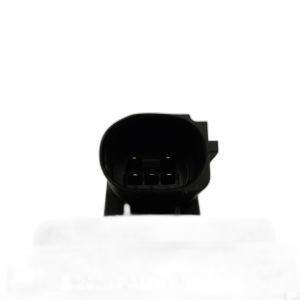
- Throttle Body Connector — On the electronic throttle body itself, where the engine wiring harness connects.. This 6-pin connector is a common point for issues like corrosion, pushed-out pins, or loose connections that can interrupt signals and trigger P2110.
- Circuits K447 and K448 — These are the specific wires in the harness that control the ETC motor. They run from the throttle body connector to the C2 PCM harness connector.. P2110 and its companion codes (like P2118) are often caused by an open, short, or high resistance in these two circuits. All electrical tests for the motor circuit are performed on these wires.
- PCM C2 Connector — This is one of the main connectors on the Powertrain Control Module (PCM), located in the engine bay.. This is the termination point for the throttle body circuits. Testing here can help determine if a fault is in the wiring, the throttle body, or the PCM itself.
- Main Engine/Chassis Grounds — Key ground points are located near the battery, from the engine block to the chassis, and on the frame.. A poor ground connection can cause a variety of electrical issues, including erratic behavior of the electronic throttle control system. Verifying ground resistance is less than 1 ohm is a critical diagnostic step.
Real Owner Repair Stories
- YouTube user 'Fix it Angel' (Vehicle showing P2118, which triggers P2110.) — Engine would not rev past idle, no throttle response.
❌ Tried (didn't work) Scanning the code.
✅ What actually fixed it The user checked the under-hood fuse box and found a blown 10-amp fuse labeled 'ETCS' (Electronic Throttle Control System). Replacing the fuse restored all functionality. - YouTube user 'The Infamous G' (2014 Ram 1500 5.7L Hemi) — Truck would go into limp mode when accelerating hard, with no power and RPMs stuck around 1300.
❌ Tried (didn't work) The user suspected the accelerator pedal sensor but ruled it out because it's a simple component and less likely to fail than the throttle body.
✅ What actually fixed it Replaced the entire electronic throttle body assembly. After replacement, the truck regained full power and no longer entered limp mode. - DodgeForum.com user (2005 Ram Hemi (older model but identical codes and issue)) — ETC light flashing and no throttle response after a cold start in -30°F weather. Codes P2118 and P2110 were present.
❌ Tried (didn't work) Restarting the truck sometimes temporarily resolved the issue.
✅ What actually fixed it Another user pointed out a Technical Service Bulletin for this concern that involved replacing the entire throttle body assembly and flashing the PCM with updated software. This aligns with the known icing issue and component failure.
OEM Part Supersession History
53034251AB, 53034251AC→53034251AD— Part revision and improvement by the manufacturer.
Heads up: This part (53034251AD) is the correct 80mm throttle body for 2013 and newer 5.7L and 6.4L HEMI engines. Attempting to use it on pre-2013 models may require intake manifold swaps and PCM reprogramming.
Model Year Variations Within This Range
- 2019: TSB 09-003-20 REV. B was issued for a specific batch of 2019 Ram models (1500, 2500, 3500, 4500/5500) built between September 06, 2019 and September 20, 2019. These vehicles required an inspection of the throttle body's Julian date and potential replacement due to a manufacturing defect.
- 2019-2020: The fifth-generation Ram 1500 (DT platform) was introduced in 2019. While the 5.7L HEMI continued to use a similar throttle body, the 3.6L V6 engine uses a different part. However, the diagnostic principles, symptoms of failure, and the need for an 'ETC Relearn' procedure after replacement remain consistent across powertrains.
Helpful Videos

Used OEM Parts in Stock
New Aftermarket Parts Available


The information in this article is provided for general reference and educational purposes only. Vehicle specifications, procedures, and part compatibility can vary by production date, trim level, and region. Always consult your vehicle's factory service manual and verify part numbers before purchasing or performing repairs. Safety-critical components such as airbags, seat belts, and braking systems should be installed by a qualified professional.
- Ram 1500:
- 🎬 Helpful Videos
- 🛍️ Shop This Part
- What's Unique About the 2013-2020 Ram 1500
- Diagnostic Flowchart
- Symptoms You May Notice
- Most Likely Causes
- Rare But Worth Checking
- Diagnosis Steps
- Parts You'll Likely Need
- Related Codes That Often Appear With This One
- Technical Service Bulletins (TSBs) & Recalls
- Platform-Specific Known Issues
- Mechanic-Grade Diagnostic Values
- Scan Tool Commands That Help
- Wiring & Ground Locations
- Real Owner Repair Stories
- OEM Part Supersession History
- Model Year Variations Within This Range
- 🎟️ Get 5% Off