

OBD-II Code P2108: Throttle Actuator Control Module Performance
The Ultimate 2026 Guide: What P2108 Means, Why It Triggers, and How to Fix It
- Code P2108 triggers when the electronic throttle fails to match the computer's commands, forcing the vehicle into a 30-mph limp mode.
- Cleaning carbon buildup from the throttle body resolves over 50% of P2108 codes for under $20 in parts.
- Driving with P2108 risks sudden stalling in traffic and causes rich-running conditions that destroy a $1,500 catalytic converter within months.
- Never replace the $400 throttle body assembly before inspecting the wiring harness and verifying the main engine ground straps are tight.
- Completing a mandatory electronic 'relearn' procedure using a scan tool is required after cleaning or replacing the throttle body to restore a stable idle.
What Does P2108 Mean?

The P2108 code means your car's Powertrain Control Module (PCM) detects a critical performance problem with the electronic throttle control system. In 'drive-by-wire' systems, this indicates the module controlling the throttle plate fails to respond to commands. The PCM sends a command (e.g., 'Open throttle to 30%'), but sensor feedback shows a significant mismatch, meaning the plate moves too slowly, fails to open enough, or cannot hold its position.
Technical definition: The SAE/OBD-II definition is "Throttle Actuator Control (TAC) Module Performance." This indicates the PCM detects a malfunction where the actual throttle position deviates from the commanded position by more than 10% for a set period (usually 2-3 seconds). The module's performance falls outside its calibrated operational range due to a mechanical or electrical fault.
Can I Drive With P2108?
no_not_recommended. Driving is strongly discouraged. The vehicle enters a severe 'limp mode,' limiting speed to under 30 mph, or stalls unexpectedly in traffic, creating a significant safety risk. Continuing to drive with a rich fuel condition caused by this fault overheats and destroys the catalytic converter, adding $800-$2,500 to the total repair cost.
Common Causes

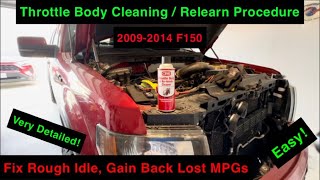
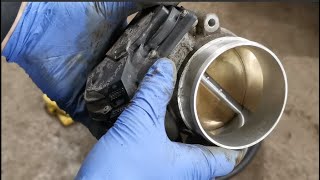
- Dirty or Sticking Throttle Body (Very Common) — Carbon and oil residue build up around the throttle plate and bore, creating physical resistance that prevents smooth movement. This forces the 🎬 Watch: How to clean your throttle body to improve mileage. actuator motor to work harder and respond slower than commanded, triggering the error.
- Faulty Throttle Actuator Motor (Common) — The electric motor driving the throttle plate wears out. Internal gears strip, or the motor becomes too weak to move the plate quickly against intake airflow.
- Wiring or Connector Issues (Common) — Frayed wires, loose connections, or corrosion in the electrical harness between the PCM and throttle body disrupt power and data signals, leading to incorrect data and loss of control.
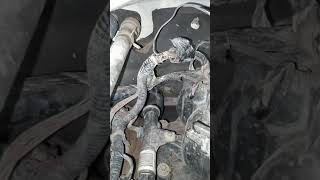
- Poor Ground Connection (Common) — A corroded, loose, or broken ground wire for the throttle body or PCM causes erratic voltage and communication loss. This notoriously affects GM trucks via a specific ground strap on the back of the engine. 🎬 Watch: Troubleshooting GM truck stalling and communication loss issues.
- Faulty Throttle Position Sensor (TPS) (Less Common) — The TPS reports the throttle plate's exact position. If it sends inaccurate, erratic, or delayed information, the PCM detects a mismatch and logs P2108.
- Faulty Accelerator Pedal Position (APP) Sensor (Less Common) — The APP sensor translates foot movement into a voltage signal. A fault here sends an incorrect command to the throttle system, creating a performance conflict.
- Low System Voltage / Bad Battery (Rare) — The TAC module requires stable voltage. A failing battery or alternator causes the module's internal processor to fail self-tests or operate erratically.
- PCM Software Corruption or Outdated Calibration (Rare) — Module firmware corrupts, or outdated calibration misinterprets sensor data. Manufacturers release Technical Service Bulletins (TSBs) with software updates to fix logic errors that falsely trigger P2108.
- Powertrain Control Module (PCM) Failure (Rare) — The PCM itself fails due to internal hardware issues, such as burnt driver circuits or microcontrollers, causing it to send faulty commands.
Symptoms

- Reduced Engine Power / Limp Mode — The vehicle intentionally limits engine speed and throttle response to prevent unintended acceleration, making the car feel extremely sluggish.
- Poor, Delayed, or No Acceleration — The car hesitates for several seconds after pressing the gas pedal, or lacks throttle response entirely.
- Rough or Unstable Idle — The engine idles erratically, hunts for a stable RPM, or stalls when coming to a stop.
- Check Engine Light On (also visible on scanner) — The Malfunction Indicator Lamp (MIL) illuminates, often accompanied by a 'Reduced Power' or 'Check Electronic Throttle Control' dash message.
- Engine Won't Start or Stalls — A severe throttle system failure prevents the engine from starting or causes immediate stalling after startup.
- Increased Fuel Consumption — Inefficient throttle management creates an incorrect, rich air-fuel mixture, causing a noticeable drop in fuel economy.
Diagnostic Flowchart
Tap your situation to follow the diagnostic path that matches what you're seeing on this code.
Common Fixes & Costs
- Clean the Throttle Body — Parts: $10-$20, Labor: $100-$200, ~0.8 hr book time (DIY)
- Replace the Throttle Body Assembly — Parts: $250-$600, Labor: $125-$250, ~1.2 hr book time (Intermediate)
- Repair Wiring or Ground Connection — Parts: $20-$100, Labor: $150-$400, ~2.5 hr book time (Professional)
- Replace the Accelerator Pedal Position (APP) Sensor — Parts: $70-$250, Labor: $75-$175, ~0.8 hr book time (DIY)
- PCM Reprogramming or Replacement — Parts: $800-$1,500, Labor: $150-$300, ~1.5 hr book time (Professional)
Used vs. New Parts: Buying Guide
When a used part is worth it: A used throttle body from a low-mileage, accident-damaged vehicle is a cost-effective option for older, high-mileage cars where a new OEM part is cost-prohibitive.
Donor-vehicle mileage cap: roughly under 60000 miles for the part to have meaningful remaining life.
Donor quality checklist:
- Verify the part number matches exactly; electronic components are year/model specific.
- Inspect the electrical connector for corrosion, bent pins, or damage.
- Avoid parts from vehicles scrapped due to engine or electrical failure.
- Prefer sellers offering a short-term functional warranty (30-90 days).
Decision logic:
- If The fix is cleaning the existing part → Do not replace; cleaning is the most cost-effective first step.
- If Vehicle is less than 8 years old or has under 80,000 miles → Buy a new OEM or high-quality aftermarket part for maximum reliability and warranty.
- If Vehicle is over 10 years old and budget is the primary concern → A used part from a reputable salvage yard is a reasonable choice, accepting the risk of a shorter lifespan.
- If Remanufactured parts are available from trusted brands → Consider a remanufactured unit, rebuilt with new internal components and tested to OE specs.
Warranty tradeoff: Used parts typically offer a 30-90 day warranty. New aftermarket parts usually come with a 1-year to limited lifetime warranty. New OEM parts carry the manufacturer's standard parts warranty.
Worst-case if a used part fails: 300-600
What Happens If You Wait — Timeline
- Immediate: Code P2108 sets, MIL illuminates. Vehicle immediately enters 'limp mode' with severely limited power and throttle response, creating a significant safety hazard. (MPG impact: 0-15%% · Added cost: $0)
- 0-1 month: If limp mode is intermittent, the primary symptom is a noticeable drop in fuel economy due to the engine running an inefficiently rich air-fuel mixture. Stalling at stops becomes more frequent. (MPG impact: 5-15%% · Added cost: $25-75 in wasted fuel)
- 1-6 months: Sustained operation in a rich condition overheats the catalytic converter. The internal ceramic substrate cracks or melts, leading to a permanent loss of efficiency and an eventual P0420 code. (MPG impact: 10-20%% · Added cost: $1200-2800 (for required catalytic converter replacement))
- 6+ months: Complete catalytic converter failure occurs. Extreme heat and rich exhaust cause downstream damage to oxygen sensors. Engine performance is severely degraded. (MPG impact: 15-25%% · Added cost: $1800-3500 (catalytic converter plus O2 sensors and tune-up))
Cost of Not Fixing It
- Immediate: Unpredictable stalling or entering limp mode in traffic creates a significant safety hazard. Fails emissions tests immediately. (Added cost: 0)
- 0-1 month: Noticeable drop in fuel economy (5-15%) due to an inefficient air-fuel mixture. (Added cost: 25-75)
- 1-6 months: Running rich overheats the catalytic converter, melting its internal structure and triggering a P0420 code. (Added cost: 1200-2800)
- 6+ months: Sustained stress causes secondary issues like fouled spark plugs, damaged oxygen sensors, and excessive carbon buildup. (Added cost: 300-800)
Diagnosis Steps

- Scan for All Trouble Codes
Use an OBD-II scanner to confirm P2108 and check for related codes (e.g., P2104, P2135, P0638, U0107). P2108 is often a secondary code caused by another primary fault. Address other codes first.
Tools: OBD-II Scanner (Beginner) - Inspect and Clean the Throttle Body
Remove the air intake duct. Look for a thick ring of black carbon buildup around the throttle plate and bore. Clean it thoroughly using dedicated throttle body cleaner and a soft cloth. Manually move the plate to ensure it does not bind. This alone resolves over 50% of P2108 cases.
Tools: Screwdriver/ratchet set, throttle body cleaner, rags (Intermediate) - Perform a Thorough Visual Inspection
Inspect the throttle body area between the air filter and intake manifold. Check the wiring harness for chafing, melting, or rodent damage. Examine connectors for corrosion or bent pins. Trace and verify the main engine-to-chassis ground straps are clean and tight.
Tools: Flashlight (Beginner) - Analyze Live Data with a Scan Tool
Use a scan tool to graph live data. Plot 'Commanded Throttle Position' against 'Actual Throttle Position.' With the key on and engine off, slowly press and release the gas pedal. The graphs must mirror each other perfectly. A lag or flat spot confirms a performance issue.
Tools: Advanced OBD-II Scanner (Intermediate) - Pro Tip: Perform a Wiring Harness 'Wiggle Test'
With the live data graph active (Key On, Engine Off), gently wiggle the wiring harness at the throttle body connector, along its path, and at the PCM. If the 'Actual Throttle Position' signal drops out on the graph, you have found an intermittent break or short.
Tools: Advanced OBD-II Scanner (Advanced) - Test Throttle Position Sensor (TPS) Voltage
Using a multimeter set to DC volts, back-probe the TPS signal wire. With the key on and engine off, voltage must sweep smoothly from approximately 0.5V (closed) to 4.5V (wide-open) as you press the pedal. Any sudden voltage drop indicates a faulty sensor.
Tools: Multimeter, Back-probe kit (Advanced) - Test Throttle Actuator Motor Resistance
Turn the ignition off and disconnect the throttle body connector. Measure resistance between the two throttle actuator motor pins using a multimeter. Expected resistance is 1.5 to 30 ohms. Infinite ohms (OL) indicates an open circuit; near zero indicates a short. Both require replacement.
Tools: Multimeter (Advanced) - Check for Technical Service Bulletins (TSBs)
Before replacing the PCM, check for manufacturer TSBs. Ford and Chrysler/Dodge have known software glitches that falsely trigger P2108, fixable with a simple PCM reflash.
Tools: Internet access (NHTSA/Manufacturer site) (Intermediate) - Perform a Throttle Body Relearn Procedure
After cleaning or replacing the throttle body, you MUST perform an 'idle air volume learn' procedure. This calibrates the PCM to the new closed position. Most vehicles require a specific scan tool function to complete this.
Tools: Advanced OBD-II Scanner (Intermediate)
When This Code Triggers (Freeze-Frame Conditions)
- Engine Coolant Temp: 180-210°F (82-99°C) (The engine is fully warmed up and has exited the cold-start enrichment phase.)
- RPM: 1200-2800 RPM (The code sets during light acceleration or steady-state cruising, rarely at idle or wide-open throttle.)
- Engine Load: 25-60% (Occurs under moderate load conditions where precise throttle adjustments are critical.)
- Vehicle Speed: 25-60 mph (40-97 km/h) (Triggers during city or highway driving when the throttle is neither fully closed nor fully open.)
Related Codes
- P2104 — This code for 'Throttle Actuator Control System - Forced Idle' is a direct result of P2108. The PCM sets P2104 to force the engine to idle as a safety measure when it detects the performance error from P2108. Diagnosing P2108 resolves P2104.
- P2135 — P2135 'Throttle/Pedal Position Sensor/Switch A/B Voltage Correlation' points specifically to an electrical disagreement between the two redundant sensors within the TPS. If you have both codes, the root cause is almost certainly a faulty throttle position sensor.
- P0638 — P0638 'Throttle Actuator Control Range/Performance' is very similar to P2108. P0638 typically points to the throttle plate physically failing to reach its commanded range. P2108 more strongly suggests a problem with the electronic control module itself or its communication.
- P2112 — P2112 'Throttle Actuator Control System - Stuck Closed' is a more specific version of the fault. P2112 indicates the PCM commanded the throttle to open but sees from the TPS that it remains physically stuck closed.
Climate & Environmental Factors
- High Humidity / Road Salt: Moisture and salt accelerate corrosion on connector pins and ground connections, increasing electrical resistance and causing intermittent signal loss.
- Extreme Cold: Moisture inside the throttle body freezes, causing the plate to stick temporarily. Older wiring harnesses become brittle and crack if disturbed.
- High Altitude: Operating at high altitude exposes pre-existing sluggishness in the actuator motor as the PCM adjusts for air density changes.
How to Talk to a Mechanic About This Code
Say this: "I have a P2108 code with limp mode symptoms. I'd like a diagnostic appointment. Before recommending a full throttle body replacement, please inspect and clean the throttle plate, check for any relevant TSBs, and inspect the wiring harness and ground connections first."
This signals you understand the common, cheaper causes of P2108. It directs the technician to follow a logical diagnostic procedure instead of immediately defaulting to the most expensive repair.
Avoid saying:
- 'My car is acting weird and won't accelerate.'
- 'The check engine light is on, can you just fix it?'
- 'I think I need a new throttle body.'
Questions to ask before authorizing the repair:
- Was the throttle body dirty? Did cleaning it solve the issue?
- Did you perform a 'wiggle test' on the wiring harness to check for shorts?
- Did you test the throttle position sensor's voltage sweep? Was it smooth?
- Is a throttle body 'relearn' procedure required after this repair, and is that included in the cost?
Where to Take It: Dealer vs Independent vs Chain
- Dealer:
Recommended only if a PCM reflash is required or if the vehicle is under warranty. Otherwise, an independent shop is more cost-effective.
Best for: Vehicles under warranty, Cases where a known Technical Service Bulletin (TSB) requires a PCM software update, Complex electrical issues on newer or European vehicles
Downsides: Highest labor rates, Defaults to replacing the entire throttle body assembly rather than attempting a cleaning or wiring repair first (Typical cost: +50% vs. baseline) - Independent Shop:
Best fit for most P2108 scenarios. A good independent shop handles the most common causes (cleaning, wiring, replacement) at a reasonable cost.
Best for: Out-of-warranty vehicles, Following a logical diagnostic process (clean, inspect wiring, then replace parts), Performing throttle body cleaning, replacement, and relearn procedures
Downsides: Quality and diagnostic capabilities vary widely; vet shops based on reviews and ASE certifications, Lacks the expensive tools to perform a PCM software update if a TSB requires it (Typical cost: +0% vs. baseline) - Chain Shop:
Not recommended for diagnosing a P2108 code. Their process is not well-suited for the step-by-step diagnosis this code requires.
Best for: Simple parts replacement *after* a definitive diagnosis has already been made elsewhere
Downsides: Technician skill varies dramatically, Lacks in-depth diagnostic tools and experience for electrical issues beyond simple part swaps, High pressure to upsell services; recommends a new throttle body without proper diagnosis (Typical cost: -10% vs. baseline)
When to Walk Away From the Repair
If the estimated repair cost exceeds 40-50% of the car's private-party value, seriously consider selling or trading in the vehicle.
- Car worth $4000, fix is $850: Fix it. The repair cost is well below the 50% threshold.
- Car worth $3000, fix is $1600: Walk away. The repair (likely a PCM replacement) costs more than half the car's value.
- Car worth $8000, fix is $3500: Borderline. This implies P2108 caused catalytic converter failure. Get a second opinion before authorizing such an expensive repair.
What Scan Tool You Need for This Code
Minimum: A scanner that reads and graphs live data, specifically 'Commanded Throttle Position' and 'Actual Throttle Position'.
A basic $20 code reader only shows the P2108 code. It cannot display the live data graph needed to see the lag between commanded and actual throttle position, which is essential for diagnosis.
Budget: BlueDriver Pro (~$100) — Connects to your phone via Bluetooth and graphs the commanded vs. actual throttle position live data to confirm the fault.
Mid-range: Foxwell NT510 Elite / Innova 5610 (~$150) — Adds the critical 'Throttle Body Relearn' function, mandatory after cleaning or replacing the throttle body on most cars. This avoids a separate $100-$150 charge from a shop.
Professional: Autel MaxiCOM MK808 / MK808S (~$500) — Offers full bidirectional control to manually command the throttle motor open and closed for testing. Includes the throttle relearn function and dealer-level diagnostics.
How to Clear the Code After You Fix It
- Reconnect battery if it was disconnected for the repair.
- Use an OBD-II scan tool to clear the P2108 and any related fault codes.
- Perform a throttle body relearn procedure if the throttle body was cleaned or replaced.
- Complete a full OBD-II drive cycle to allow readiness monitors to run.
Drive cycle (~20 minutes): A general drive cycle includes: a cold start, idle for 2-3 minutes with electrical loads on (like A/C and rear defrost), accelerate to 55 mph and hold a steady speed for 3-5 minutes, decelerate to 20 mph without braking, and perform mixed city driving with stops and accelerations.
Readiness monitors affected: Catalyst Monitor, Oxygen (O2) Sensor Monitor, Comprehensive Component Monitor
Before emissions retest: drive at least 50 miles to fully set monitors.
Watch out for:
- Disconnecting the battery fails to clear codes permanently or reset readiness monitors on modern vehicles.
- The code returns almost immediately if the root cause remains unfixed.
- Skipping the mandatory throttle body relearn procedure after service causes severe idle and performance issues.
Will This Fail Emissions / State Inspection?
Yes — this code typically fails an OBD-II emissions inspection.
- California: An active P2108 code causes an automatic failure of the smog check. After repair, a complete OBD-II drive cycle must be performed to set all readiness monitors before re-testing.
- New York: The NYS vehicle inspection includes an OBD-II scan. An illuminated Check Engine Light from code P2108 results in an immediate inspection failure.
- Texas: In counties requiring emissions testing, an active P2108 code causes the vehicle to fail the inspection. After clearing the code, drive 50-100 miles to ensure readiness monitors are set to 'Ready' before re-inspection.
Most Commonly Affected Vehicles
- Ford F-150, Explorer, Mustang (2011-2020) — Extremely common on models with EcoBoost and 5.0L V8 engines. Often caused by carbon buildup or firmware issues requiring a TSB reflash. The 2011-2016 F-150s are particularly noted for this.
- Chevrolet / GMC Silverado, Sierra, Tahoe, Suburban (2007-2019) — Frequently caused by faulty throttle position sensors, corroded wiring harnesses, or a broken ground wire (G103/G104) on the rear of the driver's side cylinder head on V8 models.
- Dodge / Ram Ram 1500, Charger, Durango (2003-2016) — On Hemi 5.7L engines, this code triggers due to a faulty throttle body or an internal PCM failure requiring a reflash or replacement.
- Hyundai / Kia Sonata, Optima, Santa Fe (2010-2019) — Commonly caused by a dirty throttle body, a failing throttle position sensor, or a faulty accelerator pedal sensor.
- Toyota Corolla, Camry, RAV4 (2014-2022) — Often related to throttle actuator calibration problems or glitches in the ECU software resolved with a dealer software update.
- Volkswagen / Audi Jetta, Golf, A4 (TDI & TSI engines) (2009-2021) — On TDI diesel models, the code is frequently caused by a failed or carbon-fouled intake manifold flap (anti-shudder valve). On TSI gasoline engines, a binding throttle valve is a common culprit.
- Nissan Altima, Sentra, Rogue (2007-2018) — Traced back to a failing throttle body assembly requiring replacement and a subsequent idle air volume relearn procedure. Some 2024-2025 Rogues were recalled for internal throttle body gear failure (NHTSA 26V081).
- Volvo S60, XC70, XC90 (2004-2010) — Known for throttle body module failures requiring replacement. Aftermarket units are available that do not require dealer programming.
Manufacturer-Specific Notes
- General Motors (Chevy/GMC): On many V8 trucks and SUVs (approx. 2007-2014), a single ground wire (G103/G104) that bolts to the rear of the driver's side cylinder head corrodes or breaks. This causes P2108, stalling, and communication codes like U0107. Always check this ground before replacing parts.
- Ford: Ford issued Customer Satisfaction Program 13N03, extending the warranty on the electronic throttle body for certain 2009-2013 vehicles to 10 years or 150,000 miles due to internal contamination. Check for TSBs related to PCM software updates before replacing an expensive throttle body.
- Volkswagen/Audi: On TDI diesel engines, P2108 is frequently linked to the failure of the intake manifold flap (anti-shudder valve). This component's internal plastic gears fail or get contaminated with oil and carbon, causing it to stick.
- Dodge/Chrysler/Jeep: For some models, particularly the Ram 1500 with a 5.7L Hemi, the service manual points to P2108 as an 'Internal PCM failure.' After ruling out wiring and the throttle body, the next step is a PCM reflash or replacement.
Real Owner Stories
2007 Chevy Silverado at 300K miles
Vehicle randomly stalled over bumps, sometimes not restarting. Dash lights flickered. Codes P2108, P1516, and U0107 (Lost Communication with TAC Module) were present.
What they tried:
- Mechanics advised replacing the throttle body, gas pedal sensor, and ECM, costing thousands.
Outcome: The actual problem was a single corroded ground wire connecting the main wiring harness to the back of the driver's side cylinder head. Repairing this ground fixed all symptoms.
Lesson: With GM trucks showing communication codes (U-codes) alongside P2108, inspect the main engine and body grounds before replacing expensive electronic parts.
2004 Volvo XC70 at 196K miles
Car suddenly went into 'reduced performance' limp mode, limiting speed to 20 mph. P2108 code stored.
What they tried:
- Owner diagnosed a failed throttle body. Instead of paying for an OEM part and dealer programming, they ordered a new Bosch throttle body online for $260.
Outcome: The new throttle body was a direct plug-and-play fit and worked perfectly without dealer programming. Dissecting the old part revealed completely chewed-off internal plastic gears.
Lesson: On older Volvos, the throttle body is a simple electro-mechanical part. A high-quality aftermarket replacement works perfectly without costly dealer programming.
2010 Skoda Octavia TDI (VW Group)
Check Engine Light came on with code P2108. The car was drivable but had reduced power.
What they tried:
- Based on forum research, the shop suspected the intake manifold flap motor (anti-shudder valve).
Outcome: The diagnosis was correct. The shaft seal on the flap motor failed, allowing oil to contaminate the internal plastic gears. Replacing the intake manifold flap assembly resolved the code.
Lesson: On VW and Audi TDI diesel engines, P2108 is often caused by the failure of the separate intake manifold flap motor, not the main throttle body.
Mazda RX-8
Car experienced intermittent issues where the engine revved to 2,000 RPM on its own and the accelerator pedal became completely unresponsive. Codes P2107 and P2108 appeared.
What they tried:
- Replaced the throttle body with a known-good unit, which had no effect.
- Ruled out the pedal sensor and ECU based on the intermittent nature of the fault.
Outcome: The owner replaced the entire engine wiring harness. This completely solved the problem, indicating an intermittent short or break in the original harness.
Lesson: If an intermittent P2108 isn't solved by cleaning or replacing the throttle body, and the 'wiggle test' fails, the issue is likely a hard-to-find fault within the main wiring harness.
How to Prevent This Code From Triggering
- Clean the throttle body periodically. (Every 30,000-50,000 miles, or if a rough idle develops.) — Removes carbon and oil sludge that physically restricts the throttle plate's movement, the #1 cause of the P2108 performance error.
- Inspect and protect critical electrical connectors. (Once per year, especially before winter in salt-belt states.) — Applying a thin layer of dielectric grease to the throttle body connector seal and pins prevents moisture intrusion and corrosion.
- Check and clean main chassis/engine ground points. (Every 60,000 miles or if any electrical gremlins appear.) — A clean, tight ground connection is essential for stable voltage. A corroded ground is a common, hidden cause of P2108, especially on GM trucks.
- Ask dealer for PCM calibration updates during service. (Whenever the vehicle is at a dealership for other service.) — Manufacturers release software updates (TSBs) to correct logic errors that cause a false P2108 code.
Frequently Asked Questions
What is the most common fix for code P2108?
The most common and cost-effective fix is thoroughly cleaning the carbon buildup from the throttle body and throttle plate. This simple procedure restores proper movement and resolves the performance error without needing to replace parts.
What are the most common misdiagnosis mistakes for P2108?
The biggest mistake is immediately replacing the throttle body or PCM without a full diagnosis. Overlooking simple issues like a corroded ground wire, a dirty throttle plate, or a frayed wiring harness leads to expensive and unnecessary parts replacement.
I cleaned my throttle body, but the code came back. What's next?
If the code returns after cleaning, ensure a 'throttle body relearn' procedure was performed. If it was, use a scan tool to analyze live data for throttle response lag, test the TPS and motor circuits, and perform a 'wiggle test' on the wiring harness.
My car went into 'limp mode'. What does that mean?
Limp mode is a self-preservation feature where the vehicle's computer intentionally restricts engine power and speed when a critical fault like P2108 is detected. This prevents engine damage and avoids unsafe situations like unintended acceleration.
Can I just clear the code and keep driving?
You can clear the code, but it returns almost immediately if the underlying mechanical or electrical issue is not fixed. Ignoring it is a major safety risk, as it leads to stalling or sudden, complete power loss while driving.
Will a bad P2108 code cause me to fail an emissions test?
Yes. While P2108 is not a direct emissions system code, the active Check Engine Light it triggers causes an automatic failure of any state emissions inspection.
Is the Accelerator Pedal Sensor the same as the Throttle Position Sensor?
No. The Accelerator Pedal Position (APP) sensor connects to your gas pedal and tells the computer how much you want to accelerate. The Throttle Position Sensor (TPS) is on the throttle body itself and reports the actual opening of the throttle plate back to the computer.
Can a bad battery cause a P2108 code?
Yes. The electronic throttle control module requires stable voltage. A failing battery or alternator causes voltage drops that lead to internal processor errors, logged as a P2108 performance fault.
Key Takeaways
- Code P2108 triggers when the electronic throttle fails to match the computer's commands, forcing the vehicle into a 30-mph limp mode.
- Cleaning carbon buildup from the throttle body resolves over 50% of P2108 codes for under $20 in parts.
- Driving with P2108 risks sudden stalling in traffic and causes rich-running conditions that destroy a $1,500 catalytic converter within months.
- Never replace the $400 throttle body assembly before inspecting the wiring harness and verifying the main engine ground straps are tight.
- Completing a mandatory electronic 'relearn' procedure using a scan tool is required after cleaning or replacing the throttle body to restore a stable idle.
Helpful Videos

The information in this article is provided for general reference and educational purposes only. Vehicle specifications, procedures, and part compatibility can vary by production date, trim level, and region. Always consult your vehicle's factory service manual and verify part numbers before purchasing or performing repairs. Safety-critical components such as airbags, seat belts, and braking systems should be installed by a qualified professional.
- 🎬 Helpful Videos
- What Does P2108 Mean?
- Can I Drive With P2108?
- Common Causes
- Symptoms
- Diagnostic Flowchart
- Common Fixes & Costs
- Used vs. New Parts: Buying Guide
- What Happens If You Wait — Timeline
- Cost of Not Fixing It
- Diagnosis Steps
- When This Code Triggers (Freeze-Frame Conditions)
- Related Codes
- Climate & Environmental Factors
- How to Talk to a Mechanic About This Code
- Where to Take It: Dealer vs Independent vs Chain
- When to Walk Away From the Repair
- What Scan Tool You Need for This Code
- How to Clear the Code After You Fix It
- Will This Fail Emissions / State Inspection?
- Most Commonly Affected Vehicles
- Manufacturer-Specific Notes
- Real Owner Stories
- 2007 Chevy Silverado at 300K miles
- 2004 Volvo XC70 at 196K miles
- 2010 Skoda Octavia TDI (VW Group)
- Mazda RX-8
- How to Prevent This Code From Triggering
- Frequently Asked Questions
- What is the most common fix for code P2108?
- What are the most common misdiagnosis mistakes for P2108?
- I cleaned my throttle body, but the code came back. What's next?
- My car went into 'limp mode'. What does that mean?
- Can I just clear the code and keep driving?
- Will a bad P2108 code cause me to fail an emissions test?
- Is the Accelerator Pedal Sensor the same as the Throttle Position Sensor?
- Can a bad battery cause a P2108 code?
- Key Takeaways
- 🎟️ Get 5% Off