

P2101 on 2014-2018 GMC Yukon: Throttle Actuator Control Performance Fixes
On a 2014-2018 Yukon, P2101 usually means the throttle body is failing or the engine's computer (ECM) needs a software update. An ECM reprogram may fix it, especially on 2017+ models where a 'door open' feature can falsely trigger the code. If a software update doesn't apply or fix it, replacing the throttle body is the common repair, with parts costing $150-$300.
- Always check for available ECM software updates before replacing parts; it's a very common fix for this specific vehicle and code.
- For 2017 and newer Yukons, the code can be triggered by simply opening the driver's door due to a software glitch.
- If a software update doesn't fix it, the most likely failed part is the entire throttle body assembly.
- This code will almost certainly put the vehicle into 'Reduced Engine Power' mode, making it unsafe for normal driving.
What's Unique About the 2014-2018 Gmc YUKON
For this generation of GMC Yukon and its platform mates (Chevy Tahoe/Suburban, Cadillac Escalade), P2101 is frequently a software-related issue, not just a hardware failure. GM has issued technical service bulletins advising that an ECM reprogram can resolve the code. This is especially true for 2017 and newer models which introduced a 'Driver Door Open Prime' (DDOP) feature that primes the fuel system when the driver's door is opened. A software anomaly can cause this feature to falsely trigger P2101, making a software check a critical first step before replacing any parts.
Diagnostic Flowchart
Tap your situation to follow the diagnostic path that matches what you're seeing on this vehicle.
Generation note: The 2014-2018 year range covers the fourth generation of the GMC Yukon (2015-2020 models). However, a key difference exists within this generation: 2017 and newer models introduced a 'Driver Door Open Prime' (DDOP) feature that could cause P2101 to be set falsely, an issue addressed by a specific TSB (#18NA037) that does not apply to 2014-2016 models.
Symptoms You May Notice
- "Reduced Engine Power" message on the dash
- Check Engine Light is on
- Vehicle has very limited acceleration (limp mode)
- Unstable or surging idle. [PIP4578B]
- Engine may stall
- Delayed throttle response
- Vibrating or buzzing noise from the throttle body after shutting off the engine.
- Replacing the Accelerator Pedal Position (APP) sensor. P2101 specifically relates to a performance issue at the throttle body itself, not the pedal. A faulty APP sensor would typically set different codes, such as P2138.
Most Likely Causes
- Outdated Engine Control Module (ECM) Software 🔴 High Probability GM has identified a software anomaly where the 'Driver Door Open Prime' (DDOP) feature on 2017+ models can falsely trigger DTC P2101. TSB #18NA037 was issued to provide a general software update to correct the logic that causes the false code. This makes it a very common issue on these specific model years.
How to confirm: A GM dealer or a qualified shop with access to GM's service information (TIS2Web) can check if your vehicle's VIN has an open campaign or a pending software update related to TSB #18NA037 or #PIP5501B. The dealer reprogram costs roughly one hour of labor ($100-$200).
Typical fix: Reprogram the ECM with the latest software. This is a dealer-only or specialty shop repair.
Est. part cost: $0-$0 - Failing Throttle Body Assembly 🔴 High Probability The electronic motor or internal position sensors within the throttle body can wear out over time, leading to a mismatch between the commanded and actual throttle position. Carbon buildup can also cause the throttle plate to stick, but often the internal electronics are the ultimate point of failure.
How to confirm: Using a scan tool, compare the 'Commanded Throttle Position' to the 'Actual Throttle Position' data. If they differ significantly, or if the actual position is erratic, the throttle body is likely faulty. Physical binding, heavy carbon buildup, or a buzzing/vibrating noise from the unit after shutdown also point to failure.
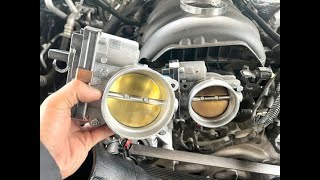
Typical fix: Replace the entire throttle body assembly. Cleaning may be a temporary fix but often the internal electronics are the point of failure and the code returns. After replacement, a throttle relearn procedure is required. 🎬 Watch: How to replace the throttle body and perform a relearn.
Est. part cost: $150-$300 - Wiring or Connector Issue 🟡 Medium Probability
How to confirm: Visually inspect the wiring harness going to the throttle body for any signs of damage, chafing, or corrosion. With the engine running, wiggle the connector and harness to see if it affects the idle or triggers the code. A multimeter can be used to check for proper voltage and ground at the connector.
Typical fix: Repair the damaged section of the wiring harness or clean/replace the connector pigtail. Broken wires inside the insulation, typically within 1 to 4 inches of the connector, are a known issue. 🎬 See this guide on diagnosing reduced engine power and throttle codes.
Est. part cost: $5-$50
Rare But Worth Checking
- Failing Powertrain Control Module (PCM/ECM): This is very rare. The PCM should only be considered after all other possibilities, including software, wiring, and the throttle body itself, have been definitively ruled out.
- Low System Voltage: A weak or failing battery can cause numerous, seemingly unrelated electronic issues. TSB #18NA037 specifically mentions that the vehicle battery may be in a reduced state of charge and that stable voltage is critical. Before diagnosing complex electronic faults, ensure the battery and charging system are healthy.
Diagnosis Steps
- Check for Technical Service Bulletins (TSBs). Contact a GM dealer with your VIN to see if software updates like TSB #18NA037 or #PIP5501B apply to your vehicle, especially for 2017+ models. This should be the first step.
- If updates are available, have the ECM reprogrammed. This may resolve the issue without further repairs. The TSB notes that stable battery voltage is critical during this process.
- If no updates are needed, connect a scan tool and monitor live data for Commanded vs. Actual throttle position. The values should closely match. A significant and persistent deviation points to a throttle body or wiring issue.
- Inspect the throttle body electrical connector and wiring harness. Look for chafed wires, corrosion on pins, or a loose connection. Wiggle the harness with the engine idling to see if you can induce a stumble or code.
- Remove the air intake tube and inspect the throttle body bore and plate for heavy carbon buildup. A dirty throttle body can cause the plate to stick. While cleaning is an option, be aware it may only be a temporary fix if the electronics are failing.
- If wiring is good and the throttle body is clean but the code persists (or returns shortly after cleaning), the throttle body assembly is the most likely cause of failure and should be replaced.
- After replacement, perform a throttle relearn procedure. This can often be done without a scan tool by idling the engine for 3 minutes, turning the ignition off for 60 seconds, and then idling again for 3 minutes. Driving the vehicle may also complete the learn cycle.
Parts You'll Likely Need
- Throttle Body Assembly
(OEM #12729500)— This is the most common hardware failure for P2101 after software issues are ruled out. The internal motor or sensors fail, requiring replacement 🎬 Watch: A breakdown of P2101 causes and common fixes. of the complete unit.
Trusted brands: ACDelco (OEM), Dorman (OE FIX), SKP, Standard Motor Products (SMP)
OEM price range: $200-$300
Aftermarket price range: $140-$220
Related Codes That Often Appear With This One
- P1516 — This is a GM-specific code for Throttle Actuator Control (TAC) Module Performance, often set alongside P2101 as they both relate to the ECM's command vs. the throttle's actual response. [PIP4578B, 13]
- P2119 — This code relates to Throttle Closed Position Performance, indicating the system is having trouble verifying the throttle plate's resting position. [PIP4578B]
- P2176 — This code means 'Minimum Throttle Position Not Learned', which can occur when the throttle body is failing or has been replaced without performing the relearn procedure. [PIP4578B]
- P0121 — This code indicates a problem with the Throttle Position Sensor 'A' Circuit Range/Performance, directly related to the function of the throttle body assembly. [PIP4578B]
Technical Service Bulletins (TSBs) & Recalls
- 18NA037: Provides ECM reprogramming information to correct DTC P2101, specifically mentioning the 'Driver Door Open Prime' feature on 2017+ models as a cause.
- PIP5501B: Communicates that vehicles, particularly 2017+ models, may be setting DTC P2101 falsely due to the 'Driver Door Open Prime' feature.
- PIP4578B: Discusses P2101 in the context of idle surge and reduced power on high-mileage vehicles, often with other throttle-related codes.
- PIE0415: An engineering bulletin requesting field information on vehicles setting DTC P2101, confirming its definition as 'Throttle Actuator Position Performance'.
Platform-Specific Known Issues
- A software anomaly on 2017-2018 models can cause DTC P2101 to set falsely when the 'Driver Door Open Prime' (DDOP) feature is activated. An ECM reprogram is the specified fix per TSB #18NA037.
- GM issued TSB #18NA037 specifically to address DTC P2101 with an ECM software update, indicating a known software-based cause for this code across multiple model years and K2XX platforms.
- On high-mileage Yukons, P2101 may appear with other throttle-related codes (P0068, P0121, P1516, P2119, P2176) and cause an idle surge or trigger reduced power mode. [PIP4578B]
- Some owners report hearing a distinct buzzing or vibration from the throttle body area after shutting the engine off, which can be an early sign of the electronic motor failing.
Mechanic-Grade Diagnostic Values
- Throttle Position Sensor (TPS) 1 Signal Voltage — expected: Approx. 0.37V at closed throttle, increasing smoothly to approx. 4.5V at wide-open throttle.. Failure: Voltage is jumpy, inconsistent, or falls outside the 0.37V to 4.5V range for more than a moment.
- Throttle Position Sensor (TPS) 2 Signal Voltage — expected: Starts high at closed throttle and decreases as the throttle opens. It should mirror TPS 1.. Failure: Voltage does not change smoothly or does not mirror the input of TPS 1.
- 5-Volt Reference at Throttle Body Connector — expected: 4.8V to 5.2V at pins E (Light Blue/Black) and H (Grey) with key on, engine off.. Failure: Voltage outside this range indicates a wiring issue or a problem with the ECM's 5V reference circuit.
- Low Reference (Ground) at Throttle Body Connector — expected: Less than 5.0 Ohms to a known good ground at pins B (Black/White) and D (Black).. Failure: High resistance indicates a poor ground connection, which is a common cause of sensor performance codes.
Scan Tool Commands That Help
- GDS2 / Tech2: Throttle Position Control / ETC Learn — Used to command the throttle plate to specific angles (e.g., 10%, 25%, 50%) to verify the actuator motor is responding correctly and the TPS sensors are reading accurately throughout the range. Also used to perform the idle/throttle relearn after cleaning or replacement.
- GDS2 / Tech2: Module Setup - Idle Relearn Reset — After replacing or cleaning the throttle body, this function resets the learned idle values in the ECM, forcing it to recalibrate to the new/clean throttle plate position.
Wiring & Ground Locations
- G101 / G106 — G101 is on the lower front of the engine block. It jumpers to G106, located on the front center of the frame cross rail, under the crank pulley.. This is a primary ground point for the Engine Control Module (ECM) and Transmission Control Module (TCM). A poor connection here can cause erratic ECM behavior and false sensor codes.
- G103 — Located on the left rear of the engine compartment on the cowl, above the brake booster.. This ground serves the Body Control Module (BCM) and the Data Link Connector (DLC). While not a direct engine ground, poor connection here can cause communication issues between modules.
- Throttle Body Connector Harness — The wiring harness leading to the throttle body connector.. Technicians report that internal breaks in the copper strands of the wires can occur within 1 to 4 inches of the throttle body connector due to engine vibration and heat, even if the insulation looks intact. A wiggle test of this area is critical.
Real Owner Repair Stories
- YouTube user 'Jabo THE MECHANIC' (GMC Sierra (mechanically identical to Yukon)) — Reduced Engine Power message, codes P1516 and P2101 stored.
❌ Tried (didn't work) The first diagnostic step was to attempt a cleaning rather than immediate replacement.
✅ What actually fixed it The throttle body was heavily contaminated with carbon. A thorough cleaning of the throttle plate and bore using a microfiber cloth and brake cleaner, followed by an idle relearn procedure with a scan tool, resolved the codes and symptoms.
OEM Part Supersession History
12617792, 12678224, 12713775→12729500— Standard part evolution for design improvements or manufacturing changes.
Heads up: Part number 12729500 is the current recommended OEM replacement for the previous numbers on 5.3L Gen V engines in this year range.
Model Year Variations Within This Range
- 2017-2018: These models introduced the 'Driver Door Open Prime' (DDOP) feature, which can falsely trigger P2101 due to a software glitch. TSB #18NA037 addresses this with an ECM reprogram, a fix not applicable to earlier years in this generation.
Helpful Videos
Used OEM Parts in Stock


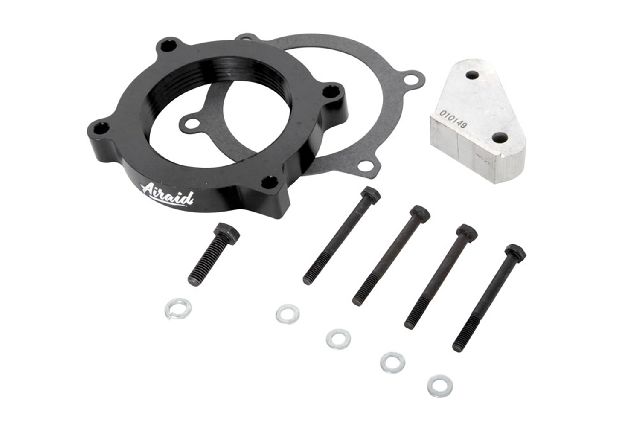
New Aftermarket Parts Available

The information in this article is provided for general reference and educational purposes only. Vehicle specifications, procedures, and part compatibility can vary by production date, trim level, and region. Always consult your vehicle's factory service manual and verify part numbers before purchasing or performing repairs. Safety-critical components such as airbags, seat belts, and braking systems should be installed by a qualified professional.
- Gmc YUKON:
- 🎬 Helpful Videos
- 🛍️ Shop This Part
- What's Unique About the 2014-2018 Gmc YUKON
- Diagnostic Flowchart
- Symptoms You May Notice
- Most Likely Causes
- Rare But Worth Checking
- Diagnosis Steps
- Parts You'll Likely Need
- Related Codes That Often Appear With This One
- Technical Service Bulletins (TSBs) & Recalls
- Platform-Specific Known Issues
- Mechanic-Grade Diagnostic Values
- Scan Tool Commands That Help
- Wiring & Ground Locations
- Real Owner Repair Stories
- OEM Part Supersession History
- Model Year Variations Within This Range
- 🎟️ Get 5% Off