

P2101 on 2011-2015 GMC Savana: Throttle Actuator Control Fault Causes and Fixes
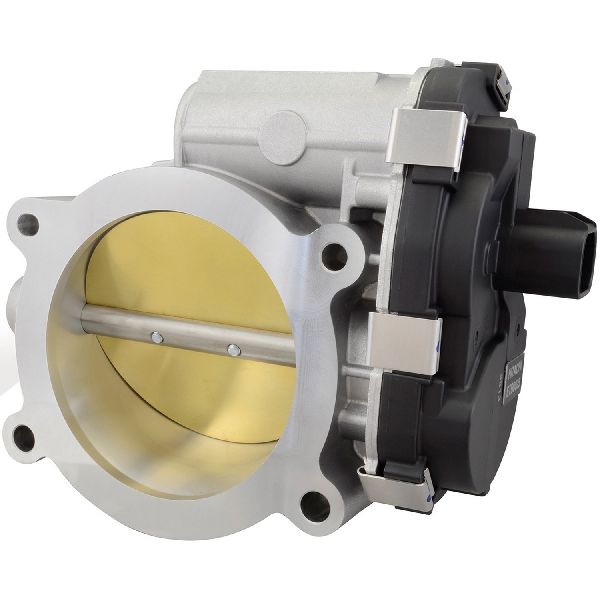
On a 2011-2015 GMC Savana, code P2101 almost always points to a problem with the electronic throttle body, triggering a 'Reduced Engine Power' warning. The most common fix is cleaning the throttle body of heavy carbon buildup. If cleaning doesn't work, especially on high-mileage vans, replacement of the entire throttle body assembly is often necessary. A new throttle body assembly costs between $150 and $450.
- P2101 on a GMC Savana will almost always trigger the 'Reduced Engine Power' mode, making the van unsafe to drive in normal traffic.
- The first and cheapest step is to thoroughly clean the throttle body of carbon buildup and perform a throttle relearn procedure.
- On high-mileage Savanas, be prepared to replace the entire throttle body assembly, as cleaning is often a temporary fix for a worn-out component.
- Always perform a throttle relearn procedure after cleaning or replacing the throttle body to prevent high idle and other issues.
- Before condemning the throttle body, always perform a quick visual inspection of the wiring and connector for obvious damage.
What's Unique About the 2011-2015 Gmc SAVANA
The GMC Savana, as a workhorse platform often used for commercial purposes, accumulates high mileage and significant idle time, which are key factors for this code. A GM Technical Service Bulletin (TSB PIP4578B) directly links P2101 to issues on high-mileage vehicles, suggesting a pattern of wear and tear on the throttle body assembly. As carbon from the PCV system builds up, the PCM learns to open the throttle plate more to maintain idle; eventually, it can no longer compensate, leading to the code and limp mode. While carbon buildup is a common initial trigger, the underlying failure of the throttle actuator motor or its internal electronics is a frequent reality for these vans as they age.
Diagnostic Flowchart
Tap your situation to follow the diagnostic path that matches what you're seeing on this vehicle.
Symptoms You May Notice
- Reduced Engine Power message displayed 🎬 Watch: What to do when you see the Reduced Engine Power message.
- Check Engine Light is on
- Vehicle has very limited acceleration and power (limp mode)
- Unstable, rough, or high idle
- Engine may stall
- Idle surge, especially on high-mileage vehicles, as noted in TSB PIP4578B
- Service StabiliTrak or Traction Control warning lights may also illuminate
- Replacing the Accelerator Pedal Position (APP) sensor. The P2101 code specifically points to a fault at the throttle body motor circuit, not the pedal sensor. A faulty APP sensor would typically set different codes, such as P2138 or P2122.
Most Likely Causes
- Dirty or Carbon-Clogged Throttle Body 🔴 High Probability Over time, carbon from the crankcase ventilation system builds up in the throttle body, restricting the movement of the throttle plate. The PCM tries to compensate for the blockage, but eventually, the required adjustment exceeds its limits, triggering P2101.
How to confirm: Remove the air intake hose from the throttle body and visually inspect the throttle plate and bore for a thick, black, sticky layer of carbon deposits. The plate may feel sticky or slow to move when pushed manually (with ignition off).
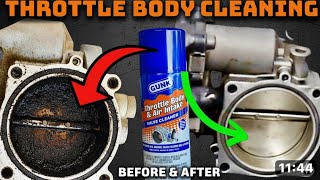
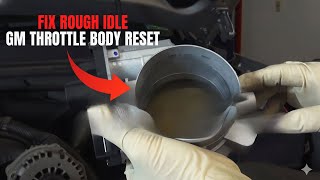
Typical fix: Clean the throttle body thoroughly with a dedicated throttle body cleaner and a soft cloth or brush. The unit should be removed for best results. 🎬 See this step-by-step guide on how to clean your throttle body. A throttle relearn procedure is required after cleaning to reset the PCM's learned values.
Est. part cost: $10-$20 - Failed Throttle Body Assembly 🔴 High Probability The internal motor or electronic sensors within the throttle body fail from age, heat cycles, and extensive use typical of a Savana van. TSB PIP4578B points to this being common on high-mileage vehicles.
How to confirm: If cleaning the throttle body and verifying wiring does not resolve the code, the assembly itself is the likely failure point. A scan tool can monitor commanded vs. actual throttle position; a persistent discrepancy points to a bad unit.
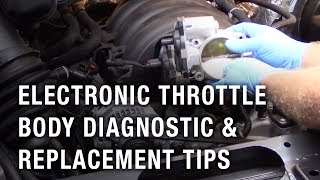
Typical fix: Replace the entire throttle body assembly. This is the most definitive fix. A throttle relearn procedure is mandatory after replacement.
Est. part cost: $150-$450 - Wiring or Connector Issue 🟡 Medium Probability Engine vibration and heat can cause wires in the harness leading to the throttle body to break or chafe over time. The plastic connector itself can become brittle and the locking tab can break. GM has issued bulletins for harness chafing on similar truck platforms, where wires rub against engine components or brackets.
How to confirm: Visually inspect the wiring harness for any signs of damage, chafing against brackets, or melting. Unplug the connector and check for corrosion, moisture, or bent/loose pins. Wiggle the harness with the engine running to see if it induces a stall or code.
Typical fix: Repair the damaged section of wiring using solder and heat shrink. If the connector is damaged, replace the pigtail. Ensure the harness is properly secured away from sharp edges or heat sources.
Est. part cost: $20-$50
Rare But Worth Checking
- Faulty Powertrain Control Module (PCM): This is very rare and should only be considered after all other possibilities (throttle body, wiring, grounds) have been definitively ruled out. A faulty PCM driver can misinterpret sensor data or fail to control the throttle motor correctly.
Diagnosis Steps
- Read all diagnostic trouble codes with an OBD-II scanner. Note P2101 and any other related codes like P1516, P2119, etc.
- Inspect the wiring harness and connector at the throttle body. Look for chafing on engine brackets, melting, or corrosion. Wiggle the connector and harness with the engine idling to see if the fault can be duplicated.
- Remove the air intake duct and inspect the throttle body bore and plate for heavy carbon buildup. A significant black layer is a very likely cause.
- If dirty, remove the throttle body from the intake manifold for proper cleaning. Use a dedicated throttle body cleaner and a soft rag or non-abrasive brush. Do not spray cleaner directly into the electronic components.
- Reinstall the throttle body with a new gasket.
- Perform a throttle body relearn procedure. A common method for GM vehicles without a scan tool is: Start the engine and let it idle in Park for 3 minutes. The idle may be high. Turn the engine off for 60 seconds. Restart the engine and let it idle for another 3 minutes. The idle should now be normal. 🎬 Watch: How to manually reset and relearn your GM throttle body.
- Clear the codes and test drive the vehicle. If the code and 'Reduced Engine Power' message return, the issue is likely not just carbon buildup.
- If the problem persists, the throttle body assembly is the most likely cause and should be replaced.
- If a new throttle body does not fix the issue, a more in-depth wiring diagnosis with a multimeter is needed to check for continuity, shorts, and proper voltage/ground between the PCM and the throttle body connector before suspecting a rare PCM failure.
Parts You'll Likely Need
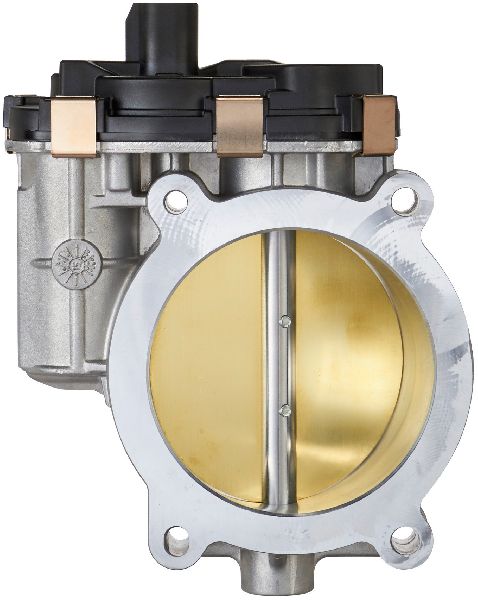
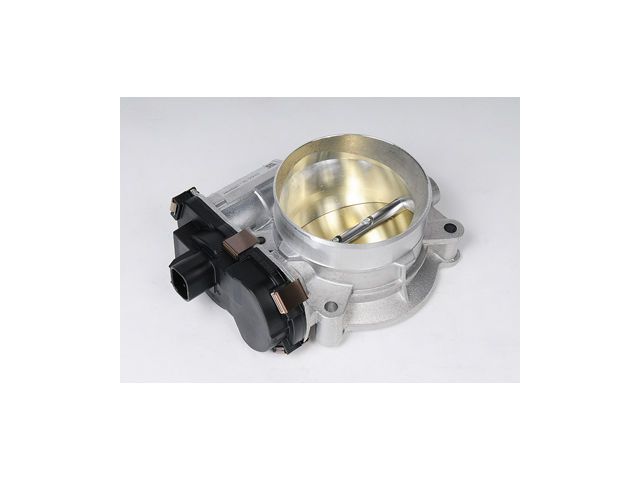
- Throttle Body Assembly
(OEM #ACDelco 217-3151 (cross-references to GM 12601387, 12629992))— This is the most common fix for P2101 when cleaning does not work, especially on high-mileage vehicles as indicated by TSB PIP4578B. The internal motor or sensors fail.
Trusted brands: ACDelco (OEM), Dorman, Hitachi, SKP
OEM price range: $240-$450
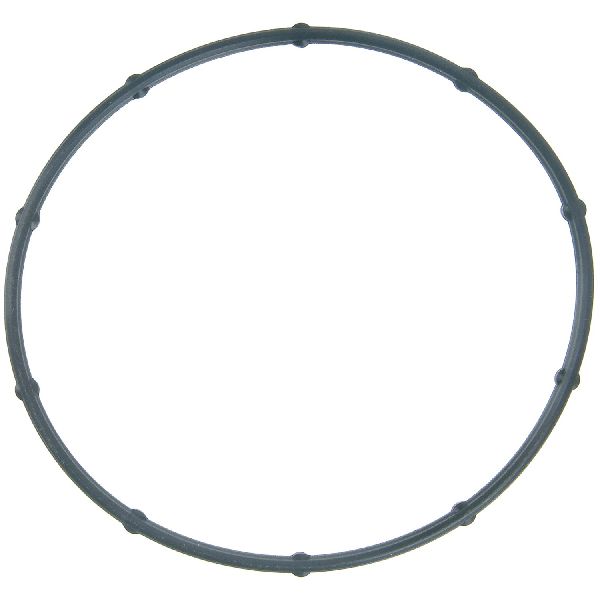
Aftermarket price range: $150-$250 - Throttle Body Gasket — Should always be replaced when the throttle body is removed for cleaning or replacement to prevent vacuum leaks.
Trusted brands: Fel-Pro, ACDelco, Mahle
OEM price range: $5-$15
Aftermarket price range: $3-$10
Related Codes That Often Appear With This One
- P1516 — A GM-specific code for Throttle Actuator Control (TAC) Module Performance, often set alongside P2101 as they both relate to a commanded vs. actual throttle position error.
- P2119 — Indicates an issue with the throttle closed position performance, directly related to the throttle body's function and often cited in the same TSB as P2101.
- P0068 — Relates to a mismatch between the MAP sensor, MAF sensor, and throttle position, which can be caused by an errant or carbon-fouled throttle body.
- P0121 — Indicates a performance problem with the Throttle Position Sensor 'A' circuit, which is part of the throttle body assembly and can be triggered by the same carbon buildup.
- P2176 — This code is for 'Throttle Actuator Control System - Idle Position Not Learned,' which often appears after a battery disconnect, cleaning, or if the throttle body is failing and cannot find its home position.
Technical Service Bulletins (TSBs) & Recalls
- PIP4578B: Addresses idle surge, reduced engine power mode, and DTCs including P2101, P1516, P0068, P0121, P2119, and P2176 on high mileage vehicles. It explicitly states that the PCM learns to compensate for carbon buildup and that cleaning the throttle body requires an idle learn reset.
Platform-Specific Known Issues
- TSB PIP4578B directly addresses this code on high-mileage vehicles, noting it can cause idle surge and reduced engine power mode. This points to a known wear-and-tear failure pattern for the throttle body on this platform. The TSB confirms that as carbon builds, the PCM compensates until it reaches a limit, triggering the fault.
- Owner Experience: Many Savana and Express van owners report the P2101 code appearing between 100,000 and 200,000 miles. The typical story involves first cleaning the throttle body, which may solve the problem for a short time, but the code eventually returns, requiring a full replacement of the throttle body assembly.
Mechanic-Grade Diagnostic Values
- Throttle Position Sensor (TPS) Voltage — expected: Should rise smoothly from ~0.5V (closed throttle) to ~4.5V (wide-open throttle).. Failure: Erratic spikes, dropouts, or a voltage reading that doesn't change with the throttle plate angle indicates a faulty sensor.
- Throttle Actuator Motor Resistance — expected: Typically between 5 and 15 ohms across the motor pins (vehicle specific, consult service manual).. Failure: An infinite resistance reading (open circuit) or zero resistance (short circuit) indicates a failed motor.
- Throttle Actuator Control Motor Circuit Voltage Drop — expected: Less than 0.5V.. Failure: A voltage drop greater than 0.5V between the PCM supply and the motor connector suggests high resistance in the wiring or a bad connector.
- Ground Circuit Resistance — expected: Less than 1 ohm.. Failure: Resistance greater than 1 ohm from the throttle body connector ground pin to the chassis indicates a poor ground connection, which can cause erratic behavior.
Scan Tool Commands That Help
- GDS2 (Global Diagnostic System 2): Throttle/Idle Learn Reset — Used after cleaning or replacing the throttle body to command the ECM to relearn the throttle plate's idle and closed positions. This is the official dealer method.
- GDS2 (Global Diagnostic System 2): Vehicle DTC Information — To perform a full vehicle scan, querying all modules for current and history codes that may be related to the P2101 fault but not visible on a standard OBD-II scanner.
- High-End Bidirectional Scanner: Throttle Actuator Control (TAC) Test — This function allows the technician to command the throttle plate to open and close, verifying the motor's operation and sensor feedback in real-time without running the engine.
Wiring & Ground Locations
- G103 — On the front of the passenger side (right-hand) cylinder head.. This is a primary engine ground. A poor connection here can cause a host of issues with sensors and actuators controlled by the ECM, including the electronic throttle body.
- G104 — On the left rear corner of the engine, mounted to the left cylinder head.. Another critical engine ground. A service bulletin for other DTCs on these vans mentions ensuring G103, G104, G105, and G106 have clean, tight connections to resolve electrical issues.
- Throttle Body Connector — The 6-pin electrical connector on the electronic throttle body assembly.. This is the single connection point for the throttle actuator motor and the dual throttle position sensors. All power, ground, and signal wires run through this connector. It is a primary point of failure due to corrosion or damaged pins.
Real Owner Repair Stories
- YouTube channel 'Garage Sport Labs' (2012 GMC Savana 3500 Box Truck) — Flashing messages for 'Reduced Engine Power', 'Repair Throttle', and 'Starting Disabled'. The engine would die and refuse to restart temporarily.
❌ Tried (didn't work) The owner initially checked and tightened some loose ground wires, which did not solve the problem.
✅ What actually fixed it The throttle position sensor (TPS), which is the black plastic side cover on the throttle body, was replaced. The video shows the process of prying off the metal clips, replacing the sensor cap (part number TH445 was mentioned), and reinstalling it, which resolved the issue without replacing the entire throttle body assembly.
OEM Part Supersession History
12601387→12629992— Standard part revision and replacement by GM.
Heads up: The ACDelco service part number for GM 12629992 is 217-3151. These parts are direct replacements and fully compatible.
Helpful Videos


Used OEM Parts in Stock


New Aftermarket Parts Available


The information in this article is provided for general reference and educational purposes only. Vehicle specifications, procedures, and part compatibility can vary by production date, trim level, and region. Always consult your vehicle's factory service manual and verify part numbers before purchasing or performing repairs. Safety-critical components such as airbags, seat belts, and braking systems should be installed by a qualified professional.
- Gmc SAVANA:
- 🎬 Helpful Videos
- 🛍️ Shop This Part
- What's Unique About the 2011-2015 Gmc SAVANA
- Diagnostic Flowchart
- Symptoms You May Notice
- Most Likely Causes
- Rare But Worth Checking
- Diagnosis Steps
- Parts You'll Likely Need
- Related Codes That Often Appear With This One
- Technical Service Bulletins (TSBs) & Recalls
- Platform-Specific Known Issues
- Mechanic-Grade Diagnostic Values
- Scan Tool Commands That Help
- Wiring & Ground Locations
- Real Owner Repair Stories
- OEM Part Supersession History
- 🎟️ Get 5% Off