

P2101 on 2006-2010 GMC Savana: Throttle Actuator Control Fault Causes and Fixes
On a 2006-2010 GMC Savana, code P2101 almost always points to a problem with the electronic throttle body, triggering the 'Reduced Engine Power' message. The most common fix is cleaning the throttle body of carbon buildup; if that fails, replacement is necessary, costing between $150 and $450 for the part. The original OEM part number is often 12580760, which has been superseded.
- P2101 on a 2006-2010 Savana will almost certainly put the van into 'Reduced Engine Power' mode.
- The most probable cause is carbon buildup inside the throttle body, a known issue for these GM vehicles.
- Always start by thoroughly cleaning the throttle body before considering replacement.
- After cleaning or replacing the throttle body, you must perform an idle relearn procedure to prevent further issues.
- Do not replace the gas pedal (APP sensor); this code points specifically to the throttle body circuit.
What's Unique About the 2006-2010 Gmc SAVANA
The 2006-2010 GMC Savana, built on the GMT610 platform with its Chevrolet Express twin, is well-documented for throttle body issues, particularly on high-mileage vehicles used for commercial purposes. GM issued Technical Service Bulletin (TSB) #PIP4578B acknowledging that as carbon builds up, the PCM learns to compensate by increasing the throttle plate angle to maintain idle. Eventually, the buildup becomes too great for the PCM to compensate, triggering P2101 and other related codes. This makes a dirty throttle body a very high-probability cause, not just a theoretical one.
Diagnostic Flowchart
Tap your situation to follow the diagnostic path that matches what you're seeing on this vehicle.
Symptoms You May Notice
- Reduced Engine Power message displayed on the instrument cluster
- Check Engine Light is on
- Vehicle has very limited acceleration and power (limp mode)
- Idle speed may surge or be unstable
- Hesitation or jerky acceleration
- In rare cases, a no-crank condition if the throttle body is completely seized, as the PCM may inhibit the starter relay. 🎬 See how a faulty throttle body can cause starting disabled.
- Replacing the Accelerator Pedal Position (APP) sensor. An APP sensor fault will typically set a different set of codes (like P2138) and is not the primary cause of a P2101 code, though it is part of the same overall TAC system.
Most Likely Causes
- Dirty/Coked Throttle Body 🔴 High Probability As noted in GM TSB #PIP4578B, carbon buildup is a very common issue on high-mileage GM V8 engines of this era, preventing the throttle plate from moving freely and causing the actual position to deviate from the commanded position.
How to confirm: Remove the air intake duct and visually inspect the throttle plate and bore for a thick, black layer of carbon. The plate may feel sticky or difficult to move.
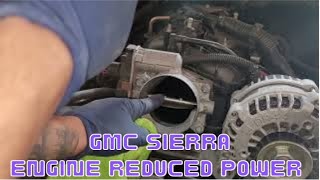
Typical fix: Remove the throttle body and clean it thoroughly with a dedicated throttle body cleaner and a soft cloth or brush. 🎬 Watch: Step-by-step guide to cleaning your Savana throttle body. Do not spray cleaner directly into the unit while it's connected, as it can damage electronics. After cleaning, an idle relearn procedure is required.
Est. part cost: $5-$15 for cleaner - Faulty Throttle Body Assembly 🟡 Medium Probability The internal electronic motor or the integrated Throttle Position Sensors (TPS) can wear out or fail, especially after many years and miles of service. This is the next logical step if cleaning does not resolve the code.
How to confirm: If a thorough cleaning and idle relearn do not fix the code, the assembly itself is the most likely culprit. A scan tool can monitor commanded vs. actual throttle position to confirm erratic behavior or a complete lack of response. In some cases, the motor can seize completely, which can be confirmed by being unable to move the butterfly valve at all.
Typical fix: Replace the entire throttle body assembly. This part is sold as a single unit. The most reliable method is to use a new OEM or high-quality aftermarket part.
Est. part cost: $150-$450 - Wiring or Connector Issue ⚪ Low Probability Engine vibrations and heat can cause wires in the harness to break, often internally where it isn't visible. The connector pins at the throttle body can also become loose, spread, or corroded. Rodent damage to wiring is also a possibility.
How to confirm: Visually inspect the wiring harness and connector for obvious damage. Wiggle the connector with the engine running to see if it affects idle. Use a multimeter to check for proper voltage (typically a 5V reference) and ground at the connector pins according to a wiring diagram.
Typical fix: Repair the damaged section of the harness or replace the connector pigtail. Ensure pins are clean and making good contact.
Est. part cost: $15-$50
Rare But Worth Checking
- Faulty Powertrain Control Module (PCM): This is rare and should only be considered after all other possibilities, including the throttle body and wiring, have been definitively ruled out. A faulty PCM driver can misinterpret sensor data or fail to send the correct command to the throttle motor.
Diagnosis Steps
- Read all stored fault codes with an OBD-II scanner.
- Visually inspect the wiring harness and connector at the throttle body for any signs of damage, corrosion, or loose connections.
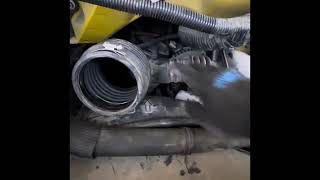
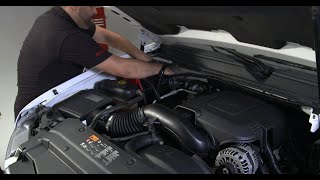
- Remove the air intake tube from the throttle body.
- Inspect the throttle bore and plate for heavy carbon buildup. If significant carbon is present, this is the most likely cause.
- WARNING: Do not force the throttle plate open with your fingers or a tool, as this can damage the internal gears on some models. If cleaning is needed, have an assistant turn the key to 'ON' (engine off) and press the accelerator pedal to open the plate electronically.
- Clean the throttle body thoroughly using throttle body cleaner and a soft rag. Manually move the plate to clean all surfaces if confirmed safe for the model, or use the electronic method.
- Reinstall the throttle body and intake tube.
- Clear all DTCs with the scanner.
- Perform a throttle body idle relearn procedure. The most reliable method is with a bi-directional scan tool (like a Tech 2) which has a specific 'Idle Learn Reset' function. A common manual method is to let the engine idle in Park for 3 minutes, shut it off for 60 seconds, then start it and let it idle for another 3 minutes, but the scan tool method is preferred. 🎬 Watch: How to perform the electronic throttle body relearn procedure.
- Test drive the vehicle. If the code and 'Reduced Engine Power' message return, the throttle body assembly is likely faulty and requires replacement.
- If a new throttle body does not fix the issue, perform a circuit integrity test on the wiring between the PCM and throttle body before suspecting a PCM failure.
Parts You'll Likely Need
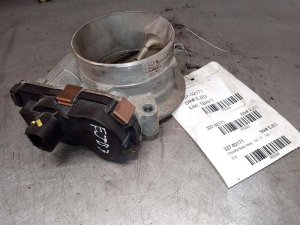
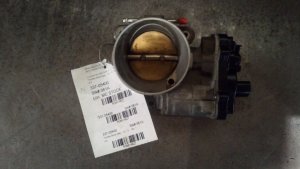
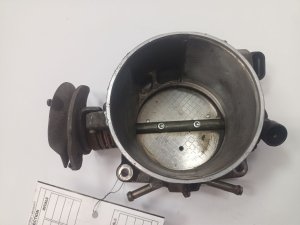
- Electronic Throttle Body Assembly
(OEM #12580760, superseded by 12679524)— This is the most common fix when cleaning the original part fails. The internal motor or position sensors wear out, and the entire assembly is replaced as a unit. Part number 12580760 was widely used, but has been replaced by GM part 12679524. Always verify with the vehicle's VIN.
Trusted brands: ACDelco (OEM), Hitachi, Dorman, BBK
OEM price range: $250-$400
Aftermarket price range: $150-$250 - Throttle Body Cleaner — Required for the first and most common repair step: cleaning carbon buildup from the throttle plate and bore.
Trusted brands: CRC, Berryman, Gumout
Aftermarket price range: $5-$15
Related Codes That Often Appear With This One
- P1516 — This is a GM-specific code for 'Throttle Actuator Control (TAC) Module Throttle Actuator Position Performance'. It is often set alongside P2101 as they both relate to the PCM's commands and the throttle body's response.
- P2119 — This code means 'Throttle Closed Position Performance' and can be triggered by the same carbon buildup or mechanical binding that causes P2101.
- P0068 — Indicates a discrepancy between the MAP sensor, MAF sensor, and throttle position. A throttle that isn't where it should be (due to the P2101 fault) can cause this correlation code.
- P2176 — This code for 'Throttle Actuator Control System - Idle Position Not Learned' often appears after a throttle body has been cleaned or replaced but the mandatory idle relearn procedure has not been performed correctly.
Technical Service Bulletins (TSBs) & Recalls
- PIP4578B: Addresses idle surge, reduced engine power, and DTCs including P2101 on high-mileage vehicles due to carbon buildup in the throttle body. It explains that the PCM learns to compensate for the buildup, and if the throttle is cleaned or the PCM is reprogrammed without an idle learn reset, other codes can appear.
Platform-Specific Known Issues
- Per GM Technical Service Bulletin #PIP4578B, high-mileage Savana vans are prone to carbon buildup in the throttle body, which directly leads to DTC P2101 and a 'Reduced Engine Power' event.
- A completely seized throttle body can sometimes cause a no-crank condition in addition to the P2101 code. The PCM may inhibit the starter relay as a safety measure when it detects a critical throttle control failure.
Mechanic-Grade Diagnostic Values
- Throttle Actuator Control (TAC) Motor Resistance — expected: 2 to 15 Ohms between the two motor control pins (often pins A and C, or the two thickest wires in the connector). Some sources cite a specific value around 3 to 4.4 Ohms.. Failure: A reading less than 1 Ohm indicates an internal short circuit. A reading of infinity (OL) indicates an open circuit. Either requires throttle body replacement.
- Throttle Position Sensor (TPS) Voltage — expected: Approximately 0.5V with the throttle plate closed, sweeping smoothly up to around 4.5V at wide-open throttle. There are two TPS sensors for redundancy, and their voltage signals should move in relation to each other.. Failure: Voltage that is erratic, jumps, or has dead spots as the throttle plate is moved indicates a worn or faulty TPS. Since the sensors are integrated, this requires throttle body replacement.
- 5-Volt Reference at Throttle Body Connector — expected: Approximately 5.0 volts at the 5V reference pin(s) with the key on, engine off. On many GM 8-pin connectors, this is the Grey wire (Pin H) and/or Light Blue/Black wire (Pin E).. Failure: Voltage significantly below 5.0V (e.g., 3V) or 0V indicates a problem with the wiring harness, a short in another sensor on the same circuit, or a fault in the PCM.
- Ground Circuit Resistance — expected: Less than 1 Ohm of resistance between the throttle body connector's ground pin(s) and the chassis or battery negative terminal.. Failure: Resistance greater than 1 Ohm indicates a poor ground connection, which can cause erratic sensor readings and trigger a P2101. This requires cleaning or repairing the relevant ground point (e.g., G103, G104).
Scan Tool Commands That Help
- Tech 2 / GDS2 (or equivalent professional scanner): Idle Learn Reset — This function is critical after cleaning or replacing the throttle body. The PCM has learned compensation values for the old/dirty part. This command erases those learned values and forces the PCM to relearn the new throttle's idle position, preventing codes like P2176 and resolving idle issues that can persist even after the P2101 fault is fixed.
Wiring & Ground Locations
- Throttle Body Connector — The 8-pin electrical connector plugged directly into the electronic throttle body assembly on the front of the intake manifold.. This is the primary connection point for all power, ground, and signal wires for the TAC motor and both TPS sensors. Corrosion, spread pins, or wire damage right at the connector is a common point of failure. The two thickest wires are typically for the TAC motor itself.
- G103 / G104 (Engine Grounds) — On GMT900 platform trucks/vans (which the Savana is related to), G103 is often on the front of the passenger side cylinder head, while G104 is on the rear of the driver's side cylinder head. Locations can vary slightly, but they are primary engine-to-harness ground points.. The PCM and its sensors, including the throttle body, rely on clean ground connections. A loose or corroded G103 or G104 can create high resistance in the ground circuit, causing incorrect voltage readings and leading the PCM to misinterpret the throttle's position, triggering a P2101.
Real Owner Repair Stories
- YouTube channel 'IAMMAKNIFICENT' (2007 Chevrolet Suburban (same platform family)) — Reduced Engine Power message, Service Stabilitrak/Traction Control messages, P2101 code, no throttle response when pressing the accelerator pedal.
❌ Tried (didn't work) Initially, the owner cleaned the throttle body but accidentally left a cleaning rag inside, which caused the initial complete blockage. After removing the rag, the engine would start but still had the 'Reduced Engine Power' message and P2101 code.
✅ What actually fixed it The code and limp mode would not clear on their own. The owner had to connect a professional scan tool and use the 'Special Functions' -> 'Idle Learn Reset' command. After the scan tool reset the learned values, the engine returned to normal operation immediately, and the code did not return.
OEM Part Supersession History
12580760, 12572658→12679524— Standard part evolution for improved reliability or manufacturing changes.
Heads up: The replacement part 12679524 may require programming or special setup procedures, such as an Idle Learn Reset, to ensure proper operation in the vehicle.
Helpful Videos

Used OEM Parts in Stock



New Aftermarket Parts Available


The information in this article is provided for general reference and educational purposes only. Vehicle specifications, procedures, and part compatibility can vary by production date, trim level, and region. Always consult your vehicle's factory service manual and verify part numbers before purchasing or performing repairs. Safety-critical components such as airbags, seat belts, and braking systems should be installed by a qualified professional.
- Gmc SAVANA:
- 🎬 Helpful Videos
- 🛍️ Shop This Part
- What's Unique About the 2006-2010 Gmc SAVANA
- Diagnostic Flowchart
- Symptoms You May Notice
- Most Likely Causes
- Rare But Worth Checking
- Diagnosis Steps
- Parts You'll Likely Need
- Related Codes That Often Appear With This One
- Technical Service Bulletins (TSBs) & Recalls
- Platform-Specific Known Issues
- Mechanic-Grade Diagnostic Values
- Scan Tool Commands That Help
- Wiring & Ground Locations
- Real Owner Repair Stories
- OEM Part Supersession History
- 🎟️ Get 5% Off