

P2101 on 2005-2009 GMC Envoy: Throttle Actuator Control Fixes and Causes
On a 2005-2009 GMC Envoy, code P2101 almost always means the electronic throttle body is dirty or failing, causing the 'Reduced Engine Power' warning. The first and most common fix is to thoroughly clean the carbon buildup from the throttle body. If cleaning doesn't work, replacing the throttle body assembly is the next step. This issue is extremely common across the entire GMT360 platform, including the Chevrolet Trailblazer and Buick Rainier.
- P2101 on a GMC Envoy will almost always trigger the 'Reduced Engine Power' mode, making the vehicle unsafe to drive in traffic.
- The most probable cause is a dirty throttle body, and the first step should always be a thorough cleaning.
- After cleaning or replacing the throttle body, an 'idle relearn' procedure is necessary to prevent high idle and other issues.
- Do not replace the accelerator pedal sensor for this code; the fault lies at the throttle body itself.
- If cleaning doesn't fix it, the entire throttle body assembly needs to be replaced.
What's Unique About the 2005-2009 Gmc ENVOY
The 4.2L I6 and 5.3L V8 engines in this generation of GMC Envoy are known for accumulating significant carbon buildup in the throttle body over time. This buildup can cause the throttle plate to stick, leading directly to the P2101 code and 'Reduced Engine Power' mode. Manufacturer bulletins note that these symptoms can appear on high-mileage vehicles or during very cold starts, suggesting the throttle mechanism is sensitive to wear and environmental conditions. TSB PIP4573B specifically details how a frozen PCV system in extreme cold can cause condensation and ice to form, leading to throttle-related codes like P2101 at startup.
Diagnostic Flowchart
Tap your situation to follow the diagnostic path that matches what you're seeing on this vehicle.
Symptoms You May Notice
- "Reduced Engine Power" message on the dashboard
- Check Engine Light is on
- Poor or no acceleration
- Unstable or rough idle
- Vehicle may stall at stops
- Unresponsive gas pedal
- Vehicle will not crank (in some severe cases where the PCM prevents startup due to the throttle fault)
- Replacing the Accelerator Pedal Position (APP) sensor. P2101 specifically points to a problem at the throttle body motor circuit, not the pedal. A faulty APP sensor would typically set different codes, such as P2138 or P2135.
Most Likely Causes
- Dirty/Coked Throttle Body 🔴 High Probability These engines are known for carbon buildup around the throttle plate, which restricts its movement. This is a very common issue on high-mileage GMT360 platform vehicles and is cited in TSB PIP4578B as a primary cause.
How to confirm: Remove the air intake duct from the throttle body and visually inspect the throttle plate and bore for a thick, black layer of carbon.
Typical fix: Thoroughly clean the throttle body bore and plate with a dedicated throttle body cleaner and a soft brush or rag. 🎬 Watch: Step-by-step guide to cleaning your Envoy's throttle body. An idle relearn procedure is required afterward. Do not use aggressive cleaners like brake cleaner, which can damage special coatings on the throttle body.
Est. part cost: $10-$20 for cleaner and supplies. - Failing Throttle Body Assembly 🟡 Medium Probability The internal electric motor or the non-serviceable Throttle Position Sensor (TPS) can fail from wear and tear, especially on high-mileage vehicles as noted in TSB PIP4578B. The internal potentiometer tracks wear, causing faulty signals.
How to confirm: If a thorough cleaning does not resolve the code, and the wiring is confirmed to be good, the throttle body assembly itself is the likely culprit. This is a very common point of failure after cleaning fails to solve the issue.
Typical fix: Replace the entire throttle body assembly. This is a bolt-on part that includes the motor and sensors. 🎬 See this walkthrough on how to replace the throttle body. A relearn procedure is necessary after replacement.
Est. part cost: $150-$450 - Wiring or Connector Issue ⚪ Low Probability Engine vibrations and heat can cause wires to fray or connector pins to become loose or corroded over time. Owners have reported finding broken wires or poor connections right at the throttle body connector, sometimes from previous improper repairs. A loose main fuse block has also been found to cause intermittent power issues to related circuits, triggering this code.
How to confirm: Inspect the wiring harness and connector at the throttle body for any signs of damage, corrosion, or loose pins. Wiggle the harness while the engine is running or while monitoring sensor data on a scan tool to see if the fault can be triggered. Check for stable voltage and ground at the connector with a multimeter.
Typical fix: Repair the damaged section of the harness or clean/replace the connector pigtail (ACDelco Pigtail #PT2628 is a common part). Ensure the main fuse block bolts are tight.
Est. part cost: $5-$50 for wiring repair supplies.
Rare But Worth Checking
- Powertrain Control Module (PCM) Failure: This is very uncommon. Before suspecting the PCM, all other possibilities, especially the throttle body and its wiring, must be exhaustively ruled out. One user on a forum replaced the PCM after extensive testing, but this is not a typical solution.
- Frozen PCV System in Extreme Cold: TSB #PIP4573B explains that in temperatures around -10°F (-23°C), moisture in the crankcase can freeze, blocking the PCV system. This can lead to moisture and ice forming in the intake and throttle body, causing it to stick and trigger P2101 on startup. This is more common with vehicles used for frequent short trips in cold climates.
Diagnosis Steps
- Scan for all DTCs to see if other codes are present, paying close attention to P1516, P2119, or P2176.
- Turn the ignition off and remove the air intake hose from the throttle body.
- Visually inspect the throttle plate and bore for heavy carbon buildup. The backside of the plate is often the dirtiest.
- If dirty, thoroughly clean the throttle body using a dedicated cleaner and a soft cloth/brush. Do not use metal brushes. Have a helper turn the key to 'ON' (engine off) and press the gas pedal to open the plate for easier cleaning. Do not force the plate open by hand, as this can damage the internal gears.
- Inspect the wiring harness and connector at the throttle body. Look for chafed wires, corrosion on the pins, or loose-fitting terminals. Wiggle the harness to check for intermittent faults.
- Reassemble the intake duct and clear the codes.
- Perform the throttle body relearn procedure. For many GM vehicles, this can be done without a scan tool by letting the engine idle for 3 minutes, turning it off for 60 seconds, and then idling again for 3 minutes. 🎬 Watch: How to perform the electronic throttle body relearn procedure.
- Test drive the vehicle. If the code and 'Reduced Engine Power' message return, the throttle body assembly is most likely faulty and needs to be replaced.
Parts You'll Likely Need
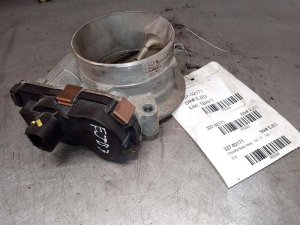
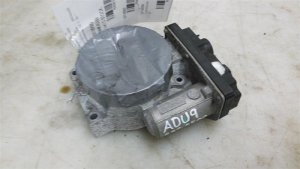
- Throttle Body Assembly
(OEM #12694872 (supersedes 12616437 for 4.2L, check VIN))— This is the most common repair if cleaning the original unit does not solve the problem. The assembly includes the non-serviceable electronic motor and position sensors that fail. Part numbers vary by engine and year.
Trusted brands: ACDelco, Dorman, Hitachi
OEM price range: $250-$400
Aftermarket price range: $150-$250 - Throttle Body Cleaner — This is required for the first and most likely diagnostic and repair step: cleaning the carbon buildup from the throttle plate and bore.
Trusted brands: CRC, Berryman, Gumout
Aftermarket price range: $10-$20 - Throttle Body Connector Pigtail
(OEM #ACDelco PT2628 / GM 88986222)— If the wiring connector is found to be corroded, melted, or has broken wires, replacing the pigtail is the standard repair.
Trusted brands: ACDelco, Dorman
OEM price range: $30-$50
Aftermarket price range: $15-$30
Related Codes That Often Appear With This One
- P1516 — This is a GM-specific code for 'Throttle Actuator Control (TAC) Module Throttle Actuator Position Performance'. It is often set along with P2101 as they both relate to the TAC system's performance and are frequently mentioned together in TSBs and forum discussions.
- P2119 — This code means 'Throttle Closed Position Performance'. It can be triggered if the throttle plate is sticking due to carbon buildup, preventing it from closing properly. It is also mentioned in the cold-start TSB PIP4573B.
- P2176 — This code means 'Throttle Actuator Control System - Idle Position Not Learned'. It often appears after cleaning or replacing the throttle body if the idle relearn procedure has not been performed or was unsuccessful.
- P0068 — This code indicates a mismatch between the MAF sensor, MAP sensor, and throttle position. A sticking throttle can cause this correlation fault. TSB PIP4578B lists this as a possible companion code.
- P1682 — This code relates to an ignition switch circuit issue. Some owners have experienced this code alongside P2101, sometimes traced to a faulty ignition switch or a bad connection at the main fuse block, which can disrupt power to the PCM and related systems.
Technical Service Bulletins (TSBs) & Recalls
- PIP4578B: Mentions P2101 in relation to idle surge and reduced power on high-mileage vehicles, recommending cleaning the throttle body.
- PIP4573B: Links P2101 to starting issues in extreme cold temperatures due to a potentially frozen PCV system causing moisture buildup.
Platform-Specific Known Issues
- TSB #PIP4578B notes that P2101 can occur on high-mileage vehicles, often accompanied by an idle surge and other throttle-related codes, pointing towards wear and carbon buildup as a primary cause.
- TSB #PIP4573B highlights that this code can be triggered during engine start in extremely cold temperatures (around -10°F / -23°C), suggesting the throttle mechanism may be susceptible to icing or sticking due to a frozen PCV system.
Mechanic-Grade Diagnostic Values
- Throttle Actuator Control (TAC) Motor Resistance — expected: 2 to 15 Ohms between the two motor control pins (e.g., Yellow and Brown wires).. Failure: A reading below 1 Ohm suggests a short, while an infinite (OL) reading indicates an open circuit in the motor.
- Throttle Position Sensor (TPS) Signal Voltage — expected: Approximately 0.5V to 0.7V at idle (throttle closed) and smoothly increasing to ~4.5V at wide-open throttle.. Failure: Voltage that is jumpy, erratic, or has dead spots as the throttle plate is slowly opened indicates a worn TPS.
- Scan Tool Live Data: Throttle Position % (Key On, Engine Off) — expected: Between 13% and 19% with the accelerator pedal at rest.. Failure: A reading outside this range at rest can indicate a calibration issue or a fault in the TPS or its circuit.
- 5-Volt Reference at Throttle Body Connector — expected: A steady 5 volts at the two 5V reference pins (e.g., Light Blue/Black and Grey wires).. Failure: Voltage that is low, absent, or fluctuating can indicate a shorted sensor on the same circuit (like the fan clutch) or a PCM fault.
Scan Tool Commands That Help
- Tech2 / GDS2 or equivalent professional scan tool: Idle Learn Reset / Throttle Learn Reset — This function should be used after cleaning or replacing the throttle body to force the PCM to relearn the new base idle and closed throttle positions. It is more reliable than the manual relearn procedure.
- Tech2 / GDS2 or equivalent professional scan tool: Throttle Plate Actuation Test — This bidirectional test allows the technician to command the throttle plate to open and close, verifying the TAC motor's function and range of motion without the engine running. It helps isolate a faulty motor from a wiring or sensor issue.
Wiring & Ground Locations
- Throttle Body Connector (4.2L) — Directly on the electronic throttle body assembly.. This is the primary connection point for all power, ground, and signal wires for the TAC motor and TPS sensors. The pins are: A (Yellow, TAC Motor), B (Black/White, Low Ref), C (Brown, TAC Motor), D (Black, Low Ref), E (Lt Blue/Black, 5V Ref), F (Purple, TPS 2), G (Dk Green, TPS 1), H (Grey, 5V Ref).
- G103 — On the cowl in the engine compartment, typically above the brake booster.. This ground point serves the Body Control Module (BCM) and the Data Link Connector (DLC). A poor connection here can cause a wide range of communication and electrical issues that may mimic other faults.
- G104 — On the rear of the left (driver's side) cylinder head.. This is a primary engine ground. A loose or corroded G104 can cause unstable sensor readings and intermittent issues with engine management components, including the throttle body.
- Underhood Fuse Block — Driver's side of the engine bay.. The entire block can become loose from its main power connections or corrode internally, causing intermittent power loss to critical circuits like the PCM, ignition, and TAC system. This can trigger P2101 along with other codes like P1682, but individual fuses will test good.
Real Owner Repair Stories
- Hands On Auto Training YouTube Channel (2006 GMC Envoy) — Reduced Power message, running very poorly, multiple codes including P2101, P0102, P1682.
❌ Tried (didn't work) The vehicle had a new MAF sensor already installed., Clearing codes provided only a temporary fix.
✅ What actually fixed it The underhood fuse block was not properly seated and secured. Tightening the fuse block restored consistent power to all circuits and resolved all the codes and driveability issues. - GMTNation Forum User (2006 Chevrolet Trailblazer 4.2L) — P2101 and P1682 codes persisted.
❌ Tried (didn't work) Replaced throttle body, Replaced ignition switch, Replaced PCM, Checked wire continuity between throttle body and PCM
✅ What actually fixed it The diagnostic path pointed to an issue on the shared 5-volt reference circuit. A common cause for this is an internally shorted fan clutch, which should be disconnected as a diagnostic step to see if the P2101 code disappears. - Reddit user, r/Cartalk (2008 Chevrolet Impala (similar GM TAC system)) — Reduced Engine Power, codes P1516 and P2101.
❌ Tried (didn't work) Initially advised by a parts store clerk to suspect the MAF sensor.
✅ What actually fixed it The user thoroughly cleaned the MAF sensor, cleaned the throttle body, and replaced a very dirty engine air filter. This combination of basic maintenance resolved the issue without replacing any major components.
"I Checked Everything" — The Actual Cause
- While P2101 is an electrical code not typically diagnosed with a smoke test, a similar pattern of 'standard tests pass, but the problem persists' is common. The root cause is often not the throttle body or its direct wiring, but rather a component that shares a power or ground circuit. The two most documented examples are an internally shorted fan clutch dragging down the 5V reference circuit, and a loose or corroded main fuse block causing intermittent power to the entire engine management system.
OEM Part Supersession History
12616437→12694872— Standard part revision and update by the manufacturer for the 4.2L engine.
Heads up: No known incompatibilities. The new part is a direct replacement for the old one on specified models.
Model Year Variations Within This Range
- 2005 vs 2006-2009: The specific wiring for the Throttle Actuator Control (TAC) system differs between the 2002-2005 models and the 2006-2007 models. While the components and failure modes are very similar, a technician referencing a wiring diagram must use the correct one for the vehicle's year to ensure accurate pinout testing.
Helpful Videos
Used OEM Parts in Stock


New Aftermarket Parts Available




The information in this article is provided for general reference and educational purposes only. Vehicle specifications, procedures, and part compatibility can vary by production date, trim level, and region. Always consult your vehicle's factory service manual and verify part numbers before purchasing or performing repairs. Safety-critical components such as airbags, seat belts, and braking systems should be installed by a qualified professional.
- Gmc ENVOY:
- 🎬 Helpful Videos
- 🛍️ Shop This Part
- What's Unique About the 2005-2009 Gmc ENVOY
- Diagnostic Flowchart
- Symptoms You May Notice
- Most Likely Causes
- Rare But Worth Checking
- Diagnosis Steps
- Parts You'll Likely Need
- Related Codes That Often Appear With This One
- Technical Service Bulletins (TSBs) & Recalls
- Platform-Specific Known Issues
- Mechanic-Grade Diagnostic Values
- Scan Tool Commands That Help
- Wiring & Ground Locations
- Real Owner Repair Stories
- "I Checked Everything" — The Actual Cause
- OEM Part Supersession History
- Model Year Variations Within This Range
- 🎟️ Get 5% Off