

P2101 on 2023 Ford Expedition: Software Update, Causes, and Fixes
On a 2023 Ford Expedition, code P2101 is almost always caused by a Powertrain Control Module (PCM) software issue. The fix is a dealer-performed software update, detailed in Ford's Technical Service Bulletins (TSBs). Replacing the throttle body is rarely the correct solution for this specific model year.
- For a 2023 Ford Expedition, P2101 is most likely a software issue, not a hardware failure.
- Before authorizing any repairs or buying parts, contact a Ford dealer and reference TSB 23-2364, especially if your vehicle was built between Dec 2022 and Apr 2023.
- Symptoms include the check engine light, a wrench icon, and the vehicle entering a severe reduced-power 'limp mode'.
- Do not replace the throttle body unless the PCM software has been confirmed to be up-to-date.
- Driving with this fault is not recommended due to the potential for sudden and unexpected loss of acceleration.
What's Unique About the 2023-2023 Ford EXPEDITION
For the 2023 Ford Expedition with the 3.5L EcoBoost engine, this code has a very specific and well-documented cause. Ford has issued multiple Technical Service Bulletins (TSBs) acknowledging that a software glitch in the Powertrain Control Module (PCM) is the primary trigger for P2101. 🎬 Watch: Understanding the P2101 code and what is actually failing. Unlike on many other vehicles where this code points to a mechanical failure of the throttle body, on this specific Expedition, the problem is most often fixed with a simple software update from a Ford dealer.
Diagnostic Flowchart
Tap your situation to follow the diagnostic path that matches what you're seeing on this vehicle.
Symptoms You May Notice
- Illuminated Malfunction Indicator Lamp (Check Engine Light)
- Illuminated Powertrain Malfunction (wrench) indicator
- Vehicle enters a severely reduced-power 'limp mode'
- Poor, delayed, or non-existent acceleration
- Condition most often occurs on startup
- Rough or unstable idle when the fault is active
- Replacing the electronic throttle body before checking for software updates. Given the specific TSBs for the 2023 Expedition, replacing this expensive part is often unnecessary and will not fix the root software problem.
Most Likely Causes
- Powertrain Control Module (PCM) Software Anomaly 🔴 High Probability Ford has officially documented this issue for the 2023 Expedition with the 3.5L GTDI (EcoBoost) engine in TSB 23-2364 and SSM 51827. The TSB applies to vehicles built between December 1, 2022, and April 30, 2023.
How to confirm: A Ford dealer can check the vehicle's service history and current PCM software version against their OASIS database to see if the update specified in TSB 23-2364 has been applied.
Typical fix: Reprogram the PCM with the latest software calibration using the Ford Diagnostic & Repair System (FDRS). This must be done by a dealer or a qualified shop. Note: The TSB states this procedure also resets the adaptive transmission strategy, which may result in firmer shifts for several days as the system relearns.
Est. part cost: $0 - Failing Electronic Throttle Body Assembly ⚪ Low Probability While a common cause for this code on other vehicles, it is much less likely on the 2023 Expedition than the software issue. Failure can be caused by wear in the internal plastic gears or a fault in the actuator motor.
How to confirm: After confirming the PCM software is up to date, a technician can use a scan tool to monitor commanded vs. actual throttle position and check for binding or slow response. A visual inspection for carbon buildup may also be performed, though this is less common on newer vehicles.
Typical fix: Replace the entire electronic throttle body assembly. 🎬 Watch: Step-by-step guide to replacing a Ford electronic throttle body.
Est. part cost: $275-$455 - Wiring or Connector Issue ⚪ Low Probability
How to confirm: Visually inspect the wiring harness and connector at the throttle body for any signs of damage, corrosion, or loose pins. A 'wiggle test' of the harness while monitoring live data can sometimes reveal an intermittent connection.
Typical fix: Repair the damaged section of wiring or replace the connector pigtail.
Est. part cost: $20-$100
Rare But Worth Checking
- PCM Hardware Failure: This is extremely rare. The PCM should only be considered a potential cause after the software has been updated and both the throttle body and its wiring have been thoroughly tested and confirmed to be good.
Diagnosis Steps
- Verify the code with a reliable OBD-II scanner.
- Check with a Ford dealership to see if Technical Service Bulletin 23-2364 is applicable and has been performed on your vehicle. This should be the first step for any 2023 Expedition with P2101, especially if it occurred on startup.
- If the TSB has been performed or is not applicable, proceed with standard diagnosis.
- Visually inspect the electronic throttle body connector and wiring harness for any signs of damage, corrosion, or looseness. Check for a secure connection.
- Using a professional scan tool like the Ford Diagnostic & Repair System (FDRS), monitor live data for Commanded Throttle Actuator Control (TAC) and Throttle Position Sensor (TPS) values to see if they track each other correctly when the accelerator is pressed.
- If the software is correct and wiring is intact, but the throttle response is erratic, fails self-tests, or live data shows a discrepancy, the throttle body assembly is the likely culprit.
- If all other components test good, a rare PCM hardware fault may be considered.
Parts You'll Likely Need
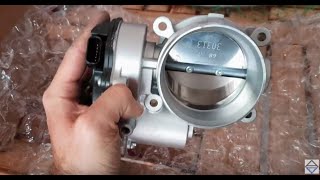
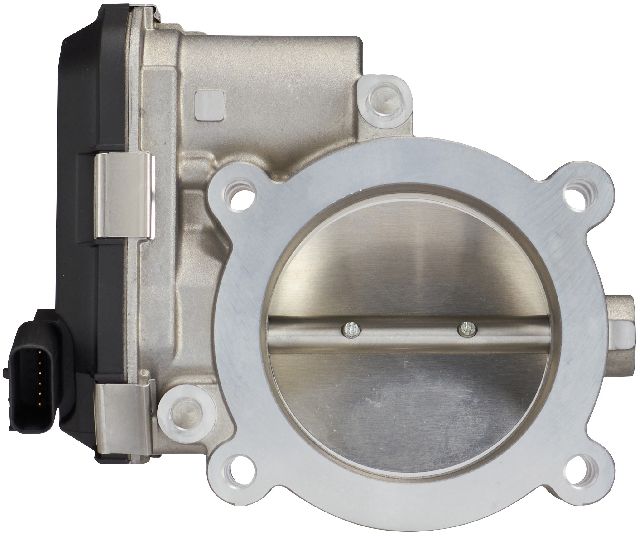
- Electronic Throttle Body Assembly
(OEM #ML1Z-9E926-A)— This part is the secondary cause of failure after the software issue. If the PCM software update does not resolve the code, the throttle body itself may have a mechanical or electrical fault.
Trusted brands: Motorcraft
OEM price range: $275-$455
Aftermarket price range: $95-$215
Technical Service Bulletins (TSBs) & Recalls
- TSB 23-2364: Addresses P2101 with reduced power on startup, recommending a PCM software update to correct the condition.
- SSM 51827: An early communication acknowledging P2101 on the 3.5L GTDI engine, noting that a solution was in development.
- TSB 25-2320: A bulletin updating labor times for the service procedure related to the P2101 software fix.
Platform-Specific Known Issues
- Ford TSB 23-2364 explicitly states that some 2023 Expeditions built from 01-Dec-2022 through 30-Apr-2023 may exhibit reduced engine power and store DTC P2101 due to the PCM software level, with the fix being a reprogram.
- An earlier communication, SSM 51827, also noted the issue on the 3.5L GTDI engine, advising that the condition did not affect durability and that a fix was in development. It also mentioned that restarting the vehicle after waiting 30 seconds could temporarily clear the condition.
- Owners on expeditionforum.com describe the experience vividly: 'Started the truck this morning and got the wrench light... truck wouldn't go over 5 mph.' This highlights the severity of the 'limp mode' and corroborates that it often happens on a cold start.
Mechanic-Grade Diagnostic Values
- Throttle Position Sensor (TPS) Voltage — expected: 0.5V - 4.5V from closed to wide-open throttle. At idle, expect approximately 10-15%.. Failure: Voltage that is outside the 0.5V-4.5V range, or readings that do not change smoothly as the accelerator pedal is pressed.
- Throttle Actuator Motor Current Draw — expected: Typically 0-10 Amps.. Failure: Current draw that exceeds 10A or shows erratic spikes, indicating a struggling or shorted motor.
- Voltage Drop at Throttle Body Connector — expected: Less than 0.5V compared to PCM supply voltage.. Failure: A voltage drop greater than 0.5V suggests high resistance in the wiring or a corroded connector.
Scan Tool Commands That Help
- Ford Diagnostic & Repair System (FDRS): PCM Reprogram — This is the primary fix specified by Ford in TSB 23-2364 to resolve the P2101 software glitch. The function updates the PCM to the latest calibration.
- Ford Diagnostic & Repair System (FDRS) or equivalent bidirectional scanner: Clear/Reset Keep Alive Memory (KAM) — This procedure should be performed after replacing a throttle body to clear the old adaptive values stored in the PCM, forcing it to relearn the parameters of the new component.
- Professional Scan Tool: Electronic Throttle Control (ETC) Learn — After cleaning or replacing the throttle body, this function commands the PCM to perform a relearn procedure to find the new closed and wide-open throttle positions.
Wiring & Ground Locations
- PCM Grounds — Located on the firewall in the engine compartment. There may be one or two ground points depending on the specific model and engine configuration.. The PCM controls the electronic throttle body. A poor ground connection at the PCM can cause erratic behavior and false codes, including P2101. Ensuring these grounds are clean and tight is a critical step if electrical issues are suspected.
- Main Battery Ground — Connects from the negative battery terminal to the chassis, typically on the fender wall just in front of the washer fluid reservoir.. A compromised main ground can cause a host of floating voltages and unpredictable electrical problems throughout the vehicle, potentially affecting the throttle control system.
- Throttle Body Connector — The electrical connector plugs directly into the electronic throttle body assembly.. This is the direct interface between the PCM and the throttle actuator motor and position sensors. Corrosion, moisture, or loose pins in this connector are a common point of failure for throttle-related codes.
Real Owner Repair Stories
- Ford F150 Forum (platform mate) (2023 Ford F-150 3.5L EcoBoost) — Wrench light and P2101 code appeared. Vehicle went into limp mode.
❌ Tried (didn't work) The dealership performed the PCM update as per TSB 23-2364, but the code returned the next day.
✅ What actually fixed it The owner returned to the dealership. The technician performed the PCM software update a second time, which successfully resolved the issue. This suggests the first flash may not have completed correctly.
When the Usual Fixes Don't Work
- While the vast majority of P2101 codes on this specific vehicle are due to the software glitch fixed by TSB 23-2364, there is a real-world case on a platform-mate F-150 where the initial software flash performed by the dealer did not fix the problem. The code returned the following day. The ultimate fix was for the dealer to perform the exact same PCM reprogram procedure a second time, which then permanently resolved the code. This indicates that a failed or incomplete flash can occur, and one should not immediately assume the throttle body is bad if the code returns after the first attempt at the TSB.
Model Year Variations Within This Range
- 2023: According to TSB 23-2364, Expedition models built between December 1, 2022, and April 30, 2023, are specifically prone to the P2101 software issue. Vehicles built before or after this range are less likely to have this specific software-related cause.
Helpful Videos

Used OEM Parts in Stock

New Aftermarket Parts Available


The information in this article is provided for general reference and educational purposes only. Vehicle specifications, procedures, and part compatibility can vary by production date, trim level, and region. Always consult your vehicle's factory service manual and verify part numbers before purchasing or performing repairs. Safety-critical components such as airbags, seat belts, and braking systems should be installed by a qualified professional.
- Ford EXPEDITION:
- 🎬 Helpful Videos
- 🛍️ Shop This Part
- What's Unique About the 2023-2023 Ford EXPEDITION
- Diagnostic Flowchart
- Symptoms You May Notice
- Most Likely Causes
- Rare But Worth Checking
- Diagnosis Steps
- Parts You'll Likely Need
- Technical Service Bulletins (TSBs) & Recalls
- Platform-Specific Known Issues
- Mechanic-Grade Diagnostic Values
- Scan Tool Commands That Help
- Wiring & Ground Locations
- Real Owner Repair Stories
- When the Usual Fixes Don't Work
- Model Year Variations Within This Range
- 🎟️ Get 5% Off