

P2101 on 2005-2009 Chevrolet Trailblazer: Throttle Actuator Fixes and Causes
On a 2005-2009 Trailblazer, P2101 almost always indicates a problem with the electronic throttle body, causing 'Reduced Engine Power' mode. The most common fix is to thoroughly clean the throttle body of carbon buildup. If that fails, the entire throttle body assembly needs to be replaced, costing between $150 and $350 for the part. Wiring issues near the throttle body connector are also a known possibility.
- P2101 on a Trailblazer will almost certainly put the truck in 'Reduced Engine Power' mode.
- Start your diagnosis by thoroughly cleaning the throttle body; this is a very common and low-cost potential fix.
- If cleaning doesn't work, inspect the wiring harness near the throttle body connector for damage before buying a new part.
- If cleaning and wiring checks don't solve it, the most likely solution is to replace the entire throttle body assembly.
- Always perform an idle relearn procedure after cleaning or replacing the throttle body to ensure proper engine operation.
What's Unique About the 2005-2009 Chevrolet TRAILBLAZER
The GMT360 platform, which includes the Trailblazer, is known for throttle body issues that trigger P2101, especially on higher mileage vehicles. A common cause is heavy carbon buildup on the throttle plate and bore, which restricts its movement. As the engine compensates for this buildup over time, the learned values can be thrown off, leading to the code. Chevrolet issued Technical Service Bulletin PIP4578B acknowledging that this code, along with others, can appear due to this buildup. Another TSB, PIP4573B, notes the code can be triggered in extremely cold weather (around -10°F / -23°C) due to a frozen PCV system causing moisture and sludge in the throttle body.
Diagnostic Flowchart
Tap your situation to follow the diagnostic path that matches what you're seeing on this vehicle.
Symptoms You May Notice
- Check Engine Light is on
- "Reduced Engine Power" message displayed
- Severely limited acceleration and power (limp mode)
- Unstable, surging, or rough idle
- Engine may stall at stops
- Hesitation or stumbling on initial acceleration
- In rare cases, a complete no-crank condition, as the PCM may inhibit the starter relay if it can't verify a safe throttle position. 🎬 Watch: Troubleshooting a no-crank condition caused by these throttle codes.
- Replacing the Accelerator Pedal Position (APP) sensor. P2101 specifically points to a performance problem at the throttle body motor, not the pedal sensor. A faulty APP sensor typically sets different codes, such as P2138.
- Replacing the Mass Airflow (MAF) sensor. While cleaning the MAF is good practice and can solve other issues, it is not a primary cause for P2101.
Most Likely Causes
- Dirty or Sticking Throttle Body 🔴 High Probability As documented in TSB PIP4578B, high-mileage GMT360 vehicles are prone to significant carbon buildup which can cause the throttle plate to stick or move slowly, triggering a performance code. The ECM learns to compensate for minor buildup, but eventually cannot adjust enough, leading to the fault.
How to confirm: Remove the air intake hose from the throttle body and visually inspect the throttle plate and bore for a thick, black ring of carbon deposits. The plate should move smoothly when pushed gently with a finger (with the ignition off).
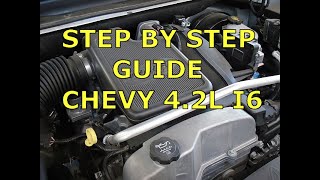
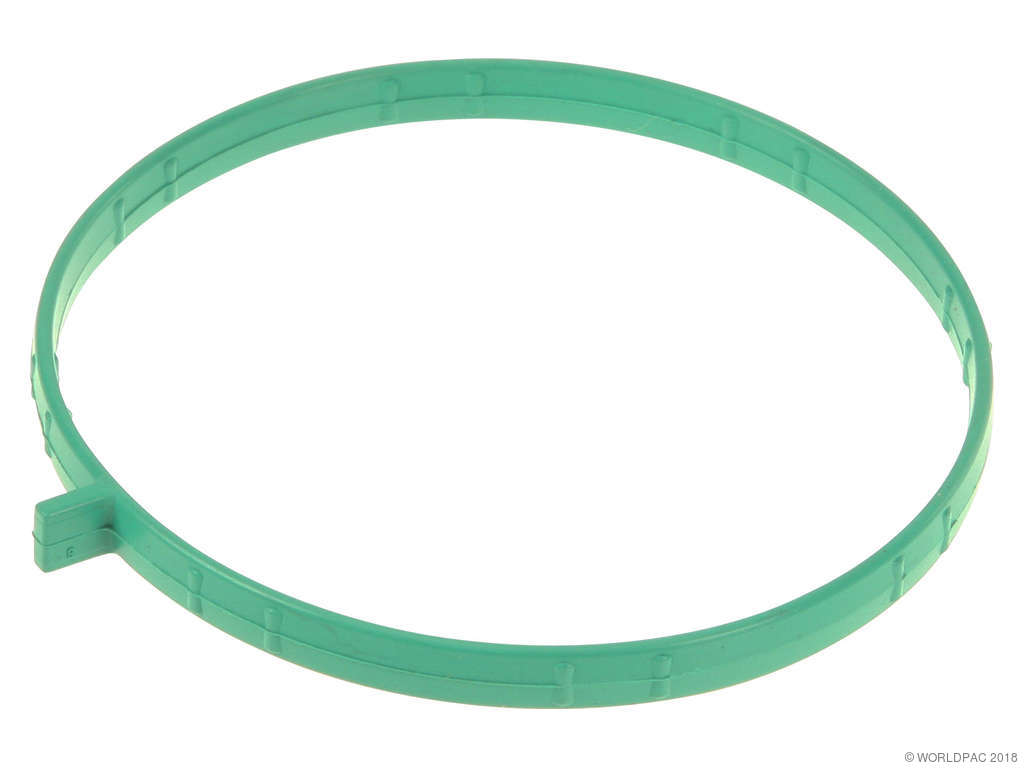
Typical fix: Remove the four 10mm bolts holding the throttle body, disconnect the electrical connector, and clean it thoroughly off the vehicle using a dedicated throttle body cleaner, a soft cloth, and a soft-bristled brush. Do not use a metal brush or aggressive scrapers. The green gasket is typically reusable if not damaged. An idle relearn procedure is required after reinstallation. 🎬 See this step-by-step guide on cleaning your throttle body properly.
Est. part cost: $5-$15 for cleaner - Failing Throttle Body Assembly 🔴 High Probability The internal electric motor or the dual Throttle Position Sensors (TPS) within the sealed assembly are a common failure point. The resistive strips on the sensors can wear out, creating dead spots, or the motor can weaken. Cleaning is often only a temporary fix if the electronics are failing.
How to confirm: If a thorough cleaning does not resolve the code, and the wiring is confirmed to be good, the throttle body assembly itself is the likely culprit. A scan tool can monitor commanded vs. actual throttle position; a lag or mismatch indicates a failing unit. In some severe failure cases, the throttle plate will be physically stuck and cannot be moved by hand.
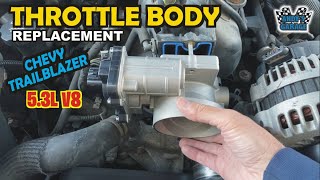
Typical fix: Replace the entire throttle body assembly. An idle relearn procedure is required after replacement.
Est. part cost: $150-$350 - Wiring Harness or Connector Issue 🟡 Medium Probability Due to engine vibration and heat, the wires in the harness leading to the throttle body can break internally or have poor terminal connections, often within 1-4 inches of the connector. The thin-gauge wires can become brittle and fail while the outer insulation appears intact.
How to confirm: Inspect the connector at the throttle body for corrosion or loose pins. With the engine running, wiggle the harness near the connector to see if it causes a change in idle or triggers the code. Perform a continuity and resistance check on each wire between the throttle body and the ECM.
Typical fix: Repair the broken wire(s) or replace the throttle body connector pigtail.
Est. part cost: $20-$40 for a pigtail connector
Rare But Worth Checking
- Failing Powertrain Control Module (PCM): This is very rare. The PCM should only be considered after all other possibilities, including the throttle body and wiring, have been definitively ruled out. One user on a forum replaced the PCM for a P2101 only to find the issue persisted, pointing back to other causes.
- Frozen PCV System in Extreme Cold: As per TSB PIP4573B, in ambient temperatures around -10°F (-23°C), the PCV system can freeze. This can cause excessive moisture, sludge, and ice to form in the crankcase and get drawn into the intake, potentially freezing or impeding the throttle plate and triggering P2101.
Diagnosis Steps
- Read all diagnostic trouble codes from the ECM. Note any other codes that appear with P2101, as they provide critical context.
- Visually inspect the wiring harness and 8-pin connector going to the throttle body. Look for any signs of damage, corrosion, or loose pins.
- Remove the air intake duct. Inspect the throttle bore and plate for significant black carbon buildup.
- With the ignition off, gently try to move the throttle plate with your finger. It should move smoothly and return to its resting position without sticking. If it is completely seized, the throttle body has failed.
- If significant carbon is present, remove the throttle body and clean it thoroughly with appropriate cleaner. Reinstall and perform an idle relearn procedure.
- If the code returns after cleaning, the issue is likely the throttle body itself or the wiring.
- Wiggle the wiring harness near the throttle body connector with the engine running to see if the fault can be duplicated, which would indicate a wiring issue.
- If wiring is confirmed to be good, replace the throttle body assembly.
- After replacement, clear all codes and perform the idle relearn procedure. For this vehicle, this can often be done without a scan tool by letting the engine idle for 3 minutes, turning it off for 60 seconds, and then idling again for 3 minutes. A scan tool provides a more reliable reset.
Parts You'll Likely Need
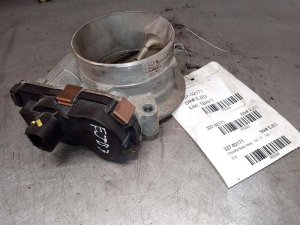
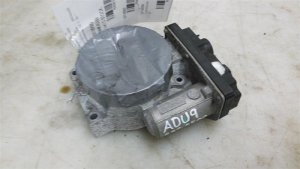
- Throttle Body Assembly
(OEM #12568580)— This is the most common definitive fix for P2101 when cleaning fails. The internal motor and sensors wear out over time, and the entire unit must be replaced. This part number corresponds to the 4.2L I6 engine.
Trusted brands: ACDelco, Bosch, Hitachi, Dorman
OEM price range: $200-$350
Aftermarket price range: $150-$250
Related Codes That Often Appear With This One
- P1516 — This is a manufacturer-specific code for 'Throttle Actuator Control (TAC) Module Throttle Actuator Position Performance', which is nearly identical in meaning to P2101 and is often set in conjunction with it.
- P2119 — This code relates to 'Throttle Closed Position Performance' and indicates the ECM is having trouble verifying the throttle's closed state, which can happen if it's stuck open by carbon or internal failure. It can also accompany the no-crank symptom.
- P2176 — This code means 'Minimum Throttle Position Not Learned' and is often triggered after a battery disconnect, throttle body cleaning, or if the throttle body is malfunctioning, preventing the ECM from completing its idle learning cycle.
Technical Service Bulletins (TSBs) & Recalls
- PIP4578B: 'SES Light, Idle Surge, and/or Reduced Engine Power Mode with DTCs... P2101... - Clean Throttle Body and Perform Idle Learn Reset'. Confirms that on high mileage vehicles, carbon buildup is a primary cause and details the codes that result.
- PIP4573B: 'Diagnostic Tips For SES Light With DTCs P1516 P2101 P2119 And/Or P2176 When Colder Than -10F (-23C)'. Links the code to a frozen PCV system in extreme cold and advises inspecting for ice/sludge in the PCV hoses and throttle body.
Platform-Specific Known Issues
- A known issue documented in TSB PIP4578B can cause this code on high-mileage vehicles due to carbon buildup in the throttle body, requiring cleaning and an idle relearn.
- TSB PIP4573B notes that this code can be set during cold starts in ambient temperatures around -10°F (-23°C), pointing to a potential frozen PCV system that allows moisture and sludge to interfere with throttle operation.
- In some cases, a severe throttle body fault can cause a no-crank condition. The ECM may inhibit the crank signal as a safety measure when it cannot verify the throttle's position, even if it receives the crank request from the ignition.
Mechanic-Grade Diagnostic Values
- Throttle Body Connector Pinout (at the throttle body) — expected: Pin A (DK GRN): TPS 1 Signal | Pin B (LT BLU/BLK): 5V Ref (TPS 2) | Pin C (BLK): Ground (TPS 1) | Pin D (PPL): TPS 2 Signal | Pin E (YEL): TAC Motor Control | Pin F (BRN): TAC Motor Control | Pin G (GRY): 5V Ref (TPS 1) | Pin H (BLK/WHT): Ground (TPS 2). Failure: Incorrect voltages, lack of continuity to ground, or open/shorted signal wires when tested against the PCM.
- TPS 1 Internal Resistance (across pins C and G) — expected: Approximately 3 kΩ. Failure: A reading of 0 Ohms indicates a short circuit, while an open circuit (OL) indicates a break. Either requires throttle body replacement.
- TAC Motor Resistance — expected: Typically between 5 and 15 ohms across the motor pins (E and F).. Failure: Infinite resistance (OL) or zero resistance (short) indicates a failed motor, requiring throttle body replacement.
- TPS Signal Voltage (Key On, Engine Off) — expected: Approximately 0.5V to 0.7V at idle (closed throttle) and smoothly increasing to around 4.5V at wide-open throttle.. Failure: Voltage that is stuck, jumps erratically, or doesn't change when the throttle plate is moved indicates a failed TPS sensor.
Scan Tool Commands That Help
- GM Tech2 / GDS2 or equivalent professional scanner: Idle Learn Reset — This function should be used after cleaning or replacing the throttle body to force the ECM to relearn the new minimum throttle position. Failing to do this can cause high idle, stalling, and the P2176 code to appear.
- GM Tech2 / GDS2 or equivalent professional scanner: TAC Motor Control / Actuator Test — This bidirectional command allows the technician to command the throttle plate to open to specific percentages. It is used to verify if the motor is physically responding to ECM commands, helping to distinguish between a failed motor, a wiring issue, or a PCM driver fault.
Wiring & Ground Locations
- G103 — On the left side of the radiator support in the front of the underhood compartment.. This is a primary chassis ground for multiple engine components and sensors. A corroded or loose G103 can cause erratic sensor readings and insufficient voltage for actuators like the throttle body motor, leading to performance codes like P2101.
- G107 / G108 — Both are located on the lower left side of the engine block.. These are critical engine block grounds. The PCM and its related sensors, including the throttle body, rely on a solid ground connection to the engine. A loose or corroded connection at G107 or G108 can introduce electrical noise and voltage drops, directly impacting throttle control.
- Throttle Body Connector — The 8-pin connector directly on the throttle body assembly.. This is the single point of connection for power, ground, and signal lines for both the motor and the two TPS sensors. The wires in the pigtail leading to this connector are a common failure point due to heat and vibration, often breaking internally within a few inches of the connector.
Real Owner Repair Stories
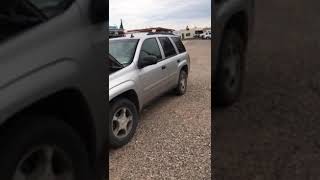
- YouTube channel 'Verde Valley Auto Electric' (2006 Chevrolet Trailblazer 4.2L) — No-crank, no-start condition with 'Reduced Engine Power' light on. Codes P2101, P2119, and P1682 were present.
❌ Tried (didn't work) Checked all fuses., Replaced a bad relay (which cleared the P1682 code but did not fix the no-crank)., Attempted to jump the starter at the fuse box; engine would crank but not start because the PCM was not engaging the fuel pump relay., Used a scan tool which showed the PCM was receiving the crank request but not sending the signal to the starter or fuel pump relays.
✅ What actually fixed it The technician diagnosed a completely seized throttle body. The internal motor had failed and the throttle plate was stuck shut, which could not be moved even by hand. The PCM was inhibiting the crank and fuel pump relays as a safety precaution because it could not verify a safe throttle position. Replacing the entire throttle body assembly resolved all codes and the no-crank condition.
OEM Part Supersession History
12568580→ACDelco 217-2296— Standard part number update and branding change from GM to ACDelco Genuine Parts.
Heads up: The part numbers 12568580 and 217-2296 are interchangeable for the 2005-2007 Trailblazer 4.2L engine.
Model Year Variations Within This Range
- 2008-2009: For the 2008-2009 model years with the 4.2L L6 engine, the throttle body part number changed. The correct replacement part numbers are 12616437 or F00H600078. The earlier part (12568580) is not listed as compatible for these later years.
Helpful Videos
Used OEM Parts in Stock


New Aftermarket Parts Available




The information in this article is provided for general reference and educational purposes only. Vehicle specifications, procedures, and part compatibility can vary by production date, trim level, and region. Always consult your vehicle's factory service manual and verify part numbers before purchasing or performing repairs. Safety-critical components such as airbags, seat belts, and braking systems should be installed by a qualified professional.
- Chevrolet TRAILBLAZER:
- 🎬 Helpful Videos
- 🛍️ Shop This Part
- What's Unique About the 2005-2009 Chevrolet TRAILBLAZER
- Diagnostic Flowchart
- Symptoms You May Notice
- Most Likely Causes
- Rare But Worth Checking
- Diagnosis Steps
- Parts You'll Likely Need
- Related Codes That Often Appear With This One
- Technical Service Bulletins (TSBs) & Recalls
- Platform-Specific Known Issues
- Mechanic-Grade Diagnostic Values
- Scan Tool Commands That Help
- Wiring & Ground Locations
- Real Owner Repair Stories
- OEM Part Supersession History
- Model Year Variations Within This Range
- 🎟️ Get 5% Off