

P2101 on 2014-2019 Chevy Silverado 1500: Throttle Actuator Control Causes and Fixes
On a 2014-2019 Silverado, code P2101 almost always points to a failing throttle body, causing a 'Reduced Engine Power' warning. The most common fix is replacing the entire throttle body assembly, which costs around $120-$250 for the part and is a straightforward DIY job. Before replacement, check for software updates and inspect wiring.
- P2101 on a 2014-2019 Silverado is a strong indicator of a failed throttle body assembly.
- The primary symptom is the truck entering 'Reduced Engine Power' mode, making it unsafe for normal driving.
- Do not confuse this with a faulty gas pedal; the problem is at the engine's throttle body.
- Replacing the throttle body is a common DIY repair that can be done in under an hour with basic tools.
- After replacement, a throttle idle relearn procedure is necessary to ensure smooth operation.
What's Unique About the 2014-2019 Chevrolet SILVERADO 1500

On this generation of Silverado and its platform mates, the P2101 code is a very common and well-documented issue. The problem is so frequent that General Motors has issued multiple Technical Service Bulletins (TSBs) that directly point to the throttle body assembly as the likely culprit. Unlike in some vehicles where cleaning carbon buildup might suffice, on these trucks, the failure is often internal to the electronic motor or sensors within the sealed throttle body assembly, making replacement the most reliable fix. Additionally, software anomalies have been identified by GM that can falsely trigger P2101, requiring a dealer software update.
Diagnostic Flowchart

Tap your situation to follow the diagnostic path that matches what you're seeing on this vehicle.
Generation note: This range covers the entire third generation (K2XX platform; 2014-2018) and the first year of the fourth generation (T1XX platform; 2019). The 2019 model year was a split, with the older K2XX body style sold as the 'Silverado 1500 LD'. The throttle body issues related to P2101 are primarily documented for the third-generation K2XX platform and early T1XX models.
Symptoms You May Notice

- "Reduced Engine Power" message on the dashboard
- Check Engine Light is on
- Vehicle will not accelerate properly or has a fixed, limited speed
- Unstable or rough idle
- Hesitation or stumbling when trying to accelerate
- In some cases, a no-start condition where the engine clicks but does not crank, especially after sitting.
- "Service Stabilitrak" or "Service Traction Control" message may appear alongside the others.
- Replacing the Accelerator Pedal Position (APP) sensor. P2101 specifically relates to the throttle body motor's performance, not the driver's pedal input. The APP sensor has its own distinct set of trouble codes (e.g., P2135, P2138).
Most Likely Causes

- Faulty Throttle Body Assembly 🔴 High Probability As noted in GM Technical Service Bulletin #PIP5660B, these trucks have a known issue with internal throttle body failures that specifically trigger code P2101. The internal electronic components and plastic gears are common failure points.
How to confirm: Use a scan tool with bidirectional controls to command the throttle plate from 0% to 100%. Listen for binding or clicking sounds and watch to see if the plate moves smoothly and corresponds to the commanded percentage. A failure to respond correctly, or getting stuck, confirms a bad throttle body.
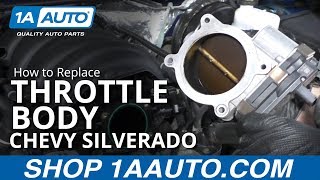
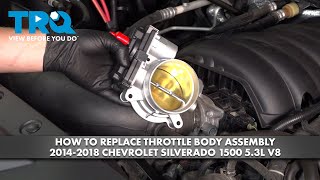
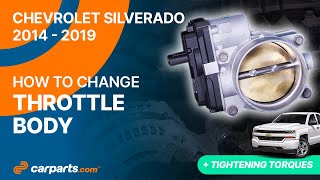
Typical fix: Replace the entire throttle body assembly. 🎬 Watch this step-by-step guide to replacing the throttle body assembly. After replacement, a throttle idle learn procedure is required. This can be done with a scan tool or by following a manual procedure, such as letting the engine idle for 3 minutes, turning it off for 60 seconds, and then idling for another 3 minutes.
Est. part cost: $120-$250 - Wiring or Connector Issue 🟡 Medium Probability The wiring harness to the throttle body is subject to engine heat and vibration, which can lead to chafing, broken wires, or poor terminal tension over time.
How to confirm: Visually inspect the wiring harness and the 6-pin connector at the throttle body for any signs of corrosion, chafing, or loose pins. Wiggle the connector with the engine running to see if it induces the fault. Check for good terminal tension on each pin in the connector. TSB #PIP5660B specifically advises verifying terminal tension at both the ECM and throttle body connectors.
Typical fix: Repair the damaged section of the wiring harness or clean/replace the connector pigtail.
Est. part cost: $10-$50 - Outdated ECM Software ⚪ Low Probability GM has released software updates to address false P2101 codes. TSB #18-NA-063 addresses a software anomaly on 2017-2018 models where a feature called 'Driver Door Open Prime' could falsely set P2101, especially with a low battery. Another bulletin, PIP5501, discusses a similar issue for 2017 models.
How to confirm: A GM dealership or a shop with access to GM's service information system (TIS2Web) can check your vehicle's VIN for any open campaigns or required ECM software updates that address P2101.
Typical fix: Update the ECM software using a dealership-level scan tool. This is often the first step a dealer will take.
Est. part cost: $0 (labor cost will apply, typically 1-1.5 hours)
Rare But Worth Checking
- Failing Starter Motor: Multiple owners have reported that a failing starter can cause a significant voltage drop during startup, which confuses the ECM and triggers the P2101 code along with a no-crank, single-click condition. If the issue only happens during starting and a new throttle body doesn't fix it, the starter should be investigated. 🎬 See how a failing starter can trigger these throttle codes.
- Faulty Engine Control Module (ECM): This is extremely rare and should only be considered after all other possibilities, including the throttle body, wiring, software, and starter have been definitively ruled out.
Diagnosis Steps
- Read all diagnostic trouble codes with an OBD-II scanner. Note P2101 and any other codes present, like P1516 or P2119.
- Check with a dealer if any ECM software updates related to P2101 (e.g., TSB #18-NA-063) are available for your VIN.
- Visually inspect the throttle body electrical connector and wiring harness for any damage, corrosion, or loose connections. Check for good pin tension.
- If available, use a scan tool with live data to monitor the commanded vs. actual throttle position. Command the throttle plate to open and close, checking for smooth operation.
- If the throttle plate sticks, moves erratically, or makes clicking/grinding noises, the throttle body assembly is faulty and needs replacement.
- If the throttle body appears to function but the code returns, use a multimeter to check for proper voltage and ground at the throttle body connector to rule out a wiring issue.
- If the problem only occurs during startup and is accompanied by a no-crank, single-click condition, test the battery and starter system to rule out a voltage drop issue.
- Before replacing the throttle body, consider removing it and cleaning it thoroughly with throttle body cleaner and a soft cloth, as heavy carbon buildup can cause sticking. Do not spray cleaner directly into the electronics. 🎬 Watch a professional diagnostic walkthrough for these specific trouble codes.
Parts You'll Likely Need
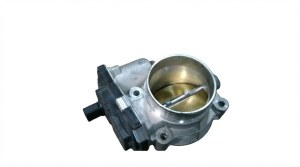
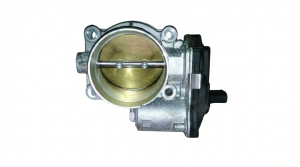
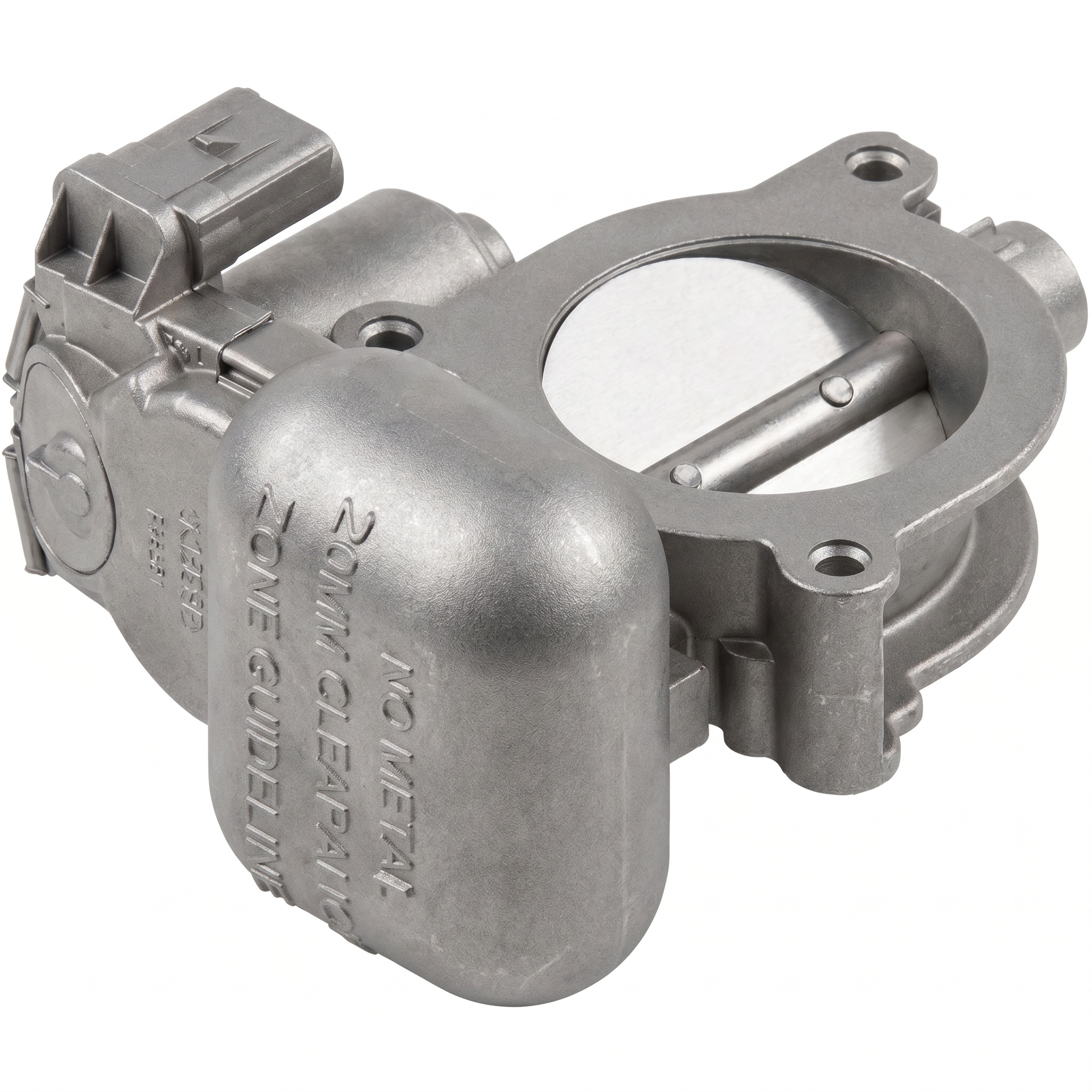
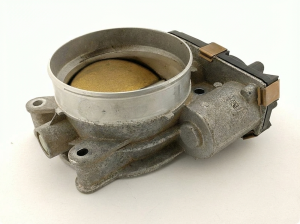
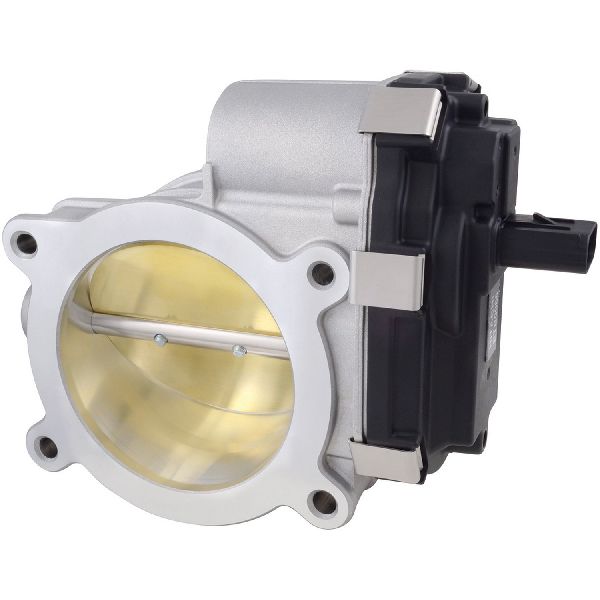
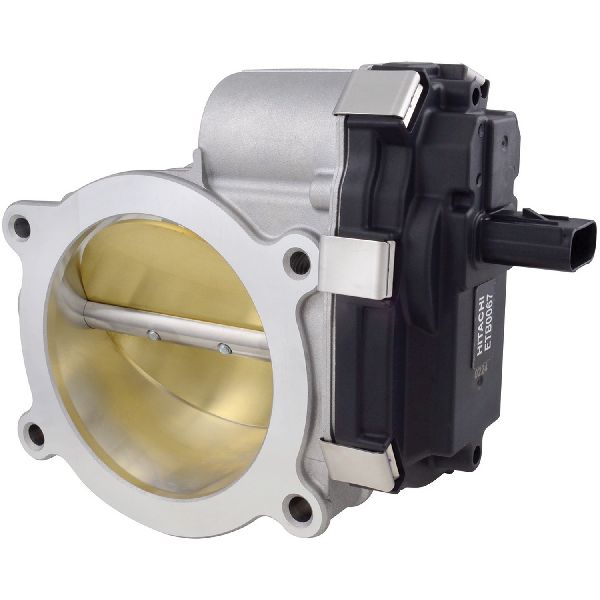
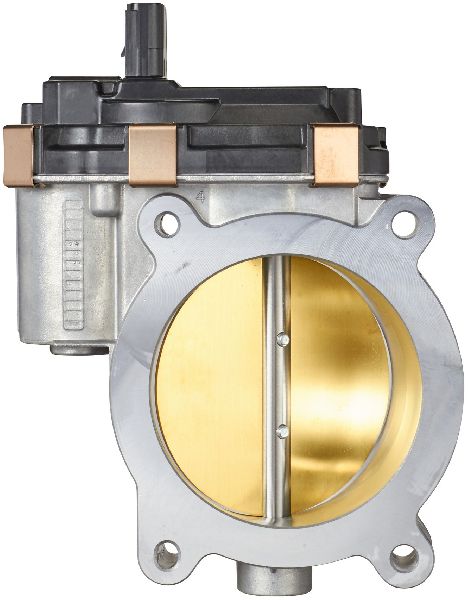
- Throttle Body Assembly
(OEM #12670839 (may supersede 12640406))— This is the most common failure part for code P2101 on this vehicle, as confirmed by owner experiences and manufacturer TSBs. The internal electronics of the original part are prone to failure.
Trusted brands: ACDelco, GM Genuine Parts, Hitachi, Standard Motor Products
OEM price range: $180-$280
Aftermarket price range: $120-$180
Related Codes That Often Appear With This One
- P1516 — This code for 'Throttle Actuator Control (TAC) Module Throttle Actuator Position Performance' is a companion code often set with P2101, as both point to a discrepancy between the commanded and actual throttle position. TSB #PIP5660B mentions them together.
- P2119 — This code indicates 'Throttle Closed Position Performance,' suggesting the throttle plate isn't returning to its default position correctly, which is another symptom of a failing or carbon-fouled throttle body.
- P0068 — This code relates to a mismatch between the MAP sensor, MAF sensor, and throttle position. A faulty throttle body providing incorrect airflow can cause this correlation error.
Technical Service Bulletins (TSBs) & Recalls
- PIP5660B: Communicates the possibility of a reduced power message with DTC P2101 due to a potential throttle body issue on 2019 models.
- 18-NA-063: Details a software anomaly causing false P2101 codes on 2017-2018 models and prescribes an ECM software update as the fix.
- PIP5501: Preliminary information related to TSB 18-NA-063, identifying the 'Driver Door Open Prime' feature as a potential cause for false codes on 2017 models.
- PIP4578B: Superseded bulletin that previously identified P2101 as a code related to reduced engine power on high-mileage vehicles, often due to carbon buildup.
Platform-Specific Known Issues
- GM Technical Service Bulletin #PIP5660B directly addresses a 'reduced power message with dtc p2101 and/or p1516 due to potential throttle body issue' for the 2019 model year, advising replacement for vehicles built before VIN breakpoint KF207339.
- TSB #18-NA-063 (and the related PIP5501) describes a software anomaly in 2017-2018 models where the 'Driver Door Open Prime' feature could falsely set P2101, especially with a low battery. The fix is an ECM reprogram.
- An older TSB, #PIP4578B, also listed P2101 among several codes related to reduced engine power mode on high-mileage vehicles, pointing to a history of this issue often caused by carbon buildup.
Mechanic-Grade Diagnostic Values
- Throttle Position Sensor (TPS) Signal Voltage — expected: Should rise smoothly from ~0.5V-0.7V at closed throttle to ~4.5V at wide-open throttle.. Failure: Voltage that is erratic, jumps, or has dead spots when the throttle plate is moved indicates a failing sensor.
- Throttle Actuator Motor Voltage (at connector) — expected: 9V - 14V when the actuator is commanded to move by a scan tool.. Failure: Voltage below 8V suggests a problem with the power supply, wiring, or a poor ground connection, not necessarily the throttle body itself.
- Voltage Drop Test on TAC Motor Circuit — expected: Less than 0.5V drop between the PCM supply voltage and the voltage measured at the motor connector.. Failure: A voltage drop greater than 0.5V points to high resistance in the wiring or a corroded connector.
- Throttle Actuator Motor Current Draw — expected: Typically between 0A and 10A, depending on load.. Failure: An unusually high current draw can indicate a binding throttle plate or a failing motor.
Scan Tool Commands That Help
- GDS2 / Professional Scan Tool: Throttle Control Actuator Test — This bidirectional control is used with the engine off to command the throttle plate to specific positions (e.g., 10%, 50%, 100%). It directly tests the motor's function and can reveal if the plate is sticking, binding, or not responding to commands.
- GDS2 / Professional Scan Tool: Throttle/Idle Learn (or 'Reset ECM Learned Values') — This function must be used after replacing or cleaning the throttle body. It clears the old learned values from the ECM, forcing it to recalibrate to the new throttle body's closed position, which prevents high idle or stalling issues.
Wiring & Ground Locations

- G103 — Typically bolted to the front of the passenger-side cylinder head.. This is a main engine ground. A loose or corroded connection here can cause unstable voltage and erratic signals for the ECM and its sensors, potentially triggering false P2101 codes.
- G104 — Typically bolted to the rear of the driver-side cylinder head.. Another primary engine block ground. Similar to G103, a poor connection can cause widespread electrical issues that affect the throttle control system.
- Throttle Body Connector (X87) — The 6-pin electrical connector on the throttle body assembly itself.. This is the direct connection point for the throttle actuator motor and position sensors. It should be checked for corrosion, backed-out pins, or poor terminal tension, which are common causes of intermittent P2101 faults.
When the Usual Fixes Don't Work
- While replacing the throttle body is the most frequent fix for P2101, it is not always the solution. If a new throttle body does not resolve the code, the diagnostic path should immediately shift. The next most likely cause is an issue in the wiring harness or a critical ground connection. Technicians report that inspecting the main engine grounds (G103/G104) for corrosion and performing a voltage drop test on the throttle body connector pins can often uncover a hidden wiring fault that was the true root cause. In rarer cases, particularly when the fault only appears during startup with a 'single click' symptom, the cause has been traced to a failing starter motor creating a severe voltage drop that disrupts the ECM's self-check of the throttle body.
OEM Part Supersession History
12627217, 12669073→12670839— Internal design and material improvements to increase reliability and prevent premature electronic failure.
Heads up: The replacement part 12670839 may require a programming or special setup procedure after installation, which may need a dealer-level scan tool.
Model Year Variations Within This Range
- 2014-2019: While the P2101 issue is common across the generation, the specific throttle body part number differs based on the engine (e.g., 4.3L V6, 5.3L V8, 6.2L V8). It is critical to order the part based on the vehicle's specific engine, not just the model year.
Helpful Videos


Used OEM Parts in Stock


New Aftermarket Parts Available


The information in this article is provided for general reference and educational purposes only. Vehicle specifications, procedures, and part compatibility can vary by production date, trim level, and region. Always consult your vehicle's factory service manual and verify part numbers before purchasing or performing repairs. Safety-critical components such as airbags, seat belts, and braking systems should be installed by a qualified professional.
- Chevrolet SILVERADO 1500:
- 🎬 Helpful Videos
- 🛍️ Shop This Part
- What's Unique About the 2014-2019 Chevrolet SILVERADO 1500
- Diagnostic Flowchart
- Symptoms You May Notice
- Most Likely Causes
- Rare But Worth Checking
- Diagnosis Steps
- Parts You'll Likely Need
- Related Codes That Often Appear With This One
- Technical Service Bulletins (TSBs) & Recalls
- Platform-Specific Known Issues
- Mechanic-Grade Diagnostic Values
- Scan Tool Commands That Help
- Wiring & Ground Locations
- When the Usual Fixes Don't Work
- OEM Part Supersession History
- Model Year Variations Within This Range
- 🎟️ Get 5% Off