

P2101 on 2011-2018 Chevrolet Camaro: Throttle Actuator Fault Causes and Fixes
P2101 on a 2011-2018 Camaro almost always indicates a problem with the electronic throttle body. The most common fix is replacing the entire throttle body assembly. Cleaning it may work temporarily, but replacement is often necessary due to internal electronic failure. After replacement, a throttle relearn procedure is mandatory.
- P2101 on a 2011-2018 Camaro means there's a fault with the electronic throttle body.
- The most common symptoms are a 'Reduced Engine Power' warning and severely limited acceleration.
- While cleaning a dirty throttle body can sometimes work, the most frequent and permanent fix is replacing the entire throttle body assembly.
- Always check for the companion code P1516, which strongly points to the same issue.
- After replacing the part, a throttle relearn procedure is necessary but can usually be done by simply letting the car idle for a few minutes.
What's Unique About the 2011-2018 Chevrolet CAMARO

On many modern GM vehicles, including the Camaro, the P2101 code is a well-documented issue often leading to a "Reduced Engine Power" message on the dash. While wiring can be a cause, the throttle body assembly itself is the most frequent point of failure. The issue is common enough that a Technical Service Bulletin (TSB #PIP4578B) was issued for high-mileage vehicles experiencing this and related codes. The TSB explains that as carbon builds up, the PCM learns to compensate; if the throttle body is cleaned or power is disconnected, this learned memory is lost, leading to codes if a relearn procedure isn't performed.
Diagnostic Flowchart

Tap your situation to follow the diagnostic path that matches what you're seeing on this vehicle.
Generation note: This range covers the end of the 5th Generation (2011-2015) and the beginning of the 6th Generation (2016-2018) Camaro. While both use electronic throttle control, the specific throttle body part numbers will differ based on the engine (V6 vs. V8). However, the causes, symptoms, and diagnostic principles for P2101 are largely the same for both generations, as confirmed by TSBs and owner forums.
Symptoms You May Notice
- Reduced Engine Power message displayed
- Check Engine Light is on
- Vehicle has very limited acceleration (limp mode)
- Unstable or surging idle
- Engine may stall
- Delayed or jerky throttle response
- Mass Airflow (MAF) Sensor: While cleaning the MAF is good maintenance, it is not a direct cause of P2101, which is specific to the throttle actuator circuit.
- Accelerator Pedal Position (APP) Sensor: A faulty pedal sensor will typically set its own specific codes (like P2138). While part of the overall system, it's a separate component from the throttle actuator motor. One forum user replaced the pedal to no effect before finding the throttle body was the true cause.
Most Likely Causes

- Failing Throttle Body Assembly 🔴 High Probability As noted in TSB #PIP4578B, high-mileage vehicles are susceptible. The internal components, such as the motor's brushes, plastic gears, or the resistive tracks of the throttle position sensor, wear out over time, causing the actual throttle position to deviate from the commanded position. One user on CorvetteForum confirmed a bad throttle body motor via a resistance test.
How to confirm: Use a scan tool to monitor commanded vs. actual throttle position. If there is a significant discrepancy, or the throttle plate doesn't respond smoothly, the unit is likely faulty. Visually inspecting the internal electronic contacts may show heavy wear marks where the throttle spends most of its time.
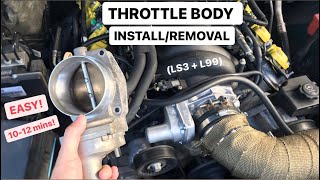
Typical fix: Replace the entire throttle body assembly. 🎬 Watch: Step-by-step throttle body replacement on a 5th Gen Camaro. After replacement, a throttle relearn procedure is required. Several forum users on Camaro5 and CorvetteForum confirmed that replacing the throttle body resolved their P2101 and P1516 codes.
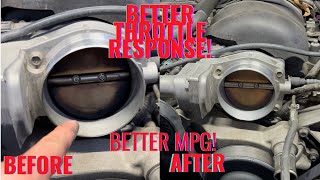
Est. part cost: $150-$350 - Dirty or Obstructed Throttle Body 🟡 Medium Probability Carbon and oil from the PCV system can build up around the throttle plate, preventing it from moving freely or closing properly. This is a common issue on all modern engines and is the primary subject of TSB #PIP4578B.
How to confirm: Visually inspect the inside of the throttle body and the throttle plate for heavy, black carbon deposits that could restrict movement.
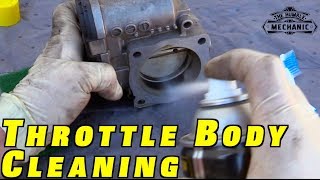
Typical fix: Remove the throttle body and clean it thoroughly with a dedicated throttle body cleaner and a soft cloth. Do not spray cleaner directly into the unit while it's connected, as this can damage the electronics. 🎬 See how to clean your throttle body the right way. A relearn procedure must be performed after cleaning.
Est. part cost: $10-$20 for cleaner - Wiring or Connector Issue ⚪ Low Probability GM vehicles of this era have had documented issues with wiring harnesses and connector terminals. Wires can break inside the insulation near the connector from engine vibration, or pins can lose tension, causing an intermittent connection to the throttle body.
How to confirm: Inspect the wiring harness and connector at the throttle body for any signs of damage, corrosion, or loose pins. Wiggle the harness with the engine running to see if it affects the idle or triggers the code.
Typical fix: Repair the damaged section of wire or replace the connector pigtail.
Est. part cost: $20-$50
Rare But Worth Checking
- Aftermarket Ported Throttle Body: Installing a ported or larger-than-stock throttle body can sometimes cause P2101 and P1516 because the airflow characteristics fall outside the range the stock ECM is calibrated for. Multiple owners on Camaro5, Camaro6, and CorvetteForum reported this issue after installing aftermarket throttle bodies, which was sometimes resolved by returning to the stock unit or getting a custom tune.
- Failing Powertrain Control Module (PCM): This is very rare. Before condemning the PCM, all other possibilities (throttle body, wiring) must be exhaustively ruled out. A faulty PCM can send incorrect commands or misinterpret sensor data.
- Weak or Failing Starter: In some GM trucks, a failing starter has been anecdotally linked to causing voltage drops that trigger a P2101 code upon startup, even though it's not directly related to the throttle system. While less documented on the Camaro, it's a possibility if starting issues are also present.
Diagnosis Steps
- Check for other stored DTCs. Codes like P1516 are a strong confirmation of a throttle body issue.
- Visually inspect the wiring harness and connector going to the throttle body for any obvious damage, corrosion, or loose pins.
- Remove the intake tube and inspect the throttle bore and plate for heavy carbon buildup that could cause it to stick.
- Using a capable scan tool, monitor the live data for Commanded Throttle Position and Actual Throttle Position. Command the throttle open and closed with the scan tool and watch for smooth, corresponding movement. Any sticking, lagging, or non-response points to a faulty throttle body.
- If cleaning the throttle body doesn't resolve the issue and the wiring is confirmed to be good, replace the throttle body assembly. A user on CorvetteForum fixed their issue by replacing the throttle body after a static resistance test on the motor showed it was bad.
- After replacement or cleaning, perform the throttle relearn procedure. This is critical. A common method is to start the engine and let it idle in Park for 3 minutes, turn the engine off for 1 minute, then start and idle again for 3 minutes. Other methods involve specific ignition cycles and pedal presses. If the idle is still not correct, a drive cycle may be needed. 🎬 Watch: How to perform a throttle relearn using a scanner.
Parts You'll Likely Need

- Throttle Body Assembly
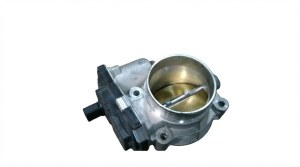
(OEM #12676296 (for 6.2L LT1 V8, 2016-2018), 12605109 (for 6.2L LS3/L99 V8, 2010-2015))— This is the most common failure point for P2101. The internal motor or sensors fail, requiring replacement of the entire sealed unit.
Trusted brands: ACDelco (GM Genuine), Hitachi, Standard Motor Products (SMP), Dorman
OEM price range: $250-$350
Aftermarket price range: $150-$250
Related Codes That Often Appear With This One
- P1516 — This is a GM-specific code for 'Throttle Actuator Control (TAC) Module Throttle Actuator Position Performance.' It is very commonly seen with P2101 as both point to a disagreement between the commanded and actual throttle position. Forum threads frequently mention these two codes appearing together.
- P2119 — This code relates to 'Throttle Actuator Control Throttle Body Range/Performance' and is also mentioned in TSB #PIP4578B alongside P2101, indicating they stem from the same root causes like carbon buildup.
- P0121 — This code for 'Throttle/Pedal Position Sensor 'A' Circuit Range/Performance' can sometimes appear if the PCM is confused about the data coming from the throttle body's internal sensors. It's also listed in TSB #PIP4578B.
Technical Service Bulletins (TSBs) & Recalls
- PIP4578B: Addresses idle surge, reduced engine power, and DTCs P0068, P0121, P1516, P2101, P2119, and/or P2176 on high mileage vehicles. It recommends cleaning the throttle body and performing an idle learn reset.
Platform-Specific Known Issues
- A Technical Service Bulletin (TSB #PIP4578B) was issued for multiple GM models and years, including the 2010-2018 Camaro V8, for idle surge, reduced engine power, and DTCs including P2101 on high-mileage vehicles. The bulletin explains that the PCM learns to compensate for carbon buildup, and if the throttle body is cleaned or the battery disconnected, this learned value is lost, causing issues until an 'idle learn reset' is performed with a scan tool or via a drive cycle.
Mechanic-Grade Diagnostic Values
- Throttle Position Sensor (TPS) Signal Voltage — expected: Approximately 0.5V - 1.0V at idle (throttle closed) and 4.0V - 4.5V at wide-open throttle (WOT). The voltage should increase smoothly as the throttle opens.. Failure: Voltage readings that are intermittent, drop to 0V, or do not change when the throttle plate moves indicate a faulty TPS.
- Throttle Actuator Control (TAC) Motor Resistance — expected: Typically between 2 and 10 ohms when measured across the two motor terminals on the throttle body.. Failure: An infinite resistance reading (open circuit) or a reading far outside the expected range suggests the internal motor has failed.
- Throttle Body Connector Voltage Supply — expected: Two separate 5V reference signals and two low reference (ground) circuits should be present at the connector with the key on, engine off.. Failure: Missing 5V reference or a high resistance on the ground circuit (greater than 1 ohm) points to a wiring or PCM issue.
Scan Tool Commands That Help
- GDS2 / Tech2 (or capable professional scanner): Throttle Position Control / Actuator Test — This bidirectional command allows the technician to command the throttle plate to specific angles (e.g., 10%, 25%, 50%) while observing the 'Actual Throttle Position' PID. It is used to verify if the throttle motor is responding correctly, sticking, or lagging behind the command, which confirms a faulty throttle body.
- GDS2 / Tech2 (or capable professional scanner): Idle Learn Reset / Throttle Learn Reset — This function must be used after cleaning or replacing the throttle body. It clears the old learned airflow values from the PCM, forcing it to recalibrate to the new, clean baseline idle position. Failing to do this often results in a high or unstable idle and can set other DTCs.
Wiring & Ground Locations

- Engine Block Grounds (5th Gen, LS3/L99) — Key grounds are located on the rear of both the driver and passenger side cylinder heads. Another small ground comes from the main harness to a bolt on the driver's side of the block. A major chassis ground is also located on the passenger side frame rail.. The ECM and throttle control system rely on clean ground connections. A corroded or loose engine ground can cause erratic sensor readings and insufficient voltage to the throttle actuator motor, potentially triggering a P2101.
- Engine Block Ground (6th Gen, LT1) — A critical ground attaches to the engine block underneath the passenger side exhaust manifold, near the starter. There are also two smaller grounds on the back of the passenger cylinder head.. The ground near the starter on 6th Gen models is reportedly often not tightened sufficiently from the factory. A loose connection here can cause a voltage drop to various systems, including the throttle body, leading to intermittent P2101 codes and other electrical issues like an erratic tachometer.
- Throttle Body Connector (Generic GM 6-pin) — The 6-pin connector at the electronic throttle body.. Knowing the pin functions is critical for testing. The two thickest wires are typically for the motor (e.g., Yellow and Brown). The other four are for the dual Throttle Position Sensors, each having its own 5V reference and ground. Testing for 5V power and good ground at this connector is a primary diagnostic step.
Real Owner Repair Stories
- Camaro6.com user 'MakCamaro' (2020 Camaro ZL1 (6th Gen)) — After installing an aftermarket (Soler) 95mm throttle body and Roto-Fab cold air intake, the car would enter 'Reduced Power' limp mode with a Check Engine Light after 5-20 minutes of driving.
❌ Tried (didn't work) Performing the throttle relearn procedure multiple times with the aftermarket throttle body installed.
✅ What actually fixed it The user removed the aftermarket throttle body and adapter, reinstalled the OEM throttle body, and performed the relearn procedure. The car returned to normal operation with no CEL or limp mode, confirming the aftermarket part was the cause of the P2101 code.
OEM Part Supersession History
12605109→19420707— Standard part number update/revision by GM.
Heads up: This is the correct 90mm 'gold blade' throttle body for 2011-2015 Camaro SS models with the LS3 or L99 engine.12632171, 12648414, 12669536, 12671014→12676296— Consolidation of previous part numbers into a single current revision.
Heads up: This is the correct throttle body for 2016-2018 Camaro models with the 6.2L LT1 engine. Some documentation notes that this replacement part may require programming or special setup procedures with a GM scan tool.
Model Year Variations Within This Range
- 2011-2015 (5th Generation V8): These models use the port-injected LS3/L99 engine with a 90mm, 4-bolt 'gold blade' electronic throttle body (PN 12605109, superseded by 19420707). The engine control module is typically an E38 or E67 PCM.
- 2016-2018 (6th Generation V8): These models use the direct-injected LT1 engine, which is a different engine family. It uses a different throttle body (PN 12676296) and a more advanced engine control module. The ground locations and some wiring may also differ from the 5th generation.
Helpful Videos


We Have This Part in Stock





The information in this article is provided for general reference and educational purposes only. Vehicle specifications, procedures, and part compatibility can vary by production date, trim level, and region. Always consult your vehicle's factory service manual and verify part numbers before purchasing or performing repairs. Safety-critical components such as airbags, seat belts, and braking systems should be installed by a qualified professional.
- Chevrolet CAMARO:
- 🎬 Helpful Videos
- 🛍️ Shop This Part
- What's Unique About the 2011-2018 Chevrolet CAMARO
- Diagnostic Flowchart
- Symptoms You May Notice
- Most Likely Causes
- Rare But Worth Checking
- Diagnosis Steps
- Parts You'll Likely Need
- Related Codes That Often Appear With This One
- Technical Service Bulletins (TSBs) & Recalls
- Platform-Specific Known Issues
- Mechanic-Grade Diagnostic Values
- Scan Tool Commands That Help
- Wiring & Ground Locations
- Real Owner Repair Stories
- OEM Part Supersession History
- Model Year Variations Within This Range
- 🎟️ Get 5% Off