

P2101 on 2007-2014 Cadillac Escalade: Throttle Actuator Fault Causes and Fixes
On a 2007-2014 Escalade, code P2101 almost always points to a faulty electronic throttle body. This often happens on high-mileage vehicles and causes 'Reduced Engine Power' mode. Cleaning the carbon buildup may work temporarily, but replacement is the common long-term fix. After any repair, a throttle relearn procedure is critical. The part costs around $150-$350.
- P2101 on a 2007-2014 Escalade almost always means there's a problem with the electronic throttle body.
- The most common symptom is the 'Reduced Engine Power' message, which severely limits driving ability.
- Before replacing the throttle body, try cleaning it thoroughly, as carbon buildup can cause the throttle plate to stick.
- If cleaning doesn't work, replacement of the entire throttle body assembly is the most reliable fix.
- This is a known issue on high-mileage GM trucks and SUVs from this era, as confirmed by a TSB.
What's Unique About the 2007-2014 Cadillac ESCALADE
The 2007-2014 Escalade (GMT900 platform) with the 6.2L V8 is known for throttle body issues, especially as mileage increases. A specific Technical Service Bulletin (TSB PIP4578B) from GM acknowledges that this code, along with others, can appear on high-mileage vehicles due to carbon buildup, leading to symptoms like an idle surge or the 'Reduced Engine Power' message. As carbon accumulates, the ECM adapts by changing the throttle angle; eventually, it can no longer compensate, triggering the fault. This indicates a common wear-and-tear failure pattern for the original throttle body assembly rather than an obscure electrical fault.
Diagnostic Flowchart
Tap your situation to follow the diagnostic path that matches what you're seeing on this vehicle.
Symptoms You May Notice
- Reduced Engine Power message displayed
- Check Engine Light is on
- Vehicle stuck in 'Limp Mode' with limited acceleration
- Unstable or surging idle
- Poor or no throttle response
- Engine may stall at stops
- Shaking or unusual noise from the engine bay
- Replacing the accelerator pedal position (APP) sensor. While the APP sensor is part of the throttle control system, it typically sets its own specific codes (like P2135 or P2138) when it fails. P2101 points more directly to a performance issue at the throttle body itself.
Most Likely Causes
- Failing Throttle Body Assembly 🔴 High Probability As noted in TSB #PIP4578B, these units are known to fail on high-mileage vehicles. Internal components like the DC motor, return spring, and integrated position sensors wear out, causing erratic behavior and a mismatch between commanded and actual throttle position.
How to confirm: Listen for a buzzing or vibrating noise from the throttle body with the key on, engine off. Use a scan tool to monitor commanded vs. actual throttle position; a significant discrepancy or a reading that jumps erratically points to a faulty unit. In one documented case on a similar GM truck, a faulty unit showed a desired throttle position of 13% while the actual position was 23% with the key on and engine off.
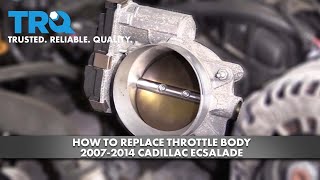
Typical fix: Replace the entire throttle body assembly. 🎬 See this step-by-step walkthrough for replacing the throttle body After replacement, a throttle relearn procedure is mandatory. Be aware that even new OEM parts can sometimes be faulty out of the box, as documented by owners who had to try multiple replacements.
Est. part cost: $150-$350 - Dirty or Carbon-Clogged Throttle Body 🟡 Medium Probability The PCV (Positive Crankcase Ventilation) system introduces oil vapors and carbon into the intake, which builds up around the throttle plate, restricting its movement. TSB PIP4578B specifically calls this out as a cause of P2101 on high-mileage engines.
How to confirm: Remove the intake ducting and visually inspect the throttle bore and plate for a thick, black layer of carbon buildup. The plate may stick or be slow to move when pushed manually (with key off).
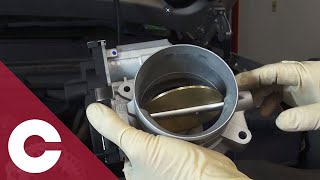
Typical fix: Clean the throttle body thoroughly with a dedicated throttle body cleaner and a soft brush or rag. One owner on a forum reported fixing his P2101 code 🎬 Watch: How cleaning the throttle body fixed a sluggish Escalade for $5 with a can of cleaner and a toothbrush. After cleaning, an 'idle learn reset' must be performed with a scan tool or manually to prevent a high idle or recurring codes.
Est. part cost: $5-$15 - Wiring or Connector Issue ⚪ Low Probability Engine vibration and heat can cause wiring to fray or break *inside* the insulation, typically within 1-4 inches of the throttle body connector. The connector pins can also lose tension, causing an intermittent connection.
How to confirm: Visually inspect the wiring harness leading to the throttle body for any signs of damage, chafing, or melting. With the engine running, carefully wiggle the wires near the connector to see if it affects idle or triggers the code. A voltage drop test showing a drop greater than 0.5V between the PCM supply and the motor connector indicates excessive resistance in the wiring.
Typical fix: Repair the damaged section of wire or replace the connector pigtail.
Est. part cost: $15-$50
Rare But Worth Checking
- Faulty Powertrain Control Module (PCM): This is very rare. The PCM should only be considered after all other possibilities, including the throttle body and its wiring, have been definitively ruled out. One diagnostic video showed a rare case where fluctuating sensor voltage on the scan tool was steady when back-probed at the wire, correctly pointing to a bad ECM.
- ECM Software Anomaly (Newer Models): While not for the 2007-2014 generation, it's notable that GM issued TSBs (e.g., 18-NA-037) for 2017+ models where a 'Driver Door Open Prime' feature could falsely set a P2101 code, especially with a low battery. The fix is a software reprogram. This highlights that the code can be triggered by software glitches under specific circumstances.
Diagnosis Steps
- Read all fault codes stored in the ECM. Note any other codes that appear alongside P2101, as they can provide important clues.
- Inspect the throttle body electrical connector for loose pins, corrosion, or damage. Wiggle the harness near the connector with the engine running to check for intermittent wire breaks.
- Remove the air intake hose from the throttle body. Inspect the throttle plate and bore for heavy carbon buildup that could restrict movement.
- If significant carbon is present, clean the throttle body thoroughly using a dedicated cleaner and a soft cloth. Do not spray cleaner directly on the electrical components.
- After cleaning or replacement, perform a throttle relearn procedure. A scan tool is the most reliable method ('Idle Learn Reset' function). A manual procedure can also be attempted: 🎬 Watch: How to perform the GM electronic throttle relearn procedure a) Start the engine and let it idle in Park for 3 minutes. b) Turn the engine OFF for at least 60 seconds. c) Restart the engine and let it idle in Park for another 3 minutes. If the idle is still not normal, a drive cycle above 45 mph with several decelerations may be required.
- If the code returns, use a scan tool to monitor the commanded throttle position versus the actual throttle position while an assistant presses the accelerator pedal (with the engine off, key on). If the actual position lags, jumps, or doesn't match the commanded position, the throttle body assembly is almost certainly faulty.
- If a new throttle body does not resolve the issue, inspect the wiring harness again for damage. In rare cases, the new part itself could be faulty, or the PCM may be the culprit.
Parts You'll Likely Need
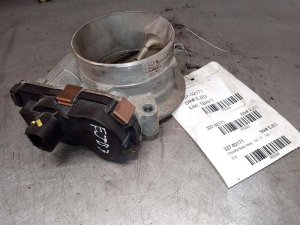
- Electronic Throttle Body Assembly
(OEM #12601387 (Superseded by 12629992))— This is the most common failure point for code P2101 on this vehicle. The internal motor and position sensors wear out, causing the performance range issue detected by the ECM.
Trusted brands: ACDelco (GM Genuine), Hitachi, Cardone (Remanufactured), Dorman
OEM price range: $250-$350
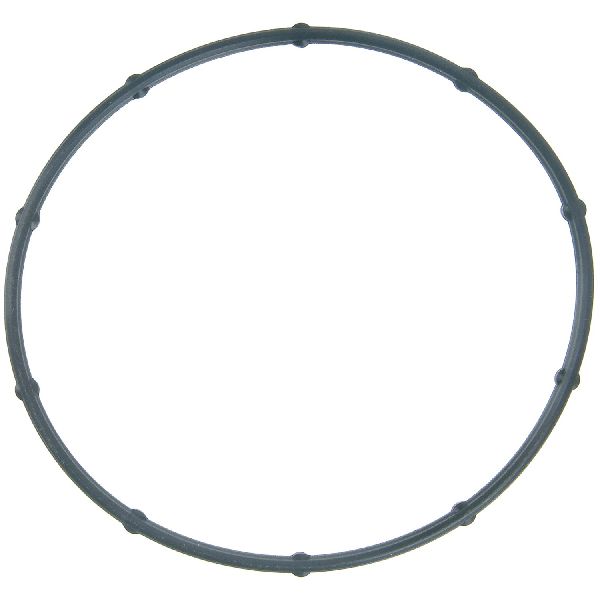
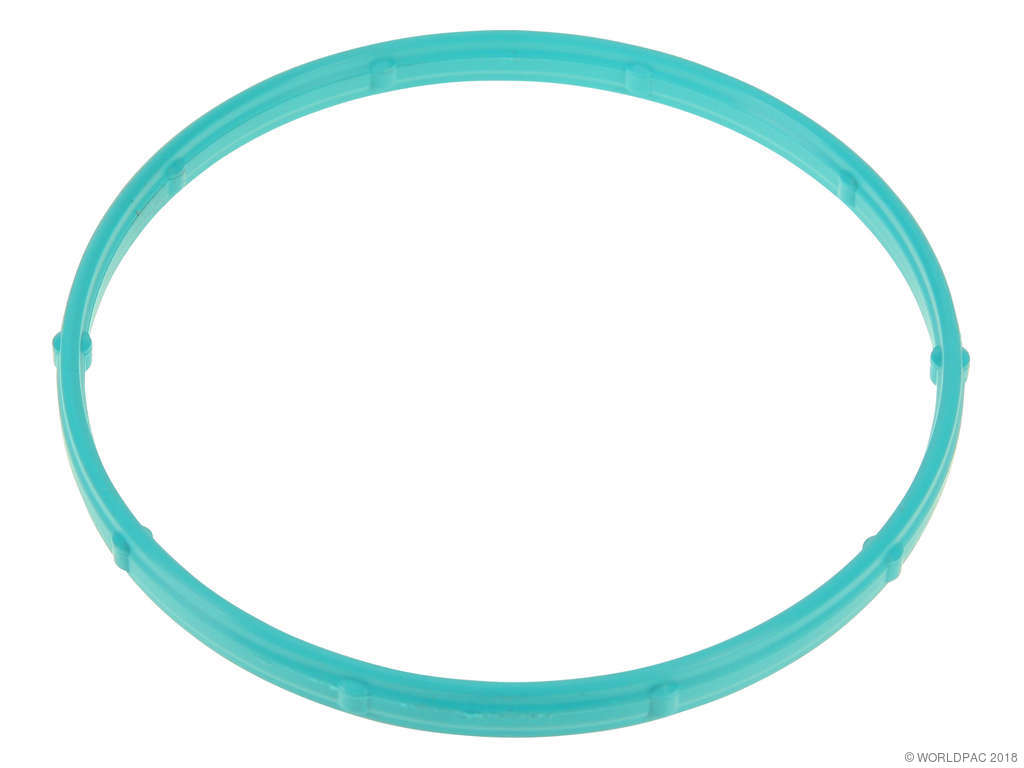
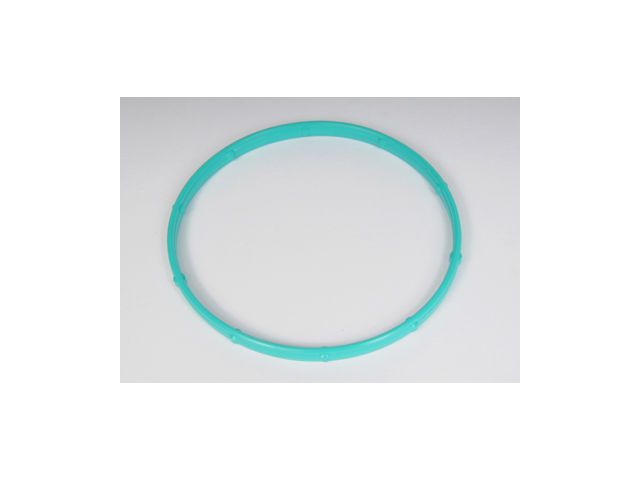
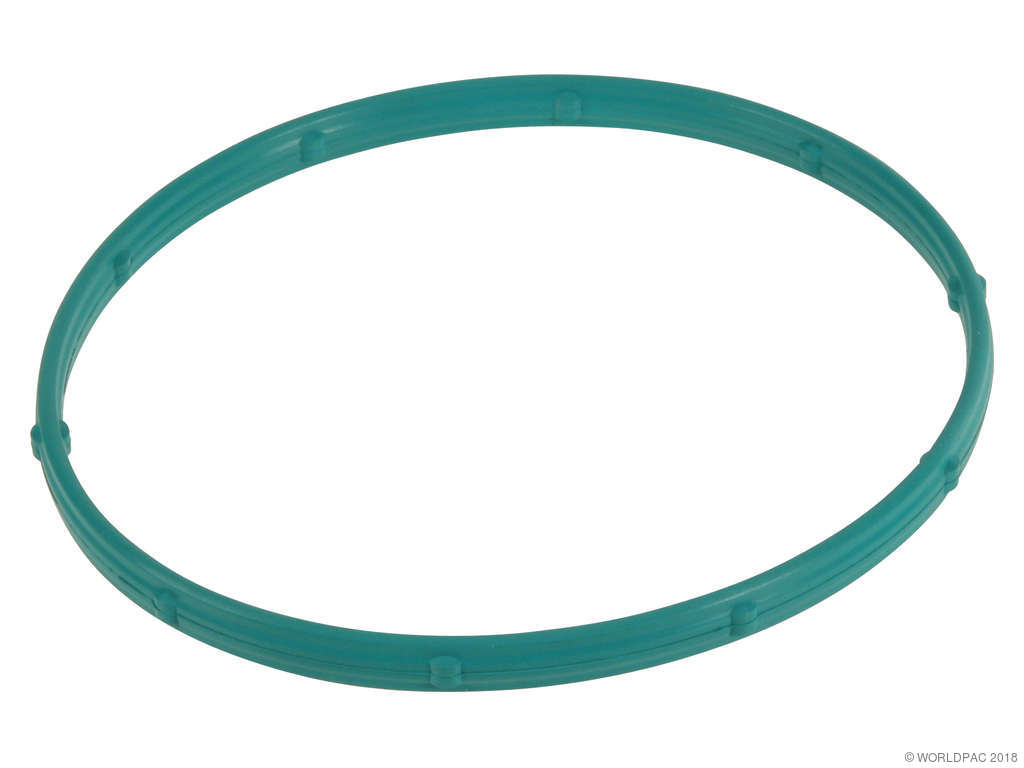
Aftermarket price range: $150-$250 - Throttle Body Gasket — The gasket should always be replaced when the throttle body is removed to prevent vacuum leaks.
Trusted brands: Fel-Pro, ACDelco, Mahle
OEM price range: $10-$20
Aftermarket price range: $5-$15
Related Codes That Often Appear With This One
- P1516 — This is a GM-specific code for 'Throttle Actuator Control (TAC) Module Throttle Actuator Position Performance.' It is very commonly seen with P2101 as both relate to the ECM not getting the expected response from the throttle body.
- P2119 — Relates to 'Throttle Actuator Control Throttle Body Range/Performance,' indicating the throttle plate's resting or closing position is incorrect. Often caused by carbon buildup or a weak return spring.
- P2176 — This code, 'Throttle Actuator Control System - Idle Position Not Learned,' often appears after a throttle body has been cleaned or replaced and the ECM needs to perform a relearn procedure.
- P0121 — This code for 'Throttle/Pedal Position Sensor 'A' Circuit Range/Performance' can also be triggered by the same failing throttle body, as the integrated position sensor is providing erratic readings to the ECM.
Technical Service Bulletins (TSBs) & Recalls
- PIP4578B: Addresses idle surge, reduced engine power, and DTCs including P2101 on high-mileage vehicles, pointing towards carbon buildup and the need for cleaning and an idle learn reset.
- PIP3089B: Addresses intermittent P2101 and related codes caused by wiring issues near the throttle body connector.
Platform-Specific Known Issues
- A Technical Service Bulletin (TSB #PIP4578B) was issued for multiple GM models and years, including the 2007-2014 Escalade, for experiencing reduced power and setting codes P2101, P1516, and others, particularly on high-mileage vehicles. The bulletin specifically notes that cleaning the throttle body without performing an 'idle learn reset' can cause the issue to return.
- Another TSB (#PIP3089B) points to loose wiring crimps or broken wires within 1-4 inches of the throttle body connector as a potential cause for intermittent P2101 and related codes.
Mechanic-Grade Diagnostic Values
- Throttle Position Sensor (TPS) Voltage — expected: Smoothly sweep from ~0.5V (closed) to ~4.5V (wide open).. Failure: Erratic spikes, dropouts, or a non-linear response when opening the throttle.
- Throttle Actuator Motor Voltage — expected: 9V to 14V when active.. Failure: Voltage below 8V can indicate a power supply issue from the battery or wiring.
- Throttle Actuator Motor Winding Resistance — expected: 5 to 15 Ohms.. Failure: A reading of 0 Ohms (short) or infinite Ohms (open) indicates a failed motor inside the throttle body.
- Wiring Voltage Drop — expected: Less than 0.5V.. Failure: A voltage drop greater than 0.5V between the PCM supply and the throttle motor connector suggests high resistance in the wiring or a bad connector.
- Scan Tool Commanded vs. Actual Position (KOEO) — expected: Commanded and Actual throttle position percentages should be nearly identical.. Failure: A significant difference between the two values (e.g., Desired 13% vs. Actual 23%) points to a faulty throttle body.
Scan Tool Commands That Help
- GDS2, Tech2, or equivalent professional scan tool: Idle Learn Reset / ETC (Electronic Throttle Control) Learn — This function, found under 'Special Functions' or 'Module Setup' for the ECM, is mandatory after cleaning or replacing the throttle body. It resets the learned idle and throttle plate values in the ECM to prevent high idle, stalling, or an immediate return of the P2101 code.
- GDS2, Tech2, or equivalent professional scan tool: Throttle Position Control (Bi-Directional Test) — Allows the technician to command the throttle plate to open to specific percentages (e.g., 10%, 25%, 50%) with the engine off. This is used to verify if the actual throttle position (reported by the TPS) matches the commanded position across its range of motion, confirming the motor and sensors are working correctly.
Wiring & Ground Locations
- G103 / G104 — G103 is on the front of the left (driver's side) cylinder head. G104 is on the rear of the left cylinder head.. These are primary engine grounds. A poor connection at these points can cause a host of electrical issues, including erratic sensor readings and module performance. One TSB service document incorrectly identifies G104 as the ground for the TAC module, when the correct ground is G103. Ensuring G103 is clean and tight is a critical diagnostic step.
- TAC Module — Mounted on the driver's side firewall, under the hood.. This is the control module for the throttle system on some GM models. While the 2007-2014 Escalade integrates this logic into the ECM, checking connections in this area is still relevant as it's a central point for related wiring.
- Engine Harness Chafe Points — The rear of the engine block and the top of the transmission bell housing are common chafe points for the main engine wiring harness.. As documented in TSB 08-07-30-021H, the harness can rub through, causing shorts in the GMLAN data wires. This can trigger a P2101 code along with other seemingly unrelated electrical problems, making it a difficult-to-diagnose edge case.
Real Owner Repair Stories
- Tahoe Yukon Forum (2007-2014 GM SUV (platform equivalent)) — P2101 code, Reduced Engine Power, throttle body vibration sound.
❌ Tried (didn't work) Initial diagnosis was uncertain, with a shop suggesting they would have to 'throw parts at it'.
✅ What actually fixed it A user in the thread confirmed that replacing the Throttle Position Sensor (which is integrated into the throttle body assembly) resolved all the issues being discussed, including the P2101 code. - YouTube user 'Magnificent' (2007 Suburban (platform equivalent)) — Service traction control, service stabilitrak, reduced engine power, P2101 code, no throttle response.
❌ Tried (didn't work) The initial problem was self-inflicted by leaving a cleaning rag in the throttle body intake.
✅ What actually fixed it After removing the foreign object, the code persisted. The final fix was clearing the codes and performing an 'Idle Learn Reset' using a professional scan tool, which successfully restored normal operation and cleared the 'Reduced Engine Power' message.
OEM Part Supersession History
12601387→12629992— The redesigned internal electronic sensor in the newer part improves on shortcomings of the old one, which was prone to failure from excessive wear.
Heads up: The new part (12629992) may require programming or special setup procedures. At a minimum, a throttle position reset (Idle Learn Reset) using a scan tool is required for the ECM to recognize the new part and ensure proper idle and drivability.
Helpful Videos
Used OEM Parts in Stock

New Aftermarket Parts Available


The information in this article is provided for general reference and educational purposes only. Vehicle specifications, procedures, and part compatibility can vary by production date, trim level, and region. Always consult your vehicle's factory service manual and verify part numbers before purchasing or performing repairs. Safety-critical components such as airbags, seat belts, and braking systems should be installed by a qualified professional.
- Cadillac ESCALADE:
- 🎬 Helpful Videos
- 🛍️ Shop This Part
- What's Unique About the 2007-2014 Cadillac ESCALADE
- Diagnostic Flowchart
- Symptoms You May Notice
- Most Likely Causes
- Rare But Worth Checking
- Diagnosis Steps
- Parts You'll Likely Need
- Related Codes That Often Appear With This One
- Technical Service Bulletins (TSBs) & Recalls
- Platform-Specific Known Issues
- Mechanic-Grade Diagnostic Values
- Scan Tool Commands That Help
- Wiring & Ground Locations
- Real Owner Repair Stories
- OEM Part Supersession History
- 🎟️ Get 5% Off