

P2101 on 2007-2014 Cadillac CTS: Throttle Actuator Fault Causes and Fixes
P2101 on a Cadillac CTS almost always points to a problem with the electronic throttle body. This often triggers the 'Reduced Engine Power' message. Cleaning may be a temporary fix, but replacement of the entire throttle body assembly is the common, permanent solution. The issue was so prevalent on 2008-2011 models that GM issued a special warranty extension for the part.
- P2101 on a 2007-2014 CTS is a serious code that will likely put your car in 'Reduced Engine Power' mode.
- The most probable cause is a failed throttle body assembly, a known issue for this vehicle.
- Before buying a new part, inspect the throttle body for heavy carbon buildup and clean it. This is a low-cost first step that sometimes resolves the issue.
- If you replace the throttle body, a 'throttle relearn' procedure is required to make the car run correctly.
- Do not immediately suspect the accelerator pedal; the problem is almost always at the engine's throttle body.
What's Unique About the 2007-2014 Cadillac CTS
This issue is a well-documented weak point on the second-generation Cadillac CTS (2008-2014), particularly those with the 3.6L LLT V6 engine. The internal electronic sensors of the throttle body are prone to wear, leading to incorrect signals. GM acknowledged this by issuing Special Coverage Adjustment 14582A for many models, including the 2008-2011 CTS, which extended the warranty on the throttle body to 10 years or 120,000 miles due to these exact symptoms. The problem is so common that the 'Reduced Engine Power' message is almost synonymous with throttle body failure on these cars.
Diagnostic Flowchart
Tap your situation to follow the diagnostic path that matches what you're seeing on this vehicle.
Generation note: The 2007-2014 range covers the end of the first generation (2007) and the entire second generation (2008-2014). The throttle body issue is most prevalent and well-documented on the second-generation models with the 3.6L LLT and 3.0L LF1 engines, particularly those from 2008-2011, as highlighted by GM's special coverage program 14582A. However, the underlying electronic throttle control system is similar, and the fault can occur on all model years in this range.
Symptoms You May Notice
- "Reduced Engine Power" message on the dashboard.
- "Service Stabilitrak" message may also appear.
- Check Engine Light is on.
- Vehicle has limited or no acceleration (limp mode).
- Rough or unstable idle.
- Engine may stall or shut off.
- Delayed, jerky, or unresponsive throttle.
- Engine revs high at idle or when braking.
- Replacing the accelerator pedal position (APP) sensor. While the APP sensor is part of the throttle control system, P2101 specifically points to a performance issue at the throttle body motor, not the pedal. On this CTS, the throttle body itself is the far more common failure point.
Most Likely Causes
- Failing Throttle Body Assembly 🔴 High Probability The internal throttle position sensors (TPS) are integrated into the assembly and are a known high-failure item on this platform, as acknowledged by GM's Special Coverage 14582A. Wear on the sensor's contact points or failure of the internal motor leads to erratic signals that the PCM flags as a performance error.
How to confirm: Scan for codes P1516, P2101, and/or P2176. 🎬 Watch: Diagnosing these common Cadillac throttle codes. GM service documents explicitly state to replace the throttle body if these codes are present after ruling out wiring issues. The failure is internal to the sealed unit, and observing live data with a scan tool will show the commanded throttle position and actual position do not match.
Typical fix: Replace the entire throttle body assembly. After replacement, a 'Throttle Learn' procedure must be performed to calibrate the new part with the PCM.
Est. part cost: $150-$400 - Dirty or Obstructed Throttle Body 🟡 Medium Probability Carbon buildup around the throttle plate is common on direct-injection engines like the 3.6L LLT. This buildup can cause the plate to stick or move slowly, preventing the motor from moving it to the commanded position within the expected time, triggering a performance error.
How to confirm: Remove the air intake hose and visually inspect the throttle bore and plate for a thick ring of black carbon deposits. The plate may feel sticky or slow to move when pushed manually (with ignition off).
Typical fix: Thoroughly clean the throttle plate and bore with a dedicated throttle body cleaner and a soft cloth or brush. Do not spray cleaner directly into the electronics. 🎬 See how to safely clean your CTS throttle body. A throttle relearn procedure is required after cleaning to reset idle values.
Est. part cost: $10-$20 - Wiring or Connector Issue ⚪ Low Probability Engine vibration and heat can cause wires to break inside the insulation, typically within a few inches of the throttle body connector. This creates an intermittent open or short in the circuit.
How to confirm: Visually inspect the wiring harness leading to the throttle body for any signs of chafing, melting, or corrosion at the connector pins. With the engine idling, carefully wiggle the harness near the connector to see if it causes the idle to stumble or triggers the fault. A voltage drop test can also identify high resistance in the circuit.
Typical fix: Repair the damaged section of wire or replace the connector pigtail. The pigtail part number is often ACDelco PT2628 or equivalent.
Est. part cost: $20-$50
Rare But Worth Checking
- Powertrain Control Module (PCM) Fault: This is very rare, but a faulty PCM can fail to properly command or interpret signals from the throttle body. This should only be considered after the throttle body and wiring have been definitively ruled out.
- Low Battery Voltage: A weak or failing battery can cause various electronic modules to malfunction and throw erroneous codes, including P2101. If the battery is old or the voltage is below 12.4V with the engine off, it should be tested and charged or replaced before further diagnosis.
Diagnosis Steps
- Scan the PCM for all stored trouble codes. Note if P1516, P2176, P2135, or P2119 are present with P2101.
- Check battery voltage. Ensure the battery has a full charge (at least 12.4V engine off, 13.5V+ engine running) to prevent erroneous codes.
- Inspect the wiring harness and connector at the throttle body for damage, looseness, or corrosion. Perform a wiggle test on the harness with the engine running.
- Remove the air intake duct and visually inspect the throttle plate. Check for heavy carbon buildup or any foreign objects obstructing its movement.
- If significant carbon is present, clean the throttle body thoroughly with appropriate cleaner and a soft cloth.
- After cleaning, perform the throttle relearn procedure. A common manual method is: Turn ignition ON (engine off) for 3 minutes, turn OFF for 60 seconds. Start the engine and let it idle for 3 minutes.
- If codes return after cleaning, or if the throttle body was clean, the throttle body assembly is the primary suspect. Use a scan tool to monitor commanded vs. actual throttle position in live data to confirm a discrepancy.
- If the throttle body is confirmed faulty, replace it with a new assembly.
- After replacing the throttle body, perform the throttle relearn procedure to calibrate the new part with the PCM.
Parts You'll Likely Need
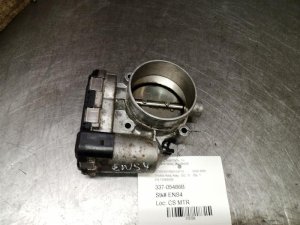
- Throttle Body Assembly
(OEM #12632172)— This is the most common cause of P2101 on the 2007-2014 CTS. The internal electronics fail, requiring replacement of the entire sealed unit.
Trusted brands: ACDelco (GM OE), Bosch (OEM Supplier), Dorman OE Fix, Spectra Premium
OEM price range: $250-$400
Aftermarket price range: $150-$250 - Throttle Body Connector Pigtail
(OEM #ACDelco PT2628)— Needed if the original connector or wiring near it is found to be corroded, melted, or broken, which is a possible cause of the code.
Trusted brands: ACDelco, Dorman
OEM price range: $30-$50
Aftermarket price range: $15-$30
Related Codes That Often Appear With This One
- P1516 — This is a GM-specific code for 'Throttle Actuator Control (TAC) Module Throttle Actuator Position Performance'. It is frequently set alongside P2101 and points directly to a throttle body failure.
- P2176 — 'Throttle Actuator Control System - Idle Position Not Learned'. This code often appears with P2101, indicating the computer cannot find the proper closed-throttle position, usually due to a faulty throttle body or heavy carbon buildup.
- P2135 — 'Throttle/Pedal Position Sensor/Switch 'A'/'B' Voltage Correlation'. While this code can relate to the pedal, on the CTS it more commonly indicates a failure of the dual position sensors within the throttle body assembly.
- P2119 — 'Throttle Actuator Control Throttle Body Range/Performance'. This code indicates the PCM has detected the throttle plate is not closing correctly or returning to its resting position as expected, often due to carbon buildup or a mechanical fault in the throttle body.
Technical Service Bulletins (TSBs) & Recalls
- 14582A: A Special Coverage Adjustment from GM to replace faulty throttle bodies on 2008-2011 CTS models that set codes like P2101. This covered parts and labor for 10 years or 120,000 miles.
- PIP4578B: Mentions P2101 with idle surge and reduced power on high mileage vehicles, identifying carbon buildup as a primary cause and mandating a cleaning and idle relearn procedure.
Platform-Specific Known Issues
- GM Special Coverage Adjustment 14582A: This program was a major acknowledgment by GM of a widespread defect. It covered the 2008-2011 CTS (and many other models) for throttle body failure for 10 years/120,000 miles. The repair involved replacing the entire throttle body assembly at no charge. While this program has expired for most vehicles, its existence confirms the high failure rate of the original part.
- NHTSA Technical Service Bulletin #PIP4578B: This bulletin, which covers the 2007 CTS among many other GM vehicles, addresses idle surge, reduced power, and a group of DTCs including P2101, especially on high-mileage vehicles. It points to carbon buildup in the throttle body as a primary cause and recommends cleaning the throttle body and performing an 'idle learn reset' with a Tech 2 scan tool.
Mechanic-Grade Diagnostic Values
- Throttle Actuator Control (TAC) Motor Resistance — expected: 2 to 15 Ohms. Failure: Infinite resistance (open circuit) or less than 1 Ohm (short circuit).
- Throttle Position Sensor (TPS) 1 Resistance — expected: Resistance should increase smoothly as the throttle plate is opened from closed to wide-open.. Failure: Resistance value stays stuck or has gaps/jumps as the plate moves.
- Throttle Position Sensor (TPS) 2 Resistance — expected: Resistance should decrease smoothly as the throttle plate is opened from closed to wide-open.. Failure: Resistance value stays stuck or has gaps/jumps as the plate moves.
- Live Data - TPS Voltage — expected: Should rise smoothly from approximately 0.5V (closed throttle) to 4.5V (wide-open throttle).. Failure: Erratic spikes or values that do not correspond to the pedal position.
- Battery Voltage — expected: 12.4V-12.7V with engine off; 13.5V-14.5V with engine running.. Failure: Low voltage can cause various electronic faults, including P2101.
Scan Tool Commands That Help
- Tech 2 / GDS2: Reset Idle Learn / Idle Learn Reset — This function must be used after cleaning the throttle body or replacing the ECM/PCM. Failure to perform the reset can cause the PCM to continue compensating for previous carbon buildup, leading to a return of the fault codes.
- Tech 2 / GDS2: Module Set Up or Special Functions/TAC System — This is the menu path within the GM scan tool where the 'Reset Idle Learn' function is typically located.
Wiring & Ground Locations
- Throttle Body Connector — Front center of the engine, connected to the throttle body assembly.. This is the primary connection point for all power and signal wires to the throttle actuator motor and position sensors. Corrosion or damage here is a direct cause of P2101.
- G132 — Top right of the engine.. This is a ground point for the Engine Controls System, which includes the ECM. A poor ground here can cause erratic ECM behavior and incorrect throttle commands.
- G102 — On the left rear of the engine block.. This ground is used by the ignition coils. While not directly tied to the throttle body, electrical noise from a poor ground can interfere with sensitive sensor readings.
- Engine Control Module (ECM) — For the 3.6L (VIN 7) engine, the ECM is located on the front right valve cover.. This is the location of the computer that controls the throttle body. All wiring for the throttle body terminates here, making its connectors a key inspection point.
Real Owner Repair Stories
- YouTube channel "Ford Boss Me" (2008 Cadillac CTS 3.6L) — Car had been sitting for a long time with a dead battery. After starting, it ran very poorly and set three codes for a throttle body problem (P2101, P2119, P2176).
❌ Tried (didn't work) The technician immediately suspected an issue beyond a simple electronic failure due to the car's history.
✅ What actually fixed it Mice had built a nest in the air cleaner assembly and debris, specifically leaves, had been pulled into the intake, physically jamming the throttle plate and preventing it from moving correctly. Cleaning the leaves out of the throttle body resolved the issue.
OEM Part Supersession History
12632171, 12648414, 12669536, 12671014→12676296— Part revision and consolidation for 3.0L and 3.6L engines.
Heads up: This part number is for the 2008-2011 CTS with 3.0L/3.6L engines. It is not compatible with the 2007 model.12604075, 12609009, 12616994→12694878— Part revision for the first-generation 3.6L engine.
Heads up: This part number is for the 2004-2007 Cadillac CTS with the 3.6L engine. It is not compatible with 2008 and newer models.
Model Year Variations Within This Range
- 2007: The first-generation 2007 CTS with the 3.6L LY7 engine uses a different throttle body (OEM P/N series ending in 12694878) than the second-generation 2008-2014 models. While the failure mode is similar, the parts are not interchangeable.
- 2008-2011: These model years, particularly with the 3.0L (LF1) and 3.6L (LLT) engines, were specifically included in GM's Special Coverage Adjustment 14582A for high failure rates of the throttle body assembly. The OEM part for these years is in the series ending in 12676296.
Helpful Videos

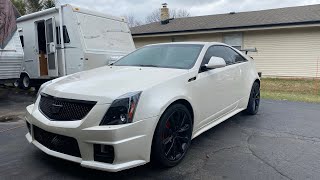
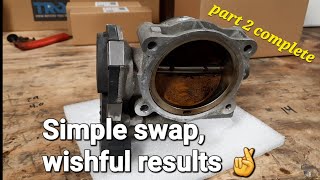
Used OEM Parts in Stock


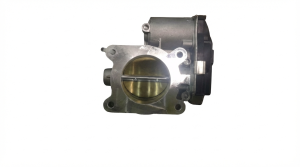


New Aftermarket Parts Available




The information in this article is provided for general reference and educational purposes only. Vehicle specifications, procedures, and part compatibility can vary by production date, trim level, and region. Always consult your vehicle's factory service manual and verify part numbers before purchasing or performing repairs. Safety-critical components such as airbags, seat belts, and braking systems should be installed by a qualified professional.
- Cadillac CTS:
- 🎬 Helpful Videos
- 🛍️ Shop This Part
- What's Unique About the 2007-2014 Cadillac CTS
- Diagnostic Flowchart
- Symptoms You May Notice
- Most Likely Causes
- Rare But Worth Checking
- Diagnosis Steps
- Parts You'll Likely Need
- Related Codes That Often Appear With This One
- Technical Service Bulletins (TSBs) & Recalls
- Platform-Specific Known Issues
- Mechanic-Grade Diagnostic Values
- Scan Tool Commands That Help
- Wiring & Ground Locations
- Real Owner Repair Stories
- OEM Part Supersession History
- Model Year Variations Within This Range
- 🎟️ Get 5% Off