

P2099 on 2020-2025 Hyundai Palisade: Causes and Fixes for Post Catalyst Fuel Trim Too Rich Bank 2
For a 2020-2025 Hyundai Palisade, code P2099 most often means the downstream oxygen sensor on Bank 2 (the front/radiator side) is faulty or there's an exhaust leak nearby. Replacing the sensor is a common DIY fix, with parts costing between $70 and $180. In some cases, an ECU software update may be required.
- P2099 on your Palisade means the exhaust on the front (radiator side) of the engine is reading as too rich after the catalytic converter.
- The most likely cause is a faulty downstream oxygen sensor (Bank 2, Sensor 2).
- Before replacing any parts, carefully inspect the exhaust system for leaks between the engine and the catalytic converter.
- Do not ignore this code. While not an emergency, it will decrease fuel economy and can eventually lead to the failure of your very expensive catalytic converter.
- If you also have a P0175 code, the problem is more likely a leaking fuel injector than a bad sensor.
What's Unique About the 2020-2025 Hyundai Palisade
The Hyundai Palisade and its corporate cousin, the Kia Telluride, share the same 3.8L GDI V6 engine and emissions components. While this code is common across many manufacturers, on GDI (Gasoline Direct Injection) engines like this one, a leaking high-pressure fuel injector can be a more prominent, though still less common, cause of a true rich condition compared to older port-injected engines. A strong smell of gasoline on the oil dipstick is a key indicator of this specific issue. Additionally, some Hyundai vehicles have required ECU software updates to correct emission logic flaws that can trigger this code.
Symptoms You May Notice
- Check Engine Light is on
- Decreased fuel economy
- Rough idle or hesitation during acceleration
- Black smoke from the exhaust in severe cases
- Sluggish throttle response
- Replacing the upstream (Bank 2, Sensor 1) O2 sensor. This code specifically points to the post-catalyst, downstream sensor.
- Replacing the catalytic converter when the actual issue is a simple exhaust leak or a faulty O2 sensor.
- Replacing the Bank 1 (rear/firewall side) sensor instead of the Bank 2 (front/radiator side) sensor.
Most Likely Causes
- Faulty Downstream Oxygen (O2) Sensor (Bank 2) 🔴 High Probability Oxygen sensors are wear-and-tear components that operate in a harsh exhaust environment. Their internal heating elements or sensing cells can fail over time, leading to incorrect, biased-rich readings sent to the PCM.
How to confirm: Use a scan tool to monitor the live voltage data for the Bank 2, Sensor 2. A healthy downstream sensor should show a relatively stable voltage (typically around 0.6V-0.8V) at steady RPM. If the voltage is stuck high (above 0.8V) or fluctuates wildly like an upstream sensor, it is likely faulty. Visually inspect the sensor's wiring harness for melting or damage, as it runs near hot exhaust components.
Typical fix: Replace the Bank 2 downstream oxygen sensor. The sensor for Bank 2 is located on the front (radiator side) of the engine, after the catalytic converter.
Est. part cost: $70-$180 - Exhaust Leak 🟡 Medium Probability Exhaust components are exposed to moisture, road salt, and constant heat cycles, which can cause corrosion and cracks at gaskets or weld seams over time. A leak before the downstream O2 sensor can allow outside air to enter, paradoxically causing the sensor to misread and trigger a rich code under certain conditions.
How to confirm: Perform a visual inspection of the exhaust system from the engine to the catalytic converter on Bank 2. Look for black soot marks, cracks, or holes. The most reliable method is to have a shop perform a smoke test, which will force smoke through the exhaust and reveal the location of any leaks.
Typical fix: Repair the leak by replacing the faulty gasket or welding the cracked component. In some cases, a section of pipe may need to be replaced.
Est. part cost: $20-$200 - Failing Catalytic Converter (Bank 2) ⚪ Low Probability While durable, a catalytic converter can become inefficient or clogged due to age, contamination from a persistent rich running condition, or physical damage. Oil consumption, a known issue on some of these engines, can also contaminate the converter over time.
How to confirm: A professional diagnosis is often needed. This can involve using an infrared thermometer to check inlet and outlet temperatures (outlet should be significantly hotter) or a backpressure test. If the downstream O2 sensor voltage mimics the upstream sensor's fluctuations, it's a strong sign the converter is not working.
Typical fix: Replace the Bank 2 catalytic converter assembly. This is an expensive repair.
Est. part cost: $800-$2000+
Rare But Worth Checking
- Leaking Fuel Injector (Bank 2): Because this is a GDI engine, a leaking injector can dump a significant amount of fuel, creating a true rich condition. This would likely be accompanied by other codes like P0175 (System Too Rich Bank 2) or misfire codes on one of the Bank 2 cylinders. A key symptom is a strong smell of raw fuel on the engine oil dipstick.
- Damaged Wiring or Connectors: The O2 sensor wiring harness can be damaged by heat from the exhaust, road debris, or corrosion, leading to a short or open circuit that sends a false rich signal.
- Powertrain Control Module (PCM) Issue: In very rare cases, the PCM itself can be faulty or may require a software update. Hyundai has issued service campaigns for other Lambda II engine vehicles to update emission logic, so this should be considered after all other possibilities have been exhaustively ruled out.
Diagnosis Steps
- Read the code(s) with an OBD-II scanner and note any other codes present.
- Visually inspect the entire exhaust system for Bank 2 (front of the engine bay) for obvious signs of leaks, such as cracks, rust holes, or black soot trails around gaskets.
- Inspect the Bank 2 downstream O2 sensor wiring and connector for any signs of melting, corrosion, or damage.
- Use a scan tool with live data to monitor the voltage of the Bank 2 downstream O2 sensor. It should be relatively stable (e.g., 0.6-0.8V). If it's stuck high or switching rapidly like an upstream sensor, the sensor is a likely suspect.
- Check for any open service campaigns or TSBs related to ECU software updates for emissions control by contacting a Hyundai dealer with your VIN.
- If no exhaust leaks are found and the sensor appears to be reading incorrectly, replace the Bank 2 downstream O2 sensor.
- If the code returns after replacing the sensor, a more thorough diagnosis of the catalytic converter, fuel injectors, and potential vacuum leaks is required. A professional smoke test is the best way to find hard-to-see exhaust or vacuum leaks.
Parts You'll Likely Need
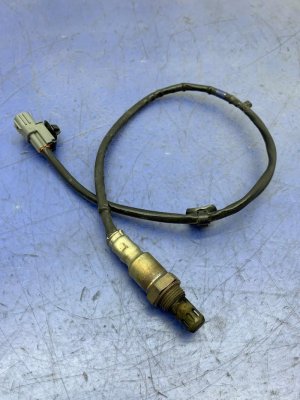
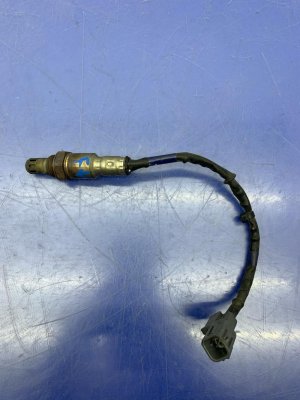
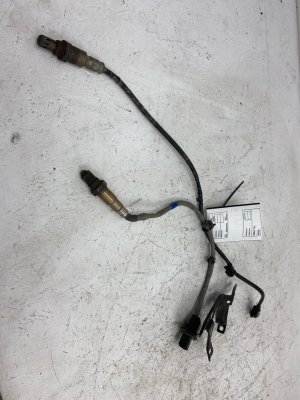
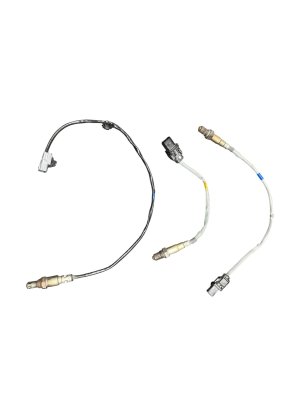
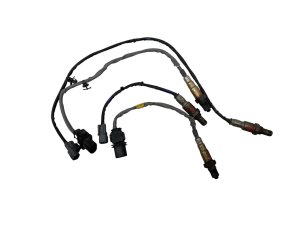
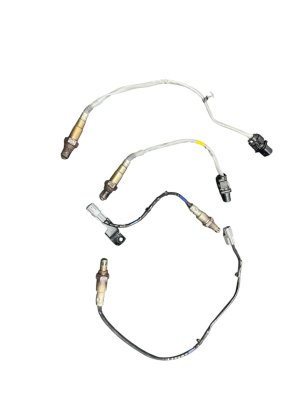
- Downstream Oxygen Sensor (Bank 2, Sensor 2)
(OEM #39210-3LNB0)— This sensor is the most common failure point for a P2099 code, as it directly measures the condition that triggers the code and is a known wear item. This part number is for the Left/Bank 2 side.
Trusted brands: Hyundai Genuine, NGK/NTK, Denso, Bosch
OEM price range: $180-$280
Aftermarket price range: $70-$150 - Exhaust Gasket — If an exhaust leak is found at a flanged connection, the gasket will need to be replaced.
Trusted brands: Hyundai Genuine, Fel-Pro, Walker Exhaust
OEM price range: $15-$40
Aftermarket price range: $10-$25
Related Codes That Often Appear With This One
- P0175 — This code means 'System Too Rich Bank 2' and is detected by the *upstream* sensor. If P2099 and P0175 appear together, it strongly suggests a genuine rich condition exists (like a leaking fuel injector) rather than just a faulty downstream sensor.
- P2097 — This is the equivalent 'Too Rich' code for Bank 1. If both P2099 and P2097 are present, it points to a problem affecting the entire engine, such as a faulty Mass Airflow (MAF) sensor or fuel pressure regulator, not a bank-specific issue.
Technical Service Bulletins (TSBs) & Recalls
- TSB 26-01-010H / Service Campaign 9C9: While not directly for P2099, this campaign involves an ECU software update for certain Palisade vehicles to improve NOx and Particulate Matter emissions logic. An ECU reflash can sometimes resolve erroneous fuel trim codes.
Platform-Specific Known Issues
- Owner Experience with Oil Consumption Leading to O2 Sensor Failure: In a YouTube video, an owner of a 2020 Palisade details a long-running battle with excessive oil consumption. This issue eventually led to a check engine light for an O2 sensor code, as the burning oil fouled the sensor. The dealership initially quoted a high price for the sensor replacement, not covering it under warranty until the underlying oil consumption issue was addressed through a formal consumption test.
Mechanic-Grade Diagnostic Values
- Downstream O2 Sensor (Bank 2, Sensor 2) Voltage — expected: A relatively stable voltage between 0.6V and 0.8V when the engine is at operating temperature and running at a steady RPM.. Failure: A voltage that is consistently stuck high (above 0.8V) indicates a rich reading or faulty sensor. A voltage that fluctuates rapidly like an upstream sensor (0.1V to 0.9V) points to a failing catalytic converter.
- Long-Term Fuel Trim (LTFT) for Bank 2 — expected: Ideally within +/- 5% at idle and steady cruise.. Failure: If P2099 is present, the LTFT may be attempting to compensate by going negative, but the code is set by the post-catalyst sensor's reading, not the trim value itself. If P0175 is also present, you will see a significantly negative LTFT (e.g., -10% or more) as the PCM tries to reduce fuel.
Scan Tool Commands That Help
- Hyundai GDS (Global Diagnostic System): Resetting Adaptive Values — After replacing a component like an O2 sensor or fixing a fuel delivery issue, use this function to clear the old learned fuel trim values from the Engine Control Module. This forces the PCM to relearn trims with the new, correct sensor data, preventing the code from returning due to old adaptations.
- Hyundai GDS (Global Diagnostic System): Actuation Test (e.g., for fuel injectors) — If a leaking injector is suspected as the root cause of the rich condition, the GDS can be used to command individual injectors to fire. This can help in advanced diagnostics to isolate a mechanically stuck or faulty injector, though it's a test typically performed by a professional.
Wiring & Ground Locations
- Main Engine/Chassis Ground — A primary ground bolt is located on the chassis near the under-hood fuse box in the engine bay.. The Powertrain Control Module (PCM) and its sensors, including O2 sensors, rely on clean ground connections for accurate voltage readings. A corroded or loose main ground can introduce electrical noise or a voltage offset, potentially causing the PCM to misinterpret the O2 sensor's signal and set a false P2099 code.
- Engine Bay Wiring Harness — The main engine wiring harness runs across the engine and connects to all sensors, including the O2 sensors.. The wiring for the Bank 2 (front) O2 sensor is routed near hot exhaust components. Technicians should inspect this harness for any signs of melting, chafing, or brittle insulation, as a short-to-ground or short-to-voltage in the sensor signal or heater circuit wire can cause a persistent P2099 code.
Model Year Variations Within This Range
- 2023-2025: The 2023 model year introduced a mid-cycle refresh with significant cosmetic changes to the front and rear, and interior tech upgrades like a larger standard infotainment screen. However, the core powertrain, including the 3.8L V6 engine, eight-speed transmission, and exhaust components, remained unchanged from the 2020-2022 models. Therefore, the causes and fixes for P2099 are identical across the entire 2020-2025 range.
Diagnostic Flowchart
Other Known Issues on This Vehicle
Issues unrelated to this code that are worth knowing about as an owner of this generation:
- Excessive Oil Consumption 🔴 High — Commonly reported, especially on 2020 models. Can begin at low mileage (e.g., under 20,000 miles). Caused by carbon buildup on piston oil control rings.
- Wind/Whistling Noise from Door/Mirror Area 🟡 Low — Very common on 2020-2021 models at highway speeds. (Ref: TSB 21-BD-003H (supersedes 19-BD-010H) provides a fix involving new moldings and foam pads.)
- Fragile Windshields 🟠 Medium — Frequently reported by owners of 2020 models; small impacts lead to large cracks requiring replacement.
- Tow Hitch Harness Fire Risk 🔴 High — Affects 2020-2022 models with the factory tow hitch. Debris/moisture can short the module. (Ref: Recall 235 (NHTSA 22V633000))
- Foul/Chemical Odor from Nappa Leather Headrests 🟡 Low — Common complaint on 2020-2021 Limited and Calligraphy trims. (Ref: TSB 20-BD-018H and 21-BD-002H-1 describe an odor-neutralizing procedure.)
- GDI Intake Valve Carbon Buildup 🟠 Medium — An inherent issue with all GDI engines, including this one. Becomes noticeable after 60,000+ miles, causing rough idle or misfires.
Used vs. New Parts: Buying Guide for This Vehicle
When a used part is the smart pick: For this repair, using a used part is generally not recommended. The primary failure components are wear-and-tear items (O2 sensor) or potentially damaged/clogged parts (catalytic converter). A used part will have an unknown history and limited remaining lifespan, making it a poor value proposition.
Donor-vehicle mileage cap: roughly under 40000 miles for the part to have meaningful remaining life.
What to inspect on the donor part:
- For an O2 sensor, a used part is never advisable.
- If considering a used catalytic converter (e.g., from a rear-end collision), ensure the donor vehicle had low mileage and no signs of engine issues (no oil leaks, clean tailpipe).
- Check for any physical damage, dents, or corrosion on the part itself.
OEM-only on this vehicle (don't cheap out):
- Catalytic Converter: While expensive, the OEM Hyundai converter is designed specifically for the vehicle's emissions system. Aftermarket converters, especially cheaper ones, are notorious for failing to meet the PCM's strict efficiency monitoring, often leading to a P0420/P0430 code within a year.
Aftermarket brands forum-validated for this vehicle:
- O2 Sensors: NTK (often the original OE supplier for NGK), Denso, and Bosch are widely trusted brands that provide OE-level performance and reliability for oxygen sensors.
Brands owners have reported issues with on this vehicle:
- Avoid generic, unbranded 'white-box' oxygen sensors from online marketplaces. These often use lower-quality sensing elements and have high failure rates, leading to the code returning and wasted labor.
Real Owner Stories
Aggregated from forums and TSBs cited above. Mileages and costs reflect what owners reported in those sources.
2020 Hyundai Palisade 3.8L GDi V6
Symptoms: Check engine light for an O2 sensor code following a long-running battle with excessive oil consumption.
What fixed it: The owner had to undergo a formal oil consumption test at the dealership to address the underlying engine issue before the O2 sensor could be replaced under warranty.
Source hint: YouTube video mentioned in vehicle_specific_issues
2020 Hyundai Palisade 3.8L GDi V6 — ~20000 miles
Symptoms: Excessive oil consumption (over 1qt per 1000 miles) leading to secondary emissions concerns.
What fixed it: Dealer-performed consumption tests to identify carbon buildup on piston oil control rings.
Source hint: reddit.com/r/HyundaiPalisade thread
Related OBD-II Codes
Frequently Asked Questions
Does Service Campaign 9C9 apply to my 2020-2025 Hyundai Palisade if I have a P2099 code?
Could the oil consumption issue on my 2020 Palisade be causing the P2099 code?
Where is the Bank 2 downstream oxygen sensor located on the 3.8L GDi V6 engine?
Is there a specific TSB for the foul odor in my Palisade that might be related to emissions?
Will my Kia Telluride experience the same P2099 issues as the Palisade?
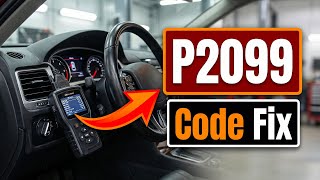
Helpful Videos
We Have This Part in Stock

The information in this article is provided for general reference and educational purposes only. Vehicle specifications, procedures, and part compatibility can vary by production date, trim level, and region. Always consult your vehicle's factory service manual and verify part numbers before purchasing or performing repairs. Safety-critical components such as airbags, seat belts, and braking systems should be installed by a qualified professional.
- Hyundai Palisade:
- 🎬 Helpful Videos
- 🛍️ Shop This Part
- What's Unique About the 2020-2025 Hyundai Palisade
- Symptoms You May Notice
- Most Likely Causes
- Rare But Worth Checking
- Diagnosis Steps
- Parts You'll Likely Need
- Related Codes That Often Appear With This One
- Technical Service Bulletins (TSBs) & Recalls
- Platform-Specific Known Issues
- Mechanic-Grade Diagnostic Values
- Scan Tool Commands That Help
- Wiring & Ground Locations
- Model Year Variations Within This Range
- Diagnostic Flowchart
- Other Known Issues on This Vehicle
- Used vs. New Parts: Buying Guide for This Vehicle
- Real Owner Stories
- 2020 Hyundai Palisade 3.8L GDi V6
- 2020 Hyundai Palisade 3.8L GDi V6 — ~20000 miles
- Related OBD-II Codes
- Frequently Asked Questions
- 🎟️ Get 5% Off