

P2099 on 2008-2015 GMC Acadia: Post-Catalyst Rich Fuel Trim Causes and Fixes
P2099 on a GMC Acadia often points to leaking fuel injectors on Bank 2, causing a rich condition. This is supported by a manufacturer TSB. Other causes include exhaust leaks or a faulty downstream oxygen sensor. Expect to diagnose fuel injectors first.
- P2099 means the engine is running too rich on Bank 2 (the front cylinder bank).
- For the 2008-2015 Acadia, the most likely cause is a leaking fuel injector, as noted in a GM service bulletin.
- Do not immediately replace the oxygen sensor; it is likely just reporting the problem correctly.
- Other potential causes include exhaust leaks before the O2 sensor or, less commonly, a faulty sensor itself.
- Ignoring this code can lead to reduced fuel efficiency and expensive damage to the catalytic converter.
What's Unique About the 2008-2015 Gmc ACADIA

For the first-generation GMC Acadia and its 3.6L V6 engine, the P2099 code is specifically called out in Technical Service Bulletin (TSB) PIP4964F, which strongly points towards leaking or imbalanced fuel injectors. While many vehicles might get this code from a bad oxygen sensor or exhaust leak, the manufacturer has identified that faulty injectors are a primary cause on this platform, directing technicians to perform an injector balance test before other diagnostics. This suggests a higher-than-average probability of a fuel delivery problem compared to other vehicles with the same code.
Diagnostic Flowchart
Tap your situation to follow the diagnostic path that matches what you're seeing on this vehicle.
Symptoms You May Notice
- Check Engine Light is on
- Decreased fuel economy
- Rough idle or engine hesitation
- Black smoke from the exhaust
- Strong smell of raw fuel from the exhaust
- Replacing the oxygen sensor first. While the O2 sensor reports the problem, it's often not the root cause. The TSB for this vehicle specifically points to fuel injectors, which should be investigated before replacing sensors. Many owners replace the O2 sensor only to have the code return shortly after.
Most Likely Causes

- Leaking or Faulty Fuel Injectors (Bank 2) 🔴 High Probability A specific GM Technical Service Bulletin (PIP4964F) directs technicians to check for fuel injector balance issues when P2099 is present. Forum discussions on platforms like ScannerDanner confirm that even minor issues with the injector spray pattern, not just flow rate, can be detected by the sensitive downstream fuel control system.
How to confirm: Perform a fuel injector balance test using a diagnostic scan tool (like a Tech 2) or an Active Fuel Injector Tester (AFIT). Note: TSB PIP4964F states the injector balance test is not available on 2009 models. A less precise method is to remove the spark plugs on Bank 2 (front cylinders 2, 4, 6) and check for signs of a rich condition (dark, sooty, or wet deposits).
Typical fix: Replace the faulty fuel injector(s) on Bank 2. It is highly recommended to replace all three injectors on that bank at the same time, and some owners opt to replace all six. The upper and lower intake manifolds must be removed for access. 🎬 See how to replace the fuel injectors and spark plugs.
Est. part cost: $50-$150 per injector - Exhaust Leak 🟡 Medium Probability Exhaust components, particularly gaskets and the flexible pipe, can develop leaks due to age, heat cycles, and corrosion. TSB PIP4964F notes that if injector tests are normal, the next step is to check for small leaks, especially at the outlet of the catalytic converter, which can pull in air and skew sensor readings.
How to confirm: Visually inspect the exhaust system from the engine to the catalytic converter on Bank 2 for black soot trails, cracks, or holes. Listen for ticking or hissing sounds that are more pronounced when the engine is cold. A smoke machine can be used to pressurize the exhaust and reveal leaks, which is the method recommended by GM. 🎬 Watch a technician find and repair common Acadia exhaust leaks.
Typical fix: Replace the leaking gasket or repair/replace the damaged section of the exhaust pipe.
Est. part cost: $10-$100 - Faulty Downstream Oxygen (O2) Sensor ⚪ Low Probability
How to confirm: Use a scan tool to monitor the live voltage data from the Bank 2, Sensor 2 (downstream) O2 sensor. A healthy sensor on a warm engine should show a relatively stable voltage (e.g., 0.6-0.8V). If it's stuck high (>0.8V), it is correctly reading a rich condition. If it fluctuates rapidly like the upstream sensor, the catalytic converter may be failing. It is rare for the sensor itself to fail in a way that causes a P2099 without other circuit codes.
Typical fix: Replace the Bank 2, Sensor 2 oxygen sensor. On the Acadia, this sensor is located on the front catalytic converter, after the converter itself.
Est. part cost: $40-$120
Rare But Worth Checking
- Faulty Mass Air Flow (MAF) Sensor: A dirty or failing MAF sensor can send incorrect airflow data to the ECM, causing it to command an incorrect fuel mixture. While this usually sets other codes, there are owner-documented cases, such as on a 2010 Chevy Traverse, where cleaning or replacing the MAF sensor resolved a persistent P2099 code. 🎬 Watch this successful P2099 diagnostic and repair walkthrough.
- High Fuel Pressure: A failing fuel pressure regulator can cause system-wide high fuel pressure, leading to a rich condition. This would typically affect both banks and set a P2097 as well, but can sometimes manifest as a code on only one bank initially.
Diagnosis Steps

- Scan for all stored DTCs. Note any other codes that are present, as they can provide valuable clues (e.g., misfire codes, P2097, catalyst codes).
- Check for Technical Service Bulletins (TSBs). TSB #PIP4964F is highly relevant and should be the primary guide. It explicitly states to perform an injector test first.
- Test Fuel Injectors: Following the TSB, perform a fuel injector balance test or AFIT test. This is the most critical step for this specific vehicle and code. If a balance test isn't possible (e.g., on a 2009 model), inspect the Bank 2 spark plugs for heavy carbon fouling as an indicator.
- Inspect for Exhaust Leaks: If injectors test normal, perform an exhaust system smoke test as per the TSB. Carefully inspect the Bank 2 (front) exhaust manifold, gaskets, and the pipe section before the downstream O2 sensor for any leaks.
- Analyze Fuel Trim and O2 Sensor Data: Use a scan tool to observe short-term and long-term fuel trims for both banks. Confirm the rich condition on Bank 2. Monitor the Bank 2, Sensor 2 O2 sensor voltage. A sensor stuck at a high voltage (e.g., >0.8V) confirms a rich reading, but doesn't prove the sensor is at fault.
- Test the Oxygen Sensor: Only if all other tests are inconclusive, consider testing the sensor itself. Swapping the Bank 1 and Bank 2 downstream sensors (if accessible and identical) can help determine if the sensor is the problem. If the code moves to P2097, the sensor is faulty.
- Check Fuel Pressure: Verify that fuel pressure is within the manufacturer's specified range to rule out a faulty regulator.
- Inspect MAF Sensor: As a final check, inspect the MAF sensor for contamination (especially if an oiled air filter is used) and clean or replace if necessary.
Parts You'll Likely Need

- Fuel Injector
(OEM #Varies by engine: LY7 (~2008): 12609418; LLT (~2009-2011): 12638530; LFX (~2012-2015): 12663380 / 12634126)— A known issue on this platform, as cited by GM TSB PIP4964F, where leaking or imbalanced injectors cause a rich condition on one bank.
Trusted brands: ACDelco, GM Genuine Parts, Bosch
OEM price range: $80-$150
Aftermarket price range: $40-$90 - Downstream Oxygen Sensor (Bank 2, Sensor 2)
(OEM #ACDelco 213-4229)— This sensor can fail, but is often replaced unnecessarily. A Bosch 16089 is a commonly cited and used aftermarket part number for this repair.
Trusted brands: Bosch, Denso, ACDelco
OEM price range: $70-$130
Aftermarket price range: $40-$80 - Intake Manifold Gasket Set
(OEM #Fel-Pro MS 97222-1 (example))— Required when replacing the fuel injectors, as the upper and lower intake manifolds must be removed to access the fuel rail.
Trusted brands: Fel-Pro, ACDelco
OEM price range: $40-$70
Aftermarket price range: $20-$40
Related Codes That Often Appear With This One
- P2097 — This is the equivalent code for Bank 1 ('Post Catalyst Fuel Trim System Too Rich Bank 1'). The TSB PIP4964F mentions both codes together, suggesting the underlying issue (like fuel injectors or fuel pressure) can affect either or both banks.
- P0300 — A random misfire code can occur if a leaking fuel injector is fouling spark plugs or upsetting the air/fuel balance enough to cause incomplete combustion.
- P0430 — 'Catalyst System Efficiency Below Threshold (Bank 2)'. A chronic rich condition can overwhelm and eventually damage the catalytic converter by causing it to overheat, leading to this efficiency code.
Technical Service Bulletins (TSBs) & Recalls
- PIP4964F: Advises technicians to check for fuel injector balance issues when a Service Engine Soon lamp is on with DTC P2097 or P2099. Also provides secondary diagnostic steps for checking exhaust leaks if injectors are good.
Platform-Specific Known Issues
- TSB #PIP4964F explicitly links DTCs P2099 and P2097 to potential fuel injector balance problems, advising technicians to perform an injector test before proceeding with other diagnostics.
- The same TSB notes that for 2009 models, the injector balance test may not be available in the scan tool software, requiring alternative diagnostic methods like spark plug inspection.
- Owners on forums for the Acadia and its platform mates (Traverse, Enclave) frequently report that replacing only the O2 sensor does not fix the problem, reinforcing the TSB's focus on fuel injectors.
Mechanic-Grade Diagnostic Values
- Mass Airflow (MAF) Sensor Reading at Idle — expected: Approximately 3.5 to 7.0 grams/second (g/s) for a fully warm 3.6L engine at idle.. Failure: A reading significantly lower than the engine's displacement (e.g., < 3.0 g/s) may indicate a vacuum leak after the MAF or a contaminated sensor. A significantly high reading could indicate a faulty sensor.
- Low-Pressure Fuel Pump Pressure (Pre-HPFP) — expected: 87 - 130 PSI (600 - 896 kPa). This is the pressure from the in-tank pump feeding the high-pressure fuel pump.. Failure: Pressure below this range could indicate a weak in-tank fuel pump, potentially starving the high-pressure pump and causing lean conditions, although a rich code is less likely unless the regulator is failing.
- Downstream O2 Sensor (Bank 2, Sensor 2) Voltage — expected: Relatively stable voltage between 0.6V and 0.8V on a warm, running engine in closed loop.. Failure: A voltage signal stuck consistently high (e.g., > 0.8V) indicates the sensor is correctly reading a rich condition. This confirms the rich state but does not mean the sensor itself is faulty.
Scan Tool Commands That Help
- GM GDS2 / Tech2Win: Injector Balance Test / Active Fuel Injector Tester (AFIT) — This is the first step recommended by TSB PIP4964F. It directly tests the flow rate and balance of fuel injectors to identify a leaking or underperforming injector that is causing the rich condition on Bank 2.
- GM GDS2: Output Controls (Bidirectional) — Allows a technician to individually command components like the EVAP purge or vent solenoids. This can be used to rule out other potential sources of un-commanded fuel vapor entering the intake, which could contribute to a rich condition, after injectors and exhaust leaks have been checked.
Wiring & Ground Locations
- G101 — On the left frame rail in the engine compartment.. This is a primary ground point for the Engine Control Module (ECM) and the Mass Air Flow (MAF) sensor. A poor connection here can cause erratic ECM behavior or incorrect MAF readings, leading to improper fuel calculations and potential rich/lean codes.
- G103 — On the left inner fender panel in the engine compartment, sometimes described as above the brake booster.. Serves as a ground for multiple modules including the Body Control Module (BCM). While less direct, poor grounding can introduce electrical noise that may affect sensor readings processed by the ECM.
- G110 — Mounted to the right front of the engine on the cylinder head.. Provides a direct engine ground. A corroded or loose connection here can affect the performance of sensors that rely on the engine block for a ground path.
- Bank 2 O2 Sensor Harness — Routed from the front catalytic converter (Bank 2) towards the main engine harness.. The harness for the front (Bank 2) O2 sensors runs close to hot exhaust components and moving engine parts. It should be inspected for any signs of melting, chafing, or damaged connectors that could cause a short or open in the sensor circuit, leading to false readings.
Real Owner Repair Stories
- Acadia Forum and Traverse Forum user reports (2011 GMC Acadia, high mileage) — Persistent P2099 code, poor fuel economy.
❌ Tried (didn't work) Replacing the Bank 2 downstream O2 sensor (code returned)., Replacing the Bank 2 upstream O2 sensor (code returned)., Cleaning the MAF sensor.
✅ What actually fixed it Replacing all three fuel injectors on Bank 2 (the front bank). The owner noted that after replacement, fuel trims returned to normal and the code did not come back. This aligns directly with the advice in TSB PIP4964F. - Traverse Forum user report (2010 Chevrolet Traverse 3.6L) — P2099 code, sometimes accompanied by a rattling or ticking noise from the front of the vehicle.
❌ Tried (didn't work) Replacing the downstream O2 sensor.
✅ What actually fixed it The owner discovered a hairline crack in the housing of the Bank 2 catalytic converter, near the weld for the downstream O2 sensor bung. This allowed outside air to be pulled into the exhaust stream under certain conditions, skewing the sensor's reading. Replacing the catalytic converter assembly resolved the code.
"I Checked Everything" — The Actual Cause
- A hairline crack in the body of the catalytic converter itself, especially near the O2 sensor bung. A standard smoke test performed from the tailpipe may not have enough pressure to reveal such a small leak, which may only open up when the metal expands with heat. This can lead to erroneous O2 sensor readings that don't accurately reflect the post-catalyst gases.
OEM Part Supersession History
12611545, 12632255→12638530 (for LLT engine)— Standard part evolution for improved reliability or manufacturing process.
Heads up: Part number 12638530 is specific to the LLT direct injection engine. It is not compatible with the earlier LY7 port-injection engine or the later LFX engine, which use different injector designs.
Model Year Variations Within This Range
- 2008-2011 (LY7, LLT Engines): These models use an aluminum intake manifold and have separate, cast iron exhaust manifolds. The LLT engine (2009+) uses a Bosch ECM.
- 2012-2015 (LFX Engine): The LFX engine features a lighter composite (plastic) intake manifold to reduce heat soak and has exhaust manifolds integrated directly into the cylinder heads, meaning aftermarket headers cannot be fitted. It also uses a different, more tuner-friendly Delphi ECM.
- 2009 Only: TSB PIP4964F explicitly notes that the 'Injector Balance Test' function may not be available in the dealer scan tool (Tech 2) for 2009 models, requiring technicians to use alternative methods like spark plug inspection to diagnose faulty injectors.
- 2012 Only: Early 2012 models with the new LFX engine may still have used the timing chain design from the previous LLT engine, which was more prone to stretching. The design was updated in 2013. While not a direct cause of P2099, it's a critical reliability distinction for the 2012 model year.
Helpful Videos

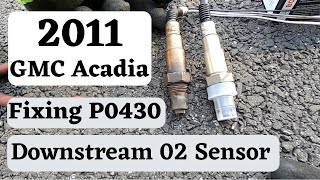
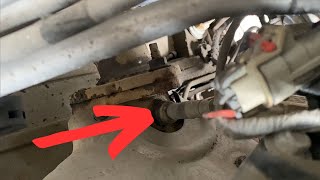
Used OEM Parts in Stock



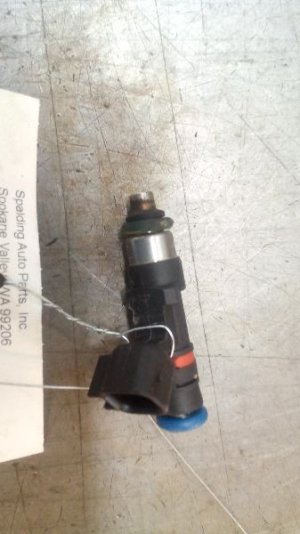


New Aftermarket Parts Available



The information in this article is provided for general reference and educational purposes only. Vehicle specifications, procedures, and part compatibility can vary by production date, trim level, and region. Always consult your vehicle's factory service manual and verify part numbers before purchasing or performing repairs. Safety-critical components such as airbags, seat belts, and braking systems should be installed by a qualified professional.
- Gmc ACADIA:
- 🎬 Helpful Videos
- 🛍️ Shop This Part
- What's Unique About the 2008-2015 Gmc ACADIA
- Diagnostic Flowchart
- Symptoms You May Notice
- Most Likely Causes
- Rare But Worth Checking
- Diagnosis Steps
- Parts You'll Likely Need
- Related Codes That Often Appear With This One
- Technical Service Bulletins (TSBs) & Recalls
- Platform-Specific Known Issues
- Mechanic-Grade Diagnostic Values
- Scan Tool Commands That Help
- Wiring & Ground Locations
- Real Owner Repair Stories
- "I Checked Everything" — The Actual Cause
- OEM Part Supersession History
- Model Year Variations Within This Range
- 🎟️ Get 5% Off