

P2099 on 2015-2023 Ford Mustang 2.3L EcoBoost: Causes for a Rich Condition
This code is confusing on a 4-cylinder Mustang. It means 'Post Catalyst Fuel Trim Too Rich Bank 2', but your engine only has one bank. The issue is a rich fuel condition on your engine's single exhaust stream. The most likely causes are a faulty downstream oxygen sensor, a stuck-open EVAP purge valve, or a leaking fuel injector. A PCM software update may also be required.
- Ignore the 'Bank 2' part of the code; your 2.3L engine only has one bank. The problem is a rich fuel mixture.
- Start your diagnosis with the easiest and most common Ford issues: check the EVAP purge valve for being stuck open.
- A faulty downstream O2 sensor is a high-probability cause. Use a scan tool to check its voltage before replacing.
- If mechanical and sensor checks don't find a fault, the problem could be a software glitch that requires a dealer visit for a PCM update.
What's Unique About the 2015-2023 Ford Mustang
The 2.3L EcoBoost engine has a single exhaust manifold and therefore only one 'bank' of cylinders. V-shaped engines (like the Mustang GT's 5.0L V8) have two banks. The appearance of a 'Bank 2' code on an I4 engine is unusual. A Ford Technical Service Bulletin (TSB SSM 46159) for a different EcoBoost engine notes that incorrect PCM calibration can cause fuel trim codes like P2099 to be set improperly, suggesting a software-related issue. This means the problem is not a faulty 'Bank 2' component (which doesn't exist), but rather a rich running condition on the single bank that the PCM is flagging with a confusing code, or a software anomaly in the engine's computer.
Symptoms You May Notice
- Check Engine Light is on
- Decreased fuel economy
- Smell of gasoline from the exhaust
- Black smoke from the exhaust, especially on acceleration
- Hesitation or poor acceleration
- Rough idle
- Car struggles to start, especially after refueling
- Searching for or attempting to replace a 'Bank 2' oxygen sensor. This engine only has one bank, so there are no 'Bank 2' components to service.
- Replacing the upstream (pre-catalyst) O2 sensor when the code specifically points to the post-catalyst fuel trim.
Most Likely Causes
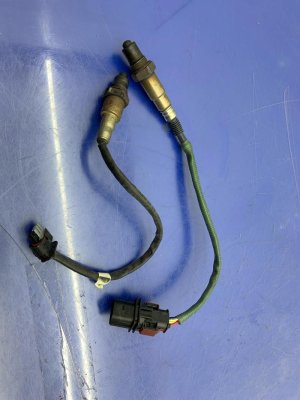
- Faulty Downstream Oxygen (O2) Sensor 🔴 High Probability The downstream sensor is responsible for triggering this code. It can become slow, contaminated, or fail over time, sending false 'rich' signals to the PCM.
How to confirm: Use a scan tool to monitor the voltage of the downstream O2 sensor (Bank 1, Sensor 2). A healthy sensor on a warm engine should show a relatively steady voltage, typically between 0.5V and 0.7V. If it's stuck high (above 0.8V) or fluctuating wildly like the upstream sensor, it's likely faulty.
Typical fix: Replace the downstream (post-catalyst) oxygen sensor.
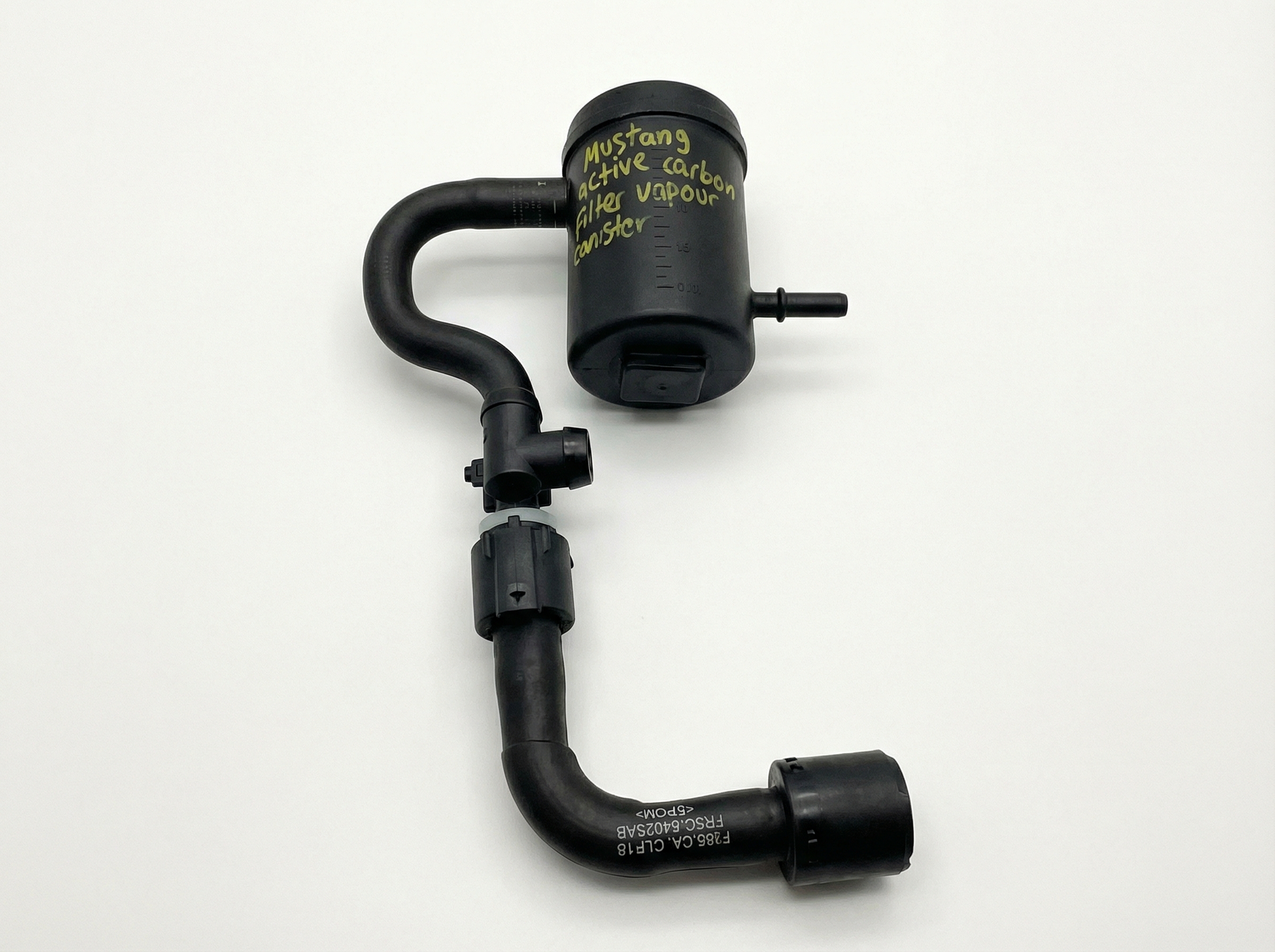
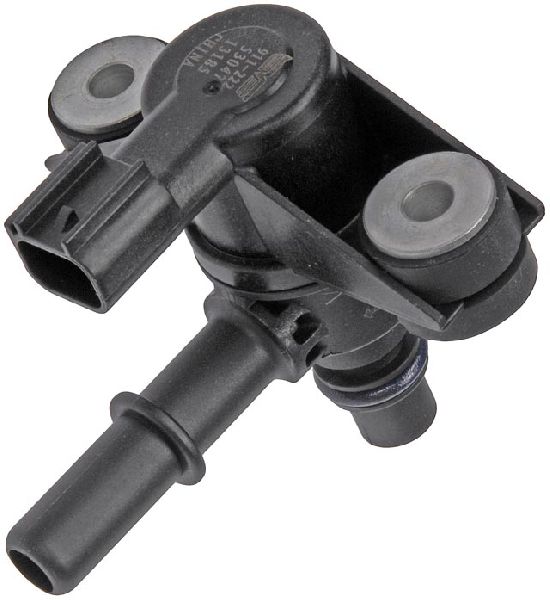
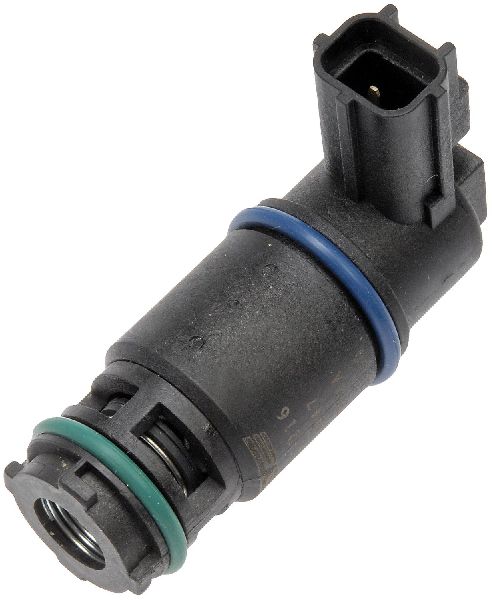
Est. part cost: $50-$120 - Stuck-Open EVAP Purge Valve 🟡 Medium Probability The EVAP purge valve is a notoriously common failure point on the S550 EcoBoost Mustang and other Ford vehicles. When it sticks open, it allows un-commanded fuel vapors from the gas tank to be drawn into the intake manifold, creating a rich condition that the PCM struggles to correct. This can also cause rough starts after filling the gas tank.
How to confirm: With the engine running, disconnect the vapor line from the purge valve itself (the line that runs from the charcoal canister, not the line to the intake). Place your finger over the port on the valve; if you feel a vacuum, the valve is stuck open and needs to be replaced.
Typical fix: Replace the EVAP purge valve. This is a relatively simple replacement located on the engine.
Est. part cost: $40-$80 - Leaking Fuel Injector(s) 🟡 Medium Probability Direct injection (GDI) systems like the EcoBoost operate at very high pressures, and injectors can fail or leak over time, dripping excess fuel into a cylinder. This raw fuel washes oil from the cylinder walls and contaminates the oil, in addition to causing a rich condition.
How to confirm: Perform a fuel pressure leak-down test. You can also remove the spark plugs and inspect them; a plug that is black and sooty compared to the others indicates a rich condition in that cylinder. A borescope can also be used to check for wetness on the piston top.
Typical fix: Identify and replace the leaking fuel injector(s). It is often recommended to replace them as a set.
Est. part cost: $70-$150 per injector - Exhaust Leak ⚪ Low Probability Leaks at the exhaust manifold, turbocharger flange, or downpipe connection can allow outside air to be drawn into the exhaust stream. This can confuse the oxygen sensors and lead to incorrect fuel trim adjustments, sometimes causing a rich code.
How to confirm: Visually inspect the exhaust system from the engine to the catalytic converter for black soot trails, which indicate a leak. A smoke test is the most effective way to pinpoint the exact location of a leak. Listen for ticking or hissing noises when the engine is cold.
Typical fix: Replace the leaking gasket or tighten the loose connection.
Est. part cost: $20-$100 - Dirty or Faulty Mass Airflow (MAF) Sensor ⚪ Low Probability If the MAF sensor is contaminated (especially with oiled air filters), it can under-report the amount of air entering the engine, causing the PCM to add too much fuel to compensate for the perceived lack of air.
How to confirm: Inspect the MAF sensor element for dirt or oil. You can try cleaning it with a dedicated MAF sensor cleaner. If the problem persists, monitor MAF readings on a scan tool to see if they are rational for the given engine speed and load.
Typical fix: Clean the MAF sensor with a dedicated cleaner. If cleaning doesn't work, replace the sensor.
Est. part cost: $10 for cleaner, $80-$150 for a new sensor
Rare But Worth Checking
- PCM Calibration Issue: As suggested by TSB SSM 46159 for another Ford engine, the PCM logic itself may be flawed. If all mechanical and sensor checks pass, the issue might be resolved with a software update from a Ford dealership. This is especially relevant given the illogical 'Bank 2' designation on an I4 engine.
- Failing Catalytic Converter: A failing or contaminated catalytic converter can lose its ability to store oxygen, causing erratic readings from the downstream O2 sensor and potentially triggering a rich code.
- Leaking Low-Pressure Fuel Sensor: An updated low-pressure fuel sensor is a common replacement item on these cars. A faulty sensor could potentially send incorrect data to the PCM, contributing to fuel trim issues.
Diagnosis Steps
- Verify the Code: Use a scan tool to confirm P2099 is present. Note any other codes, as they can provide critical clues (especially P0172 or P1450). Check freeze frame data to see the engine conditions when the code was set.
- Acknowledge the Contradiction: Understand that 'Bank 2' does not exist on this engine. You are looking for a cause of a rich condition on the single exhaust bank.
- Inspect for EVAP Purge Valve Failure: Perform the vacuum test on the purge valve as described in 'Common Causes'. This is a frequent issue on Ford vehicles and is easy to check.
- Check for Exhaust Leaks: Start the engine when it's cold and listen for any ticking or hissing sounds from the exhaust manifold, turbo, and downpipe area. A smoke test is the most definitive method.
- Inspect the Air Intake System: Check that the air filter is clean and that all intake tubing between the airbox, turbo, and throttle body is secure and free of cracks. Pay close attention if you have an aftermarket cold air intake.
- Analyze Sensor Data: Use a scan tool to monitor live data. Watch the short-term (STFT) and long-term (LTFT) fuel trims. Consistently negative numbers (e.g., -10% or more) confirm the PCM is trying to remove fuel to correct a rich condition. Observe the downstream O2 sensor voltage; if it's stuck high (above 0.8V), the sensor itself is a likely culprit.
- Test the Fuel System: If fuel trims are highly negative, suspect a fuel delivery problem. Check fuel pressure to ensure it's within spec and perform a leak-down test to check for leaking injectors.
- Consider a PCM Update: If all else fails, contact a Ford dealership to see if there are any available PCM software updates for your vehicle, referencing TSB SSM 46159 as a potential indicator of this type of issue.
Parts You'll Likely Need
- Downstream Oxygen Sensor
(OEM #FR3Z-9G444-C (Motorcraft DY-1335))— This is the sensor that triggers the code. It can fail and send inaccurate 'rich' readings.
Trusted brands: Motorcraft, Bosch, Denso, NGK
OEM price range: $80-$150
Aftermarket price range: $40-$90 - EVAP Canister Purge Valve
(OEM #FR3Z-6A785-C (replaces FR3Z-6A785-A))— A very common failure item on this engine that directly causes a rich condition by allowing un-metered fuel vapor into the intake.
Trusted brands: Motorcraft, Standard Motor Products
OEM price range: $50-$80
Aftermarket price range: $40-$60
Related Codes That Often Appear With This One
- P0172 — System Too Rich (Bank 1). This is the primary code for a rich condition on this engine. If you see P0172 with P2099, it strongly confirms a rich condition that needs to be diagnosed.
- P2196 — O2 Sensor Signal Stuck Rich (Bank 1, Sensor 1). This indicates the upstream sensor is also detecting a rich condition, pointing away from the downstream sensor being the sole cause.
- P1450 — Unable to Bleed Up Fuel Tank Vacuum. This code is very commonly associated with a failing EVAP purge valve, a primary cause of P2099 on this platform.
Technical Service Bulletins (TSBs) & Recalls
- SSM 46159: While for a 3.5L GTDI engine, this TSB is relevant as it states that codes P2097, P2098, and/or P2099 can be set due to incorrect PCM calibration values, providing a strong clue that this can be a software issue on Ford's turbocharged engines.
Platform-Specific Known Issues
- The primary vehicle-specific issue is the PCM's potential to set a 'Bank 2' code on a single-bank engine, which can mislead diagnosis. This is hinted at in TSBs for other Ford EcoBoost engines, like TSB #SSM 46159.
Mechanic-Grade Diagnostic Values
- Downstream O2 Sensor (HO2S12) Voltage — expected: Relatively steady voltage between 0.1V (lean) and 0.9V (rich) on a warm, running engine.. Failure: Voltage is stuck high (above 0.8V), indicating a persistent (and possibly false) rich signal.
- Mass Air Flow (MAF) Sensor Voltage — expected: 0.46V to 4.6V with the engine running (KOER).. Failure: Voltage is greater than 0.27V with Key On Engine Off (KOEO), or outside the expected range during KOER.
- Fuel Rail Pressure (FRP) Sensor VREF — expected: Between 4.0 and 6.0 volts.. Failure: Voltage is below 4.0V, indicating a potential issue with the sensor's reference voltage from the PCM.
- Sensor Circuit Ground Resistance — expected: Less than 5 Ω.. Failure: Resistance is higher than 5 Ω, indicating a poor ground connection which can cause incorrect sensor readings.
Hidden / Shadow Codes Worth Checking
- Mode 6 Data: While not a specific 'shadow code', accessing Mode 6 data with an advanced scan tool (like FORScan) can reveal test results for individual emissions monitors. A technician can see the raw test values for the O2 sensor and catalyst monitors to determine if they are close to their failure threshold, even if a DTC has not been set yet. (see via Advanced OBD-II scan tool with Mode 6 capability, such as Ford IDS or FORScan.)
Scan Tool Commands That Help
- FORScan / Ford IDS: Clear/Reset KAM (Keep Alive Memory) — After replacing a component like an O2 sensor, fuel injector, or EVAP valve. This command erases the long-term fuel trim adaptations, forcing the PCM to relearn the fuel strategy immediately with the new part, which can prevent the code from returning due to old, incorrect learned values.
- FORScan / Ford IDS / Advanced Scan Tools: HO2S PID Monitoring + Harness Wiggle Test — When a faulty sensor is suspected but could also be a wiring issue. A technician can graph the live voltage data from the downstream O2 sensor while physically wiggling and shaking the wiring harness. If the voltage signal drops out or spikes during the wiggle test, it indicates an intermittent wiring or connector fault rather than a failed sensor.
Wiring & Ground Locations
- Engine Harness Ground — Grounded to one of the bolts on the high-pressure fuel pump (HPFP) on the 2.3L EcoBoost engine.. The HPFP area is a central grounding point for multiple engine harness components. A loose or corroded ground here can introduce electrical noise and resistance, affecting sensor signals and potentially causing erroneous fuel trim codes.
- HO2S12 Connector (Downstream O2 Sensor) — On the exhaust downpipe, after the catalytic converter. The connector has 4 pins.. Knowing the specific pin functions allows for direct testing of the sensor and its circuit. Pin 1: VPWR (Voltage Power), Pin 2: HTR12 (Heater Circuit), Pin 3: SIGRTN (Signal Return/Ground), Pin 4: HO2S12 (Signal Wire).
- G201 — Located in the passenger side kick panel area, near the Powertrain Control Module (PCM).. This is a primary ground point for the PCM itself. A poor connection at G201 can cause a wide range of unpredictable issues, including incorrect processing of sensor data and faulty diagnostic trouble codes.
OEM Part Supersession History
FR3Z-6A785-A→FR3Z-6A785-C— Updated design to improve reliability and prevent sticking.
Heads up: The new part is a direct replacement for the old one.
Model Year Variations Within This Range
- 2015-2023: The Coolant Temperature Sensor on 2.3L Mustang blocks is located on the intake manifold side, whereas on other 2.3L EcoBoost applications it may be on the turbocharger side of the block.
- 2018-2023: The Mustang received a significant facelift for the 2018 model year, which included updates to the engine and PCM software. This can lead to variations in diagnostic logic and part compatibility compared to the 2015-2017 models. Always verify parts by VIN, especially for electronic components.
Diagnostic Flowchart
Other Known Issues on This Vehicle
Issues unrelated to this code that are worth knowing about as an owner of this generation:
- Head Gasket Failure / Coolant Intrusion 🔴 High — More common on earlier models (pre-2020) and tuned vehicles, but can occur on stock engines. Often manifests as coolant consumption and white exhaust smoke. (Ref: TSB 19-2346 (for the related 2.0L EcoBoost) outlines a similar issue of coolant intrusion requiring engine replacement, showing a pattern in Ford's design.)
- Intake Valve Carbon Buildup 🟠 Medium — A natural consequence of gasoline direct injection (GDI) where fuel doesn't clean the intake valves. Can cause rough idle, misfires, and power loss over time, typically noticeable after 40,000-60,000 miles.
- EVAP System Component Failures 🟠 Medium — The EVAP purge valve is a very common failure item, often occurring between 30,000-70,000 miles. It leads to rough idle, starting issues after refueling, and codes like P1450.
- Low-Speed Pre-Ignition (LSPI) 🔴 High — An abnormal combustion event common to small-displacement, turbocharged GDI engines. It can cause catastrophic engine damage. Using high-quality fuel and API SN+ or SP-rated oil is critical for prevention.
- Failing Low-Side Fuel Pressure Sensor 🟡 Low — A known issue where the sensor fails, causing CELs and drivability problems. Ford has released an updated part to address this.
Used vs. New Parts: Buying Guide for This Vehicle
When a used part is the smart pick: For this repair, a used EVAP purge valve from a verified low-mileage donor vehicle could be a cost-effective option, as its failure is often mechanical (sticking). Other components like wiring harnesses or connectors are also suitable to source used.
Donor-vehicle mileage cap: roughly under 50000 miles for the part to have meaningful remaining life.
What to inspect on the donor part:
- For an EVAP valve, check for cracks in the plastic housing.
- For wiring, ensure connectors are intact with no broken locking tabs or corrosion on the pins.
- Inspect harnesses for any signs of brittleness, melting, or improper repairs (e.g., tape instead of heat shrink).
OEM-only on this vehicle (don't cheap out):
- Powertrain Control Module (PCM): Due to the need for VIN-specific programming and the possibility of software-related issues causing this code, only a new or professionally refurbished and programmed OEM unit should be used.
- Fuel Injectors: While aftermarket injectors exist, OEM Motorcraft injectors are recommended to ensure correct flow rates and spray patterns for the GDI system.
Aftermarket brands forum-validated for this vehicle:
- NTK and Denso are frequently cited as the original equipment manufacturers for Ford's O2 sensors and are considered reliable, high-quality alternatives to Motorcraft-branded parts.
Brands owners have reported issues with on this vehicle:
- Universal O2 Sensors: Avoid any oxygen sensor that requires cutting and splicing wires. The connections are a common point of failure and can lead to incorrect readings.
- Bosch O2 Sensors: While a major OEM for many brands, some Ford owners report issues with Bosch sensors being 'lazy' or causing problems, recommending NTK or Denso instead.
Real Owner Stories
Aggregated from forums and TSBs cited above. Mileages and costs reflect what owners reported in those sources.
2015 Ford Mustang 2.3L EcoBoost
Symptoms: The owner noted the diagnostic trouble code charts for the 2.3L engine list P2099 as a possible code, often linked to exhaust leaks or sensor contamination.
What fixed it: Inspection of the exhaust system for leaks and checking for sensor contamination as per the Ford diagnostic chart.
Source hint: https://www.mustang6g.com/forums/threads/diagnostic-trouble-code-dtc-charts-and-descriptions.62291/
Related OBD-II Codes
Frequently Asked Questions
Why does my Mustang show a 'Bank 2' error (P2099) when it only has one exhaust bank?
Why does my EcoBoost Mustang struggle to start specifically after I fill up the gas tank?
Is there a specific TSB for the 2.3L EcoBoost regarding these rich codes and PCM updates?
Could a dirty aftermarket oiled air filter cause the P2099 code on my Mustang?
How can I tell if my downstream O2 sensor is the cause of the P2099 code?
Helpful Videos
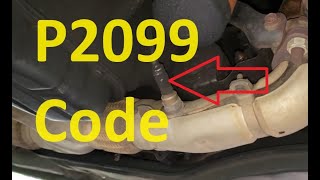

![How to Fix FORD P2099 Engine Code in 4 Minutes [2 DIY Methods / Only $9.53]](https://img.youtube.com/vi/Bu5rHugju5c/mqdefault.jpg)

Used OEM Parts in Stock
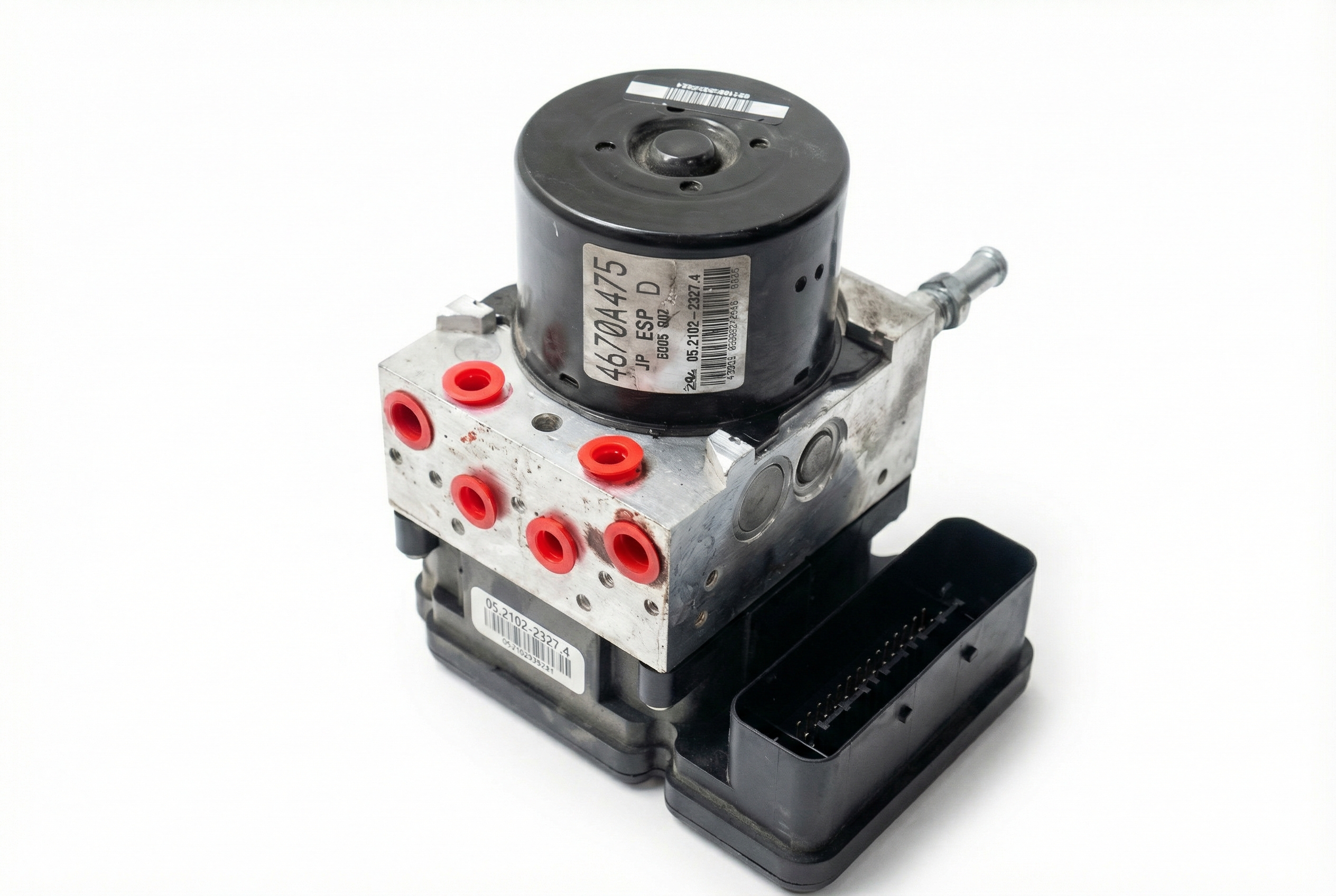
New Aftermarket Parts Available
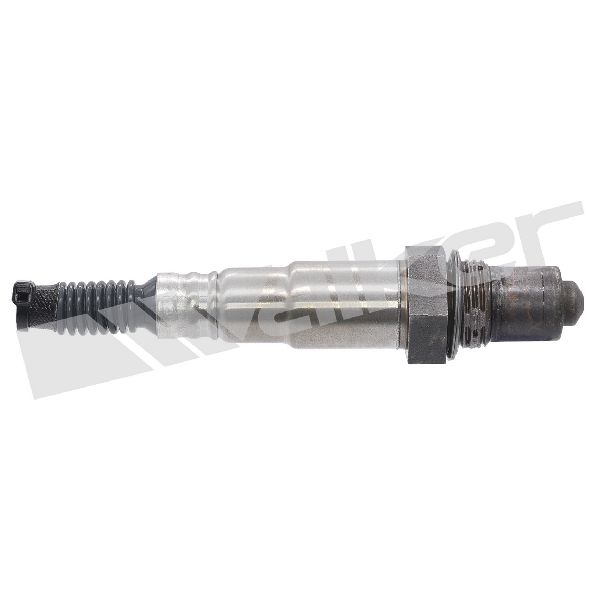

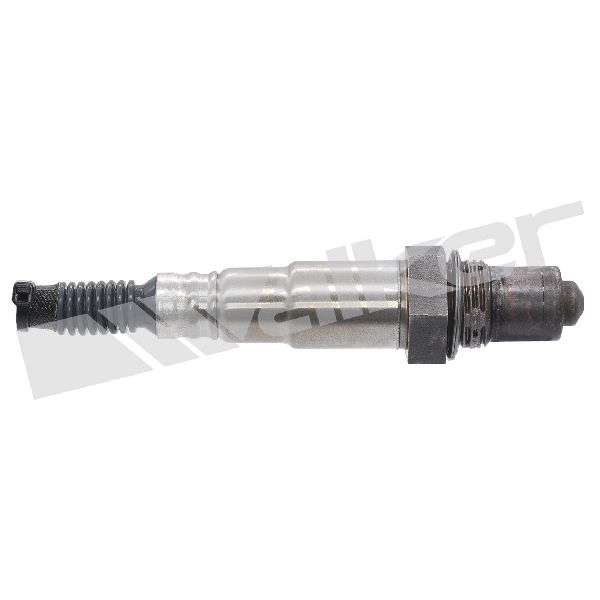

The information in this article is provided for general reference and educational purposes only. Vehicle specifications, procedures, and part compatibility can vary by production date, trim level, and region. Always consult your vehicle's factory service manual and verify part numbers before purchasing or performing repairs. Safety-critical components such as airbags, seat belts, and braking systems should be installed by a qualified professional.
- Ford Mustang:
- 🎬 Helpful Videos
- 🛍️ Shop This Part
- What's Unique About the 2015-2023 Ford Mustang
- Symptoms You May Notice
- Most Likely Causes
- Rare But Worth Checking
- Diagnosis Steps
- Parts You'll Likely Need
- Related Codes That Often Appear With This One
- Technical Service Bulletins (TSBs) & Recalls
- Platform-Specific Known Issues
- Mechanic-Grade Diagnostic Values
- Hidden / Shadow Codes Worth Checking
- Scan Tool Commands That Help
- Wiring & Ground Locations
- OEM Part Supersession History
- Model Year Variations Within This Range
- Diagnostic Flowchart
- Other Known Issues on This Vehicle
- Used vs. New Parts: Buying Guide for This Vehicle
- Real Owner Stories
- 2015 Ford Mustang 2.3L EcoBoost
- Related OBD-II Codes
- Frequently Asked Questions
- 🎟️ Get 5% Off