

P2099 on 2014 Chrysler 300: Post-Catalyst Rich Fuel Trim (Bank 2) Causes and Fixes
P2099 on a 2014 Chrysler 300 indicates a rich fuel condition on Bank 2 (driver's side). The most common causes are a faulty downstream oxygen (O2) sensor or an exhaust leak before the sensor. In many cases, a powertrain software update from a Chrysler dealer may be required, as specified in TSBs for this model.
- P2099 means your 2014 Chrysler 300 is running rich on the driver's side (Bank 2).
- The most likely fix is replacing the downstream (post-catalyst) oxygen sensor on the driver's side.
- Before replacing parts, check for exhaust leaks between the engine and the sensor.
- Ask a dealer to check if your vehicle needs a PCM software update, as this is a known issue that can fix the code without replacing any parts.
- Do not ignore this code, as it will decrease fuel economy and can eventually lead to costly catalytic converter damage.
What's Unique About the 2014-2014 Chrysler 300
For the 2014 Chrysler 300, equipped with either the 3.6L Pentastar V6 or 5.7L HEMI V8, the P2099 code is often straightforward. However, Chrysler has issued Technical Service Bulletins (TSBs) for similar models and engines indicating that the PCM software can be overly sensitive and may need an update to correct false rich codes. While exhaust manifold leaks are a notorious cause on the related Ram 5.7L HEMI, the most frequent culprits on the 300 tend to be the O2 sensor itself or a needed software reflash.
Diagnostic Flowchart
Tap your situation to follow the diagnostic path that matches what you're seeing on this vehicle.
Symptoms You May Notice
- Check Engine Light is on
- Decreased fuel economy
- Poor engine performance or sluggish acceleration
- Rough idle
- Black smoke from the exhaust, especially on acceleration
- Strong smell of gasoline from the exhaust
- Replacing the catalytic converter first. The converter is expensive and is usually damaged by a persistent rich condition, it is not the root cause of the code.
- Replacing the upstream O2 sensor (Sensor 1). P2099 specifically relates to the reading from the downstream sensor (Sensor 2), which monitors catalyst efficiency.
- Replacing the Mass Air Flow (MAF) sensor without testing. While a faulty MAF can cause rich conditions, it typically affects both banks and would likely set a P2097 code as well.
Most Likely Causes
- Powertrain Control Module (PCM) Software Update Needed 🔴 High Probability Chrysler has released multiple TSBs for this model year and its platform mates to address inaccurate fuel trim codes. The original software logic can be too sensitive and falsely trigger P2099.
How to confirm: A Chrysler dealership or a qualified shop with access to FCA's wiTECH software can check your vehicle's VIN against available TSBs, such as #18-039-15 REV-A or #18-103-16. TSB 18-094-16 also supersedes 18-039-15 and applies to 2014 Chrysler 300 models.
Typical fix: The dealer will reprogram or 'reflash' the PCM with the latest software version. This is a software-only fix that typically takes under an hour. 🎬 Watch: How to reflash a Chrysler PCM for software updates.
Est. part cost: $0-$250 - Faulty Downstream Oxygen (O2) Sensor (Bank 2, Sensor 2) 🔴 High Probability O2 sensors are wear-and-tear items that degrade over time from heat and contaminants in the exhaust stream. They are a very common failure point for this code when a software update doesn't resolve it.
How to confirm: Use a scan tool to monitor the live voltage data from the Bank 2, Sensor 2. A healthy downstream sensor should show a relatively steady voltage (e.g., 0.6-0.8V) when warm. If it's stuck high (above 0.8V) or fluctuating wildly like the upstream sensor, it is likely faulty.
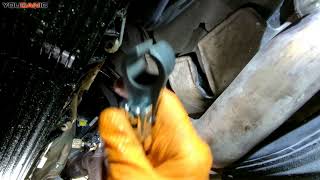
Typical fix: Replace the Bank 2, Sensor 2 oxygen sensor. This is located on the driver's side of the vehicle, after the catalytic converter.
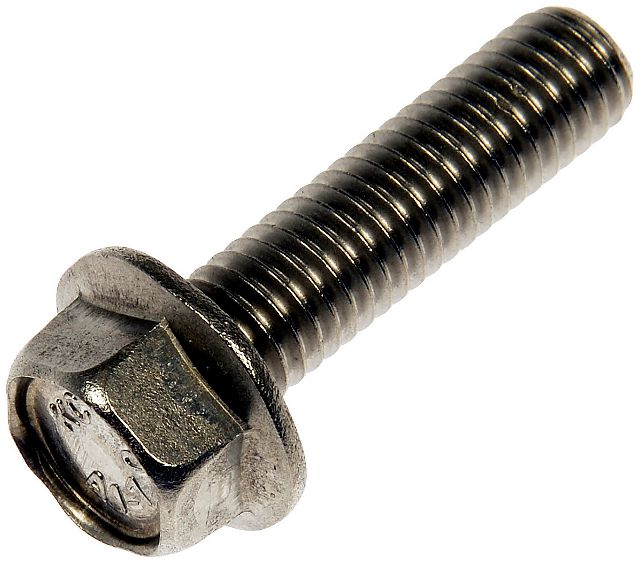
Est. part cost: $40-$120 - Exhaust Leak 🟡 Medium Probability Exhaust components can develop leaks at gaskets or welds due to corrosion and thermal cycles. A leak before the O2 sensor can draw in outside air, confusing the sensor and leading to incorrect fuel trim adjustments. On HEMI engines, broken exhaust manifold bolts are a known issue.
How to confirm: Visually inspect the exhaust system from the engine manifold to the downstream O2 sensor for cracks, rust, or black soot marks indicating a leak. A ticking noise that is loudest on a cold start is a classic symptom. You can also use a smoke machine to pressurize the exhaust and see where smoke escapes. 🎬 Watch: How to check for exhaust leaks before replacing parts.
Typical fix: Repair the leak. This may involve replacing a gasket (e.g., exhaust manifold gasket), welding a crack in the pipe, or replacing broken manifold bolts.
Est. part cost: $20-$200 - Leaking Fuel Injector(s) on Bank 2 ⚪ Low Probability Injectors can become stuck open or leak fuel due to internal wear or contamination, causing excess fuel to enter the cylinders on one bank.
How to confirm: A professional can perform a fuel injector balance test. A DIY method is to carefully remove the fuel rail with injectors attached, pressurize the system, and watch for drips. Another sign is pulling the spark plugs on Bank 2 and finding them black and sooty compared to Bank 1.
Typical fix: Replace the faulty fuel injector(s) and their seals.
Est. part cost: $50-$150 per injector
Rare But Worth Checking
- High Fuel Pressure: A faulty fuel pressure regulator can cause high fuel pressure across the entire engine, which could trigger rich codes on both banks (P2097 and P2099). If only P2099 is present, this is less likely.
- Failing Catalytic Converter: While a failing converter can trigger this code, it's more often a symptom of the long-term rich condition rather than the cause. Rule out all other possibilities before considering converter replacement to avoid an expensive misdiagnosis.
- Contaminated Engine Oil: Severe fuel dilution in the engine oil can create vapors that are ingested by the PCV system, leading to a richer mixture that can contribute to this code.
Diagnosis Steps
- Read the code with an OBD-II scanner and confirm P2099 is present. Note any other codes, as they can provide crucial clues.
- Check for applicable Technical Service Bulletins (TSBs). Contact a dealer with your VIN to see if a PCM software update (like those mentioned in TSBs 18-039-15, 18-103-16, or 18-094-16) is available. This is a critical first step for this vehicle.
- Using a scan tool, monitor the live data for the Bank 2, Sensor 2 (downstream) O2 sensor. Once the engine is at operating temperature, the voltage should be relatively stable between 0.6V and 0.8V. If it's stuck high (e.g., >0.8V) or fluctuating rapidly, the sensor is suspect.
- Visually and audibly inspect the exhaust system on the driver's side for any signs of leaks (soot, cracks, rust, or a ticking noise when cold) between the engine and the downstream O2 sensor.
- Inspect the O2 sensor wiring and connector for any damage, melting, corrosion, or loose connections.
- If no issues are found, investigate potential fuel delivery problems, such as a leaking fuel injector on Bank 2 or high fuel pressure.
- If all else fails, consider a professional diagnosis of the catalytic converter and PCM.
Parts You'll Likely Need
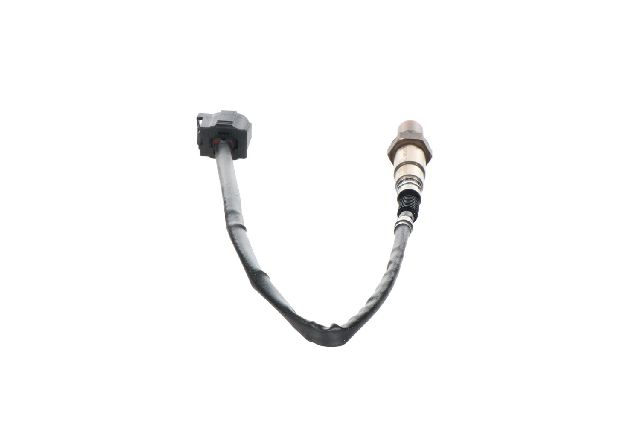
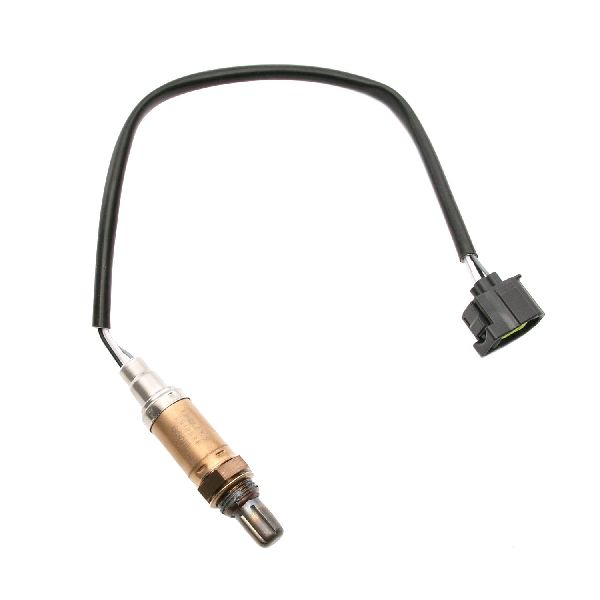
- Downstream Oxygen Sensor (Bank 2, Sensor 2)
(OEM #68144248AD (replaces 68144248AA, 5149180AA, 05149180AB))— This sensor is the most common point of failure for this code due to its role in measurement and its exposure to harsh exhaust conditions.
Trusted brands: Mopar, NTK, Denso, Bosch
OEM price range: $80-$150
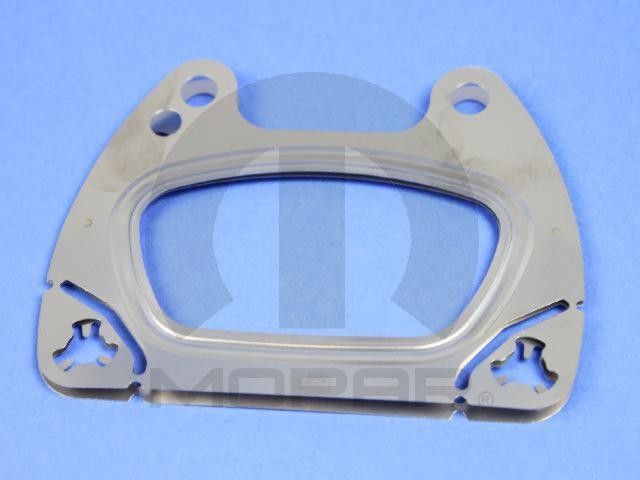
Aftermarket price range: $40-$90 - Exhaust Manifold Gasket — If an exhaust leak is found at the manifold on the driver's side, this gasket will need to be replaced. This is more common on the 5.7L HEMI engine.
Trusted brands: Fel-Pro, Mahle
OEM price range: $25-$50
Aftermarket price range: $15-$30
Related Codes That Often Appear With This One
- P2097 — This is the same 'rich' code but for Bank 1 (passenger side). If both are present, it strongly suggests a systemic problem like high fuel pressure or a faulty Mass Airflow (MAF) sensor affecting the whole engine.
- P0175 — This code means 'System Too Rich (Bank 2)' and is detected by the *upstream* O2 sensor. Seeing both together confirms a definite rich condition on Bank 2, likely caused by a leaking injector or fuel pressure issue.
- P0302, P0304, P0306 — These are misfire codes for the cylinders on Bank 2. A leaking fuel injector can foul the spark plug, causing both a misfire and a rich condition on that bank.
- P0456 — This code for a small EVAP leak is mentioned in TSB #18-103-16 REV. B as another code that can be resolved by the same PCM software update that fixes P2099.
Technical Service Bulletins (TSBs) & Recalls
- 18-039-15 REV-A: Mentions P2099 - Downstream Fuel Trim System 2 Rich for 2014 engines, particularly with manual transmissions on platform mates.
- 18-103-16 REV. B: A superseding bulletin that also involves reprogramming the PCM for P2099 on 2014 models with 3.6L or 5.7L
Platform-Specific Known Issues
- A known issue for this powertrain family is the need for a PCM software update to correct overly sensitive diagnostics for fuel trim codes. TSB #18-039-15 REV-A and #18-103-16 specifically mention P2099 as a code that can be resolved with a reflash.
- A newer TSB, #18-072-22, released in 2022 also lists P2099 for 3.6L engines as being resolved by a PCM software update.
- Owners on forums frequently report that a PCM reflash is the first and most effective step, often solving the problem without any parts replacement.
- For the 3.6L Pentastar engine, oil leaks from the oil filter adapter/cooler housing are a common problem that can, in some cases, drip oil onto and damage wiring or sensors below it.
Mechanic-Grade Diagnostic Values
- Downstream O2 Sensor (B2S2) Voltage — expected: Relatively stable voltage between 0.5V and 0.8V when in closed loop at operating temperature.. Failure: Voltage is stuck high (above 0.8V), stuck low, or fluctuates rapidly between 0.1V and 0.9V, mimicking an upstream sensor.
- O2 Sensor Heater Circuit Resistance — expected: Between 2 and 20 ohms when the sensor is cold.. Failure: Resistance is infinite (open circuit), zero (short circuit), or significantly outside the typical range.
- Fuel Pressure (3.6L V6 & 5.7L V8) — expected: Approximately 55-60 psi at the fuel rail.. Failure: Pressure is significantly higher or lower than the specified range, indicating a problem with the fuel pump or regulator.
- Fuel Injector Coil Resistance (5.7L V8) — expected: Approximately 12 ohms (High Impedance).. Failure: Resistance is significantly different from the other injectors or shows an open/short circuit. All injectors should be within 0.5 ohms of each other.
Hidden / Shadow Codes Worth Checking
- Mode $06 Data: While not a proprietary 'shadow code', Mode $06 on an advanced scan tool provides access to non-continuous monitor test results. For P2099, a technician can view the raw data from the Catalyst Efficiency Monitor (Test ID $82, Component ID $20 for Bank 2) to see how close it is to the pass/fail threshold before a code is set. (see via Advanced OBD-II scan tool with Mode $06 functionality.)
Scan Tool Commands That Help
- Chrysler wiTECH or equivalent professional scan tool: O2 Sensor Response Test — To actively test the downstream O2 sensor's ability to respond to changes in air/fuel mixture, helping to confirm if the sensor is lazy or failed rather than just reporting a true rich condition.
- Chrysler wiTECH or equivalent professional scan tool: Fuel Injector Balance Test — To identify a leaking or poorly flowing fuel injector on Bank 2 that could be the root cause of the rich condition. The tool measures the pressure drop for each injector individually.
- Chrysler wiTECH: PCM Reprogramming / Reflash — This is a required step if the vehicle's VIN matches an open TSB for P2099. It updates the PCM's software to correct overly sensitive diagnostic logic.
- Chrysler wiTECH or equivalent professional scan tool: Reset Fuel Trim Adaptations — After replacing a fuel system component like an O2 sensor or fuel injector, this function should be used to clear the PCM's learned long-term fuel trim values, allowing it to create a new baseline with the new parts.
Wiring & Ground Locations
- O2 Sensor Harness (Bank 2) — The wiring runs from the downstream O2 sensor on the driver's side exhaust, up towards the transmission, and into the main engine harness.. The harness is susceptible to heat damage from the exhaust or physical damage from road debris. A short or open in the signal, heater, or ground wire can cause false readings. A 'wiggle test' of the harness while watching live data can expose intermittent connections.
- Engine Harness Splices (e.g., S992, S994) — Wiring diagrams for the 3.6L engine show critical splices located in the engine harness near the right rear of the engine compartment.. Factory splices can be a point of failure due to corrosion or vibration over time. A high-resistance connection at a splice in the O2 sensor circuit can alter the voltage signal sent to the PCM.
- PCM Ground — The Powertrain Control Module (PCM) is located in the right rear of the engine compartment. Its ground connections are critical for all sensor readings.. A poor ground connection at the PCM can create a floating ground, causing incorrect voltage readings from sensors, including the O2 sensor. Resistance between the PCM ground circuit and the battery negative terminal should be less than 5 ohms.
Real Owner Repair Stories
- Dodge Challenger Forum (LXForums) (Dodge Challenger (platform mate with same 3.6L/5.7L engines)) — Check Engine Light with code P2099.
❌ Tried (didn't work) Replaced the Bank 2 downstream O2 sensor.
✅ What actually fixed it The code returned after replacing the sensor. The final and successful fix was taking the vehicle to a dealership to have the Powertrain Control Module (PCM) reflashed with an updated software version, as specified in a Technical Service Bulletin (TSB).
When the Usual Fixes Don't Work
- While replacing the downstream O2 sensor is a very common and often correct fix for P2099, there are numerous documented cases for this vehicle platform where this does not solve the problem. As seen in real repair stories, owners may replace the sensor only to have the code return shortly after. The underlying cause in these instances is frequently the PCM software logic, which requires a dealer-level reflash per TSBs. This highlights the importance of checking for software updates before replacing hardware, even when the symptoms point directly to a specific part like the O2 sensor.
OEM Part Supersession History
5149180AA, 05149180AB, 68144248AA→68144248AD— Part has been updated by the manufacturer for improved reliability or material changes.05037479AA / 05037479AB / 05037479AC→05037479AD— Supersession chain for the 5.7L HEMI V8 fuel injector.
Heads up: Always use a matched set of injectors. Do not mix different part numbers on the same engine bank.
Helpful Videos
We Have This Part in Stock


The information in this article is provided for general reference and educational purposes only. Vehicle specifications, procedures, and part compatibility can vary by production date, trim level, and region. Always consult your vehicle's factory service manual and verify part numbers before purchasing or performing repairs. Safety-critical components such as airbags, seat belts, and braking systems should be installed by a qualified professional.
- Chrysler 300:
- 🎬 Helpful Videos
- 🛍️ Shop This Part
- What's Unique About the 2014-2014 Chrysler 300
- Diagnostic Flowchart
- Symptoms You May Notice
- Most Likely Causes
- Rare But Worth Checking
- Diagnosis Steps
- Parts You'll Likely Need
- Related Codes That Often Appear With This One
- Technical Service Bulletins (TSBs) & Recalls
- Platform-Specific Known Issues
- Mechanic-Grade Diagnostic Values
- Hidden / Shadow Codes Worth Checking
- Scan Tool Commands That Help
- Wiring & Ground Locations
- Real Owner Repair Stories
- When the Usual Fixes Don't Work
- OEM Part Supersession History
- 🎟️ Get 5% Off