

P2099 on 2011-2018 Chevrolet Camaro: Post Catalyst Fuel Trim Too Rich Bank 2
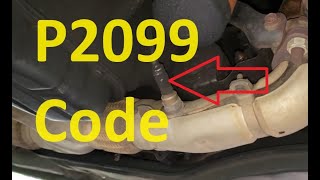
On a 2011-2018 Camaro, code P2099 means the engine is running too rich on Bank 2 (passenger side). This is frequently caused by a failing downstream oxygen (O2) sensor, an exhaust leak, or a leaking fuel injector. Expect to pay $50-$150 for a replacement O2 sensor or $70-$200 per injector, plus labor.
- P2099 means your Camaro's engine is running rich on the passenger side (Bank 2).
- Before buying parts, check for exhaust leaks, especially loose bolts on the passenger side catalytic converter, as this is a simple, commonly reported fix.
- The most common fixes are replacing the downstream O2 sensor or addressing a leaking fuel injector.
- Don't ignore this code, as it can lead to reduced MPG and eventually damage your expensive catalytic converter.
- A GM service bulletin specifically suggests checking the fuel injectors, making it a critical diagnostic step for this vehicle.
What's Unique About the 2011-2018 Chevrolet CAMARO

For the 2011-2018 Camaro, which includes both the 5th and 6th generations, the P2099 code can be more complex than just a bad sensor. A GM Technical Service Bulletin (TSB) for this platform specifically points technicians toward checking for fuel injector issues before other components. This suggests that leaking or imbalanced fuel injectors are a known issue that can cause this rich condition, a detail often overlooked in generic advice for this code. Furthermore, owner forums frequently mention exhaust leaks, particularly at the flange bolts on the passenger side catalytic converter, as a common, real-world cause.
🎬 Watch: How to find and identify exhaust leaks yourself.Diagnostic Flowchart

Tap your situation to follow the diagnostic path that matches what you're seeing on this vehicle.
Generation note: This range covers the end of the fifth generation (2011-2015) and the start of the sixth generation (2016-2018). Engines include the LFX V6 and LS3/L99 V8 (5th gen) and the LGX V6 and LT1 V8 (6th gen). While the causes are similar, part numbers for sensors and injectors will differ between these engines. For example, the 2012-2015 LFX V6 uses a different, high-pressure direct injection (GDI) system compared to the port injection on V8 models and earlier V6s.
Symptoms You May Notice
- Check Engine Light is on
- Decreased fuel economy
- Rough idle or hesitation during acceleration
- A noticeable smell of gasoline or black smoke from the exhaust.
- Engine stumbling or misfiring.
- Immediately replacing the catalytic converter. The P2099 code is a fuel trim issue detected *after* the converter; the converter itself is usually not the root cause, although it can be the culprit in some cases.
- Replacing the upstream (Sensor 1) O2 sensor. This code is specifically for the post-catalyst (Sensor 2) fuel trim system.
- Replacing the MAF sensor without checking for vacuum or exhaust leaks first, which are more common causes for this specific code.
Most Likely Causes

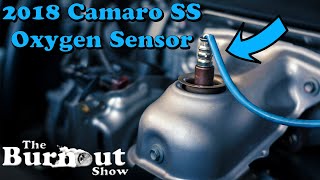
- Failing Downstream Oxygen (O2) Sensor 🔴 High Probability O2 sensors are wear items and can become slow or biased over time, sending incorrect 'rich' signals to the ECM. This is a very common first step in diagnosis for many owners.
How to confirm: Use a scan tool to monitor the live voltage of the Bank 2, Sensor 2 O2 sensor. A healthy sensor's voltage should fluctuate slowly. If it's stuck high (above 0.8V), it's likely faulty. A common DIY diagnostic step is to swap the downstream O2 sensors from Bank 1 and Bank 2. If the code changes to P2097 (Bank 1 Rich), the sensor is confirmed to be the problem.
Typical fix: Replace the Bank 2 downstream O2 sensor.
Est. part cost: $50-$150 - Exhaust Leak 🔴 High Probability Leaks in the exhaust system, especially between the engine and the downstream O2 sensor, can draw in outside air. This confuses the sensors and can lead to an incorrect rich code. On the Camaro, owners specifically report loose flange bolts on the passenger side catalytic converter as a culprit.
How to confirm: Visually inspect the exhaust system for cracks or loose connections, particularly at manifold and catalytic converter flanges. You may hear a ticking sound that gets louder with engine RPM. A smoke test is a definitive way to find small leaks. One owner on a Camaro6 forum found a loose bolt on the passenger side cat, tightened it, and resolved the code.
Typical fix: Repair the leak by tightening bolts or replacing the gasket/damaged exhaust component.
Est. part cost: $20-$300 - Leaking or Faulty Fuel Injector(s) on Bank 2 🟡 Medium Probability As highlighted by GM TSB #PIP4964F, fuel injector balance is a specific concern on these vehicles for P2099. An injector can leak excess fuel into a cylinder, creating a rich condition detected by the O2 sensors on that entire bank.
How to confirm: Perform a fuel injector balance test as recommended by the TSB. Another method is to pull the spark plugs on Bank 2 (cylinders 2, 4, 6 on a V6; 2, 4, 6, 8 on a V8) and check for signs of running rich, such as dark, sooty, or fuel-wet deposits.
Typical fix: Replace the faulty fuel injector(s) on Bank 2. It is often recommended to replace all injectors on that bank at the same time.
Est. part cost: $70-$200 per injector - Faulty Mass Air Flow (MAF) Sensor ⚪ Low Probability A dirty or failing MAF sensor can under-report the amount of air entering the engine, causing the ECM to inject too much fuel across both banks. While it can cause a P2099, it would typically be accompanied by a P2097 (Bank 1) as well.
How to confirm: Try cleaning the MAF sensor with a dedicated MAF sensor cleaner. If the problem persists, monitor the MAF reading on a scan tool to see if it corresponds correctly with engine RPM and load.
Typical fix: Clean or replace the MAF sensor.
Est. part cost: $80-$200
Rare But Worth Checking
- Failing or Clogged Catalytic Converter: While less common, a clogged or inefficient catalytic converter can trap gases and cause strange readings from the downstream O2 sensor. One owner on a Camaro5 forum reported that their P2099 was ultimately fixed by replacing a completely clogged Bank 2 catalytic converter after having already replaced both O2 sensors on that bank.
- High Fuel Pressure: A failing fuel pressure regulator can cause system-wide high fuel pressure, forcing too much fuel through the injectors and leading to a rich condition. This should be investigated if fuel trim issues are present on both banks.
- PCM or Wiring Issues: In very rare cases, a software glitch in the Powertrain Control Module (PCM) or a damaged wire in the O2 sensor harness could cause a false rich reading. This should be considered a last resort after all other possibilities are ruled out.
Diagnosis Steps
- Verify the code with an OBD-II scanner and check for any other stored codes.
- Check for exhaust leaks. This is a common and simple fix. Pay close attention to the exhaust manifold and catalytic converter flanges on Bank 2 (passenger side).
- Use the scanner's live data to monitor the Bank 2, Sensor 2 (downstream) O2 sensor voltage. A reading stuck high (>0.8V) suggests a rich condition or a bad sensor.
- As a simple test, swap the Bank 1 and Bank 2 downstream O2 sensors. Clear the codes and drive. If the code returns as P2097 (Bank 1 rich), the O2 sensor is faulty.
- If the sensor is not the issue, investigate the fuel system. Following TSB PIP4964F, a fuel injector balance test is the next logical step.
- Inspect the spark plugs on Bank 2 for black, sooty deposits, which indicate a rich condition in one or more cylinders.
- If no injector issues are found, inspect and clean the Mass Air Flow (MAF) sensor.
- As a final step, test fuel pressure to rule out a faulty regulator and inspect the catalytic converter for blockages.
Parts You'll Likely Need
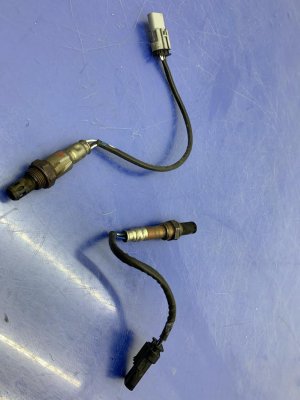
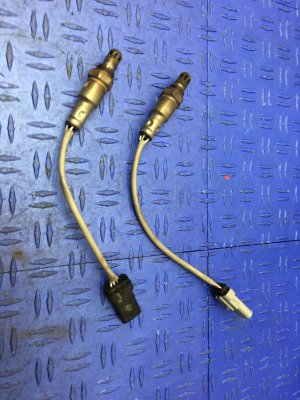
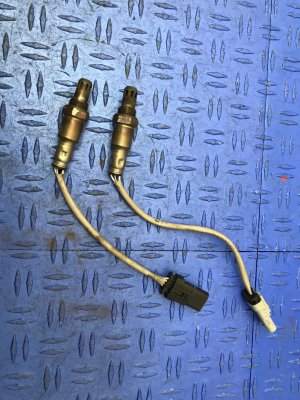
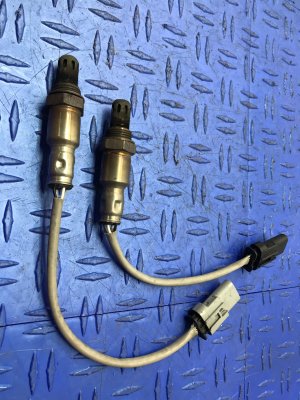
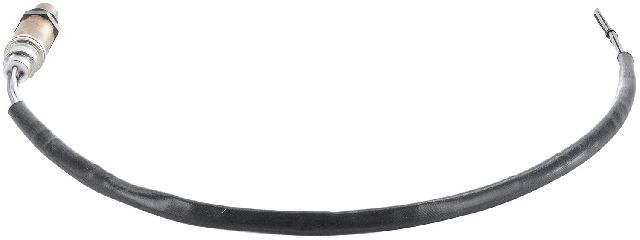
- Downstream Oxygen Sensor (Bank 2, Sensor 2)
(OEM #ACDelco AFS123 (V8 LS3/L99); ACDelco 12640453 (V6 LFX); ACDelco 12634063 (V6 LLT))— This sensor is the primary source of the signal that triggers the P2099 code and is a common failure point.
Trusted brands: ACDelco, Denso, Bosch, NTK
OEM price range: $100-$180
Aftermarket price range: $50-$120 - Fuel Injector
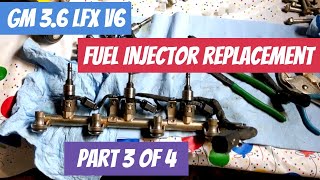
(OEM #ACDelco 12638530 (V6 LFX); ACDelco 12613412 (V8 LS3))— A GM TSB specifically mentions injector issues as a potential cause for this code on Camaros.
Trusted brands: ACDelco, Bosch
OEM price range: $120-$200
Aftermarket price range: $70-$150 - Exhaust Gasket (Manifold or Cat Flange) — Exhaust leaks are a very common cause of P2099 on this platform, and a failed gasket is often the reason for the leak.
Trusted brands: ACDelco, Fel-Pro
OEM price range: $20-$50
Aftermarket price range: $10-$30
Related Codes That Often Appear With This One
- P0175 — System Too Rich (Bank 2). This is a more general code indicating a rich condition on Bank 2, often triggered by the upstream O2 sensor. Seeing both points strongly to a fuel delivery issue like a leaking injector or a significant exhaust leak before the first O2 sensor.
- P0300, P0302, P0304, P0306, P0308 — Cylinder misfire codes on Bank 2. A leaking injector can foul a spark plug and cause misfires on the affected cylinders. Seeing these together makes the fuel injector a primary suspect.
- P0430 — Catalyst System Efficiency Below Threshold (Bank 2). This code can appear alongside P2099 if the rich condition has persisted long enough to damage or foul the catalytic converter.
Technical Service Bulletins (TSBs) & Recalls
- PIP4964F: Mentions that for a P2099 or P2097 code, technicians should perform a fuel injector balance test prior to further diagnosis.
Platform-Specific Known Issues
- Clogged Bank 2 Catalytic Converter: In a confirmed repair on the Camaro5 forums, a user with a 2012 V6 experienced a persistent P2099 code. After replacing both the upstream and downstream O2 sensors on Bank 2 without success, the issue was finally resolved by replacing the Bank 2 catalytic converter, which was found to be completely clogged.
Mechanic-Grade Diagnostic Values
- Downstream O2 Sensor (B2S2) Voltage — expected: Slowly fluctuating between 0.1V and 0.9V on a warm engine at idle.. Failure: Voltage is stuck consistently high (above 0.8V), indicating a persistent rich signal or a failed sensor.
- Fuel Injector Balance Test (Pressure Drop) — expected: The pressure drop across all injectors on the bank should be relatively equal.. Failure: If the difference in pressure drop between the highest and lowest reading injector is greater than 20 kPa (2.9 psi), the injector(s) with abnormal readings are likely faulty. Some GM procedures specify an even tighter tolerance of 1.5 psi.
- Fuel Rail Pressure (Port Injected V8s) — expected: Approximately 40-60 PSI at idle.. Failure: Significantly higher pressure could indicate a faulty fuel pressure regulator, forcing a rich condition.
- Post-Catalyst Long Term Fuel Trim (LTFT) — expected: Should ideally be between -10% and +10%.. Failure: A value more negative than -10% (e.g., -15%) shows the ECM is consistently trying to remove fuel to correct a rich condition detected by the downstream sensor.
Scan Tool Commands That Help
- GDS2 / Professional Scan Tool: Fuel Injector Balance Test — This test should be used when a leaking or malfunctioning fuel injector is suspected, as recommended by TSB PIP4964F. It's found under 'Special Functions' -> 'Fuel System'. The tool individually pulses each injector and measures the corresponding drop in fuel rail pressure, allowing a direct comparison of injector flow rates to identify a leaking or restricted injector.
- GDS2 / Professional Scan Tool: O2 Sensor Test / Heater Test — This function can be used to verify the O2 sensor's heater circuit integrity and its ability to respond to rich/lean conditions. A technician can command the heater on/off and observe voltage changes to confirm the sensor is responsive and not lazy or biased, which could cause a false P2099.
Wiring & Ground Locations
- Bank 2 O2 Sensor Harness Wires (Typical GM) — On the wiring harness connector for the Bank 2 O2 sensors.. Knowing the wire functions is critical for testing. On many GM vehicles, the Tan wire is the high signal and the Purple wire is the low signal. The other two wires (often the same color, like black or brown) are for the heater circuit. A short or open in the signal wires can cause a false rich code.
- G101 / G106 (V8 Models) — G101 is on the lower front of the engine block. G106 is on the front center of the frame cross rail, under the crank pulley.. These are primary grounds for the Engine Control Module (ECM) and Transmission Control Module (TCM). A poor connection here can cause countless erratic engine management issues, including false fuel trim codes like P2099.
- G103 — Located at the left rear of the engine compartment on the cowl, often near the brake booster.. This ground serves the Body Control Module (BCM) and the Data Link Connector (DLC). A fault here can interfere with scan tool communication, making diagnosis difficult.
- Exhaust Harness Routing — The O2 sensor wiring harness runs from the sensor up towards the top of the transmission or engine.. GM has issued bulletins for other vehicles regarding misrouted O2 sensor harnesses that can contact hot exhaust components. A melted harness can short the signal wire, causing a persistent rich or lean code. Always inspect the full length of the harness for heat damage.
Real Owner Repair Stories
- Camaro6 Forum user 'mgwarlock' (2016 Camaro 2SS (6.2L LT1), 2,500 miles) — Service Engine Soon light with code P2099.
❌ Tried (didn't work) Initial scanning of the code.
✅ What actually fixed it The owner found a loose bolt on the passenger side catalytic converter flange. Tightening the loose bolt resolved the exhaust leak and the P2099 code did not return. - Camaro5 Forum user 'Mr. Wyndham' (2012 Camaro V6 (3.6L LFX), 76,000 miles) — Recurring P2099 code with Check Engine Light.
❌ Tried (didn't work) Replacing the Bank 2 downstream O2 sensor., Using fuel injector cleaner.
✅ What actually fixed it After the code returned, a mechanic diagnosed the issue further. The final repair involved replacing the Bank 2 upstream O2 sensor and the Bank 2 (left side) catalytic converter, which was found to be completely clogged.
Model Year Variations Within This Range
- 2011-2015 (5th Gen) vs. 2016-2018 (6th Gen): The 2016 model year marked a shift to the new Alpha platform, which is lighter and more rigid. While both generations use V6 and V8 engines, the specific engines changed (e.g., LFX V6 to LGX V6, LS3/L99 V8 to LT1 V8). This means part numbers for O2 sensors, fuel injectors, and ECMs are not interchangeable between generations. Additionally, the location of Bank 1 vs Bank 2 can differ: on the V6, Bank 1 is the passenger side, while on the V8, Bank 1 is the driver's side.
Helpful Videos
Used OEM Parts in Stock
New Aftermarket Parts Available


The information in this article is provided for general reference and educational purposes only. Vehicle specifications, procedures, and part compatibility can vary by production date, trim level, and region. Always consult your vehicle's factory service manual and verify part numbers before purchasing or performing repairs. Safety-critical components such as airbags, seat belts, and braking systems should be installed by a qualified professional.
- Chevrolet CAMARO:
- 🎬 Helpful Videos
- 🛍️ Shop This Part
- What's Unique About the 2011-2018 Chevrolet CAMARO
- Diagnostic Flowchart
- Symptoms You May Notice
- Most Likely Causes
- Rare But Worth Checking
- Diagnosis Steps
- Parts You'll Likely Need
- Related Codes That Often Appear With This One
- Technical Service Bulletins (TSBs) & Recalls
- Platform-Specific Known Issues
- Mechanic-Grade Diagnostic Values
- Scan Tool Commands That Help
- Wiring & Ground Locations
- Real Owner Repair Stories
- Model Year Variations Within This Range
- 🎟️ Get 5% Off