

P2099 on 2012-2019 Cadillac CTS: Post Catalyst Fuel Trim Too Rich (Bank 2) Causes and Fixes
On a 2012-2019 Cadillac CTS, code P2099 is most often caused by a leaking fuel injector on Bank 2. A GM Technical Service Bulletin advises testing injectors before replacing any other parts. A faulty downstream oxygen sensor is another common cause. Bank 2 on these V6 engines is the driver's side.
- For a P2099 code on a 2012-2019 Cadillac CTS, do not immediately replace the oxygen sensor.
- The most likely cause is a leaking fuel injector on Bank 2; a professional injector balance test is the best way to confirm this.
- Thoroughly check for exhaust leaks between the engine and the downstream O2 sensor, as this is another common cause.
- Bank 2 is the side of the engine opposite cylinder #1. On the V6 engines in the CTS, this is typically the driver's side in the US.
- If you replace a fuel injector, it's good practice to replace the others on the same bank to ensure balanced performance.
What's Unique About the 2012-2019 Cadillac CTS
For this generation of Cadillac CTS and other GM vehicles with similar engines (like the Chevy Camaro and GMC Acadia), there is a known tendency for this code to be caused by fuel injectors. A specific Technical Service Bulletin (TSB #PIP4964F) was issued advising technicians to perform a fuel injector balance test before attempting other repairs like replacing oxygen sensors. This suggests that simply swapping the O2 sensor, a common first step on other vehicles, is often a misdiagnosis on the CTS and its platform mates.
Diagnostic Flowchart
Tap your situation to follow the diagnostic path that matches what you're seeing on this vehicle.
Generation note: This range covers two Cadillac CTS generations. The second generation runs from 2012-2014 (including the coupe and wagon through 2015) and the third generation runs from 2014-2019. Engines like the 3.6L V6 were used across both generations, and the issues causing P2099 are common to both.
Symptoms You May Notice
- Check Engine Light is on
- Reduced fuel economy
- Poor engine performance or acceleration
- Rough idle
- Smell of gasoline from the exhaust
- Transient hesitation or stumble after a cold start
- Replacing the downstream oxygen sensor without first testing the fuel injectors. The official GM TSB for this code specifically advises testing injectors early in the diagnostic process to avoid this misstep.
Most Likely Causes
- Leaking Fuel Injector(s) on Bank 2 🔴 High Probability As identified in GM TSB #PIP4964F, fuel injectors are a primary suspect for this code on these engines. Direct injection systems run at very high pressure, and injectors can leak fuel into a cylinder (2, 4, or 6), causing a rich condition that the downstream O2 sensor detects.
How to confirm: Perform a fuel injector balance test using a professional scan tool (sometimes called an Active Fuel Injector Tester or AFIT), as recommended by the TSB. Another method is to check the spark plugs on Bank 2; a dark, sooty plug indicates a rich condition in that cylinder.
Typical fix: Replace the faulty fuel injector(s) on Bank 2. It is often recommended to replace all injectors on that bank at the same time, along with their seals.
Est. part cost: $60-$120 per injector - Faulty Downstream Oxygen (O2) Sensor (Bank 2, Sensor 2) 🟡 Medium Probability
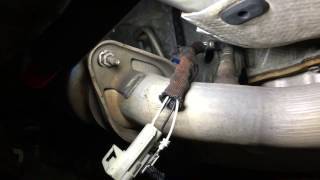
How to confirm: Use a scan tool to graph the voltage of the Bank 2 Sensor 2, located on the driver's side after the catalytic converter. A healthy downstream sensor on a warm engine at steady RPM should show a relatively stable voltage (typically 0.6-0.8V). If it's stuck high (above 0.8V) or fluctuating rapidly like an upstream sensor, it is likely faulty.
Typical fix: Replace the Bank 2, Sensor 2 oxygen sensor. 🎬 Follow this step-by-step guide to replacing your O2 sensors.
Est. part cost: $50-$100 - Exhaust Leak 🟡 Medium Probability Exhaust components can develop leaks at gaskets or flex pipe joints over time.
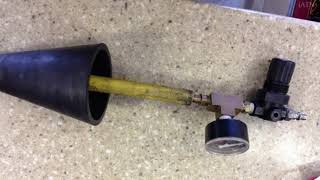
How to confirm: Visually inspect the exhaust system from the engine to the catalytic converter on Bank 2 for cracks or loose gaskets, paying close attention to the exhaust manifold flange. A smoke test is the most effective way to find small leaks. Some owners report hearing a ticking or hissing noise that points to a leak.
Typical fix: Repair the leak, which may involve replacing a gasket or welding a crack in the pipe.
Est. part cost: $10-$50 for gaskets - High Fuel Pressure ⚪ Low Probability
How to confirm: Test the fuel pressure using a fuel pressure gauge connected to the fuel rail's service port. Compare the reading to the manufacturer's specification. This is less common on direct injection systems without other codes present.
Typical fix: Replace the fuel pressure regulator or, in some cases, the high-pressure fuel pump.
Est. part cost: $50-$350
Rare But Worth Checking
- Faulty Upstream Oxygen (O2) Sensor (Bank 2, Sensor 1): An upstream (pre-catalyst) sensor that is biased or failing can cause the ECM to add too much fuel, creating a genuine rich condition that the downstream sensor correctly reports. This is less common than the downstream sensor failing.
- Failing Catalytic Converter: While possible, a failing catalytic converter is more likely to cause a P0420/P0430 (Catalyst Efficiency) code. However, if it becomes internally damaged or clogged, it can affect O2 sensor readings and contribute to a P2099 code.
- Engine Harness Chafing: GM TSB #PI0631G indicates that on some vehicles with the LFX engine, the engine wiring harness can rub against the transmission case, causing chafing and shorting of various wires, including those for O2 sensors, which can lead to numerous DTCs, including P2099.
- Faulty Powertrain Control Module (PCM): In rare cases, a software glitch or internal failure of the PCM can cause incorrect fuel trim calculations, leading to a false P2099 code.
Diagnosis Steps
- Connect an OBD-II scanner and check for any other accompanying trouble codes. Address those first, especially fuel trim (P0175) or misfire codes.
- Analyze the freeze frame data to understand the engine's operating conditions (RPM, load, temperature) when the P2099 code was triggered.
- Using the scanner's live data, observe the Long Term Fuel Trim (LTFT) for Bank 2. A value that is significantly negative (e.g., -10% or lower) confirms the ECM is actively reducing fuel to combat a rich condition.
- Following the guidance of TSB #PIP4964F, perform a fuel injector balance test with a capable scan tool to check for leaking injectors on Bank 2.
- If injectors test okay, inspect the exhaust system for leaks between the cylinder head and the downstream O2 sensor on Bank 2. A smoke test is highly effective.
- Use the scanner to graph the voltage of the Bank 2 downstream (Sensor 2) oxygen sensor. If it is stuck high (consistently >0.8V) or not responding correctly, it is likely faulty.
- Check the voltage of the Bank 2 upstream (Sensor 1) oxygen sensor to ensure it is not biased and causing the rich condition.
- As a rare possibility, inspect the engine wiring harness where it passes near the transmission for any signs of chafing, as noted in TSB PI0631G.
- After any repair, clear the codes and perform a complete drive cycle to ensure the fix was successful.
Parts You'll Likely Need
- Fuel Injector
(OEM #12634126 (may be superseded by 12642128))— This is the most probable cause according to GM's own technical service bulletin for the P2099 code on this platform.
Trusted brands: ACDelco, Hitachi, Standard Motor Products, GB Remanufacturing
OEM price range: $90-$120
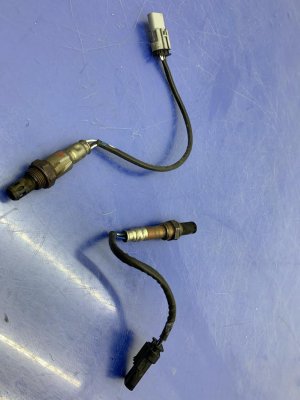
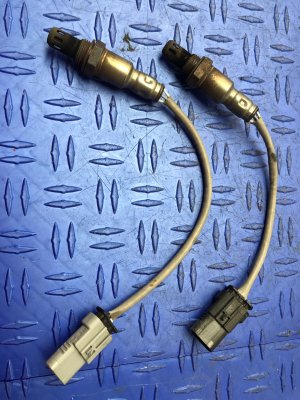
Aftermarket price range: $50-$100 - Downstream Oxygen Sensor (Bank 2, Sensor 2)
(OEM #12683553 (supersedes 12627140))— A faulty or biased O2 sensor can send incorrect rich readings to the ECM, triggering the code.
Trusted brands: ACDelco, Denso, Bosch, Walker Products
OEM price range: $70-$90
Aftermarket price range: $45-$75 - Exhaust Manifold Gasket
(OEM #12627072 (example for LFX))— If an exhaust leak is found at the manifold, a new gasket will be required to seal it.
Trusted brands: ACDelco, Fel-Pro
OEM price range: $20-$40
Aftermarket price range: $10-$25
Related Codes That Often Appear With This One
- P2097 — This is the same code but for Bank 1 (passenger side). If both are present, it points to a systemic issue affecting both banks, like a fuel pressure problem or a MAF sensor issue.
- P0175 — This code means "System Too Rich (Bank 2)" as measured by the *upstream* O2 sensor. If seen with P2099, it strongly indicates the engine is actually running rich, pointing towards causes like leaking injectors or high fuel pressure.
- P0302, P0304, P0306 — These are misfire codes for the cylinders on Bank 2. A badly leaking fuel injector can foul the spark plug and cause misfires in its cylinder.
Technical Service Bulletins (TSBs) & Recalls
- Bulletin #PIP4964F: Advises technicians to perform an injector balance or Active Fuel Injector Tester (AFIT) test prior to further diagnosis for P2097 or P2099 codes, as leaking injectors are a common cause.
- Bulletin #PI0631G: Details a condition where the engine harness can rub through on the transmission case, causing various electrical faults and DTCs, including P2099.
Platform-Specific Known Issues
- GM Technical Service Bulletin #PIP4964F directly links DTC P2099 (and P2097) to potentially faulty fuel injectors and advises testing them before proceeding with other diagnostics.
- GM Technical Service Bulletin #PI0631G notes that the engine wiring harness may chafe against the transmission case, causing shorts that can trigger a P2099 code, among many others.
Mechanic-Grade Diagnostic Values
- Downstream O2 Sensor (Post-Catalyst) Voltage at Idle — expected: A relatively stable voltage, typically between 0.4V to 0.8V on a warm, healthy engine.. Failure: A voltage stuck high (above 0.8V) indicates a persistent rich condition or a faulty sensor. Rapid fluctuations mirroring the upstream sensor suggest a failing catalytic converter.
- Upstream O2 Sensor (Pre-Catalyst) Voltage — expected: Rapidly fluctuating voltage between approximately 0.1V (lean) and 0.9V (rich) as the ECM adjusts the air-fuel mixture.. Failure: A sensor that is slow to respond or is stuck at a specific voltage is likely faulty and can be the underlying cause of the rich condition reported by the downstream sensor.
- Long Term Fuel Trim (LTFT) - Bank 2 — expected: Close to 0%, with an acceptable range typically within +/- 5%.. Failure: A strongly negative value (e.g., -10% or more) shows the ECM is consistently trying to remove fuel to correct a rich condition detected by the upstream O2 sensor, corroborating the P2099 code.
Scan Tool Commands That Help
- GDS2 (GM Global Diagnostic System 2) / Tech2Win: Active Fuel Injector Tester (AFIT) — This is the primary diagnostic step recommended by GM TSB #PIP4964F. It performs an automated injector balance test to identify leaking or malfunctioning injectors without requiring their physical removal, making it the most efficient way to confirm or rule out the most common cause of P2099 on this platform.
- GDS2 / Professional Scan Tool: O2 Sensor Heater Test — To verify the integrity of the oxygen sensor's internal heater circuit. A failed heater can cause the sensor to be slow to reach operating temperature, leading to incorrect readings and fuel trim issues, especially during cold starts.
Wiring & Ground Locations
- G107 (or similar engine block ground) — On the LFX engine, a key ground point (often designated G107 or similar) is located on the engine block, typically near the ignition coils or rear of the cylinder head.. The ECM and its critical sensors, including oxygen sensors, rely on a clean ground connection. A loose or corroded engine ground can create a voltage offset, causing the ECM to receive false high voltage readings from the O2 sensor, mimicking a rich condition.
- Engine Harness at Transmission Bellhousing — The main engine wiring harness routes down the back of the engine and can make contact with the edge of the transmission bellhousing.. As noted in GM TSB #PI0631G, this is a known chafe point. Vibration can cause the harness to rub through, potentially shorting the O2 sensor signal, heater, or ground wires, leading to erratic readings and codes like P2099.
- Engine Harness at Driver's Side Shock Tower / Upper Control Arm — On some GM platforms using the LFX, the harness routes near the driver's side shock tower and upper control arm.. Another documented chafe point. Bulletins #21-NA-149 and #PI0631G describe how engine movement can cause the harness to rub against these chassis components, damaging wires for the Bank 2 (driver's side) sensors.
OEM Part Supersession History
12634126→12642128 (and others, check VIN)— Standard part evolution for improved reliability and performance. The original injectors are a known failure point.
Heads up: While later part numbers are generally backward compatible, it is critical to use injectors from the same part number series across a single bank to ensure matched flow rates. Mixing old and new superseded parts is not recommended.
Model Year Variations Within This Range
- 2012-2015 (LFX Engine): The 3.6L LFX engine was the primary V6. It is known for timing chain wear (often exacerbated by oil consumption) and is the main subject of TSB #PIP4964F regarding injector issues causing P2099.
- 2016-2019 (LGX Engine): The 3rd generation CTS introduced the updated 3.6L LGX engine. This was a significant redesign with a different block, heads, improved cooling, and a simplified timing chain system to improve on the LFX's weaknesses. While the fundamental causes for P2099 remain the same (injectors, O2 sensors), the specific part numbers for these components are different from the LFX.
Helpful Videos

Used OEM Parts in Stock
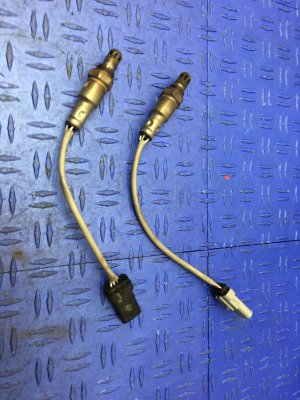
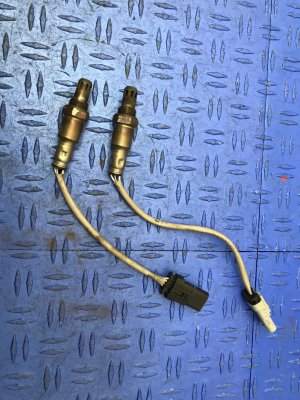
New Aftermarket Parts Available



The information in this article is provided for general reference and educational purposes only. Vehicle specifications, procedures, and part compatibility can vary by production date, trim level, and region. Always consult your vehicle's factory service manual and verify part numbers before purchasing or performing repairs. Safety-critical components such as airbags, seat belts, and braking systems should be installed by a qualified professional.
- Cadillac CTS:
- 🎬 Helpful Videos
- 🛍️ Shop This Part
- What's Unique About the 2012-2019 Cadillac CTS
- Diagnostic Flowchart
- Symptoms You May Notice
- Most Likely Causes
- Rare But Worth Checking
- Diagnosis Steps
- Parts You'll Likely Need
- Related Codes That Often Appear With This One
- Technical Service Bulletins (TSBs) & Recalls
- Platform-Specific Known Issues
- Mechanic-Grade Diagnostic Values
- Scan Tool Commands That Help
- Wiring & Ground Locations
- OEM Part Supersession History
- Model Year Variations Within This Range
- 🎟️ Get 5% Off