

P2099 on 2004-2011 Cadillac CTS: Post-Catalyst Rich Fuel Trim Causes & Fixes
On a 2004-2011 Cadillac CTS, code P2099 often points to a leaking fuel injector on Bank 2 (the driver's side). Before replacing oxygen sensors, follow GM's specific advice in TSB #PIP4964F and have the fuel injectors tested, as this is a known issue across multiple GM vehicles with the 3.6L engine.
- Do not immediately replace the oxygen sensor for a P2099 code on a 2004-2011 Cadillac CTS.
- Follow GM's TSB (PIP4964F) and test the fuel injectors on Bank 2 first; they are the most common cause, especially on 2008-2011 models with direct injection.
- If injectors are not the issue, the second most likely cause is a small exhaust leak near the catalytic converter or O2 sensor.
- Pay attention to secondary symptoms like a fuel smell on startup or a difficult hot restart, as these strongly point towards leaking fuel injectors.
What's Unique About the 2004-2011 Cadillac CTS
This vehicle range spans two CTS generations with different fuel systems. A General Motors Technical Service Bulletin (TSB PIP4964F) specifically addresses code P2099 on these vehicles and their platform mates, pointing directly to faulty fuel injectors as a primary cause. This is especially relevant for the 2008-2011 models with direct injection (DI) engines (LLT V6). This manufacturer guidance makes an injector test a more critical first step than on other vehicles where an O2 sensor might be the default first replacement.
Diagnostic Flowchart
Tap your situation to follow the diagnostic path that matches what you're seeing on this vehicle.
Generation note: The 2004-2011 range covers the first generation (2004-2007) and the second generation (2008-2011) of the Cadillac CTS. The first generation primarily used port-injected V6 engines (e.g., 3.6L LY7), while the second generation introduced direct-injected V6s (e.g., 3.0L LF1, 3.6L LLT). The TSB pointing to fuel injectors is particularly relevant for the second-gen's direct injection system, which is also shared with the Buick Enclave, Chevy Traverse, and GMC Acadia.
Symptoms You May Notice
- Check Engine Light illuminated.
- Reduced fuel economy.
- Rough or erratic idle.
- Engine hesitation or lack of power during acceleration.
- Strong smell of gasoline from the exhaust, especially on a cold start.
- Black smoke from the tailpipe.
- Hard starting or uneven cranking after the engine has been shut off for a short period (symptom of a leaking injector).
- Replacing the catalytic converter without first diagnosing the fuel system. The rich condition is the cause, and the failing converter is the effect.
- Replacing the upstream (pre-catalyst) oxygen sensor, as this code is specifically set by the downstream sensor.
Most Likely Causes
- Leaking Fuel Injector(s) on Bank 2 🔴 High Probability A GM Technical Service Bulletin (PIP4964F) explicitly identifies this as a likely cause for P2099, especially on 2008+ models with the 3.6L LLT direct injection engine. These injectors can leak fuel into the cylinder after the engine is shut off.
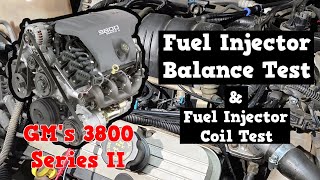
How to confirm: Perform a fuel injector balance test or use an Active Fuel Injector Tester (AFIT) as recommended by the TSB. Another symptom is a difficult restart when hot, as leaked fuel partially hydro-locks the cylinder. Pulling the spark plugs on Bank 2 (cylinders 2, 4, 6) may reveal one or more plugs that are black and sooty from excess fuel.
Typical fix: Replace the faulty fuel injector(s) on Bank 2. It is often recommended to replace all three on that bank at the same time.
Est. part cost: $50-$150 per injector - Exhaust Leak 🟡 Medium Probability TSB PIP4964F lists this as the second most likely cause after injectors. Another TSB, PIP5681, notes that on related platforms, broken welds on exhaust pipe brackets can cause cracks and leaks that trigger this code. Flex pipes are a common failure point that can rot and leak.
How to confirm: Visually inspect the exhaust manifold, gaskets, and piping on Bank 2 for cracks or black soot trails. The TSB recommends a low-pressure (5-8 psi) smoke test at the tailpipe to find leaks near the converter or O2 sensor boss. A user on a forum with a 2008 CTS reported an exhaust rattle along with the P2099 code.
Typical fix: Repair the leak by replacing the gasket, tightening bolts, or replacing the cracked pipe section. TSB PIP4964F suggests filing the mating surface of the pipe flange when replacing a gasket to ensure a good seal.
Est. part cost: $10-$200 - Faulty Downstream Oxygen Sensor (Bank 2, Sensor 2) 🟡 Medium Probability
How to confirm: Use a scan tool to monitor the voltage of the Bank 2, Sensor 2. A healthy downstream sensor should show a relatively steady voltage (typically 0.6-0.8V). If it's stuck high (above 0.8V) or fluctuating rapidly like an upstream sensor, it is likely faulty. Before replacing, inspect the wiring harness for damage, as melted wires near the hot exhaust are common.
Typical fix: Replace the Bank 2 downstream (post-catalyst) oxygen sensor.
Est. part cost: $40-$120 - High Fuel Pressure ⚪ Low Probability This is more common on first-generation models with a traditional fuel pressure regulator. On DI engines (2008+), this could point to an issue with the high-pressure fuel pump (HPFP).
How to confirm: Connect a fuel pressure gauge to the fuel rail and check if the pressure is within the manufacturer's specified range. For DI engines, this requires a scan tool capable of reading high-side fuel pressure, which should be between 276-725 PSI (1.9-5.0 MPa) at idle.
Typical fix: Replace the faulty fuel pressure regulator or, on DI engines, investigate the high-pressure fuel pump.
Est. part cost: $50-$200
Rare But Worth Checking
- Failing Catalytic Converter: A rich condition can destroy a catalytic converter, but a failing converter can also sometimes cause this code. It should only be considered after all other causes, especially fuel delivery and exhaust leaks, are ruled out.
- Dirty or Faulty Mass Airflow (MAF) Sensor: A MAF sensor that under-reports airflow can cause the engine to run rich on both banks, but it's less likely to trigger a code for only one bank. Sometimes a MAF issue can manifest with other codes like P0101 and trigger StabiliTrak warnings.
- Mechanical Valvetrain Issue: TSB PIP4964F notes that if injectors and exhaust leaks are ruled out, a mechanical issue like a sticking valve or a lifter follower out of place could be the cause, which may not always set a misfire code.
Diagnosis Steps
- Check for other DTCs to get more context (e.g., misfire codes, upstream rich codes).
- IMPORTANT: Review TSB #PIP4964F. The first recommended step is to test the fuel injectors on Bank 2 for leaks or imbalance using an AFIT or balance tester. [⭐ MANUFACTURER TSB — highest authority]
- If injectors test good, perform a thorough visual inspection of the Bank 2 exhaust system from the cylinder head to the downstream O2 sensor. Look for black soot indicating a leak.
- Conduct a low-pressure (5-8 PSI) smoke test of the exhaust system as per TSB PIP4964F to pinpoint hard-to-see leaks near the catalytic converter.
- If no leaks are found, use a scan tool to graph the voltage of the Bank 2, Sensor 2 (downstream) O2 sensor. It should be relatively stable. If it's stuck high (rich), inspect wiring for damage before condemning the sensor.
- Check the fuel pressure to ensure it's within OEM specifications. This is especially important for non-DI engines.
- Inspect the spark plugs on Bank 2 (cylinders 2, 4, 6). A black, sooty appearance confirms a rich condition on that bank and can help isolate the issue to a specific cylinder.
Parts You'll Likely Need
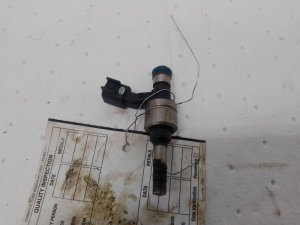
- Fuel Injector
(OEM #ACDelco 12638530 (For 3.6L LLT DI Engine, 2008-2011) or Bosch 62656 (For 3.6L LY7 Port Injection, 2004-2007))— This is the most likely cause according to GM's own Technical Service Bulletin (PIP4964F) for this specific code on this vehicle.
Trusted brands: ACDelco, Bosch, Standard Motor Products (FJ994)
OEM price range: $100-$180
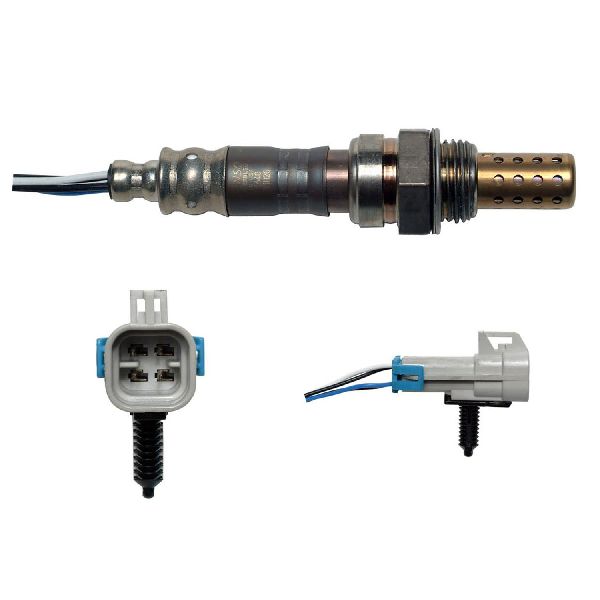
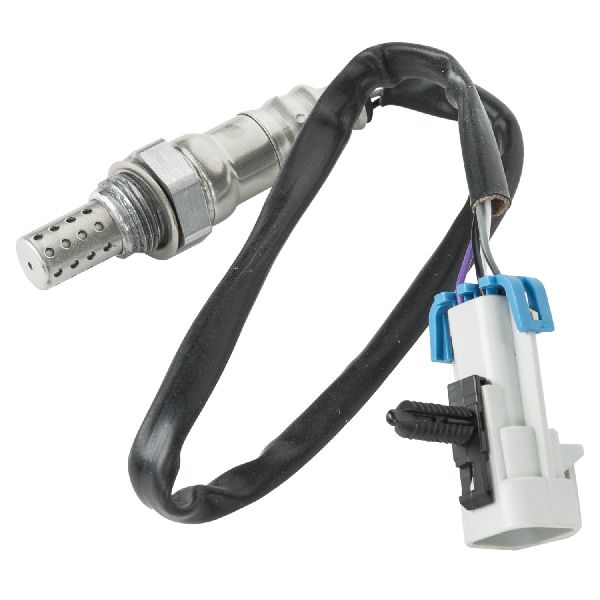
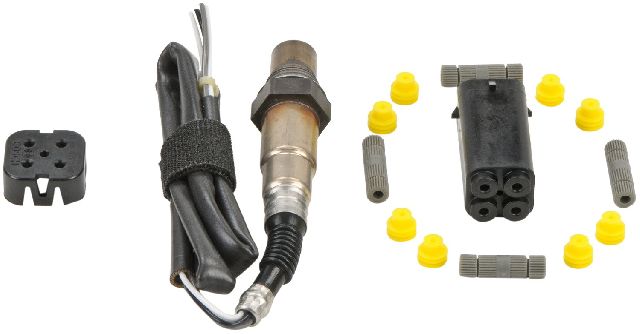
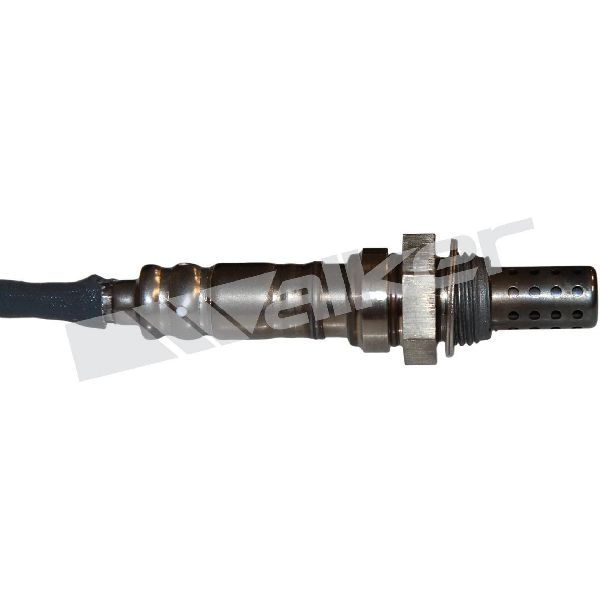
Aftermarket price range: $50-$120 - Downstream Oxygen Sensor (Bank 2, Sensor 2)
(OEM #ACDelco 213-4229 or NTK 21569 (For 3.6L LLT, 2008-2011, Bank 2 is Left side))— If the fuel system is confirmed to be working correctly, the sensor providing the reading is the next most likely point of failure.
Trusted brands: ACDelco, Denso, NTK
OEM price range: $80-$150
Aftermarket price range: $40-$100
Related Codes That Often Appear With This One
- P0175 — P0175 is 'System Too Rich Bank 2' detected by the *upstream* sensor. Seeing both codes together strongly indicates an actual rich condition (like a leaking injector) on Bank 2.
- P0302, P0304, P0306 — These are misfire codes for the cylinders on Bank 2 (cylinders 2, 4, and 6). A severely leaking injector can foul the spark plug and cause misfires on that bank, directly linking the fuel issue to a specific cylinder.
- P2097 — This is the same code but for Bank 1 ('Post Catalyst Fuel Trim System Too Rich Bank 1'). If both P2097 and P2099 are present, the issue is likely something that affects the entire engine, such as a faulty fuel pressure regulator or MAF sensor.
Technical Service Bulletins (TSBs) & Recalls
- PIP4964F: Advises technicians to perform a fuel injector balance test before other diagnostics when encountering DTC P2097 or P2099. If injectors are good, the next step is to check for small exhaust leaks
Platform-Specific Known Issues
- Owner Experience with Leaking Injector Symptoms: An owner of a 2011 Buick Enclave with the same 3.6L engine and P2099 code described a key symptom: after starting the car and shutting it off, a subsequent restart would be very difficult, with an uneven crank as if the engine was hydro-locked. This, combined with a strong fuel smell on cold starts, points directly to one or more injectors leaking fuel into the cylinders after shutdown.
Mechanic-Grade Diagnostic Values
- High-Pressure Fuel Rail Pressure (Direct Injection, 2008+ LLT) — expected: 1.9-5.0 MPa (276-725 PSI) at idle.. Failure: Pressure significantly above or below this range, or erratic readings, can indicate a failing High-Pressure Fuel Pump (HPFP) or sensor.
- Low-Pressure Fuel System Pressure (Port Injection, 2004-2007 LY7) — expected: 320-580 kPa (46-84 PSI) with the fuel pump running.. Failure: Pressure that drops more than 34 kPa (5 PSI) within one minute after the pump is turned off indicates a leak in the system, possibly from an injector.
- Mass Airflow (MAF) Sensor Reading — expected: Approximately 3-8 g/s at a stable, warmed-up idle for a 3.6L V6.. Failure: Readings that are significantly lower than expected can cause the PCM to incorrectly calculate a rich condition. Readings should increase smoothly and linearly with RPM.
- Fuel Injector Coil Resistance (Direct Injection, 2008+ LLT) — expected: Approximately 1.5 ohms.. Failure: A reading that is significantly different from the other injectors, either much higher (open) or lower (shorted), indicates a faulty injector coil.
- Fuel Injector Coil Resistance (Port Injection, 2004-2007 LY7) — expected: Approximately 11-14 ohms (High Impedance).. Failure: An injector with resistance significantly outside this range (e.g., below 10 ohms or infinite) is likely faulty.
Scan Tool Commands That Help
- GM Tech 2 / GDS2 or equivalent professional scan tool: Fuel Injector Balance Test — This is the primary diagnostic step recommended by GM TSB PIP4964F for a P2099 code. The tool commands the fuel pump on, measures rail pressure, pulses each injector individually, and records the pressure drop. Comparing the pressure drop across all injectors on Bank 2 can identify a leaking or clogged injector.
- GM Tech 2 / GDS2 or equivalent professional scan tool: Fuel Pump Enable — Used as part of the injector balance test or when checking for fuel pressure leak-down. This command runs the fuel pump without starting the engine, allowing a technician to safely check for pressure stability.
Wiring & Ground Locations
- G101 / G102 — G101 is on the left front strut tower; G102 is on the right front of the engine compartment. For some model years, G102 is on the left rear of the engine.. These are primary engine grounds. G101 grounds the Engine Control Module (ECM) and Mass Air Flow sensor. A poor connection at these points can cause erratic sensor readings and incorrect fuel calculations, potentially leading to a rich code.
- G131 — Located on the left rear of the engine.. This is another critical engine ground point. Since Bank 2 is on the driver's side (left side for US models), ensuring grounds on that side of the engine are clean and tight is crucial for proper sensor and injector operation.
Real Owner Repair Stories
- ScannerDanner Forum user 'ghost' (2010 Chevrolet Traverse 3.6L (same engine family and common issue)) — P2099 code - Post Catalyst Fuel Trim System Too Rich.
❌ Tried (didn't work) Having a mechanic patch a pinhole found in the exhaust system.
✅ What actually fixed it The user was advised by other technicians that even after patching one leak, another small, undetected exhaust leak upstream of the O2 sensor was the most likely cause, or a faulty O2 sensor itself. The final resolution was not posted, but the failure of the initial exhaust patch is a key diagnostic data point.
OEM Part Supersession History
12614934, 12626234, 12634492→12639260, 12647344, 12658552, 12676667— These are part numbers for the high-pressure fuel pump (HPFP) used on the 2008-2011 3.6L LLT direct injection engine. The multiple supersessions indicate revisions to address performance or reliability issues over the production run.
Model Year Variations Within This Range
- 2004-2007: These first-generation models primarily use a port fuel injection system (LY7 engine) with lower fuel pressure and high-impedance injectors (~12 ohms). Fuel pressure issues are typically related to the in-tank pump or rail-mounted regulator.
- 2008-2011: These second-generation models introduced the direct injection (DI) system (LLT engine), which uses a low-pressure in-tank pump and a high-pressure, engine-driven pump (HPFP). The injectors are low-impedance (~1.5 ohms) and operate at much higher pressures. TSB PIP4964F is particularly relevant to these DI engines. A normal characteristic of this system is a noticeable ticking sound from the HPFP and injectors.
Helpful Videos
Used OEM Parts in Stock

New Aftermarket Parts Available



The information in this article is provided for general reference and educational purposes only. Vehicle specifications, procedures, and part compatibility can vary by production date, trim level, and region. Always consult your vehicle's factory service manual and verify part numbers before purchasing or performing repairs. Safety-critical components such as airbags, seat belts, and braking systems should be installed by a qualified professional.
- Cadillac CTS:
- 🎬 Helpful Videos
- 🛍️ Shop This Part
- What's Unique About the 2004-2011 Cadillac CTS
- Diagnostic Flowchart
- Symptoms You May Notice
- Most Likely Causes
- Rare But Worth Checking
- Diagnosis Steps
- Parts You'll Likely Need
- Related Codes That Often Appear With This One
- Technical Service Bulletins (TSBs) & Recalls
- Platform-Specific Known Issues
- Mechanic-Grade Diagnostic Values
- Scan Tool Commands That Help
- Wiring & Ground Locations
- Real Owner Repair Stories
- OEM Part Supersession History
- Model Year Variations Within This Range
- 🎟️ Get 5% Off