

P2099 on 2021-2024 Cadillac CT5 V6/V8: Post-Catalyst Rich Fuel Trim Causes and Fixes
On a CT5 with a V6 or V8 engine, code P2099 often points to a known issue with fuel injectors, as highlighted in a GM Technical Service Bulletin. The next most common cause is a faulty downstream oxygen sensor on Bank 2. Start diagnosis by checking for TSBs applicable to your specific vehicle, as a leaking injector is a higher-than-normal probability on this platform.
- P2099 on a 2021-2024 Cadillac CT5 only applies to the 3.0L V6 and 6.2L V8 engines.
- Due to a manufacturer TSB, a faulty fuel injector on Bank 2 (passenger side) is a highly probable cause and should be tested early.
- If injectors test good, the next most likely cause is a failed downstream (post-catalyst) oxygen sensor on Bank 2.
- Do not immediately replace the catalytic converter; it is the victim of the rich condition, not the cause.
- Driving for an extended period with this code can ruin your catalytic converter, leading to a much more expensive repair.
What's Unique About the 2021-2024 Cadillac CT5
For this specific vehicle range, General Motors has issued a Technical Service Bulletin (TSB #PIP4964F and its revisions) that directly links the P2099 code to a potential problem with the fuel injectors. While a bad oxygen sensor is a common cause on many cars, this TSB makes a leaking or malfunctioning fuel injector a higher-probability cause on the 2021-2024 CT5. This known issue is also seen on other GM performance vehicles sharing these engines, like the Camaro ZL1. This warrants a specific injector test early in the diagnostic process before replacing other parts.
Diagnostic Flowchart
Tap your situation to follow the diagnostic path that matches what you're seeing on this vehicle.
Symptoms You May Notice
- Check Engine Light is on
- Decreased fuel economy.
- Sluggish or rough acceleration
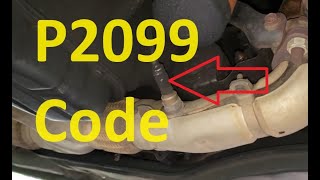
- A possible smell of gasoline from the exhaust. 🎬 Watch: A quick overview of P2099 causes and common fixes.
- Engine may stumble or hesitate on cold starts
- Replacing the upstream (pre-catalyst) oxygen sensor. While related, the upstream sensor has its own codes (like P0175) and is less likely to be the direct cause of a post-catalyst code.
- Replacing the catalytic converter. A rich condition can damage a converter over time, but the converter itself is almost never the cause of a rich code. The P2099 code indicates a problem with the fuel mixture happening *before* or being misread *after* the catalyst.
Most Likely Causes
- Leaking or Malfunctioning Fuel Injector(s) on Bank 2 🔴 High Probability A specific GM Technical Service Bulletin (#PIP4964F) points directly to this issue as a primary cause for code P2099 on 2021+ models, suggesting a known potential weakness across multiple GM engine families.
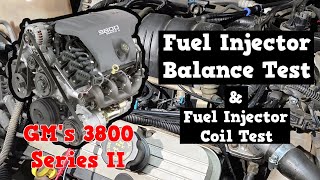
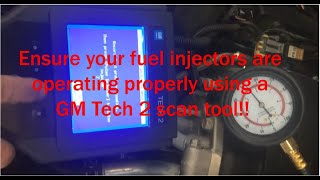
How to confirm: A technician will need to perform a fuel injector balance test using a diagnostic scan tool or an Active Fuel Injector Tester, 🎬 See how a technician performs a GM fuel injector balance test. as recommended by the TSB. The test compares the fuel pressure drop across each injector; 🎬 Watch: Understanding the pressure drop method for testing GM injectors. a variance greater than 20 kPa (3 psi) from the average indicates a fault. Another method is to check the spark plugs on Bank 2; a plug that is black and sooty compared to others indicates a rich condition in that cylinder.
Typical fix: If an injector is found to be leaking or has poor balance, it must be replaced. Note that new fuel injectors on this platform must be programmed to the ECM using GM service information to ensure proper operation.
Est. part cost: $50-$80 per injector - Faulty Downstream Oxygen Sensor (Bank 2, Sensor 2) 🟡 Medium Probability
How to confirm: Using a scan tool, monitor the live voltage data for the Bank 2, Sensor 2 O2 sensor. A healthy downstream sensor on a warm engine should show a relatively stable voltage, often between 0.65V and 0.80V at a steady cruise. If it is stuck high (above 0.8V) or fluctuating rapidly like the upstream sensor, it is likely faulty.
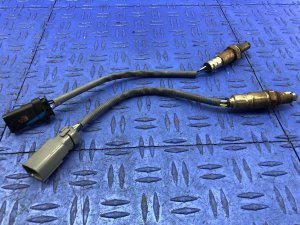
Typical fix: Replace the Bank 2, Sensor 2 oxygen sensor. This is the sensor located on the passenger side of the vehicle, after the catalytic converter.
Est. part cost: $40-$90 - Exhaust Leak ⚪ Low Probability
How to confirm: Visually inspect the exhaust system on Bank 2 (passenger side) from the engine to the catalytic converter for any cracks, loose bolts, or gasket failures. A professional smoke test is the most effective way to pinpoint small leaks.
Typical fix: Repair the leak. This may involve tightening bolts, replacing a gasket (e.g., at the manifold or downpipe flange), or welding a crack in the pipe.
Est. part cost: $10-$100
Rare But Worth Checking
- High Fuel Pressure: A faulty fuel pressure regulator or high-pressure fuel pump can cause excessive fuel to be delivered to all injectors. This would typically set rich codes on both banks (e.g., P2097 and P2099), but it's worth checking fuel pressure if the cause isn't obvious.
- Damaged O2 Sensor Wiring: The wiring for the oxygen sensor can be damaged by heat from the exhaust or road debris, causing a short circuit that results in a false rich signal. A visual inspection of the harness and checking for continuity with a multimeter is recommended.
Diagnosis Steps
- Check for any Technical Service Bulletins (TSBs) for your vehicle's VIN, paying special attention to TSB #PIP4964F or its later revisions.
- Use an OBD-II scanner to confirm P2099 is present and check for any other codes, especially P2097 or P0175.
- With the scanner, view the live data stream for the Bank 2 oxygen sensors (both upstream Sensor 1 and downstream Sensor 2). Compare Bank 2 sensor behavior to Bank 1.
- Following the TSB directive, perform a fuel injector balance test to check for leaking or malfunctioning injectors on Bank 2. This should be a primary step.
- Carefully inspect the Bank 2 exhaust manifold and downpipe for any signs of soot or cracking that would indicate an exhaust leak.
- Test the fuel pressure to ensure it is within the manufacturer's specified range.
- If all other tests are inconclusive, and the O2 sensor's live data was stuck high or otherwise abnormal, replace the Bank 2, Sensor 2 (downstream) oxygen sensor.
Parts You'll Likely Need
- Fuel Injector
(OEM #12678984)— A known issue documented by a manufacturer TSB makes this a high-probability cause for the P2099 code on this specific vehicle.
Trusted brands: ACDelco, GM Genuine Parts
OEM price range: $55-$80
Aftermarket price range: $40-$60 - Downstream Oxygen Sensor (Bank 2)
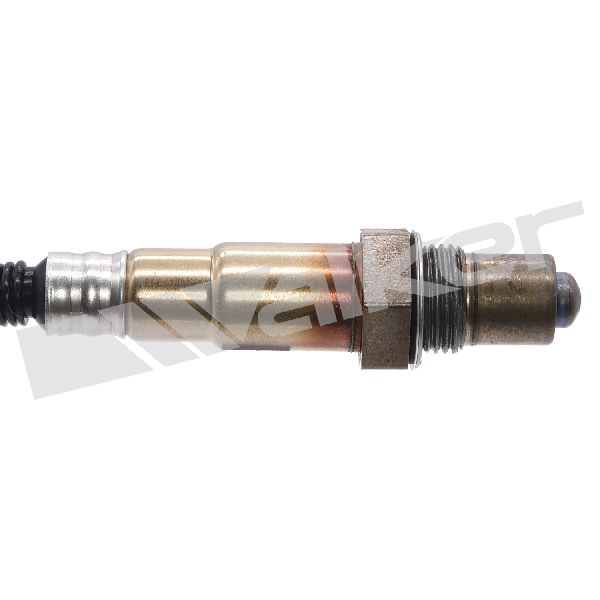
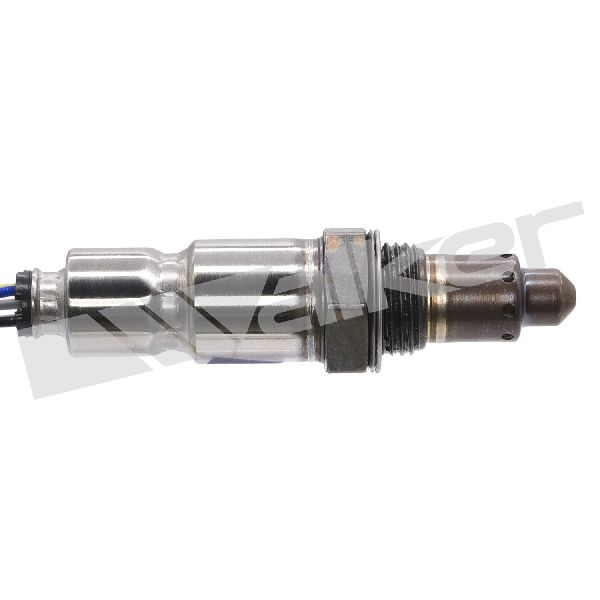
(OEM #55488558 (supersedes 12724840))— This is the sensor that reports the fault to the ECM. It can fail and send inaccurate rich readings, making it a common point of failure for this code after injectors are ruled out.
Trusted brands: ACDelco, Denso, Bosch
OEM price range: $60-$100
Aftermarket price range: $40-$70
Related Codes That Often Appear With This One
- P2097 — P2097 is the identical code for Bank 1 ("Post Catalyst Fuel Trim System Too Rich Bank 1"). If both codes appear together, it strongly suggests a systemic issue affecting both cylinder banks, such as a fuel pressure problem or a faulty Mass Airflow (MAF) sensor.
- P0175 — P0175 means "System Too Rich Bank 2" and is based on readings from the *upstream* oxygen sensor. Seeing it with P2099 confirms the rich condition is real and significant, further pointing towards a fuel delivery issue like a leaking injector rather than just a faulty downstream sensor.
Technical Service Bulletins (TSBs) & Recalls
- PIP4964F: Recommends performing a fuel injector balance test or using an Active Fuel Injector Tester when diagnosing DTC P2097 or P2099. This TSB has been revised multiple times (e.g., PIP4964E) and applies to various GM vehicles.
Platform-Specific Known Issues
- A General Motors Technical Service Bulletin (#PIP4964F and its subsequent revisions) specifically addresses this code (along with P2097) on some 2021+ models. It directs technicians to investigate a fuel injector balance issue as a primary diagnostic step before replacing other components. This TSB applies to a range of GM engines, including the LT4 and other V6s.
Mechanic-Grade Diagnostic Values
- High-Pressure Fuel Rail Pressure (LT4 & LGY) — expected: Up to 2,900 PSI (200 bar / 20 MPa).. Failure: Significantly lower or erratic pressure under load may indicate a failing high-pressure fuel pump.
- Low-Pressure Fuel System Pressure (LT4) — expected: ~50 PSI during normal driving, increasing to ~72 PSI at Wide-Open Throttle (WOT).. Failure: Failure to reach target pressure, especially at WOT, indicates a weak in-tank fuel pump or FPCM issue.
- Downstream O2 Sensor (Bank 2, Sensor 2) Voltage — expected: Relatively stable voltage on a warm, running engine. Often holds between 0.65V and 0.80V at a steady cruise.. Failure: Voltage is stuck consistently high (e.g., >0.8V) or fluctuates rapidly like the upstream sensor, indicating a sensor or catalytic converter issue.
- Fuel Injector Balance Test Pressure Drop — expected: The pressure drop for each injector should be consistent across all cylinders on the bank.. Failure: If one injector's pressure drop value is more than 20 kPa (3 psi) different from the average, it indicates a flow issue (leaking or clogged).
Scan Tool Commands That Help
- GM GDS2 / Tech 2 or equivalent professional scan tool: Fuel Injector Balance Test (sometimes listed under 'Automated Tests' or 'Actuation Tests'). — This is a critical diagnostic step for P2099 on this platform, as recommended by TSB #PIP4964F. It directly tests for a leaking or malfunctioning fuel injector by measuring the fuel pressure drop as each injector is commanded to fire, allowing for direct comparison between cylinders.
Wiring & Ground Locations
- Engine Wiring Harness Chafe Points — Based on GM bulletins for similar platforms, inspect the harness for rubbing against the ECM/TCM bracket, the driver's side upper control arm, and the shock tower bolt.. A chafed wire in the O2 sensor circuit can short to another wire or ground, sending a false rich signal (high voltage) to the ECM and triggering P2099. These are known problem areas for harness damage due to engine vibration.
"I Checked Everything" — The Actual Cause
- If a smoke test of the exhaust system reveals no leaks, the root cause is highly likely to be a leaking fuel injector as identified in TSB #PIP4964F. A smoke test only checks for physical leaks in the exhaust path and cannot diagnose fuel delivery problems, which are a primary suspect for this code on this vehicle.
OEM Part Supersession History
12724840→55488558— Standard part update/revision by the manufacturer.
Heads up: The new part (55488558) is the correct replacement. Part descriptions note that it may require programming or special setup procedures using GM Service Information to ensure proper operation.12678984→N/A— This is the current part number for the 3.0L V6 fuel injector.
Heads up: This part requires programming and/or special setup procedures. The ECM must be updated with the new injector's flow rate information for proper fuel delivery.
Helpful Videos
Used OEM Parts in Stock
New Aftermarket Parts Available


The information in this article is provided for general reference and educational purposes only. Vehicle specifications, procedures, and part compatibility can vary by production date, trim level, and region. Always consult your vehicle's factory service manual and verify part numbers before purchasing or performing repairs. Safety-critical components such as airbags, seat belts, and braking systems should be installed by a qualified professional.
- Cadillac CT5:
- 🎬 Helpful Videos
- 🛍️ Shop This Part
- What's Unique About the 2021-2024 Cadillac CT5
- Diagnostic Flowchart
- Symptoms You May Notice
- Most Likely Causes
- Rare But Worth Checking
- Diagnosis Steps
- Parts You'll Likely Need
- Related Codes That Often Appear With This One
- Technical Service Bulletins (TSBs) & Recalls
- Platform-Specific Known Issues
- Mechanic-Grade Diagnostic Values
- Scan Tool Commands That Help
- Wiring & Ground Locations
- "I Checked Everything" — The Actual Cause
- OEM Part Supersession History
- 🎟️ Get 5% Off